• Research
  • Emissary
  • About
  • Experts
Carnegie Global logoCarnegie lettermark logo
DemocracyIran
  • Donate
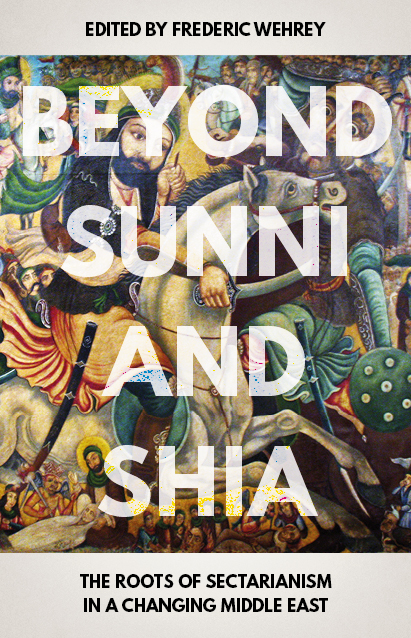
Beyond Sunni and Shia: The Roots of Sectarianism in a Changing Middle East
Book

Beyond Sunni and Shia: The Roots of Sectarianism in a Changing Middle East

An exploration of the factors behind the spread of sectarian identity politics in the Middle East.

Link Copied
By Frederic Wehrey
Published on Nov 9, 2017

Additional Links

Paperback - $34.95
Program mobile hero image

Program

Middle East

The Middle East Program in Washington combines in-depth regional knowledge with incisive comparative analysis to provide deeply informed recommendations. With expertise in the Gulf, North Africa, Iran, and Israel/Palestine, we examine crosscutting themes of political, economic, and social change in both English and Arabic.

Learn More

Source: Oxford University Press, 2017

This collection seeks to advance our understanding of intra-Islamic identity conflict in the Middle East. Instead of treating distinctions between and within Sunni and Shia Islam as primordial and immutable, it examines how political economy, geopolitics, domestic governance, social media, non- and sub-state groups, and clerical elites have affected the transformation and diffusion of sectarian identities. 

Particular attention is paid to how conflicts over distribution of political and economic power have taken on a sectarian quality, and how a variety of actors have instrumentalised sectarianism. The volume, covering Syria, Iraq, Lebanon, Saudi Arabia and the Gulf, Iran, and Egypt, includes contributors from a broad array of disciplines including political science, history, sociology, and Islamic studies.

Beyond Sunni and Shia draws on extensive fieldwork and primary sources to offer insights that are empirically rich and theoretically grounded, but also accessible for policy audiences and the informed public.

Table of Contents

Introduction
Frederic Wehrey

  1. Beyond Sectarianism in the Middle East? Comparative Perspectives on Group Conflict
    Paul Dixon

PART I: THE GEOPOLITICS OF SECTARIANISM

  1. The Sectarianism of the Islamic State: Ideological Roots and Political Context
    Hassan Hassan
  2. The Sectarianization of the Syrian War
    Heiko Wimmen
  3. Sectarianism and Iranian Foreign Policy
    Afshon Ostovar

PART II: INSTITUTIONAL SOURCES OF SECTARIANISM

  1. Shia-centric State-building in Post-2003 Iraq
    Fanar Haddad
  2. The Unraveling of Taif: The Limits of Sect-based Power-sharing in Lebanon
    Joseph Bahout
  3. Twitter Wars: Sunni-Shia Conflict and Cooperation in the Digital Age
    Alexandra Siegel
  4. The Political Economy of Sectarianism: How Gulf Regimes Exploit Identity Politics as a Survival Strategy
    Justin Gengler
  5. The Roots of Sectarian Law and Order in the Gulf: Bahrain, the Eastern Province of Saudi Arabia, and the Two Historical Disruptions
    Staci Strobl

PART III: DOCTRINAL AND CLERICAL SOURCES OF SECTARIANISM

  1. The Kingdom and the Caliphate: Saudi Arabia and the Islamic State
    Cole Bunzel
  2. Sectarianism and Political Pragmatism: The Paradox of Egypt’s al-Nour Salafis
    Stéphane Lacroix
  3. Religious Authority and Sectarianism in Lebanon
    Alexander D.M. Henley

This research was made possible through a generous grant from the Henry Luce Foundation.

Advance Praise

“This much-needed volume moves beyond primordialist and instrumentalist explanations of the issue of sectarianism. Its fascinating case-studies show not only why it is important to understand the geopolitical, institutional and religious sources of sectarianism in a changing Middle East, but also how it is possible to gain a deep and nuanced understanding of the subject.”
—Morten Valbjørn, Associate Professor, Department of Political Science, Aarhus University

“A contextual but comparative analysis of the geopolitical, institutional, and ideational drivers of sectarianism in the contemporary Middle East. Navigating beyond primordial and instrumental theoretical explanations, Beyond Sunni and Shia offers a multilayered analysis of why sectarianism assumes today such a powerful role in the domestic politics and foreign policies of Middle East states and transnational movements, and what are the prospects of moving beyond sectarianism in the future.”
—Bassel F. Salloukh, Associate Professor of Political Science, Lebanese American University, Beirut

About the Author

Frederic Wehrey

Senior Fellow, Middle East Program

Frederic Wehrey is a senior fellow in the Middle East Program at the Carnegie Endowment for International Peace, where his research focuses on governance, conflict, and security in Libya, North Africa, and the Persian Gulf.

    Recent Work

  • Article
    Parallel Climate Reckonings: Colonial Water Legacies and Indigenous Adaptation, from Morocco to the American West

      Frederic Wehrey, Charles H. Johnson

  • Commentary
    The Iran War Is a Stress Test for Gulf States

      Frederic Wehrey, Charles H. Johnson

Frederic Wehrey
Senior Fellow, Middle East Program
Frederic Wehrey

Additional Links

Paperback - $34.95
Middle EastNorth AfricaPolitical ReformSecurityReligion

Carnegie does not take institutional positions on public policy issues; the views represented herein are those of the author(s) and do not necessarily reflect the views of Carnegie, its staff, or its trustees.
More Work from Carnegie Endowment for International Peace

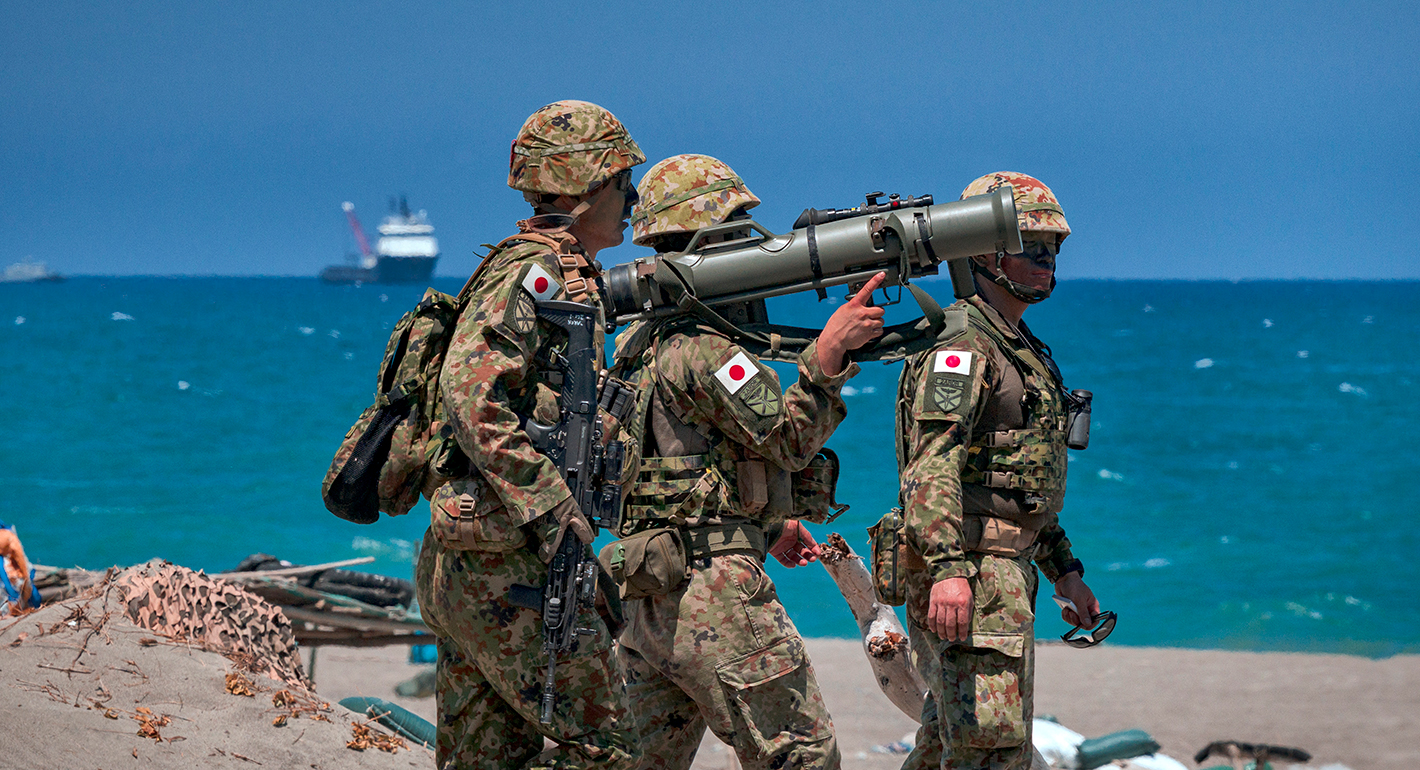
  • Japanese troops take part in a counter-landing live fire exercise as part of the annual Balikatan joint military drills on May 04, 2026 in Laoag, Ilocos Norte province, Philippines.
    Article
    The Two Logics Driving Japan’s Security Policy

    Japan’s revision of its three strategic documents reflects an intention to keep the United States engaged in the region while Japan fills any vacuums of U.S. power to preserve the Indo-Pacific order.

      • Ryo Sahashi

      Ryo Sahashi

  • Commentary
    Carnegie Politika
    Russia’s Rubber-Stamp Duma Elections Are Exposing Schisms in Putin's Regime

    In the discussions made possible by the State Duma election campaign, one question is being asked more and more loudly. “What next?”

      Andrey Pertsev
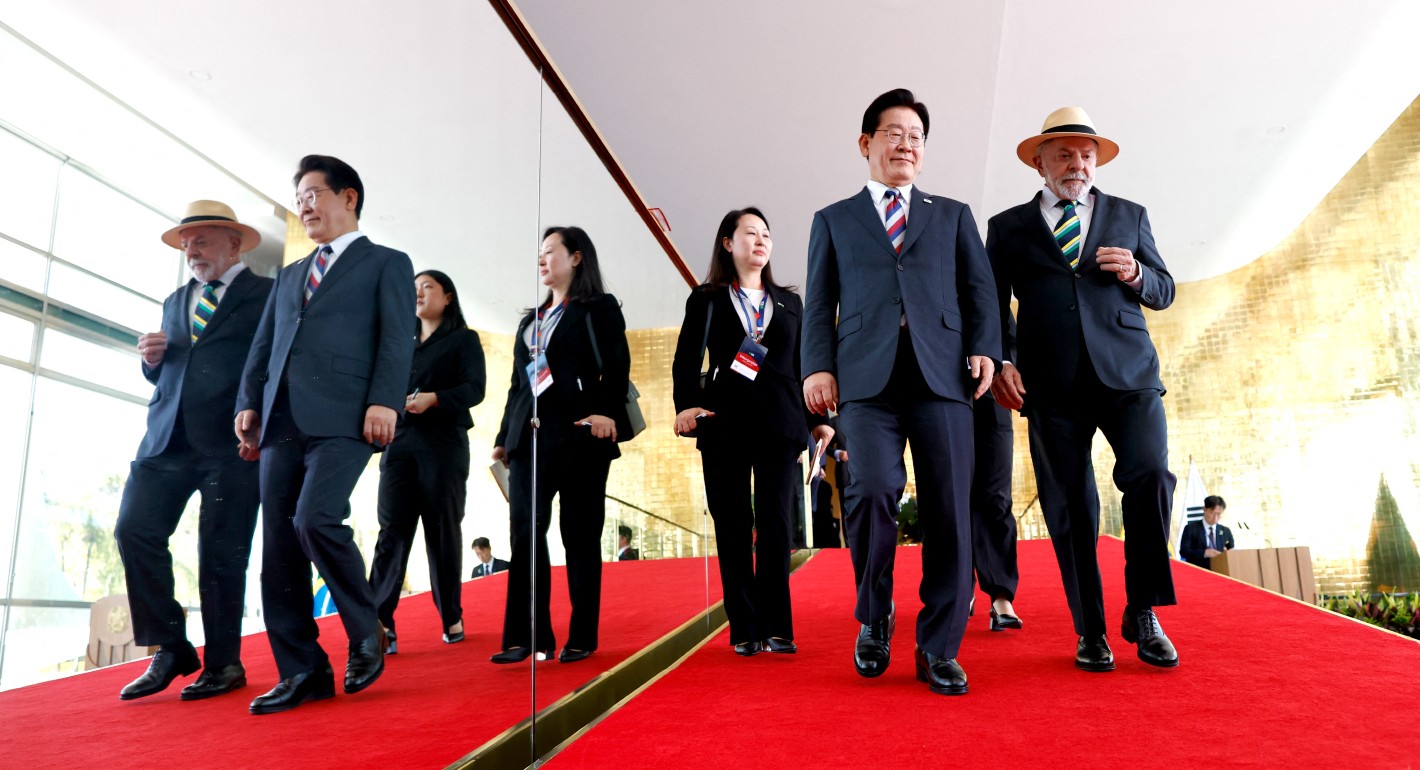
  • Lee and Lula walking
    Commentary
    Emissary
    Why Korea’s President Skipped Washington for Silicon Valley and Brasília

    Lee’s tour shows how Seoul is reorganizing its diplomacy away from Pyongyang and toward industrial networks and the geography of the compute economy.

      Darcie Draudt-Véjares

  • People standing on rocks in the ocean near the shore, with soldiers in the foreground
    Commentary
    Emissary
    The Migration Wave That Embarrassed Morocco and Rattled Europe

    Most migrants may have left Ceuta, but the effects may linger.

      • Alejandro Rodriguez
      • Sarah Yerkes

      Alejandro Martin Rodriguez, Sarah Yerkes

  • Shadowed figure lighting grocery store shelves
    Commentary
    Emissary
    Five Years After His Power Grab, Tunisia’s President Has Only Achieved Failure

    Saied’s main accomplishment has been to destroy a decade’s worth of democratic progress.

      • Sarah Yerkes

      Sarah Yerkes

Get more news and analysis from
Carnegie Endowment for International Peace
Carnegie global logo, stacked
1779 Massachusetts Avenue NWWashington, DC, 20036-2103Phone: 202 483 7600
  • Research
  • Emissary
  • About
  • Experts
  • Donate
  • Programs
  • Events
  • Blogs
  • Podcasts
  • Contact
  • Annual Reports
  • Careers
  • Privacy
  • For Media
  • Government Resources
Get more news and analysis from
Carnegie Endowment for International Peace
© 2026 Carnegie Endowment for International Peace. All rights reserved.