

Commentary
Ahead of a tough winter for Ukraine, Donald Trump’s swing back toward Russia bodes ill. But instead of panicking, Kyiv’s European allies are focusing on action.
Rym Momtaz
{
  "authors": [
    "Benjamin Silverstein"
  ],
  "type": "commentary",
  "centerAffiliationAll": "dc",
  "centers": [
    "Carnegie Endowment for International Peace"
  ],
  "collections": [
    "Carnegie Space Project",
    "Planetary Politics: Governing the Earth System and Global Commons"
  ],
  "englishNewsletterAll": "ctw",
  "nonEnglishNewsletterAll": "",
  "primaryCenter": "Carnegie Endowment for International Peace",
  "programAffiliation": "TIA",
  "programs": [
    "Technology and International Affairs"
  ],
  "projects": [],
  "regions": [
    "North America",
    "United States",
    "South Asia",
    "India",
    "East Asia",
    "Japan",
    "Oceania",
    "Australia",
    "Iran"
  ],
  "topics": [
    "Technology"
  ]
}
Source: Getty
The Artemis Accords can serve as a starting point.
Last year, the Quad—consisting of the United States, Japan, India, and Australia—committed to convene a working group on space issues to foster efficient satellite data exchanges and manage space-related risks. The working group was also charged to “consult on norms, guidelines, principles, and rules for ensuring the long-term sustainability of the outer space environment.” Bilateral agreements between Quad members demonstrate that they are beginning to live up to their pledge, but the Quad must do more to achieve its lofty goals. These partnerships build trust and confidence among participants but do not go far enough in characterizing principles or demonstrating norms that safeguard the long-term sustainability of space.
Use the interactive dial below to explore recent space-related bilateral agreements among the Quad. Click on two Quad members to display their notable agreements and joint activities. Broad themes of the partnerships are indicated by the highlighted icons. Deselect a member by clicking on the country name.

In early January 2022, U.S. and Japanese officials jointly emphasized “cooperation on space domain awareness, mission assurance, interoperability, and joint responses to serious threats to, from and within space, including by continuing discussion on proliferated low earth orbit satellite constellations” in the context of the U.S.-Japan Alliance. Later, U.S. Secretary of State Antony Blinken announced “a new research and development agreement that will make it easier for our scientists, for our engineers, and program managers to collaborate on emerging defense-related issues – from countering hypersonic threats to advancing space-based capabilities.”
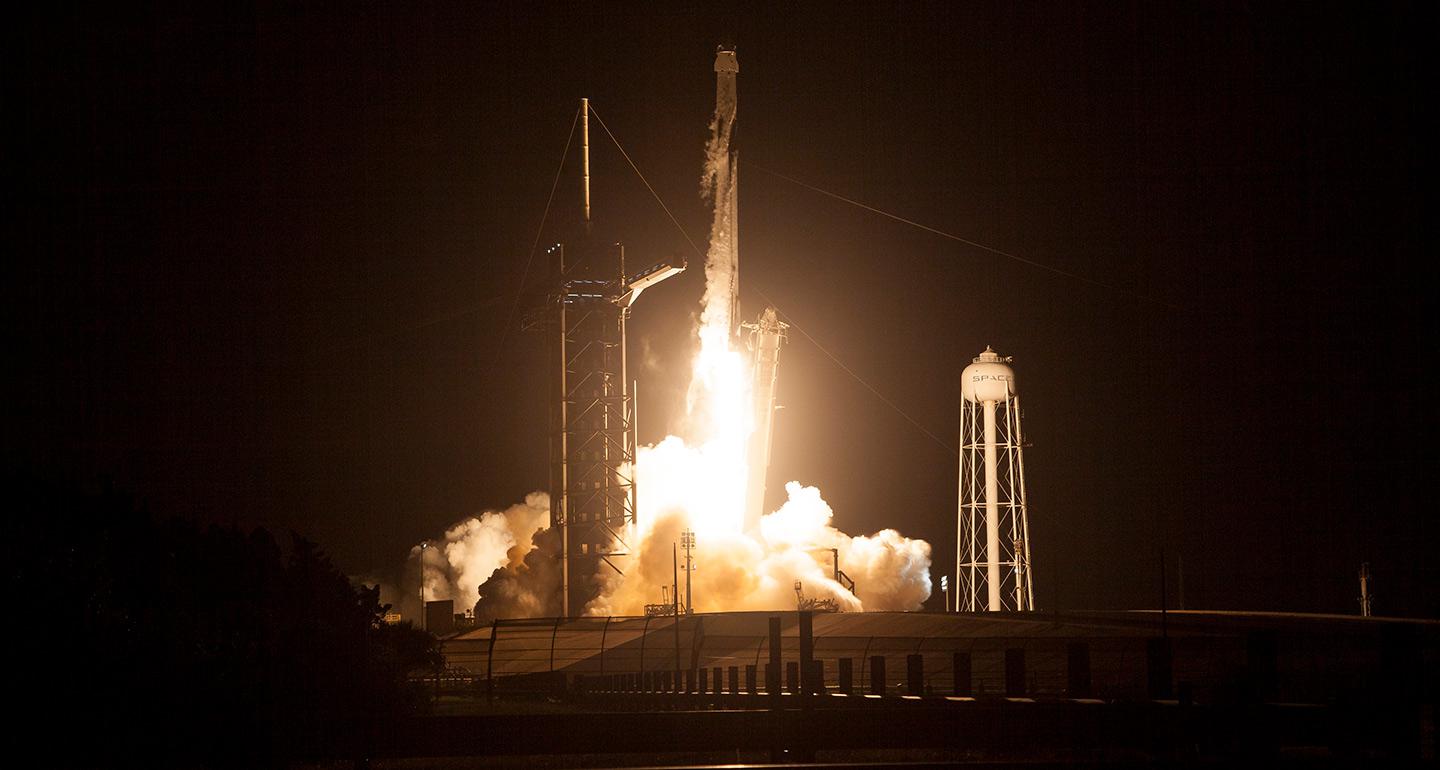
Japan is an Artemis Accords partner and longtime collaborator aboard the International Space Station.

During Fourth U.S.-India 2+2 Ministerial Dialogue in April 2022, secretaries and ministers signed a “Memorandum of Understanding on Space Situational Awareness and pledged to expand bilateral space cooperation, acknowledging the pivotal role international cooperation plays in the long-term sustainability and safety of the outer-space environment.” Furthermore, the two countries agreed to schedule an inaugural Defense Space Dialogue for later in 2022.

The 2010 session of the Australia-United States Ministerial Consultations, or AUSMIN, kicked off a long history of facilitating space cooperation by introducing an space situational awareness partnership. The most recent AUSMIN in 2021 included both an affirmation of the importance of safety and security in space as well as continued discussion of plans for a U.S.-Australian Space Framework Agreement. Australia and the United States have also recently concluded important civil space agreements.
Australia is an Artemis partner.

Japan and India have indicated mutual interest in cooperation on lunar exploration, notably conducting joint studies on the feasibility of a cooperative exploration of the moon’s south pole. More recently, Japan and India have hosted information exchanges for their respective space agencies, focusing on space security, rules and norms, and opportunities for technical cooperation.

Japan and Australia signed a Memorandum of Cooperation in 2020 that focuses on several areas of opportunity, including space exploration and space environment utilization. Japan and Australia worked together to ensure the success of one of Japan’s flagship initiatives, the Hayabusa2 asteroid exploration mission, which returned samples to Earth in Australia in 2020.

India and Australia have facilitated space-focused economic ties, with the intent to foster greater collaboration between Australian and Indian space experts. Australia and India are also discussing how Australia can fulfill a vital role in India’s Gaganyaan human spaceflight mission by providing tracking services for the spacecraft.

A harmonized set of behaviors demonstrated by all Quad members would set a more powerful example than a collection of loosely related bilateral commitments. The Quad need not reinvent the wheel in this endeavor: the U.S.-developed Artemis Accords can serve as a readymade starting point. A collection of principles based on the 1967 Outer Space Treaty, the accords outline behaviors that support peaceful, transparent, and cooperative space activities. While the United States, Japan, and Australia are Artemis partners, it does not appear that India is ripe to sign. India has ambitions to accomplish its own lunar missions and may not want to be beholden to another state’s rules on these activities. To reach consensus, the Quad working group must pare back some Artemis principles to reconcile the proposal with India’s aspirations.
Several of the principles are readily adoptable, including those on transparency and emergency assistance. Additional concrete commitments might include an intra-Quad process to establish rules of the road to guide satellite operators conducting collision avoidance maneuvers. Additionally, members should agree to a stringent schedule for safely disposing spacecraft used in joint Quad missions. All members possess the technical means to carry out these activities, and adherence would demonstrate commitments to sustainable uses of space.
The Artemis Accords represent more than just a lunar goal—the fundamental mission of the partnerships is to reduce the chance that space activities incite conflict. This goal is congruent with the Quad’s space priorities. Stepping back from long-term lunar goals can preempt objections within the Quad and help the group ensure the long-term sustainability of space. Separating the general principles from those inextricably linked to NASA’s lunar plans might facilitate agreement among the Quad, unencumbered by excess lunar baggage. Coalescing around a handful of progressive behavioral expectations is the strongest way to advance the Quad’s immediate space interests.
Benjamin Silverstein
Former Research Analyst, Space Project
Benjamin Silverstein was a research analyst for the Space Project at the Carnegie Endowment for International Peace.
Carnegie does not take institutional positions on public policy issues; the views represented herein are those of the author(s) and do not necessarily reflect the views of Carnegie, its staff, or its trustees.

Ahead of a tough winter for Ukraine, Donald Trump’s swing back toward Russia bodes ill. But instead of panicking, Kyiv’s European allies are focusing on action.

Rym Momtaz

Despite its flop at the box office, the film raises important questions for the climate community to answer.

Leonardo Martinez-Diaz

In an interview, Rozina Ali discusses her new book on the rise and manifestations of Islamophobia in the United States.

Michael Young

While the EU and European governments are embracing the much-lauded middle-power moment, this entails three difficult conundrums.

Richard Youngs

Europe is facing rising populism internally as well as external pressures from Russia, China, Turkey, and the United States.

Dimitar Bechev