

Commentary
Saied’s main accomplishment has been to destroy a decade’s worth of democratic progress.
Sarah Yerkes
{
  "authors": [
    "Sophia Besch",
    "Tara Varma"
  ],
  "type": "questionAnswer",
  "blog": "Emissary",
  "centerAffiliationAll": "",
  "centers": [
    "Carnegie Endowment for International Peace"
  ],
  "englishNewsletterAll": "",
  "nonEnglishNewsletterAll": "",
  "primaryCenter": "Carnegie Endowment for International Peace",
  "programAffiliation": "",
  "programs": [],
  "projects": [],
  "regions": [
    "France"
  ],
  "topics": [
    "Democracy"
  ]
}
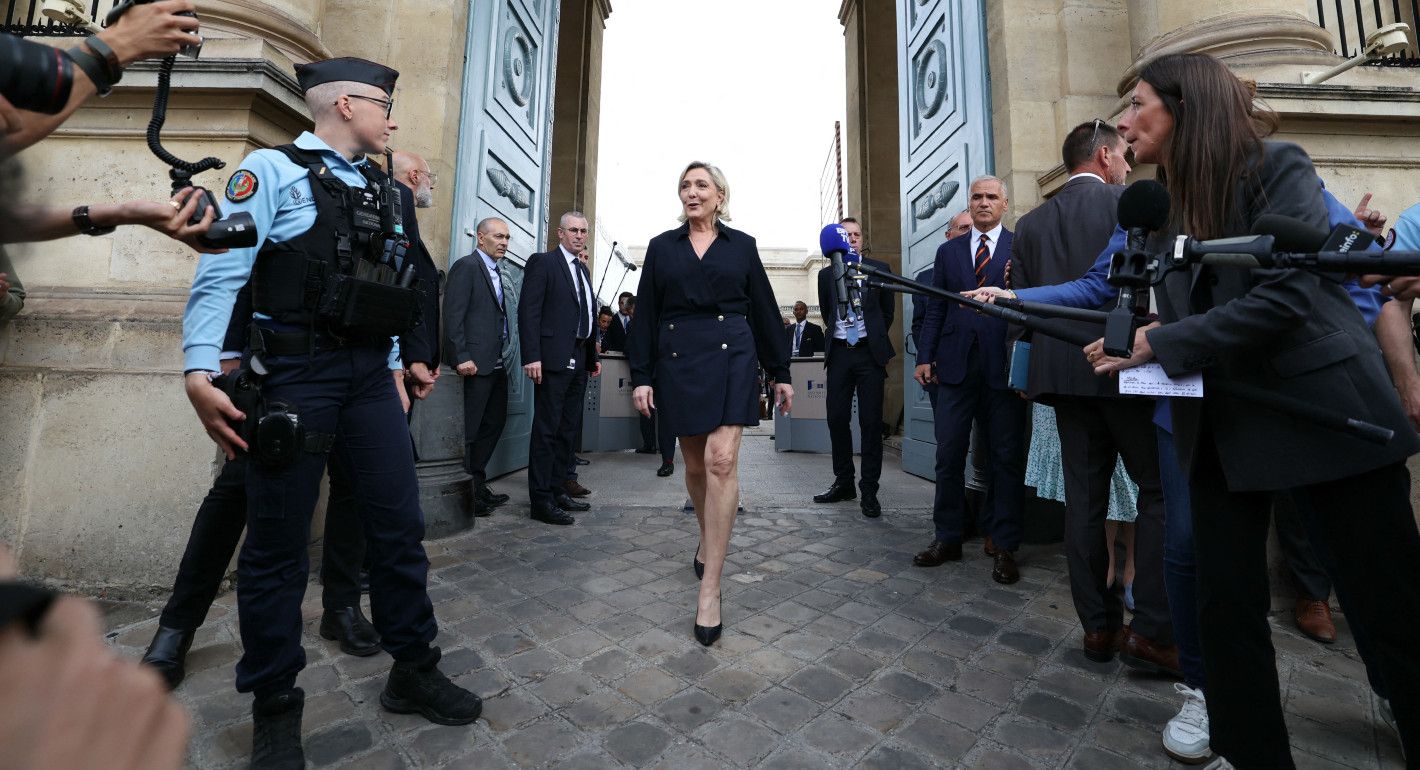
National Rally party leader Marine Le Pen arrives at the National Assembly in Paris on July 10. (Photo by Alain Jocard/AFP via Getty Images)
After the recent election, the National Rally is learning from its mistakes.
On a recent episode of The World Unpacked, host Sophia Besch spoke with Tara Varma, a visiting fellow at the Brookings Institution, about the recent French election. An excerpt from their conversation, which has been edited for clarity, is below.
Sophia Besch: Did Macron’s gamble pay off, or did it backfire?
Tara Varma: I would say it could have backfired in a possibly worse manner than it ultimately did, but I wouldn’t really say it paid off.
When Macron came into power in 2017, he came in without a party structure and managed basically to get 360 members of the National Assembly in a scenario that France had never seen before. Today, he ends up with only 160 members of parliament, which is better than what was expected. People thought that his party could be totally wiped out. He’s not wiped out, but it’s a severe decrease from what he originally had—and also from his original motto, which was to be the bulwark against the far right.
Sophia Besch: How secure is Macron’s leadership of his own party?
Tara Varma: Macron came [into power] with a movement called En Marche. Then it transformed into La République En Marche. Then it transformed into Renaissance. And now the latest avatar of this coalition for the campaign was called Ensemble Together. In a way, this is symbolic, but I think it does say something about what Macronism was and is today: it’s something that is hard to grasp, and it still centers very much around the figure of Macron. He has struggled to, if not name an heir, even get people to be future Macron[-style] leaders.
He has a very solitary way of governing. We saw with his decision to dissolve [the National Assembly], where he didn’t forewarn his prime minister, the president of the National Assembly, the president of the Senate—which he is supposed to do by the Constitution. He spoke to them afterward, but his decision was clear.
I think we’re finding ourselves in a situation where basically the onus is on him to empower the new parliamentarians of his coalition and to see the extent to which he can extend goodwill and political will to form something that goes beyond him.
Understand the world with the latest from our scholars around the world.
Sophia Besch: Do you think that this was a protest vote, or do French voters connect with the issues brought forward by the far right? Of course, I think we still have to take [the far right] seriously—they came in third, but they increased their number of MPs. They’re clearly a force to be reckoned with.
Tara Varma: Absolutely. In 2017, they had eight members of parliament. Ten days ago, they had eighty-nine. They now have 143. They managed to increase their numbers by almost 50 percent this time around. We have to take them very seriously.
One of the things that [far-right leader] Marine Le Pen said on the evening of the second round was that the tide was rising and that she knew that her time would come. I think she’s very focused on the 2027 presidential election.
What we’ve seen is [far-right party] National Rally learning from its mistakes. I think it’s realized how scary the candidates that it presented were. And it’s going to work to change that, because with a larger group at the National Assembly comes larger funds. It’ll have more money to train assistants, researchers, collaborators inside the National Assembly. I fear it’s going to professionalize even more because [its leaders] have this key objective of the presidency. Three years is quite a [long time].
It’s not a protest vote anymore. We saw a very high level of turnout in these two rounds. Until this election, it used to be that a higher level of turnout meant fewer votes for the National Rally. And this time around, it was a higher level of turnout and higher vote share for it. I think we’re looking at something where this is a vote of adhesion right now, but it also shows that there is something about identity politics and a form of acceptance of racist and anti-Semitic ideas being put out there in the public debate. We see this in France, and in other European countries and in the United States as well, and something that U.S. Democrats should be worried about.
To listen to the full episode, use the player below or your favorite podcast app.

Former Senior Fellow, Europe Program
Sophia Besch was a senior fellow in the Europe Program at the Carnegie Endowment for International Peace. Her research focuses on European foreign and defense policy.
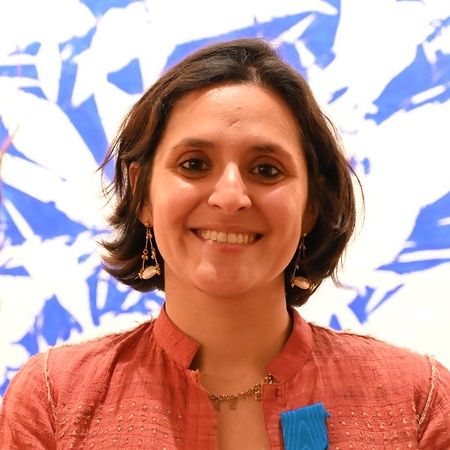
Tara Varma
Visiting Fellow, Brookings Institution
Tara Varma is a visiting fellow at the Brookings Institution.
Saied’s main accomplishment has been to destroy a decade’s worth of democratic progress.

Sarah Yerkes

In Colombia and elsewhere in the region, the United States is trying to shape election outcomes—but at what cost?
Oliver Stuenkel, Adrian Feinberg
The impacts of the Faye-Sonko rupture could go well beyond the country’s borders.

Lesley Anne Warner
Regardless of the outcome, there’s another path to ensuring that progress doesn’t stall.

Zaur Shiriyev
Lessons from other backsliding democracies show that mass mobilization needs to feed into an electoral strategy.

Saskia Brechenmacher, Shreya Joshi