On a recent episode of The World Unpacked, host Sophia Besch spoke with Amr Hamzawy, director of Carnegie’s Middle East Program, about great power competition in the region. An excerpt from their conversation, which has been edited for clarity, is below.
Sophia Besch: You recently published a digital feature on great power competition in the Middle East and North Africa. Before you set out to do this project, what would you say was the prevailing narrative?
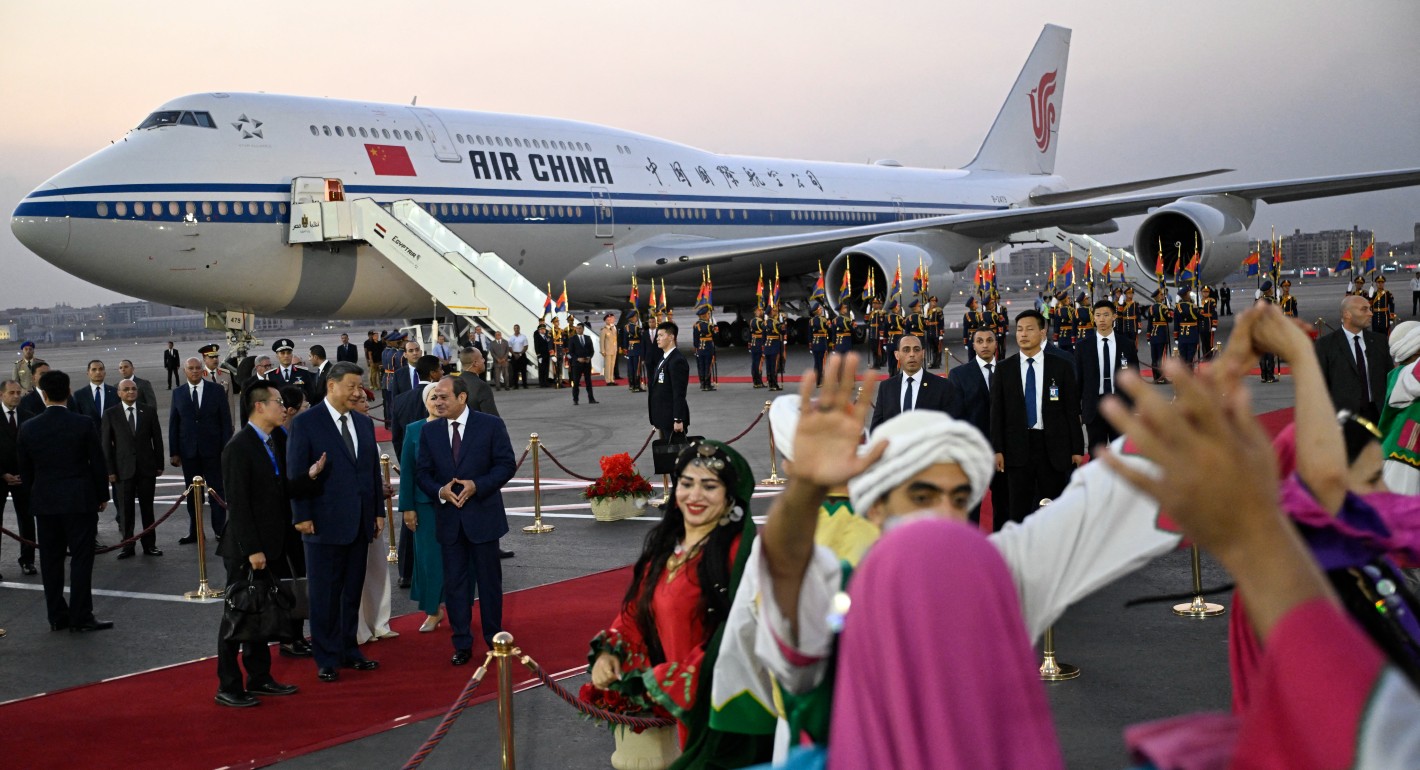
Amr Hamzawy: Consistently throughout the last four to six years, the prevailing narrative has been about a retreating U.S. influence in the Middle East and North Africa, as well as about a rising Chinese role and influence and a disruptive Russian role. And this is not only in Syria, but everywhere across the region. Scholars were pointing to Russia and Libya, Russia and North Africa, Russia and the Sahel region.
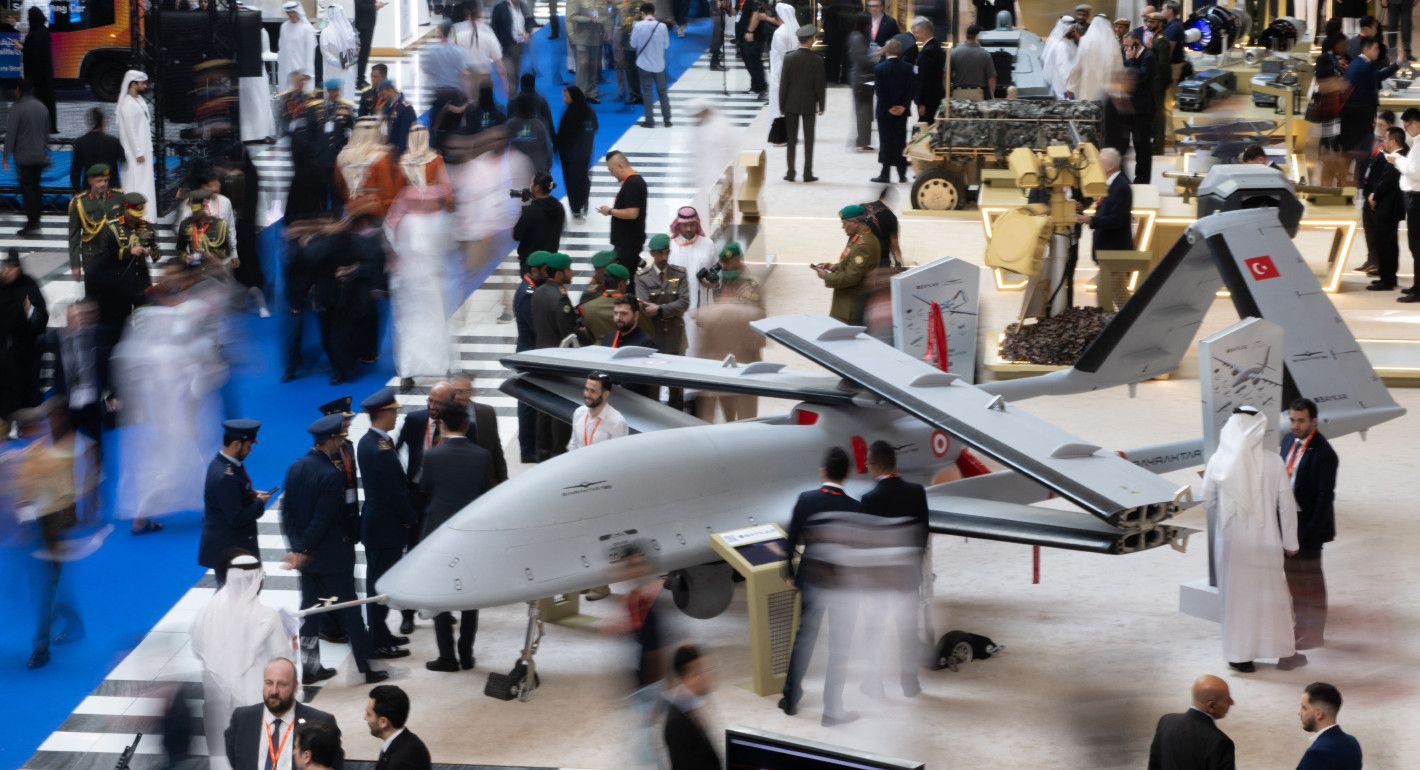
Once my colleagues and I were digging into the details of what exactly is happening on the ground, we weren’t as convinced. Is the Gulf trading only with China, or is it still trading with the United States as well? Is Morocco trading more with China as opposed to its very strong trade relations with the European Union? And once we started digging even into military deployment, into arms sales, we were getting into a complex picture that actually evades the simple narrative of a retreating superpower and emerging contestation from China and Russia that goes in a one-sided direction.
Navigating Influence: Great Powers in the Middle East and North AfricaThe United States, Russia, and China are intensifying their competition for global influence. Our analysis reveals that their involvement and impact vary across the Middle East and North Africa. Within subregions, the three powers assert their influence in the realms of economy, security, and diplomacy, achieving various degrees of success.
Sophia Besch: Iran is a unique case [in the region]. We’ve seen the relationship with this country and China grow stronger in recent years, particularly under the weight of U.S. sanctions. But Russia holds some significant influence. Can you tell us more about Iran’s strategic approach toward these two countries?
Amr Hamzawy: When you look at the details, China is more key to Iran—to its economy, to its trade. China is the go-to place for [foreign direct investments] in the Iranian economy. And it’s the number one trading partner. So the real strategic partnership, the all-inclusive partnership, is not between Iran and Russia. It’s between Iran and China. China is the most consequential big player for the stability of the regime of the Islamic Republic in Iran.
Russia is relevant from a military point of view. Of course, it’s based on reciprocity. Iran is getting weapons from Russia. Iran is also exporting weapons—drones—and Russia is coming to rely on them. It’s also based on the interests of Iran and Russia converging to almost an identical framing in Syria. Both of them are interested in sustaining the Bashar al-Assad regime. Both of them are interested in keeping the nonstate actors, the different militias, operating within Syria, as well as in Lebanon and Iraq.
So at the level of military relations, these two factors speak for the importance of Iranian-Russian relations, but it’s actually China that is the big player. When Iran needed a mediator with Saudi Arabia, it was China that was brought in, not Russia. The negotiations did not happen in Moscow. They happened in Beijing. [As a result of the deal], the Yemen civil war has also come to be at a lower intensity and at lower violence levels throughout the last two years.
Get more news and analysis from
Emissary
The latest from Carnegie scholars on the world’s most pressing challenges, delivered to your inbox.
Sophia Besch: Are there specific areas where U.S. strategy ought to change, based on this research?
Amr Hamzawy: I would put these changes in two big buckets.
Number one, I believe the U.S. needs to come to terms with the fact that regional actors are entering into a new phase: governments in the Middle East and North Africa can now go shop around for arms, for trade relations, for foreign direct investment, for security assurances. Türkiye, Saudi Arabia, the UAE—they have options. This is impacting [these governments’] policy behaviors, as well as how geostrategic realities are being discussed.
The second big bucket is the U.S. needs to do a better job in publicizing its good work—its diplomatic missions, educational missions, economic cooperation, and on-the-ground economic aid. It needs to do a better job of publicizing what those packages have achieved in terms of advancements in the educational sector, in healthcare, even in sanitation in places such as Jordan, Egypt, Yemen, and Morocco.
The level of military activity has been always disruptive in terms of U.S. impact on public opinion favorability. And then, in moments of regional crises, citizens see that the U.S. is silent on [issues such as] the continuation of the Gaza war. The result is a hijacking impact of the good work by what is in the news headlines. And [U.S. policymakers] have to take public opinion favorability ratings extremely seriously, because Arab, Iranian, and Israeli policymakers are no longer doing politics in a vacuum. Even as much as [politicians] dislike them, social media trends impact the way they do policy and [how] they reach out to different countries.
To listen to the full episode, use the player below or your favorite podcast app.
Or watch it on YouTube.
About the Authors

Sophia Besch was a senior fellow in the Europe Program at the Carnegie Endowment for International Peace. Her research focuses on European foreign and defense policy.

Amr Hamzawy is a senior fellow and the director of the Carnegie Middle East Program. His research and writings focus on Egypt’s and other middle powers’ involvement in regional security in the Middle East, particularly through collective diplomacy and multilateral conflict resolution