

Paper
Vision 2030 has made undeniable progress in building a Saudi economy that can “live without oil”—but with five years to go, the program is in danger of enriching elites while overlooking the needs of most Saudi citizens.
{
  "authors": [
    "Andrew Leber"
  ],
  "type": "commentary",
  "blog": "Emissary",
  "centerAffiliationAll": "dc",
  "centers": [
    "Carnegie Endowment for International Peace"
  ],
  "englishNewsletterAll": "menaTransitions",
  "nonEnglishNewsletterAll": "",
  "programAffiliation": "MEP",
  "programs": [
    "Middle East"
  ],
  "regions": [
    "Middle East",
    "Saudi Arabia"
  ],
  "topics": [
    "Economy",
    "Trade",
    "Security",
    "Civil Society"
  ]
}
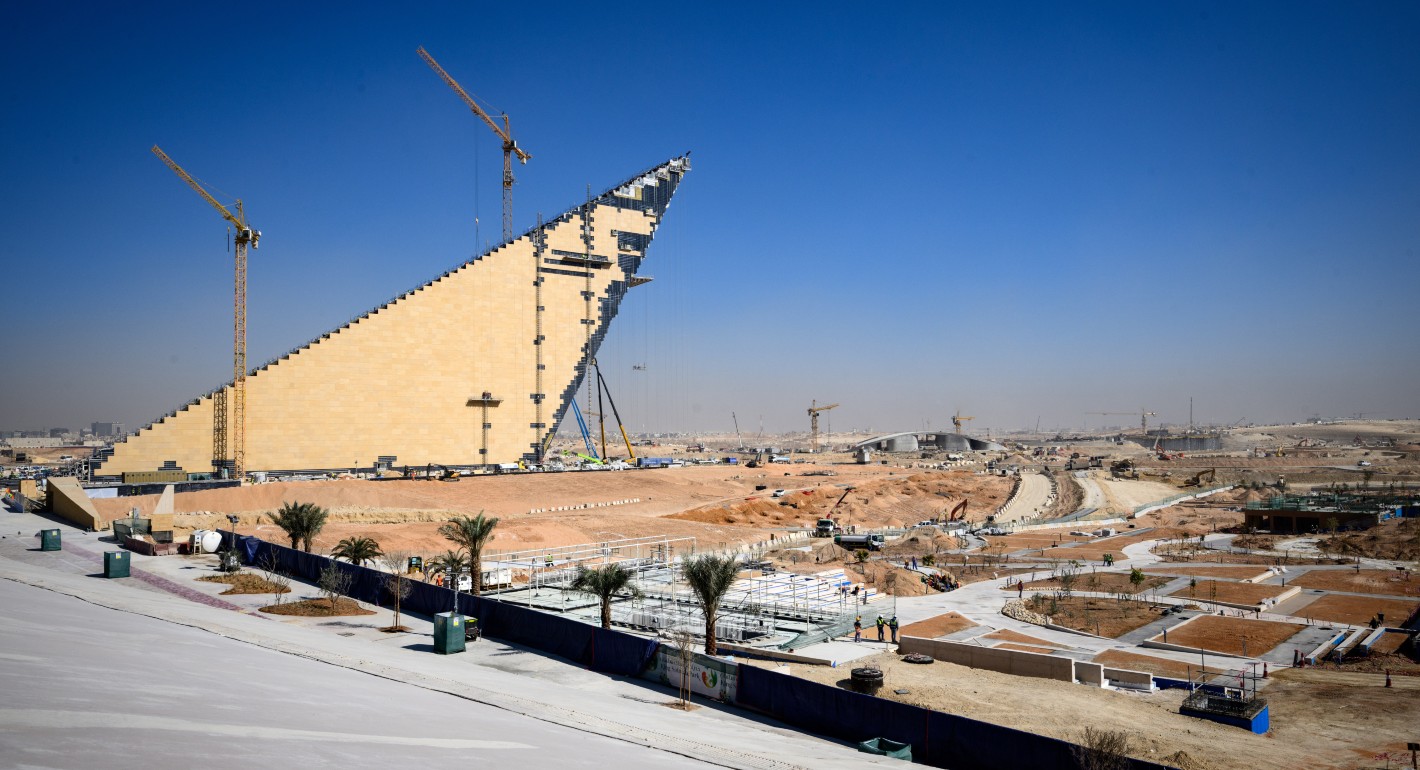
The King Salman Park construction site in 2025. (Photo by Bernd von Jutrczenka/DBA Picture Alliance via Getty Images)
As the monarchy appears to question its grandest projects, the state could do with more critical debate than rote cheerleading.
For a brief time in April, the fiercest battle being waged in the Saudi public sphere had nothing to do with Iran. Instead, a broad range of commentators clashed over a decision by the country’s oldest public university—King Saud University, or KSU—to shutter a number of academic disciplines, including Arabic language study, history, and geography. Nearer to my own Tulane University, however, state and local officials have been more concerned by very different Saudi cutbacks: the Saudi Public Investment Fund (PIF) withdrawing its funding from the LIV Golf tour. This move led to the cancellation of a marquee tournament in New Orleans and threw the league’s future into doubt.
The sports-news story from Louisiana and the talk-of-the-town item from Saudi Arabia each reflect tensions within the kingdom’s Vision 2030 program, which passed the ten-year mark this April. Within Saudi Arabia, official entities and nominally independent commentators have each praised the plan’s achievements, which have inarguably disrupted social insularity (at least toward the West), gender segregation, and economic stagnation that marked the Saudi Arabia of 2016. Yet as I discussed in a report for Carnegie last year, Vision 2030 itself risks stagnating in the “home stretch” as more fanciful projects stall out and investments in education fail to keep pace with the demands of a true knowledge economy.
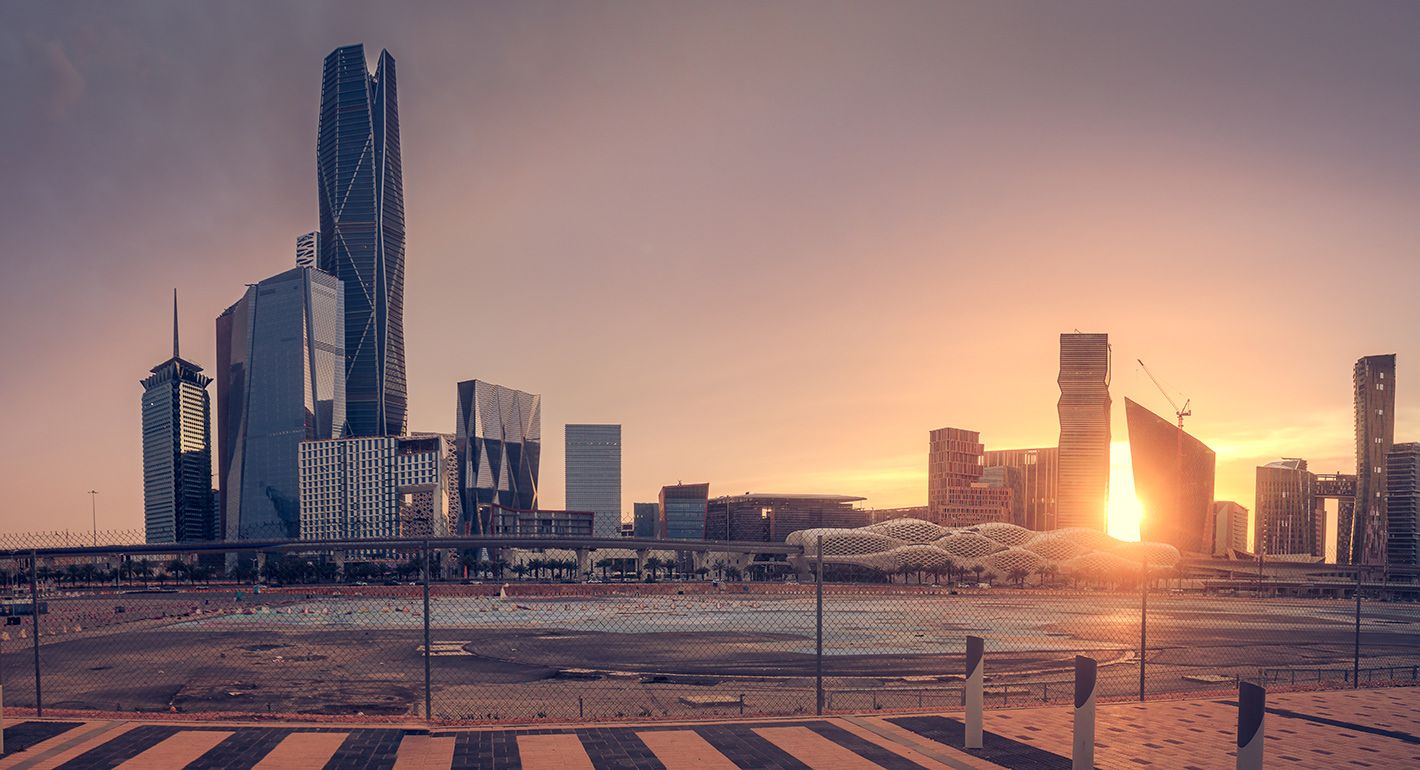
Vision 2030 has made undeniable progress in building a Saudi economy that can “live without oil”—but with five years to go, the program is in danger of enriching elites while overlooking the needs of most Saudi citizens.
Now, as the monarchy appears to question its grandest gigaprojects and grapples with the uncertain aftermath of the Iran war, the Saudi state could do with more critical debate than rote cheerleading.
English-language coverage of Vision 2030’s tenth anniversary has emphasized the moderation of expectations alongside achievements made along the way. Even before the disruptions caused by the U.S.- and Israeli-led war on Iran, the vision’s more extravagant projects faced years of steady cuts: a 105-mile-long “Line” city scaled back to a 1.5-mile trial run, a luxury island hotel going dark after a high-profile launch party, and an Asian Winter Games ceded to Kazakhstan amid concerns about slow progress toward a desert-mountain ski village. Most recently, the abrupt abandonment of LIV Golf came despite PIF Governor Yasser Rumayyan’s passionate interest in golf and years of the PIF touting LIV as an essential part of Saudi Arabia’s global economic strategy.
All of this points to the hard limits on even the gargantuan resources of the PIF. After years of explosive growth (fueled mainly by wealth transfers from other state entities), the PIF’s assets under management have seemingly plateaued since 2024. Spending by foreign tourists has also slowed, increasing by only around 4 percent in 2025 after years of double-digit postpandemic growth, and most of these international visits remain concentrated in the holy cities of Mecca and Medina. The Iran war will likely cause new challenges for this and other economic ventures. Ambitious plans for domestic AI investments are at best on pause as Saudi Arabia and its Gulf neighbors await a more stable geopolitical outcome than fraught talks between the United States and Iran.
The debate over KSU’s policies reflects the flip side of Vision 2030’s high-profile economic “bets”: slow efforts to wind down the state provision of jobs, housing, and basic services such as education in favor of private sector alternatives. Stanching the growth of high-benefit civil-service jobs has been one of the unsung “achievements” of Vision 2030. Homeownership is expanding, but only for citizens who can afford commercial mortgages. Government spending is up 67 percent overall since 2015, but education spending is up by less than 3 percent over the same time period.
The Saudi government has also sought to limit growth in spending on higher education specifically, putting mounting regulatory pressure on universities to raise their own funds and eliminate “weak” or outdated programs. KSU’s announcements in mid-April would be a familiar story for any U.S.-based academic who has watched a university administration respond to financial pressure: hire a management consultancy (in the Saudi case, Boston Consulting Group), conduct a review of academic departments, and use the review as the basis for arguing that entire programs be downsized or eliminated. KSU itself is unusually close to top decisionmakers and empowered to make rapid changes. It is directly supervised by the Royal Commission of the City of Riyadh, chaired by the crown prince, rather than the Ministry of Education.
The administrative decision kicked off a firestorm of debate within Saudi social media communities, op-ed pages, and talk shows—not least because the moderators and commentators of these spaces are often academics or self-styled intellectuals themselves. One group argued that the humanities develop crucial critical-thinking skills. These disciplines are about more than “meeting the demands of the labor market—they are for developing society,” said longtime media figure Dawud al-Sharyan. Ardent nationalists such as Mohammed al-Sa‘id instead emphasized the humanities as key to preserving Saudi Arabia’s national heritage, suggesting that “the bankers”—those concerned mainly with financial returns—“should stay in the banks.” After all, the kingdom recently mandated Arabic (one of the targeted fields of study) as the official language of government business. A third contingent took the side of KSU, contending that higher education policies “must take into account the real needs of the economy” and that the goal of the university should be to generate “human capital” as efficiently as possible.
Surprisingly, KSU officials ultimately backed down, giving humanities departments a stay of execution while reevaluating their future within the university system. Successful pushback by elements of Saudi society may have had something to do with the ability of KSU’s critics to claim they were as devoted to Vision 2030 as KSU’s defenders: Even if the economy were Saudi Arabia’s overriding priority, universities require diverse fields of study in order to support a dynamic economy while preserving the kingdom’s Arab and Muslim character. (In other words, “Good crown prince, bad university administrators.”) The Asbar Center, a normally low-key Saudi research organization, ultimately published a report on the KSU controversy that framed the discussion as a legitimate debate over “the complexities that relate knowledge to development . . . in light of the Kingdom’s Vision 2030.”
Rolling back one university’s policy changes is a small victory for select Saudi intellectuals, and one that can always be undone at a later date. Public debate hardly touched on whether Saudi scholars and students enjoy enough academic freedom to truly contribute to a knowledge economy (even as U.S. universities face their own challenges on this score). Still, it represents an area where citizens can openly debate the legitimacy of decisionmaking processes, safely insulated from any appearance of doubting the country’s political leadership.
The latest from Carnegie scholars on the world’s most pressing challenges, delivered to your inbox.
For nearly a decade, Crown Prince Mohammed bin Salman and Saudi leadership writ large have signaled that even constructive critiques of Vision 2030 are unwelcome at home. Back in 2016, the late Saudi media figure Jamal Khashoggi authored a series of Citizen’s Vision articles: a “yes, and” response that lauded Vision 2030’s ambition while suggesting further room for improvement. Mounting repression soon sent Khashoggi into self-imposed exile, however, amid the detentions of anybody positioned to criticize the ends, means, or ambition of Vision 2030. Economist Essam al-Zamil has been detained since 2017, following criticism of a decision to sell shares in national oil company Saudi Aramco, while Khashoggi’s assassination by agents of the Saudi state in 2018 showed the lengths to which MBS would go to stamp out critical views.
There are recent hints that the clampdown has gone too far even for its architects, with the release of numerous political prisoners over the past year (though many remain in detention). Independent Arabia editor Adhwan al-Ahmari acknowledged the possibility of “excessive self-censorship” by media figures in a 2023 interview, suggesting that smart commentators “dance along the red lines without crossing them.”
The media outlet Thmanyah, which aired the interview with Ahmari, joined the deluge of praise for Vision 2030 yet also published a newsletter entitled “What Might a Vision 2040 Look Like?” Author Mohammed Al Jaber pays due tribute to “the magnitude of the transformation” and the “new mindset” caused by Vision 2030 yet also turns to potential focus areas for the country’s next multiyear plan. One is a call for a greater focus on the industrial sector—coincidentally, one of al-Zamil’s critiques of Vision 2030. Another is a suggestion of more localized decisionmaking within a highly centralized political system—just as coincidentally, the focus of the concluding column in Khashoggi’s Citizen’s Vision series.
Al-Zamil, Khashoggi, Al Jaber, and MBS himself each presented citizen employment as the central challenge to Saudi Arabia and to Vision 2030’s success. In figuring out how to overcome this challenge and generate more jobs, the Saudi state should continue to ease up on domestic repression that keeps debates like the pushback to KSU a rarity.

Nonresident Scholar, Middle East Program
Andrew Leber is a nonresident scholar in the Carnegie Middle East Program.
Recent Work

Andrew Leber, Lesley Anne Warner
Andrew Leber
Carnegie does not take institutional positions on public policy issues; the views represented herein are those of the author(s) and do not necessarily reflect the views of Carnegie, its staff, or its trustees.

The Horn of Africa countries are among those facing a new security calculus.
Andrew Leber, Lesley Anne Warner
Congress should ask tough questions about the agreement’s more unique features and whether they advance U.S. interests or compromise them.

Jane Darby Menton
Despite the agreement’s uncertainty, it’s still a significant development in regional and nuclear policy.
Andrew Leber, Jane Darby Menton
The conflict is exposing the flaws and fissures of their domestic governance and social cohesion.
Frederic Wehrey, Charles H. Johnson
One is hopeful. One is realistic. One is cautionary.
Andrew Leber, Sam Worby