

Commentary
Despite public disputes over trade and immigration, the strategic partnership’s foundations remain sturdy.
Sameer Lalwani
{
  "authors": [
    "Nathan J. Brown",
    "Zaha Hassan"
  ],
  "type": "questionAnswer",
  "blog": "Emissary",
  "centerAffiliationAll": "dc",
  "centers": [
    "Carnegie Endowment for International Peace"
  ],
  "englishNewsletterAll": "menaTransitions",
  "nonEnglishNewsletterAll": "",
  "primaryCenter": "Carnegie Endowment for International Peace",
  "programAffiliation": "MEP",
  "programs": [
    "Middle East"
  ],
  "projects": [],
  "regions": [
    "United States",
    "Palestine",
    "Israel",
    "Middle East"
  ],
  "topics": [
    "Domestic Politics",
    "Education",
    "Democracy"
  ]
}
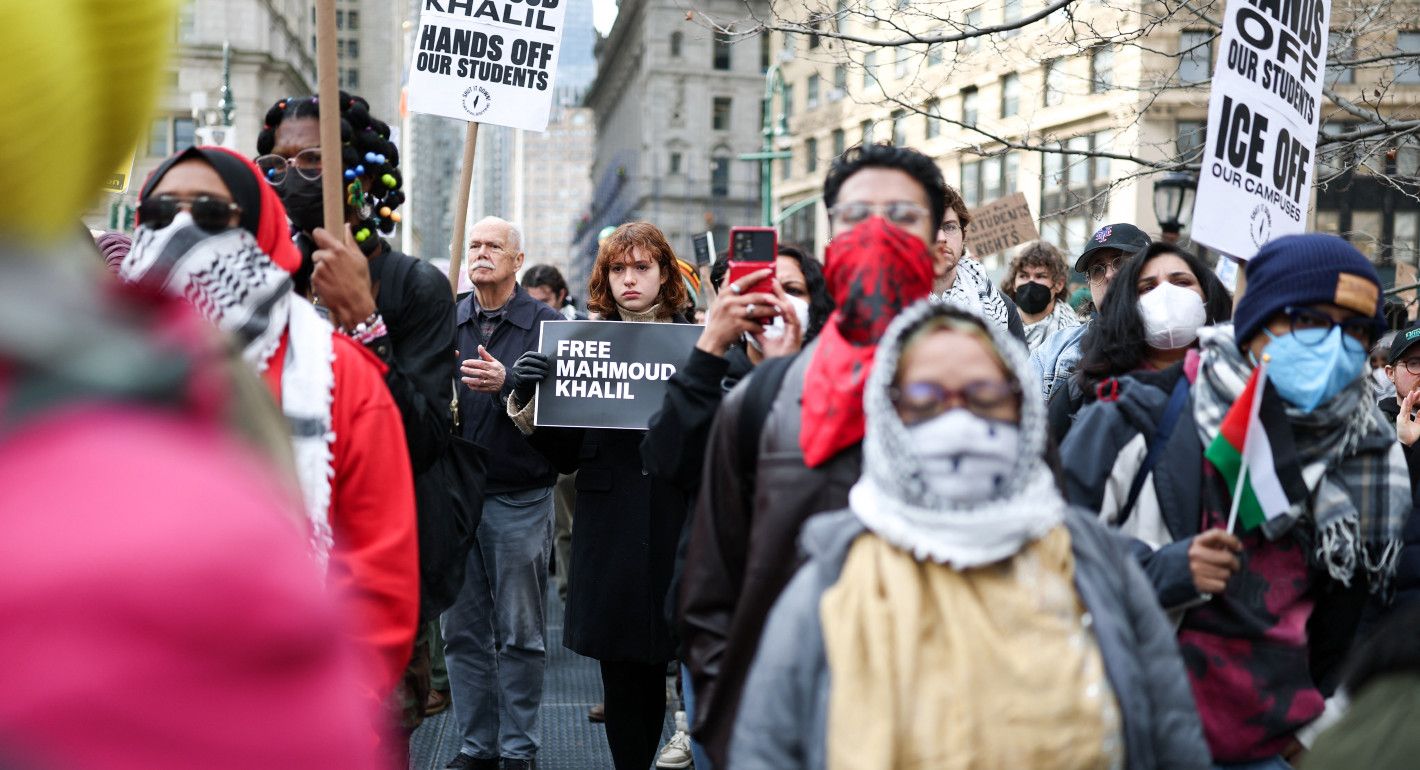
Protestors rally in support of Mahmoud Khalil outside of a New York City courthouse on March 12, 2025. (Photo by Charly Triballeau/AFP via Getty Images)
The United States has a long history of trying to silence speech. What’s happening now is different—and dangerous.
Tension around speech on college campuses is not new, but how do these developments differ from what’s come before?
Nathan J. Brown: In recent years, allegations of antisemitism and Islamophobia have been handled by the Department of Education, generally as civil rights complaints. There have been complaints and counter-complaints, investigations, and carefully negotiated settlements. What is happening now dwarfs that earlier activity.
First, the tools are so much more punitive and extensive. The wholesale cutoff of grants and contracts is completely unprecedented, but that is just part of the story. The activity is coordinated across the federal government, led sometimes by the Department of Justice and sometimes Homeland Security. Criminal prosecution and expulsion are now replacing negotiated agreements as the instrument of choice. Second, there seems to be no sign of much fact-finding—the officials involved seem to have made up their minds without any investigation. Third, Islamophobia is no longer something that leading government officials see as a problem.
And finally, and perhaps most significantly from the perspective of higher education, this comes as part of a broader set of efforts undermining the entire basis for federal relations with institutions of higher education. Every single research university in the United States has to worry about what tomorrow will bring on a wide variety of fiscal, legal, and regulatory fronts.
Zaha Hassan: The United States has a long and checkered history of trying to keep disfavored viewpoints away from its shores. An example of a “subversive” viewpoint that was once heavily restricted is Communism, often through McCarthy-era ideological exclusion laws that barred entry for artists and intellectuals the government deemed as threats. Though many of these laws were repealed, individuals who are representatives of the Palestine Liberation Organization—an umbrella organization that includes Palestinian labor unions, women’s committees, and professional associations, along with political factions—still face an irrebuttable presumption that they are engaged in terrorism. In January, the House passed a bill barring PLO members from entering the United States.
What we are seeing now is quite different—and dangerous. The speech of individuals already inside the United States is now being suppressed through different legal mechanisms, including the revocation of student visas or green cards. Over the weekend, Mahmoud Khalil, an Ivy League graduate and green card holder, was taken from his New York home and shuttled to a detention center in Louisiana. His alleged offense is his speech calling for a ceasefire in Gaza, which Secretary of State Marco Rubio apparently determined could harm U.S. foreign policy, making Khalil eligible for deportation under the Immigration and Nationality Act. If Khalil could have his green card revoked for this, permanent residents are at risk if they protest an administration’s policies.
How are university officials viewing these developments? What role should officials play?
Nathan J. Brown: Up to now, university officials seem to wish to avoid a public showdown with the Trump administration. And although they seem to be watching one another—and likely talking among themselves—they are not publicly mobilizing or coordinating. Zaha mentioned the case of Mahmoud Khalil at Columbia, and along with the cutoff of $400 million in grants and contracts, I think a lot of eyes will be on what happens there.
One thing I hear from colleagues at other universities is that their leaders tend to be holding their cards close to their chests internally as well. They seem to have little information but are averse to sharing what little they do have or to give more than vague guidance. They are taking some fiscally precautionary steps: freezing hiring, cutting support for doctoral programs, and so on.
So it seems right now that they are hoping to reach individual settlements on a case-by-case basis, as the new administration works its way down the list of targeted institutions, through a mix of litigation and negotiation. Over the long term they seem simply to be hoping for the best while drawing up plans for the worst.
Zaha Hassan: University administrators are in a very tough, high-charged political environment. The congressional hearing from December 2023 in which three university presidents were interrogated about their views on Israel and particular protest chants are still fresh in many higher education leaders’ memories. Two of the presidents ultimately were forced to resign as a result of their answers during the hearing.
Now we have hundreds of millions of dollars in federal funds being withheld from Columbia University because the Trump administration believes it has not cracked down on protesters. This will certainly have untold impact on the depth and breadth of its programming and research, and administrators are proceeding with extreme caution now. The chilling effect is already working.
Nathan, last summer you wrote about the polarization of the campus protests and how the dynamics looked different up close, particularly for American Jews. How do you see that shifting?
Nathan J. Brown: I think I see three camps emerging.
One is deeply concerned about antisemitism and generally supportive of a strong approach. That camp tends to be a bit older, but it includes the leadership of some mainstream Jewish organizations. A second camp within the Jewish community sees antisemitism being “weaponized.” The most common comment I hear from Jews on campus is that they do not feel safer as a result of these actions—just the opposite. A third is alienated by much of the Palestinian activism but still horrified by the new tools being used.
There is one underappreciated bright spot I hear about (and see myself) anecdotally: classrooms are generally places where scholarly decorum and dialogue still seem largely to prevail.
Zaha, you co-edited a book on how shrinking civic spaces are particularly affecting the Israel-Palestine debate. How do you see the administration’s use of antisemitism playing into this issue?
Zaha Hassan: The administration has made combating antisemitism a signature domestic policy issue. Antisemitism has been rising, along with anti-Palestinian and anti-Arab racism and Islamophobia, since October 7, 2023. The Department of Justice has been instructed to quell pro-Hamas intimidation and investigate antisemitism in colleges and universities.
What is “pro-Hamas” or “anti-Jewish” isn’t spelled out, but supporting a ceasefire in Gaza and engaging in a college campus protest to advocate for one may be enough to qualify. The administration also has notified sixty colleges and universities that they are at further risk of “enforcement actions” for failure to protect Jewish students. A lot of money is at stake, which will impact both academic freedom and free speech on campuses.
There is another issue that we address in Suppressing Dissent, the book I co-edited with H.A. Hellyer, that deserves mention. Since the 1960s, college campuses are where movements begin—whether it’s civil rights, anti-apartheid in South Africa, anti-war, or #MeToo. Today, the chilling of campus speech and activism is about Palestine and Israel. Protest has been critical for policy change. Our democracy has been better for the protections we have guaranteeing it. It will suffer without them.
Will these moves further suppress protests on college campuses and more broadly?
Nathan J. Brown: In a word, yes.

Nonresident Senior Fellow, Middle East Program
Nathan J. Brown, a professor of political science and international affairs at George Washington University, is a distinguished scholar and author of nine books on Arab politics and governance, as well as editor of five books.
Senior Fellow, Middle East Program
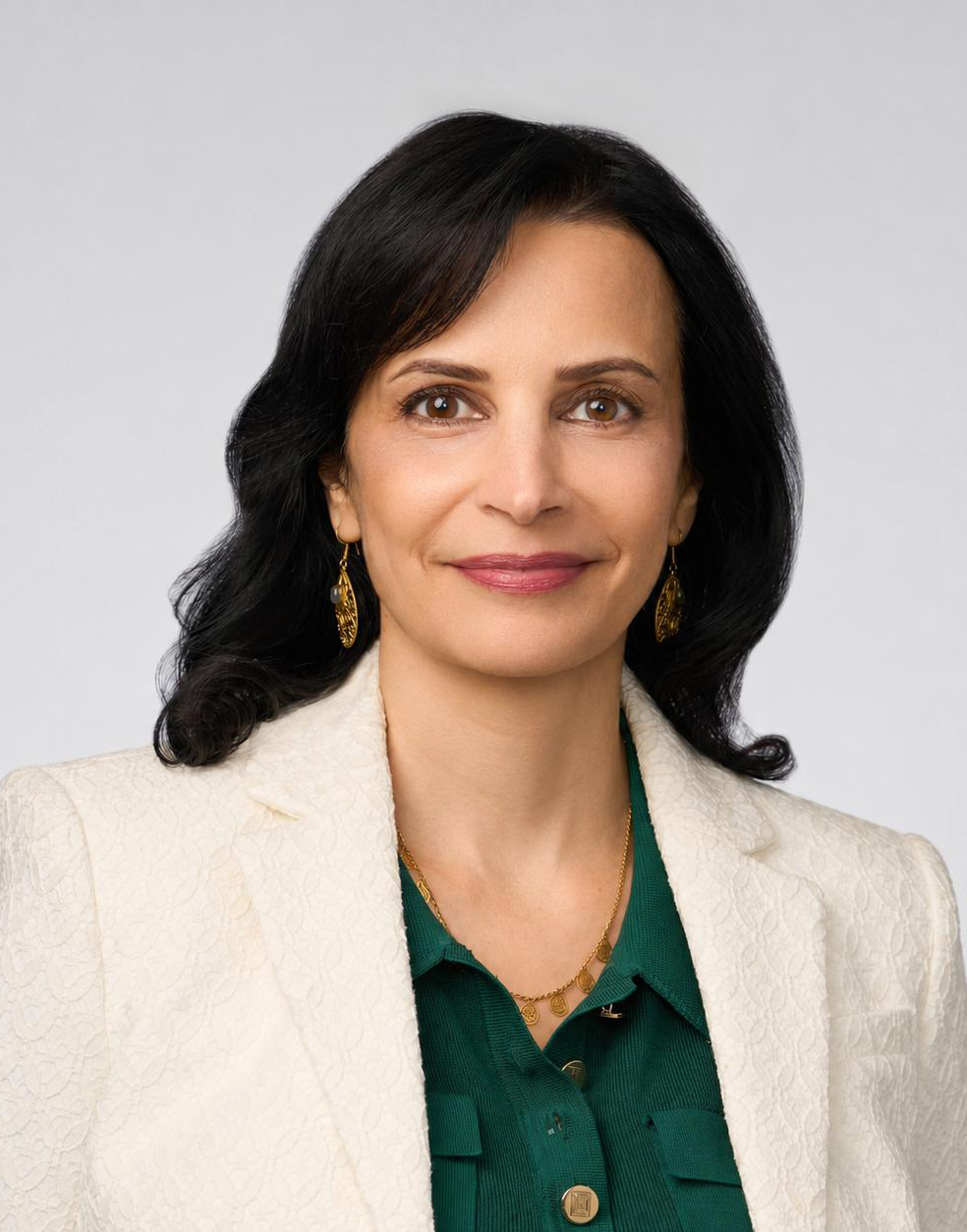
Zaha Hassan is a human rights lawyer and a senior fellow at the Carnegie Endowment for International Peace.
Carnegie does not take institutional positions on public policy issues; the views represented herein are those of the author(s) and do not necessarily reflect the views of Carnegie, its staff, or its trustees.

Despite public disputes over trade and immigration, the strategic partnership’s foundations remain sturdy.

Sameer Lalwani

It signals a new era of tech diffusion and warfare.

Steve Feldstein

Despite its flop at the box office, the film raises important questions for the climate community to answer.

Leonardo Martinez-Diaz
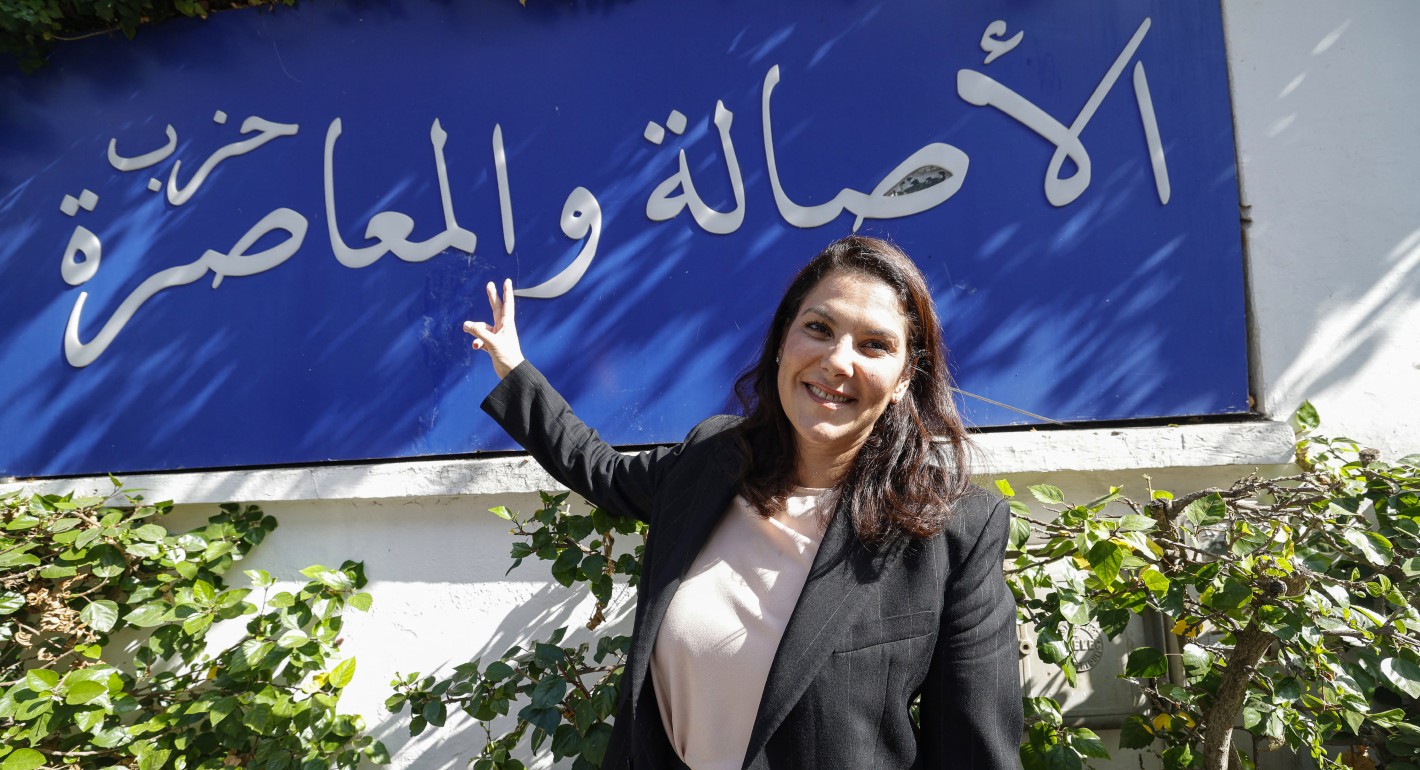
Fatima El Mansouri is the country’s first female prime minister. She’s also a privileged insider in a largely ceremonial position.

Sarah Yerkes

The acknowledgment has sparked fears of a new arms race with China and Russia.

Chris O’Meara