

Q&A
Andrew Leber, Lesley Anne Warner
{
  "authors": [
    "Lesley Anne Warner"
  ],
  "type": "commentary",
  "blog": "Emissary",
  "centerAffiliationAll": "dc",
  "centers": [
    "Carnegie Endowment for International Peace"
  ],
  "collections": [
    "Africa’s Shifting Politics and Geopolitics"
  ],
  "englishNewsletterAll": "africa",
  "nonEnglishNewsletterAll": "",
  "programAffiliation": "AFP",
  "programs": [
    "Africa"
  ],
  "projects": [],
  "regions": [
    "Southern, Eastern, and Western Africa"
  ],
  "topics": [
    "Economy",
    "Domestic Politics",
    "Foreign Policy",
    "Democracy"
  ]
}
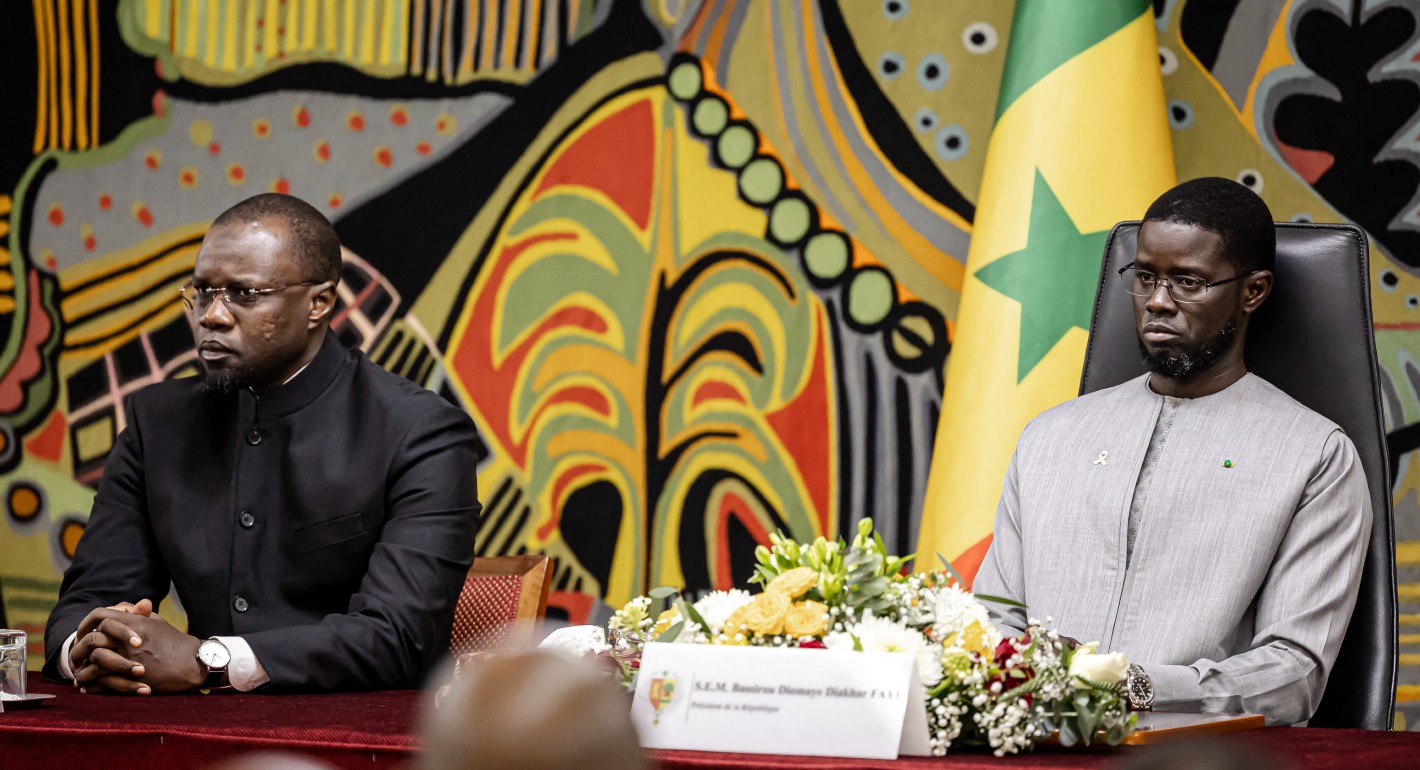
Sonko (left) and Faye attend at the Presidential Palace in Dakar in 2025. (Photo by Patrick Meinhardt/AFP via Getty Images)
The impacts of the Faye-Sonko rupture could go well beyond the country’s borders.
Last month, the relationship between Senegal’s president and prime minister—which began as a genuine political partnership—ruptured when President Bassirou Diomaye Faye dismissed his former ally, Prime Minister Ousmane Sonko, over their differing approaches to dealing with the country’s debt. The rupture has exposed deeper tensions between pragmatic governance and reformist, anti-establishment populism and has left the country with two openly competing centers of power at a critical moment.
As it unfolds, this rivalry is likely to produce a combination of policy stagnation and political volatility, whose effects threaten to ripple beyond Senegal’s borders. In that sense, Senegal has become a telling case study of what happens when a movement built in opposition confronts the constraints of power, with a president simultaneously negotiating with creditors while contending with a rival who commands both the legislature and the street.
Faye and Sonko ascended to power together following the 2024 presidential election to replace then president Macky Sall, under the Pastef (African Patriots of Senegal for Work, Ethics and Fraternity) Party. Sonko, Pastef’s populist leader with a strong political pedigree, had been barred from the presidential ballot by a criminal conviction that many viewed as politically motivated. As a result, Sonko threw his support behind Faye, with whom he had been imprisoned. Released days before the election after a wave of public protests, Faye went on to win the presidency in the first round, transforming from a relative unknown into head of state largely on Sonko’s strength. In turn, Faye appointed Sonko as his prime minister.
But their joint anti-establishment campaign quickly ran up against the realities of governing. Faye and Sonko, elected on a platform of economic sovereignty, had to navigate a debt burden that has pushed Senegal into crisis and drawn in the International Monetary Fund (IMF).
Senegal’s debt servicing costs are projected to rise by up to 12 percent this year, and the market is already pricing in the likelihood that the country will have difficulty making debt payments for the foreseeable future. The situation is exacerbated by last year’s revelation that the Sall administration had concealed approximately $7 billion in borrowing—the so-called hidden debt scandal—that has pushed Senegal’s debt-to-GDP ratio to as high as 132 percent.
Moody’s and S&P have cut Senegal’s sovereign rating, citing rising refinancing risks and the government’s slow progress toward securing a new IMF program. Against that backdrop, Faye and Sonko held divergent positions on negotiations with the IMF, with Sonko’s public opposition to debt restructuring increasingly at odds with Faye’s move toward direct engagement with the IMF.
That tension came to a head in May. Faye was acutely aware of the domestic political cost of appearing to capitulate to the IMF but agreed to personally oversee debt negotiations, with his government aiming for progress by the end of June. Sonko, by contrast, had publicly cast debt restructuring as a “disgrace,” opposed the finance minister’s proposal to raise fuel prices to avert a projected $2 billion subsidy shortfall, and pursued renegotiations of oil and gas contracts—all of which directly undermined investor confidence and threatened the stabilization agenda Faye was attempting to pursue.
Removing Sonko may have simplified the government’s negotiations with the IMF, but the reality is that any budget legislation and structural reforms that could accompany an IMF agreement would be required to go through a legislature—which is now controlled by Faye’s most powerful political adversary. Just days after his sacking, Sonko was elected president, or speaker, of the National Assembly, after his predecessor stepped down to make way for him. Running unopposed in a session boycotted by the opposition, Sonko received 132 votes—a result that confirmed his uncontested command of the 160-seat parliament, aided by Pastef’s 130-seat majority. In addition, an electoral code amendment passed by the National Assembly in April removed the legal barriers that had barred Sonko from the 2024 ballot. If signed by Faye, it would clear the path for Sonko—who has made no secret of his presidential ambitions—to run in 2029. If Faye refuses to sign the amendment, Sonko gains an additional grievance narrative atop an already formidable political platform against his former ally.
Meanwhile, Faye quickly moved to fill Sonko’s vacancy. On May 25, he appointed Ahmadou Al Aminou Lo, a former head of Senegal’s branch of the Central Bank of West African States and former minister secretary-general of the government, as prime minister, a choice that signals a clear pivot toward fiscal stabilization.
The implications of the Faye-Sonko split go well beyond Senegal’s borders. Senegal holds the Economic Community of West African States (ECOWAS) Commission presidency for 2026–2030. The bloc’s authority has been severely degraded by its repeated failure to mount a credible response to the wave of military takeovers in the Sahel, as well as the departure of junta-led governments in Mali, Burkina Faso, and Niger that formed the Alliance of Sahel States (AES) and exited ECOWAS in early 2025. Yet, despite these challenges, Senegal has functioned as one of the region’s most credible democratic anchors.
Now, the ideological fault line running through Senegalese domestic politics maps directly onto the broader fracture dividing West Africa. Sonko’s belief in economic sovereignty and rejection of IMF conditionality as neocolonial place him in closer ideological proximity to the AES juntas than to the establishment ECOWAS order, with which Faye is now effectively aligned. A government paralyzed by internal rivalry and compelled to implement austerity under duress—while its most popular political figure positions himself as the tribune of economic sovereignty—is poorly placed to sustain that role. In this sense, the regional contest between those two visions of African governance is being relitigated in real time inside Senegal’s own institutions.
Faye’s options for breaking the anticipated legislative deadlock are extremely limited. None have a sustainable upside, and all end in a victory lap for Sonko’s vanguard.
The first path would be to secure a legislative majority. Sonko’s June 1 announcement that Pastef would not participate in a new government confirms that the opposition to Faye is hardening and that it will not be possible for him to find an accommodation with the party. Sonko cemented that position on June 6 when he was elected party president at Pastef’s inaugural congress. Building an alternative governing coalition is theoretically possible but politically implausible: Even if Faye secured every non-Pastef opposition seat in parliament, he would still need dozens of defections from a bloc whose loyalty to Sonko was emphatically demonstrated during his election as speaker.
Alternatively, Faye could invoke emergency executive powers under Article 52 of the constitution to address the debt crisis and stabilize the economy. However, any decree he issues under Article 52 would be provisional and would automatically expire unless he submits it to the National Assembly for approval within fifteen days, at which point Sonko’s majority can rewrite or reject it.
Faye could also dissolve parliament under Article 87 of Senegal’s constitution. However, he cannot exercise this option until two years after the current National Assembly’s first session, which was held in December 2024, meaning his hands are tied until at least December 2026. In the six months until then, he would have to govern alongside a legislature controlled by Sonko, whose speakership is constitutionally protected and immune from presidential removal, and who can marshal the power of the streets at will. Moreover, an election that follows dissolution would pit Faye against Sonko in a proxy battle, which is likely to make the former a lame duck until 2029.
Senegal has little fiscal margin for the kind of political paralysis the Faye-Sonko rupture will produce. The likely contours of a deal with the IMF carry substantial political risk in a country where a generation has mobilized around Sonko’s vision of economic sovereignty. Yet these dynamics are not occurring in a vacuum, and they mirror those that have preceded youth-led social mobilization elsewhere on the continent: Kenya’s Gen Z protests over a finance bill in June 2024, Nigeria’s #EndBadGovernance movement in August 2024, Morocco’s protests over subsidy and tax reforms, and Madagascar’s September 2025 demonstrations that helped precipitate the collapse of the government.
Faye now faces the prospect of implementing the very policies that could ignite the same popular backlash that mobilized citizens in 2012 and 2024. Meanwhile, Sonko holds the ideological credibility and institutional platform to channel any popular discontent from the streets through the speakership and squarely at Faye. Drawing upon the country’s experience with civil society–led mobilization, Senegal’s youth and civic actors are well placed to push Faye to choose between governing through coercion and being forced to walk away from a mandate he can no longer realistically execute. For democracy-watchers, Senegal is now a real-time test of whether a government can manage political rivalry and debt restructuring without breaking the institutions that have underpinned its democratic reputation—in a regional and global environment in which incumbents and institutions that fail to deliver are testing the patience of those they govern.
Understand the world with the latest from our scholars around the world.

Visiting Scholar, Africa Program
Lesley Anne Warner is a visiting scholar with the Africa Program at the Carnegie Endowment for International Peace, and has over two decades of experience as a foreign policy expert at the intersection of political transitions, stabilization, and security cooperation.
Recent Work

Andrew Leber, Lesley Anne Warner
Carnegie does not take institutional positions on public policy issues; the views represented herein are those of the author(s) and do not necessarily reflect the views of Carnegie, its staff, or its trustees.

The Horn of Africa countries are among those facing a new security calculus.
Andrew Leber, Lesley Anne Warner
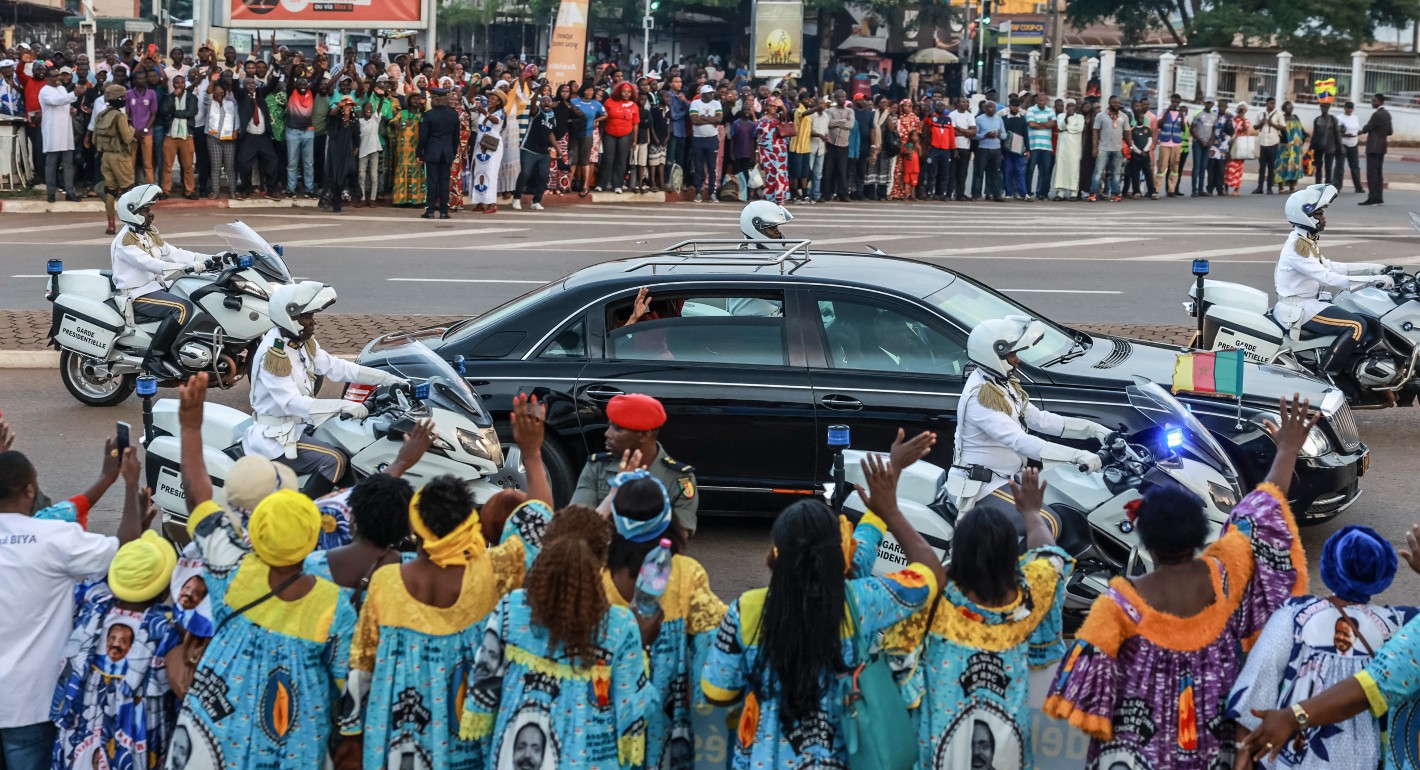
The ninety-three-year-old Biya’s absence and refusal to name a vice president threaten to upend domestic and regional stability.
Lesley Anne Warner

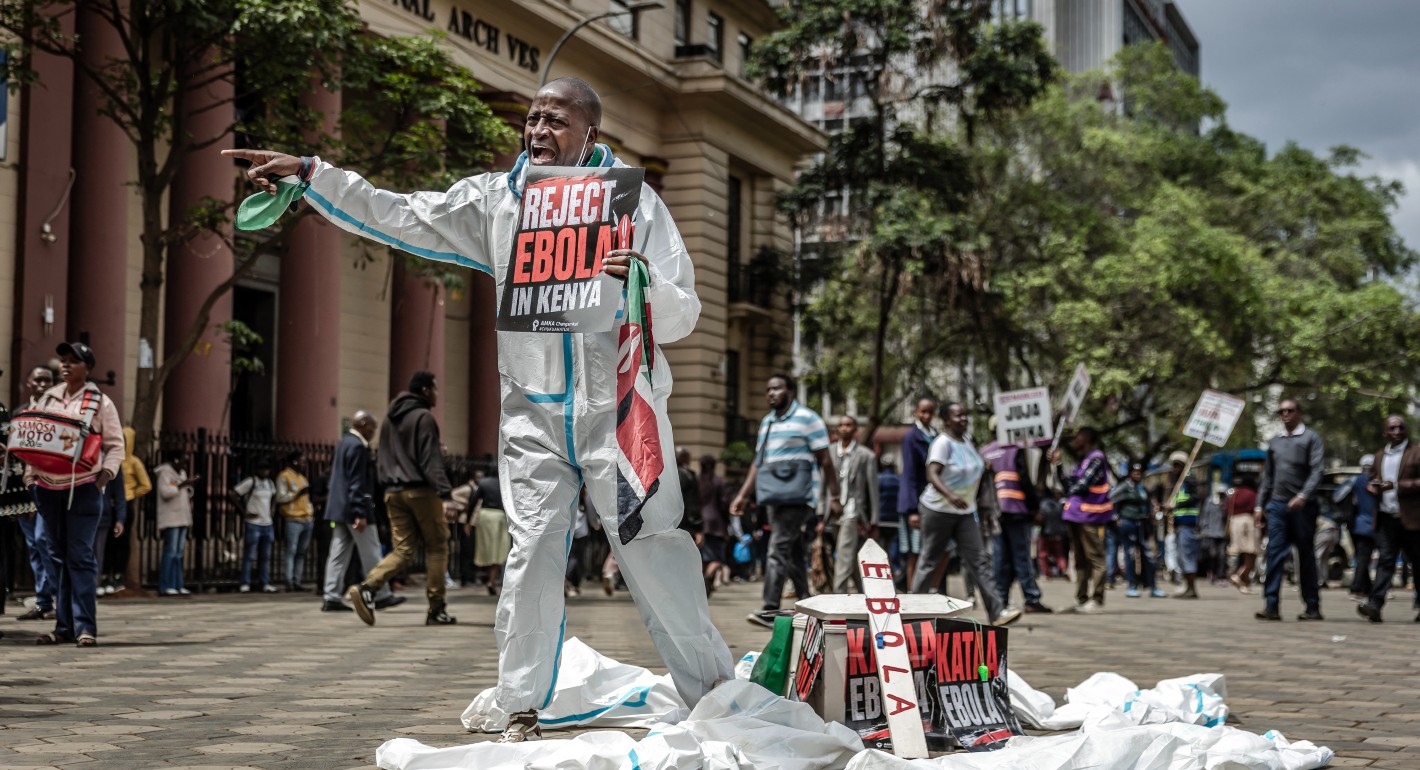
The conflict has sent economic and political shock waves through a country with no representation at the negotiating table—and Kenya is not alone.
Georgia Schaefer-Brown, Jane Munga
Washington’s transactional foreign policy is making it indistinguishable from Beijing’s, with consequential implications for African agency.
Jane Munga
African countries need to adapt to a new era of U.S. trade relations.
Kholofelo Kugler, Georgia Schaefer-Brown