

Commentary
One is hopeful. One is realistic. One is cautionary.
{
  "authors": [
    "Sam Worby",
    "Andrew Leber"
  ],
  "type": "commentary",
  "blog": "Emissary",
  "centerAffiliationAll": "dc",
  "centers": [
    "Carnegie Endowment for International Peace"
  ],
  "englishNewsletterAll": "menaTransitions",
  "nonEnglishNewsletterAll": "",
  "programAffiliation": "MEP",
  "programs": [
    "Middle East"
  ],
  "regions": [
    "Middle East",
    "Gulf",
    "Saudi Arabia",
    "United Arab Emirates",
    "Iran"
  ],
  "topics": [
    "Foreign Policy",
    "Security"
  ]
}
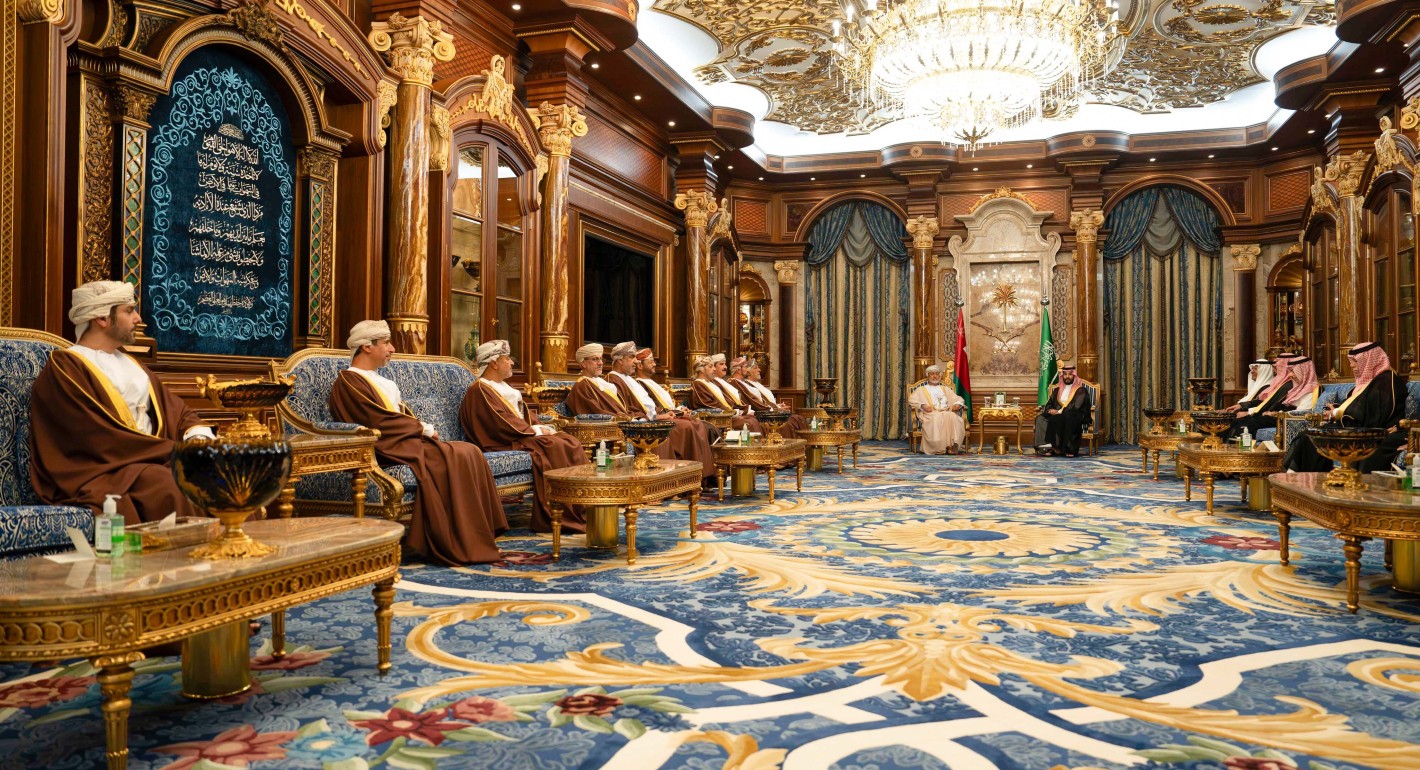
The leaders of Saudi Arabia and Oman meet in Jeddah on September 1, 2026. (Photo by Oman Ministry of Foreign Affairs/Anadolu via Getty Images)
The six GCC members’ unity would be a valued—if not essential—asset for negotiating an end to the simmering regional conflict.
In April, we outlined three scenarios for the Gulf Cooperation Council (GCC) states after the Iran war. Since then, each of the Gulf monarchies has wrestled with the limitations of its chosen strategy for navigating the conflict and its fallout. Neither asserting military capabilities, nor aggressively pursuing diplomacy, nor developing near-term Hormuz alternatives has created a long-term, viable new normal that ensures security for GCC residents and stability for ambitious economic agendas.
Perhaps counterintuitively, these setbacks increase the potential for greater GCC cooperation and cohesion in the conflict’s next stage. In April we predicted that intra-GCC tensions would likely prevent the bloc from undertaking major regional initiatives, such as joint air-defense coordination or a united diplomatic front. However, the resumption of conflict between the Houthis and Saudi Arabia seems to have generated new urgency for a proactive Gulf approach to regional security.
As expected, the GCC has largely failed to launch major cooperation initiatives since Washington and Tehran first agreed to a truce in April.
The Gulf states fell short on energy cooperation but have converged on their chosen workarounds for the still contested Strait of Hormuz. Saudi Arabia and the UAE—the region’s two largest economies—have concentrated on unilateral projects that expand each country’s existing pipelines. Saudi Aramco is also conducting ship-to-ship transfers, after they were successfully used by Abu Dhabi National Oil Company off the coast of Oman. QatarEnergy has done the same with its liquefied natural gas off the coast of the UAE. For getting critical supplies into the Gulf states, Saudi Arabia has followed the UAE in coordinating on logistics with Oman, while enhancing onward linkages to Bahrain, Kuwait, and Qatar.
On the security front, the GCC has upheld nominal commitments to blocwide security. At a Jeddah summit in April, Gulf leaders re-emphasized their joint missile-warning programs, which had been previously announced but are not yet operational. Subsequent summits of military officials and interior ministers, along with a joint exercise in July, speak to longstanding forms of GCC coordination.
Tellingly, though, deals on new drone and missile defense technology have proceeded through bilateral initiatives with the United Kingdom, Ukraine, and other states. Although individual states have continued to exercise purchasing rights to U.S. interceptors, pooling or surging Gulf-wide air-defense resources to targeted countries is not happening. Amid its struggles with Houthi drone and missile attacks, for example, Saudi Arabia has turned to Mecca Pact partners Türkiye and Pakistan for defensive support, augmented by new French and British deployments.
These divisions have likely been reinforced by the fact that the Gulf states have experienced the war quite differently based on their very geography. As Bloomberg economist Ziad Daoud pointed out, Gulf states with no access to the Red or Arabian Seas have experienced a sharp drop in oil revenues—or natural gas, in the case of Qatar. By contrast, Saudi shipments of crude across the East-West pipeline kept export revenue largely stable (at least prior to disruptions in the Red Sea), while the UAE and Oman boosted income from the previous year.
In our previous piece, we predicted a divergence in Gulf states’ overall foreign policies: how each approached U.S. interventionism, Iran’s response, and Israel’s regional role amid the ceasefire.
As we anticipated, the fault line between the UAE and Saudi Arabia has played a critical role in driving overall GCC alignment (or lack thereof). In the past six months, the UAE has continued to lean into its relationship with Israel and expressed frustration with other Gulf states that had taken a more conciliatory approach to the Iranian threat. This paid direct security dividends in the form of Israeli assistance on air defense, while securing the UAE access to more advanced U.S. microchips as an explicit reward for working closely with the United States amid the war.
One is hopeful. One is realistic. One is cautionary.
The Saudis, by contrast, offered only selective support for U.S. operations against Iran while seeking to keep a diplomatic channel open with Iran. This likely contributed to Saudi Arabia avoiding the worst of the Iranian onslaught in March and April, affirming a sense that the kingdom could replicate its (ultimately unsustainable) détente with Houthi forces. Simultaneously, the Saudis pursued enhanced ties outside the Gulf, eventually signing the Mecca Pact—an implicit biting of the thumb at the UAE and the Abraham Accords.
Both the UAE and Saudi Arabia have gradually been forced to revisit these strategies, however. Abu Dhabi opted to quietly reopen diplomatic channels with Tehran once Washington’s strategy seemed increasingly adrift and without a clear ending. The UAE also appears to be losing some faith in the value, or at least the versatility, of its Israel ties: It denied reports of secret meetings between the Israeli and UAE leaders during the war and condemned settler attacks on European diplomats visiting the West Bank, among other things.
Saudi Arabia’s emphasis on its diplomatic ties and strategic depth has come under strain as Houthi forces have joined the fray. Saudi airstrikes in Sanaa aimed at deterring Iran from opening a “second front” on the kingdom’s southern border ended up achieving the opposite. The fighting has already disrupted Saudi Arabia’s “new normal,” forcing the cancellation or postponement of high-profile events designed to tout the kingdom as a major economic hub. And while its Mecca Pact partners have sent defensive help, neither can act as a capable external partner coordinating on the ground in Yemen—something the Saudis have not had since they pushed the UAE out of Yemen late last year.
Likely as a result, Gulf states’ private sniping about one another’s approaches to the war has moved toward public consensus. While Saudi Arabia clashed with the UAE last winter over support for different factions of Yemen’s UN-recognized government and the UAE urged a more militant Saudi response to Iranian attacks, the two states have returned, for now, to emphasizing their “deep-rooted fraternal relations.” Perhaps more critically, unconfirmed reporting suggests the UAE has already renewed support for armed factions it backed before its falling out with Saudi Arabia last winter.
Taken together, Emirati conciliation toward Iran and Saudi confrontation of Houthi forces speak to a meaningful convergence of GCC members’ strategic thinking. With eased Omani-Emirati tensions, Qatar’s Emir Tamim emphasizing the need for greater GCC-wide cooperation, and Kuwait and Bahrain’s economic fortunes now highly dependent on said cooperation, the stage is set for a more aligned Gulf position in the next phase of the conflict.
The most important near- to medium-term indicator that greater cooperation is in the GCC’s future would be increased Emirati investment in countering the Houthis in Yemen. We could see Emirati involvement grow in coming months, supporting Riyadh’s commitment to shoring up the military capacity of the UN-recognized government—perhaps in exchange for Saudi flexibility on an autonomous South Yemen, aligned with Emirati interests, as preferable to an emboldened Houthi neighbor.
While Saudi-Emirati coordination would primarily aim to shift the military balance of power within Yemen, it would have greater follow-on effects in facilitating closer intra-GCC coordination on shared security goals, economic aims, and establishing a unified diplomatic front with respect to Iran. Even a temporary setting aside of the Saudi-Emirati rivalry could boost Gulf-wide initiatives.
Two buckets of broader cooperation follow directly from the Gulf monarchies’ frustrations over the past six months. A coordinated GCC framework on acquiring and developing air defenses against drone and missile attacks would help the bloc negotiate better deals with external partners. Iran is aware of the Gulf states’ air defense limitations and has endeavored to exploit them in this conflict. A more resilient regionwide approach—not to mention one that is less dependent on buying interceptors from the United States—would itself change Iran’s calculus when it comes to threatening the Gulf as a means to an end.
Gulf states remain unlikely to voluntarily share interceptor stocks with their neighbors, given global supply constraints and the continuing Iranian and Houthi threats. However, the GCC can devote longer-range planning to shared air defense resources—for example, partially shared or collaboratively funded in-region manufacturing capacity—rather than strictly independent defense production hubs.
The same is true for diversifying regional import and export routes away from the Strait of Hormuz. For example, as oil and gas routes from one Gulf state or another to the Mediterranean are opened, those routes could be shared. The same could be said for the Saudi and Emirati pipeline expansions, which Kuwait has already asked to utilize. Perhaps other states could even participate in funding for these expansions and other projects—or, more simply, pay fees for the right to other states’ pipelines in the event of another crisis.
Finally, greater intra-GCC unity would be a valued asset, if not a necessary condition, for these six states to negotiate an exit from the simmering not-war, not-peace situation that has prevailed since April. GCC-Iran talks remain a critical avenue to help ease the region out of a conflict that the primary belligerents seem increasingly unable to end with force and unwilling to end via diplomacy. In the absence of a more comprehensive U.S. and Iran-led agreement, the Gulf will need to act together in order to generate relief from the immense costs this war has imposed.
Understand the world with the latest from our scholars around the world.
Sam Worby
Managing Director, Global Repute
Sam Worby is the managing director of Global Repute, a geopolitical advisory firm focused on institutional partnerships in the Gulf and broader Middle East. His analytical work centers on U.S. policy toward Iran and the Gulf Cooperation Council.

Nonresident Scholar, Middle East Program
Andrew Leber is a nonresident scholar in the Carnegie Middle East Program.
Carnegie does not take institutional positions on public policy issues; the views represented herein are those of the author(s) and do not necessarily reflect the views of Carnegie, its staff, or its trustees.
Carnegie’s Middle East Program scholars reflect on the impasse and its potential impacts on the Middle East.


Nathan J. Brown, Alper Coşkun, Amr Hamzawy, …
Why Pakistan, Saudi Arabia, and Turkey are joining forces on regional security.
Alper Coşkun, Amr Hamzawy
Fatima El Mansouri is the country’s first female prime minister. She’s also a privileged insider in a largely ceremonial position.

Sarah Yerkes
The Horn of Africa countries are among those facing a new security calculus.

Andrew Leber, Lesley Anne Warner

The books, podcasts, and films that explain the world it made.
Andrew Leber