• Research
  • Emissary
  • About
  • Experts
Carnegie Global logoCarnegie lettermark logo
Democracy
  • Donate
What Should We Expect from India as a Strategic Partner?
Book

What Should We Expect from India as a Strategic Partner?

In his chapter, "What Should We Expect from India as a Strategic Partner?" Ashley J. Tellis analyzes the historical "sine wave" nature of the U.S.-India relationship and outlines the value and practical consequences of the transforming bilateral relationship.

Link Copied
By Ashley J. Tellis
Published on Mar 1, 2007

Additional Links

Chapter by Ashley J. Tellis (pdf)
Program mobile hero image

Program

Democracy, Conflict, and Governance

The Democracy, Conflict, and Governance Program is a leading source of independent policy research, writing, and outreach on global democracy, conflict, and governance. It analyzes and seeks to improve international efforts to reduce democratic backsliding, mitigate conflict and violence, overcome political polarization, promote gender equality, and advance pro-democratic uses of new technologies.

Learn More
Program mobile hero image

Program

South Asia

The South Asia Program informs policy debates relating to the region’s security, economy, and political development. From strategic competition in the Indo-Pacific to India’s internal dynamics and U.S. engagement with the region, the program offers in-depth, rigorous research and analysis on South Asia’s most critical challenges.

Learn More

Source: Strategic Studies Institute

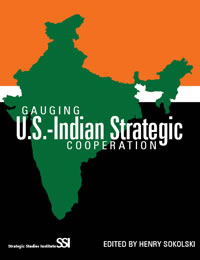
In his chapter, "What Should We Expect from India as a Strategic Partner?" in Henry Sokolski (ed.), Gauging U.S.-Indian Strategic Cooperation (Strategic Studies Institute, March 2007), Carnegie Senior Associate Ashley J. Tellis analyzes the historical "sine wave" nature of the U.S.-India relationship and outlines the value and practical consequences of the transforming bilateral relationship. Touching on various aspects of U.S.-Indian strategic collaboration, he argues that bilateral cooperation between Washington and New Delhi is "eminently possible" on many issues vital to U.S. interests in Asia and the world.

Please click on the link to the right to read the full text of his chapter.

Ashley J. Tellis
Former Senior Fellow
North AmericaUnited StatesSouth AsiaIndiaForeign PolicyNuclear Policy

Carnegie does not take institutional positions on public policy issues; the views represented herein are those of the author(s) and do not necessarily reflect the views of Carnegie, its staff, or its trustees.

More Work from Carnegie Endowment for International Peace

  • Commentary
    Carnegie Politika
    Is There Really a Threat From China and Russia in Greenland?

    The supposed threats from China and Russia pose far less of a danger to both Greenland and the Arctic than the prospect of an unscrupulous takeover of the island.

      Andrei Dagaev
  • Assessing the International Legality of Nuclear Threats
    Paper
    ‘All Options Are on the Table’: Assessing the International Legality of Nuclear Threats

    There is an urgent need to strengthen the relevant international legal frameworks if they are to protect against threats to use nuclear weapons.

      Anna Hood, Monique Cormier
  • Commentary
    Diwan
    All or Nothing in Gaza

    Implementing Phase 2 of Trump’s plan for the territory only makes sense if all in Phase 1 is implemented.
      Yezid Sayigh

  • Commentary
    Carnegie Politika
    Ukrainian Villages Are a Bigger Prize for Putin Than a Deal With Trump

    Western negotiators often believe territory is just a bargaining chip when it comes to peace in Ukraine, but Putin is obsessed with empire-building. 
      Andrey Pertsev
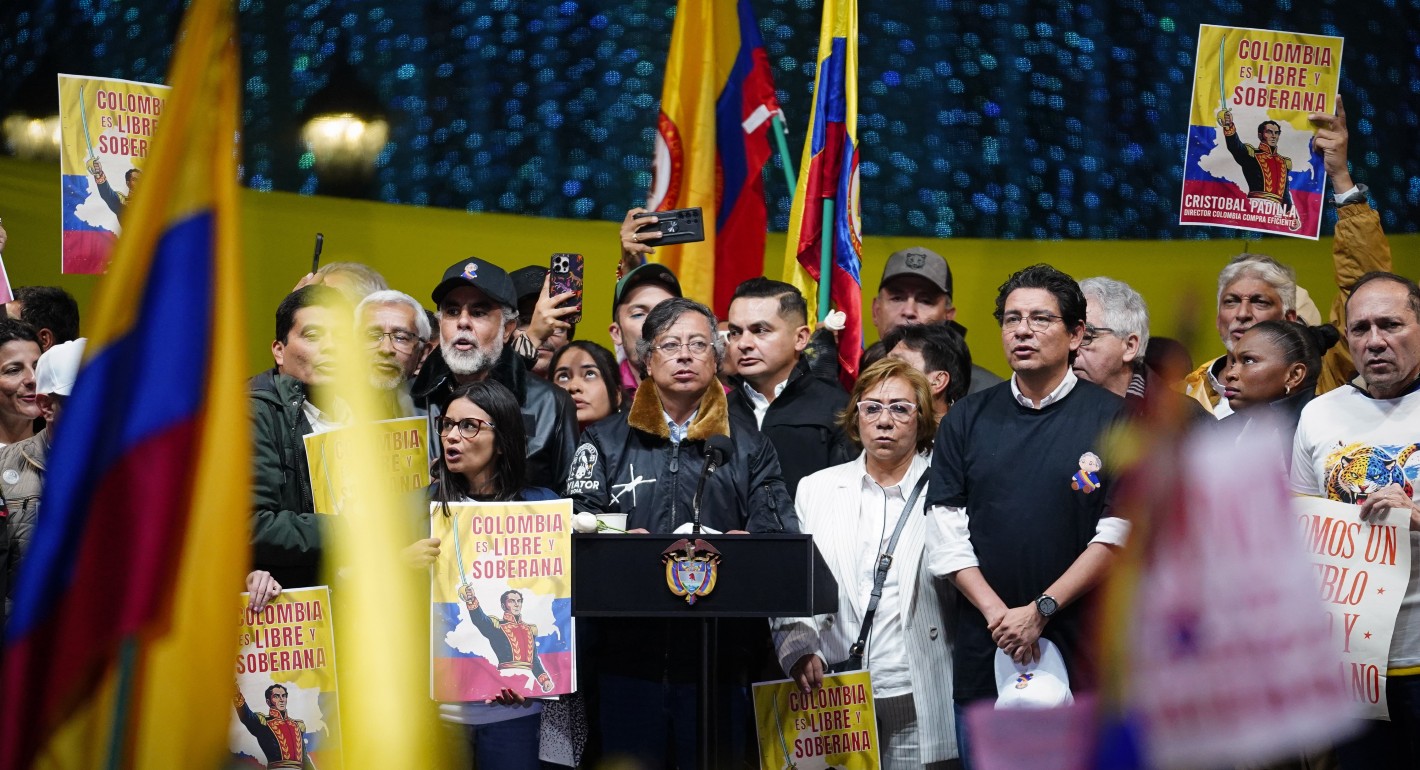
  • People on a stage
    Commentary
    Emissary
    The Dangerous Consequences of Treating Colombia Like Venezuela

    When democracies and autocracies are seen as interchangeable targets, the language of democracy becomes hollow, and the incentives for democratic governance erode.

      • Sarah Yerkes

      Sarah Yerkes, Amr Hamzawy

Get more news and analysis from
Carnegie Endowment for International Peace
Carnegie global logo, stacked
1779 Massachusetts Avenue NWWashington, DC, 20036-2103Phone: 202 483 7600Fax: 202 483 1840
  • Research
  • Emissary
  • About
  • Experts
  • Donate
  • Programs
  • Events
  • Blogs
  • Podcasts
  • Contact
  • Annual Reports
  • Careers
  • Privacy
  • For Media
  • Government Resources
Get more news and analysis from
Carnegie Endowment for International Peace
© 2026 Carnegie Endowment for International Peace. All rights reserved.