

Research
As states without nuclear weapons develop nuclear-powered submarines, can NWFZ regimes adapt to manage new technical, legal, procedural, and normative challenges?
Jamie Kwong, ed., Toby Dalton, ed., Celia McDowall, ed.

REQUIRED IMAGE
Brazil is betting on a “renaissance” of nuclear energy in the next few decades and, having large uranium mineral reserves, believes it could be an exporter of enrichment services in a growing market. The Brazilian program should not be considered a danger to proliferation, however, because it is under IAEA safeguards and monitored by Argentina-Brazil Agency for Accounting and Control.
The increasing number of countries that wish to enrich uranium raises nuclear proliferation concerns. To discourage that, a number of proposals have been made to increase assurances of supply in case of market disruptions for political reasons: GNEP by the United States and Putin’s proposal of an international enrichment center in Russia.
A characteristic common to most of these proposals is that they include a conditionality clause that requires participating newcomers in the nuclear energy arena to forego the development of uranium enrichment (and plutonium reprocessing technologies) in exchange for supply assurances.
For this reason, such proposals are seen by some developing countries as a strategy to maintain current suppliers’ monopolistic commercial positions (USEC, EURODIF/AREVA, URENCO and TENEX).
Foregoing uranium enrichment in order to obtain security of supply is not an acceptable option for a number of countries despite the fact that there is a worldwide overcapacity of enrichment of 10,000 seperative work units. There are two reasons for this:
i. Some countries, such as Australia, Canada and Brazil are betting on a strong “renaissance” of nuclear energy in the next few decades and, having large uranium mineral reserves, believe they could be exporters of enrichment services in a growing market. As an example, the head of the Brazilian Nuclear Energy Commission recently justified investments in enrichment by arguing that “Brazil has the sixth largest reserves of uranium (310,000 tons reserves and 800,000 tons resources) and one hopes it could be the second [largest] since only 30% of its territory has been prospected up to 100 meters of depth bellow the surface. Eventually Brazil could export yellow cake.”
ii. In several instances in the past, supply of nuclear fuel was interrupted (to Brazil, in 1974 and to Iran, in 1979) strengthening the decisions of these countries to develop enriching facilities for national security reasons independently of economic considerations. Indigenous uranium enrichment begins to make economic sense only if a country possesses at least 10 gigawatts of installed nuclear capacity (10 large nuclear reactors). However, countries may want to keep enrichment capabilities as a “safety net” against politically motivated threats of fuel supply interruptions.
An alternative to the proposals of the United States and Russia is a nuclear “fuel bank” – where the IAEA would maintain and administer a nuclear fuel of low enriched uranium reserve. Countries in good standing with the Agency could withdraw fuel as a last resort in the face of interruptions of supply to avoid being subjected to unilateral political pressures.
A fuel reserve under the IAEA could assure a back-up supply for power reactors throughout the world on a non-discriminatory, non-political basis reducing the need for countries to develop their own uranium enrichment technologies.
The Brazilian program should not be considered a danger to proliferation, because it is under IAEA safeguards and, in addition, under the inspection system of ABACC (Argentina-Brazil Agency for Accounting and Control), which introduced the “neighbor controlling neighbor” approach. In my view, if an IAEA fuel bank is created, the small Brazilian enrichment facilities are likely to remain so, avoiding the need for huge investments in a larger enrichment plant. Under normal conditions – which are the ones prevailing today – Brazil imports nuclear fuel from URENCO, while keeping its enrichment plant as a “reserve” – which could be expanded if the need arises. This is a “dual approach” to enrichment, which satisfies national pride and offers a supply guarantee at small expense while commercial imports of nuclear fuel go on. From this perspective, Brazil is not setting a bad example by enriching uranium. The implementation of an IAEA “fuel bank” will offer additional guarantees and discourage the need to expand nuclear enrichment in Brazil and beyond.
Carnegie does not take institutional positions on public policy issues; the views represented herein are those of the author(s) and do not necessarily reflect the views of Carnegie, its staff, or its trustees.
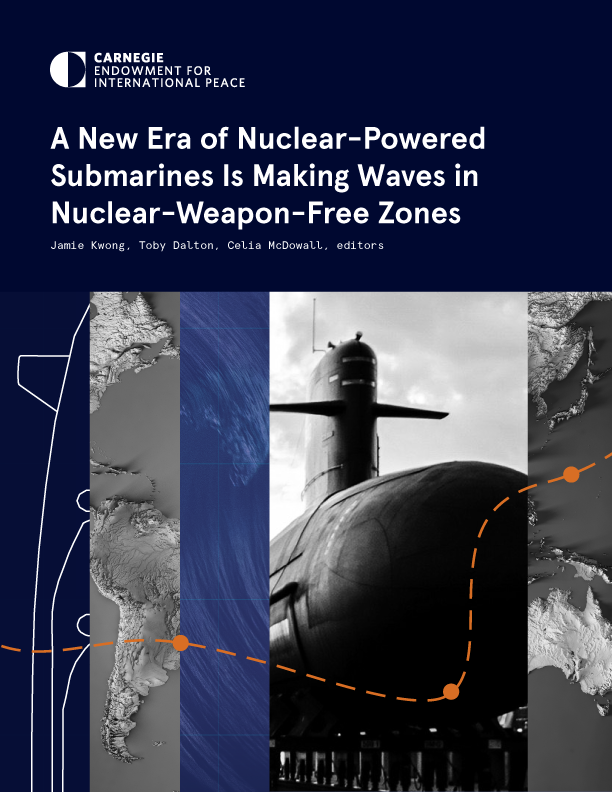
As states without nuclear weapons develop nuclear-powered submarines, can NWFZ regimes adapt to manage new technical, legal, procedural, and normative challenges?


Jamie Kwong, ed., Toby Dalton, ed., Celia McDowall, ed.
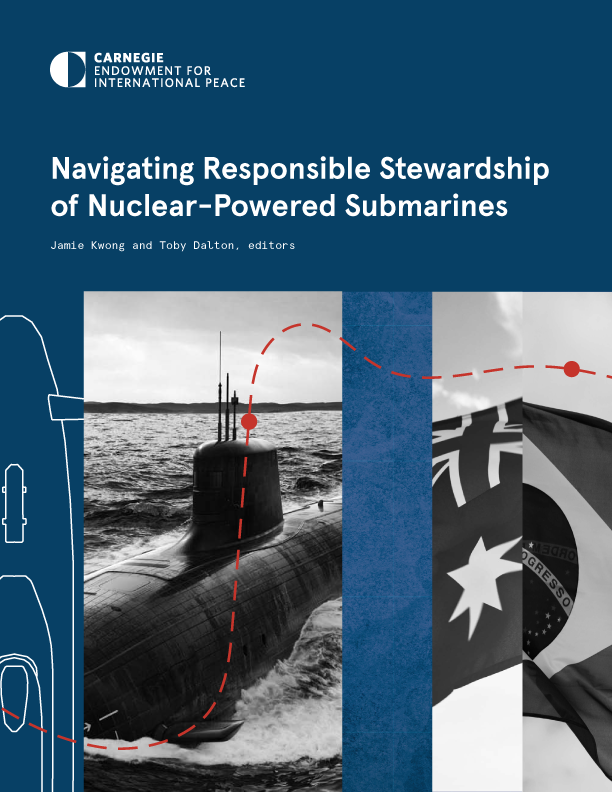
As the first states without nuclear weapons set to acquire nuclear-powered attack submarines, Australia and Brazil face new questions and challenges as they seek to responsibly manage the risks of naval nuclear propulsion.
Jamie Kwong, ed., Toby Dalton, ed.
There is an urgent need to strengthen the relevant international legal frameworks if they are to protect against threats to use nuclear weapons.
Anna Hood, Monique Cormier
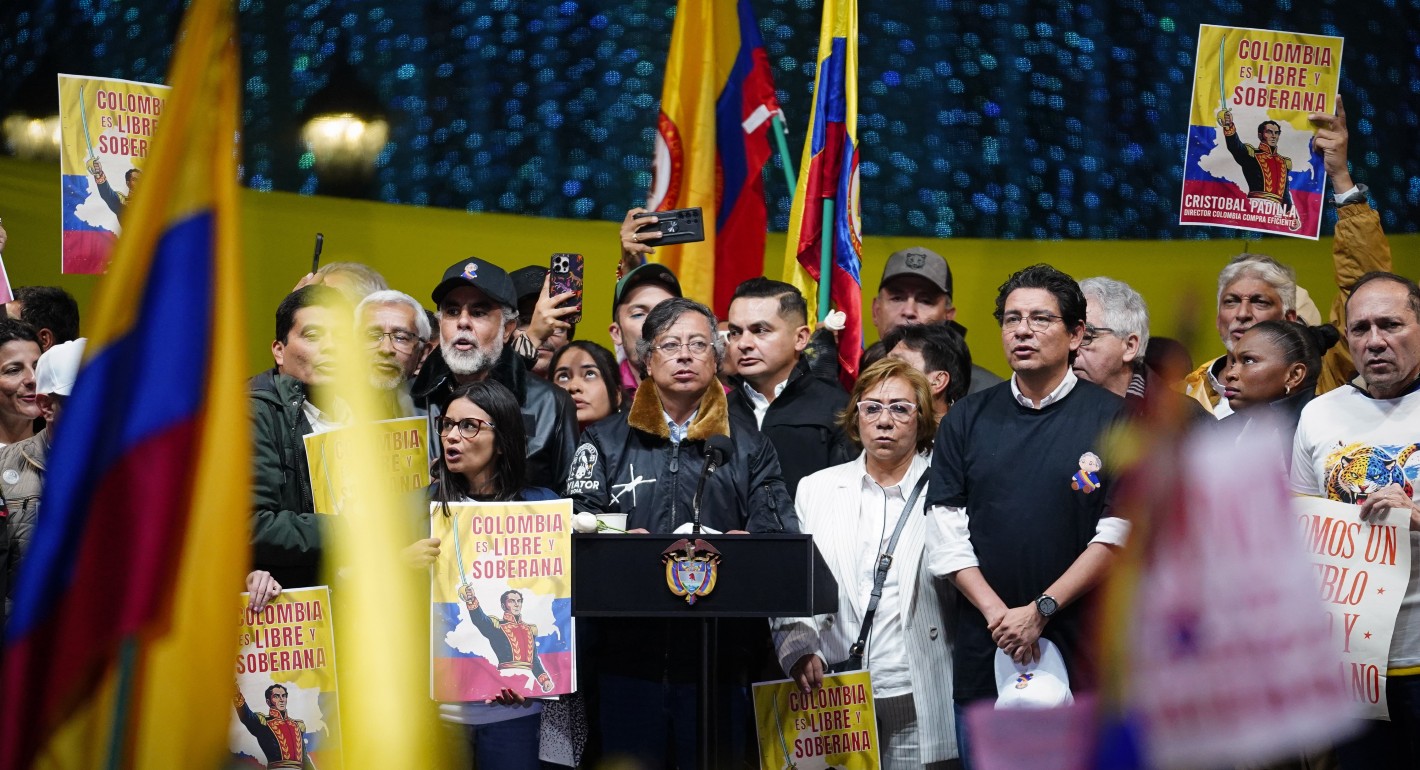
When democracies and autocracies are seen as interchangeable targets, the language of democracy becomes hollow, and the incentives for democratic governance erode.

Sarah Yerkes, Amr Hamzawy
The Kremlin will only be prepared to negotiate strategic arms limitations if it is confident it can secure significant concessions from the United States. Otherwise, meaningful dialogue is unlikely, and the international system of strategic stability will continue to teeter on the brink of total collapse.

Maxim Starchak