
• Research
  • Emissary
  • About
  • Experts
Carnegie Global logoCarnegie lettermark logo
Democracy
  • Donate
{
  "authors": [
    "Ahmed Ali"
  ],
  "type": "commentary",
  "blog": "Sada",
  "centerAffiliationAll": "",
  "centers": [
    "Carnegie Endowment for International Peace"
  ],
  "collections": [],
  "englishNewsletterAll": "",
  "nonEnglishNewsletterAll": "",
  "primaryCenter": "Carnegie Endowment for International Peace",
  "programAffiliation": "",
  "programs": [],
  "projects": [],
  "regions": [],
  "topics": []
}

Attribution logo
Commentary
Sada

Patriotic Union of Kurdistan: Revival or Mere Survival?

Intra-Kurdish politics will be particularly intense in the March 7 Iraqi parliamentary elections. The results will show whether the longstanding KDP-PUK balance is still relevant or Gorran is here to stay as a political force.

Link Copied
By Ahmed Ali
Published on Feb 24, 2010
Sada

Blog

Sada

Sada is an online journal rooted in Carnegie’s Middle East Program that seeks to foster and enrich debate about key political, economic, and social issues in the Arab world and provides a venue for new and established voices to deliver reflective analysis on these issues.

Learn More

While all Iraqi political factions are competing strongly in lead up to the March 7 parliamentary elections, in Iraqi Kurdistan the internal competition is especially intense. In particular, the Patriotic Union of Kurdistan (PUK, the more secular and less tribal of the two major Iraqi Kurdish political parties) stands to lose or regain much. The PUK suffered major losses in the July 2009 provincial elections in its main powerbase of Suleimaniyah at the hands of the newly-formed Gorran (Change) list. This has created the perception that the PUK has become a junior partner to the Kurdish Democratic Party (KDP) in the power-sharing arrangement between the two major factions in the Kurdistan Regional Government (KRG). Among the many important implications of the upcoming elections will be a signal as to whether the PUK can bounce back or Gorran is here to stay as a new force in Iraqi politics. 

KDP-PUK Relations
For now, the KDP seems to be sticking to its 2005 agreement to share power equitably with the PUK. The agreement dictates the rotation of senior positions (i.e. president, prime minister, and speaker of parliament) between the two parties. The KDP is behaving this way because it would prefer for the PUK to win back support from Gorran, which has been highly critical of the KDP as well as the PUK. There are also past animosities between Gorran leader Nosherwan Mustafa and KDP leader (and President of Iraqi Kurdistan) Masoud Barzani.
The KDP has shown more subtly that it feels it has the upper hand with the PUK, however, via a series of appointments. For example, in the discussions leading up to the formation of a new KRG, there were rumors that Prime Minister Barham Salih (PUK) would not reappoint incumbent Minister of Natural Resources Ashti Hawrami, given his reported ties to controversial oil deals. But Hawrami, who is considered close to KDP leaders, retained his position despite a public outcry. The reappointment signified a blow to Salih’s efforts to implement the PUK electoral slogan, “Renewal and Reform.” The KDP is reportedly resistant to reappointing PUK Deputy Leader Kosrat Rasul Ali to the vice presidency of Iraqi Kurdistan.
The KDP also is flexing its muscles regarding appointments to the Iraqi central government. The deputy prime minister position recently vacated by Salih, for example, has typically gone to the PUK, but this time it went to Barzani’s Baghdad-based representative, Rozh Nouri Shawes. 
Ongoing PUK-Gorran tensions
The fact that Gorran won 25 percent of Iraqi Kurdistan parliament seats was a wake-up call for the PUK.  The group took steps to regain voters’ trust in Suleimaniyah and to reenergize its political base, including a decision to expel Gorran members and to establish an internal integrity commission. PUK leader Jalal Talabani was the first to disclose his assets. Steps by the KRG, including the unprecedented disclosure of the budget and the announcement that 10,000 new KRG jobs will be created, also have helped the PUK.    
Gorran says there is a less attractive side to the competition: continuous harassment and attacks on its members in PUK-controlled territory. Gorran alleges that the office of a one of its parliamentarians in the town of Koya was burned down, that salaries of teachers suspected of ties to Gorran have been reduced, and that security officers and peshmerga fighters sympathetic to Gorran have been punished. 
Tensions mounted in January 2010 when Talabani strongly criticized Nosherwan Mustafa during the PUK plenum, drawing a strong response from Mustafa in his newspaper Rozhnama. The media war only stopped when President Barzani intervened, saying that “we will never allow for the Kurds’ blood to be shed by their Kurdish brothers again,” a reference to the KDP-PUK civil war of the 1990s.            
Kurdish Parties in the Upcoming Elections
The KDP is likely to do better than the PUK in the March 7 elections, which will strengthen its position as the senior partner in the KDP-PUK partnership. The PUK will face stiff competition from Gorran not only in Suleimaniyah but in Kirkuk, where Gorran has been establishing a presence (and where the PUK is now concentrating resources). In addition to Gorran, competition from the northern-based Islamist parties will produce a more diverse Kurdish representation in Baghdad. Once the national elections are over, all the parties will begin to regroup for the Iraqi Kurdistan provincial elections scheduled for October 2010. 
The parliamentary seat allocation has guaranteed the Iraqi Kurdish parties at least 43 future members of parliament (out of a total of 325), which will make them sought-after government partners by either Prime Minister Nouri al-Maliki’s State of Law alliance or its competitor, the Iraqi National Alliance. Either way, Iraqi Kurdish parties will lend their support only if they receive guarantees on the issues of oil revenue, effective power-sharing mechanisms, Kirkuk, and the status of the peshmerga. Whatever the electoral results among Kurdish parties, they will likely continue to speak with one voice on Kirkuk or other disputed internal boundaries. Although the three parties’ positions on these issues differ a bit--Gorran has a more hard-line stance than the other two--no Kurdish party wants to be the one that surrendered an inch of  “Kurdistani” land. 
Ahmed Ali is a researcher at the Washington Institute for Near East Policy focusing on the political dynamics of Iraq.  
Ahmed Ali

Carnegie does not take institutional positions on public policy issues; the views represented herein are those of the author(s) and do not necessarily reflect the views of Carnegie, its staff, or its trustees.
More Work from Sada

  • Commentary
    Sada
    Sub-Saharan African Migrants in Morocco: Security Concerns and the Test of Human Rights

    Is Morocco’s migration policy protecting Sub-Saharan African migrants or managing them for political and security ends? This article unpacks the gaps, the risks, and the paths toward real rights-based integration.

      Sofiane Al-Kamri
  • Commentary
    Sada
    A House Divided: How Internal Power Struggles Shape Iraq’s Foreign Policy

    Iraq’s foreign policy is being shaped by its own internal battles—fractured elites, competing militias, and a state struggling to speak with one voice. The article asks: How do these divisions affect Iraq’s ability to balance between the U.S. and Iran? Can Baghdad use its “good neighbor” approach to reduce regional tensions? And what will it take for Iraq to turn regional investments into real stability at home? It explores potential solutions, including strengthening state institutions, curbing rogue militias, improving governance, and using regional partnerships to address core economic and security weaknesses so Iraq can finally build a unified and sustainable foreign policy.

      Mike Fleet
  • Commentary
    Sada
    The Role of E-commerce in Empowering Women in Saudi Arabia: Assessing the Policy Potential

    How can Saudi Arabia turn its booming e-commerce sector into a real engine of economic empowerment for women amid persistent gaps in capital access, digital training, and workplace inclusion? This piece explores the policy fixes, from data-center integration to gender-responsive regulation, that could unlock women’s full potential in the kingdom’s digital economy.

      Hannan Hussain
  • Commentary
    Sada
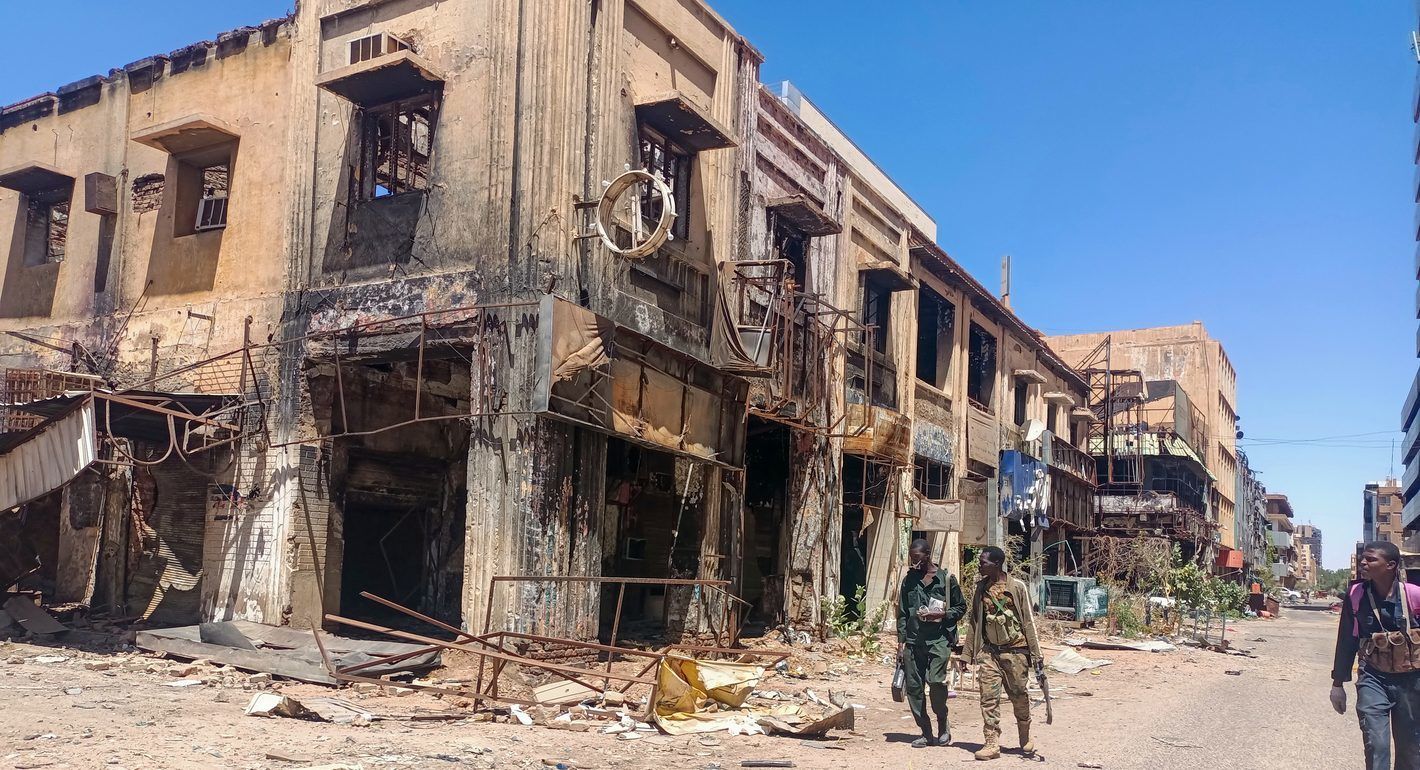
    A War Fueled by Hate Speech: Sudan’s Fall into Fragmentation

    Hate speech has spread across Sudan and become a key factor in worsening the war between the army and the Rapid Support Forces. The article provides expert analysis and historical background to show how hateful rhetoric has fueled violence, justified atrocities, and weakened national unity, while also suggesting ways to counter it through justice, education, and promoting a culture of peace.

      Samar Sulaiman
  • Commentary
    Sada
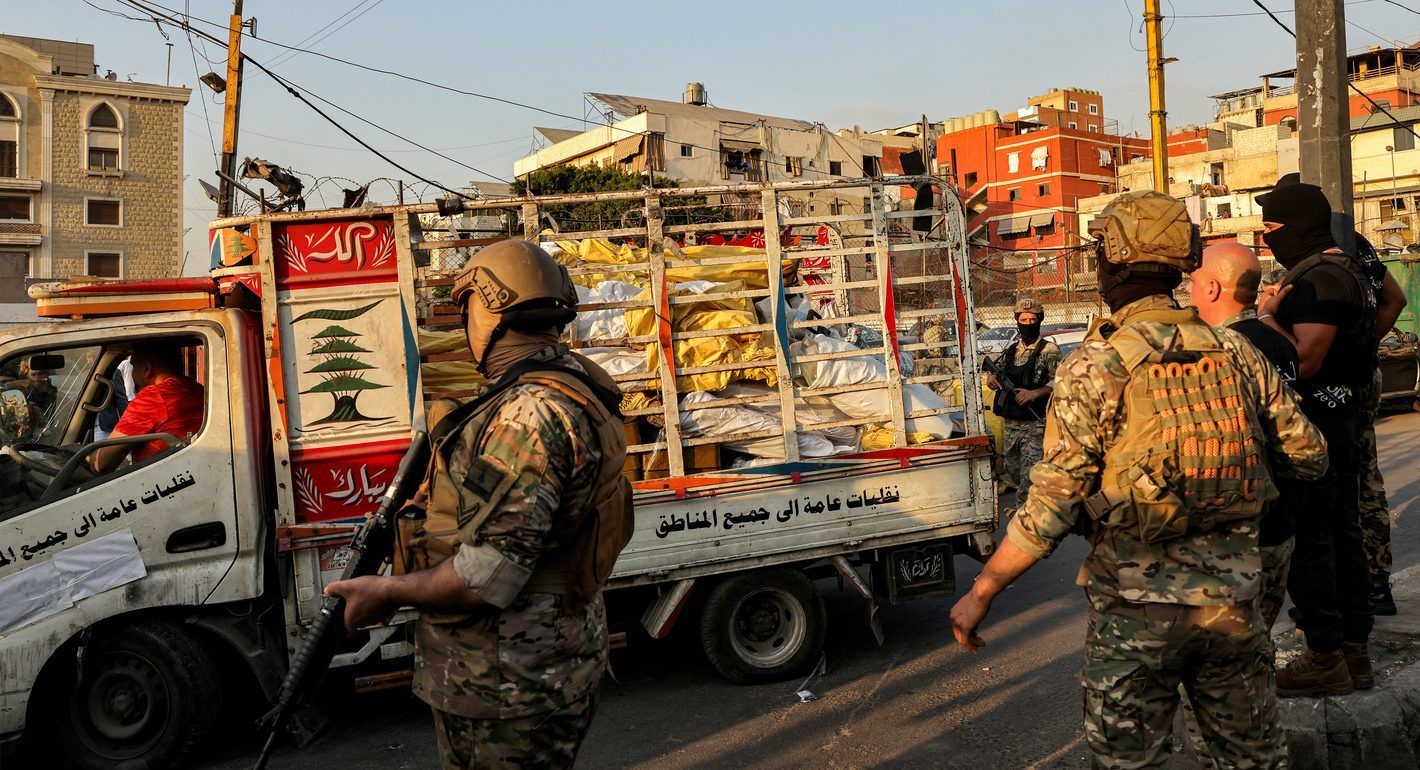
    Disarming Palestinian Factions in Lebanon: Can a Security Experiment Evolve into Sovereign Policy?

    The August 2025 government decision to restrict weapons to the Lebanese state, starting with Palestinian arms in the camps, marked a major test of Lebanon’s ability to turn a long-standing slogan into practical policy. Yet the experiment quickly exposed political hesitation, social gaps, and factional divisions, raising the question of whether it can become a model for addressing more sensitive files such as Hezbollah’s weapons.

      Souhayb Jawhar

Get more news and analysis from
Carnegie Endowment for International Peace
Carnegie global logo, stacked
1779 Massachusetts Avenue NWWashington, DC, 20036-2103Phone: 202 483 7600Fax: 202 483 1840
  • Research
  • Emissary
  • About
  • Experts
  • Donate
  • Programs
  • Events
  • Blogs
  • Podcasts
  • Contact
  • Annual Reports
  • Careers
  • Privacy
  • For Media
  • Government Resources
Get more news and analysis from
Carnegie Endowment for International Peace
© 2026 Carnegie Endowment for International Peace. All rights reserved.