

Commentary
Maria Lipman
{
  "authors": [
    "Maria Lipman"
  ],
  "type": "legacyinthemedia",
  "centerAffiliationAll": "",
  "centers": [
    "Carnegie Endowment for International Peace",
    "Carnegie Russia Eurasia Center"
  ],
  "collections": [],
  "englishNewsletterAll": "",
  "nonEnglishNewsletterAll": "",
  "primaryCenter": "Carnegie Russia Eurasia Center",
  "programAffiliation": "",
  "programs": [],
  "projects": [],
  "regions": [
    "Caucasus",
    "Russia"
  ],
  "topics": [
    "Political Reform",
    "Democracy",
    "Foreign Policy"
  ]
}
Source: Getty
With Vladimir Putin's announcement this week that he would head the pro-Kremlin United Russia party in December's parliamentary elections, Russia's new power configuration began to take shape. Ultimately, it will mean the extension of Putin's authority and a triumph of manipulative politics. But as they have demonstrated, the Russian people won't mind.
Source: The Washington Post

The dynamic Putin has created, ensuring himself nearly absolute power, has one important flaw of his own making: Because his authority is much greater than what is spelled out formally in the constitution, and it his alone, there is no way for Putin to transfer his power after, as the constitution requires, he steps down when his second term ends. This is why Putin has to thoroughly control the transition -- lest Russia itself becomes unmanageable.
The stakes could not be higher: During his presidency Putin has overseen a major redistribution of property. His primary goal is to secure that redistribution and ensure security for himself. Putin, the only real arbiter of the feuding groups among Russia's elite, is also the only possible safeguard against a new redistribution that would threaten Russia's stability.
Since he seems determined to abide by the constitution and leave office, he needs to figure out a way to nevertheless retain power -- whether as prime minister, as he recently hinted, or in some other position. Putin will also have to ensure that whoever occupies the president's office will not encroach upon his authority.
The Russian public will be happy to see Putin remain in charge, whatever the office. Those who may be not pleased are in the minority, and most of them will comply with the government's actions without public objection. In Russia, the head of state is traditionally regarded as being separate and above the government, not as the nation's top executive but as the embodiment of Russian statehood. There was a failed attempt in the 1990s to break with this tradition, but Putin has pushed Russia back to the paternalistic pattern. Under his guidance, common living standards have significantly improved, and Russia has reasserted itself on the world scene. As a result, Putin's approval ratings hold steady at 80 percent. In a national poll by the Russian agency Levada Center this year, more than a third of Russians said that they'd want Putin to be president for life.
And why would they want him to leave? Certainly not because of some charter framed under Putin's predecessor, Boris Yeltsin, whom most Russians remember with disdain. Russia does not have a history of the rule of law. Our folklore abounds in maxims such as "where court is, there's no truth." Many among the country's elite are no more concerned about adherence to the constitution than is the public at large. Indeed, various political groups and figures have begged Putin to stay for a third term.
Putin would not respond to the beseeching and do what several leaders of former Soviet republics have done: simply eliminate the constitutional hurdles and stay on as president. Although the judicial branch has been repeatedly bent to the will of the executive during his tenure, Putin has been strangely particular about the letter of the law. In today's Russia, politics may be deinstitutionalized, so that officeholders and institutions are pawns in a game of Putin's design; federalism may be undermined; political freedoms and civil liberties compromised. But while ultimately destroying the spirit of democracy, the Kremlin avoids direct violations and resorts to sophisticated schemes.
This simultaneous concern for appearance and contempt for substance is a pattern deeply rooted in Soviet history. Government propaganda was one of the pillars of the totalitarian system, and the gap between words and substance grew wider until the two had nothing in common. The regime's words -- the rhetoric of its Communist officials, its press, its political slogans and schoolbooks -- were radically at odds with real life. The Russian people grew used to this doublethink and doublespeak, so it's little wonder that today there is nothing more sacred about the current constitution than there was about any of the three charters adopted during Soviet times.
Putin and some of his aides are highly skilled in producing a government with the trappings of democracy and none of its substantial elements, such as public participation, the separation of powers, political competition or accountability. The formal decorum comes in handy when Putin needs to insist, usually to Western audiences, that Russia is a democracy. He appears anxious to fit in among the democratic leaders of the West and to distance himself from the Central Asian autocrats who have carved out lifelong presidencies.
Western leaders and critics may remain unconvinced, but by sticking to the letter of the law, Putin deprives the West of an easy argument: that Russia's regime is not democratic. As to the more complex argument, Putin's response is: Our democracy may be imperfect, but so is yours. It is not clear whether he truly believes that Western democracy is nothing but disguise and manipulation, but Putin never misses an opportunity to say it is, and the Russian people increasingly share this view.
Masha Lipman, editor of the Carnegie Moscow Center's Pro et Contra journal, writes a monthly column for The Post.
Find the link to the original article here.
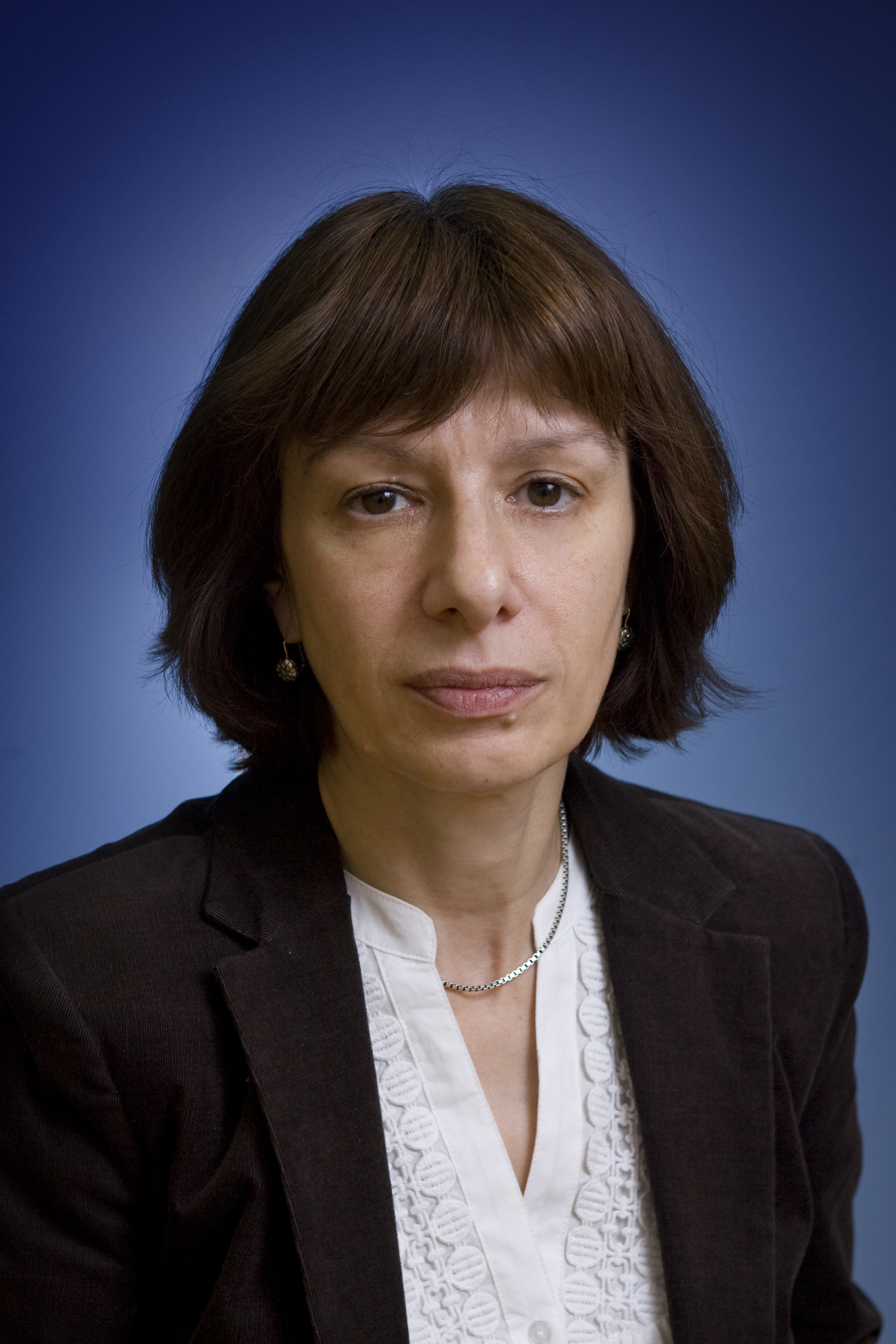
Former Scholar in Residence, Society and Regions Program, Editor in Chief, Pro et Contra, Moscow Center
Lipman was the editor in chief of the Pro et Contra journal, published by the Carnegie Moscow Center. She was also the expert of the Carnegie Moscow Center’s Society and Regions Program.
Recent Work
Maria Lipman
Maria Lipman
Carnegie does not take institutional positions on public policy issues; the views represented herein are those of the author(s) and do not necessarily reflect the views of Carnegie, its staff, or its trustees.
The EU is putting together a new security strategy to meet today’s myriad challenges. But for any proposal to be effective, the union needs to grapple with its identity and ambitions.

Pierre Vimont
Three years after the Ohrid Agreement, Kosovo and Serbia remain far from normalization. To revive implementation, the EU should abandon its ambiguity and act as an even-handed arbitrator.

Miloš Pavković, Fitim Gashi, Iliriana Gjoni, …

The EU’s new migration policy is not suited to today’s realities. With climate change increasingly becoming a driver of displacement, Europe needs to rethink its deterrence-focused approach.

Shana Tabak
The battle over free speech has taken center stage since U.S. Vice President JD Vance accused Europe of censorship. From travel bans to social media regulation, especially around the Israel-Palestine conflict, are liberal democratic governments weaponizing free speech?

Rym Momtaz, ed.
Europe seems to have accepted its sidelining in the Middle East. The EU must reassert its support for the international rules-based order and step up engagement.
Rym Momtaz