

Q&A
Matt Ferchen
{
  "authors": [
    "Matt Ferchen"
  ],
  "type": "legacyinthemedia",
  "centerAffiliationAll": "",
  "centers": [
    "Carnegie Endowment for International Peace",
    "Carnegie China"
  ],
  "collections": [
    "China and the Developing World",
    "China’s Foreign Relations"
  ],
  "englishNewsletterAll": "",
  "nonEnglishNewsletterAll": "",
  "primaryCenter": "Carnegie China",
  "programAffiliation": "",
  "programs": [],
  "projects": [
    "Carnegie Oil Initiative"
  ],
  "regions": [
    "North America",
    "South America",
    "East Asia",
    "China"
  ],
  "topics": [
    "Economy",
    "Climate Change",
    "Foreign Policy"
  ]
}
Source: Getty
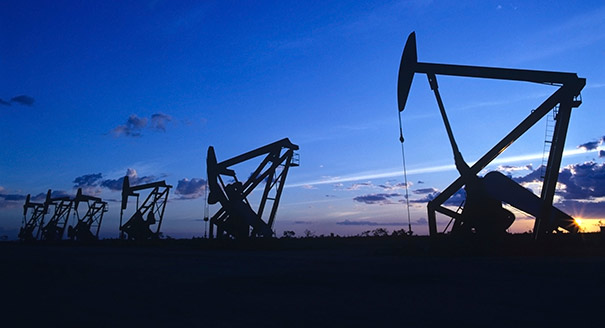
China continues to view Venezuela as a key source of oil, but Beijing has also been strengthening its private and public energy partnerships with other Latin American countries.
Source: Inter-American Dialogue
Inter-American Dialogue: Chinese Premier Li Keqiang in late May made a four-nation tour of Latin America where a number of energy-sector deals were announced, including at least $7 billion in financing for Brazil’s struggling oil company, Petrobras, as well as an announcement that China’s BYD Co. will build a solar-panel factory in Brazil. How is China’s energy engagement with Latin America evolving? Is the Asian giant beginning to orient more toward Pacific Alliance countries and away from Argentina, Ecuador and Venezuela, which have been the focus of most regional Chinese lending until now?
Matt Ferchen: China’s energy engagement with Latin America is likely to retain significant elements of current relationships while at the same time seeking to expand into new areas. China’s most significant and most problematic energy relationship in Latin America is with Venezuela, and this is unlikely to change. Despite the many problems of Venezuela’s oil sector, the country still maintains the world’s largest petroleum reserves, and China has built up a massive, if dysfunctional, loans-for-oil relationship with the country, which will be difficult for either side to unwind.China will also certainly seek to take advantage of low fossil fuel prices to gain further access to sources of oil and gas in its other Latin American energy partners like Ecuador, Brazil, Argentina and Colombia. At the same time, China is looking to expand the type and range of its energy cooperation with Latin America, including in alternative energy sources like solar and wind. Chinese companies have also been active in seeking electricity production and grid investment opportunities in the region, including in countries like Brazil and Chile.
As Chinese firms seek deeper energy ties to the Pacific Alliance, they will very likely be unable to leverage state-to-state financing deals like those established with Venezuela or Ecuador but instead will find more success through private investment or possibly new types of public-private partnerships.

Former Nonresident Scholar, Carnegie-Tsinghua Center for Global Policy
Ferchen specializes in China’s political-economic relations with emerging economies. At the Carnegie–Tsinghua Center for Global Policy, he ran a program on China’s economic and political relations with the developing world, including Latin America.
Recent Work
Matt Ferchen
Matt Ferchen, Anarkalee Perera
Carnegie does not take institutional positions on public policy issues; the views represented herein are those of the author(s) and do not necessarily reflect the views of Carnegie, its staff, or its trustees.

The domestic impacts of how long it is taking to end the war in Ukraine have pushed the French electorate to the political extremes and compromised the country’s diplomatic capacity.

Rym Momtaz

The new U.S.–Denmark–Greenland agreement will help Washington exert political, economic, and financial dominance under the guise of security. Yet, it acknowledged Copenhagen’s and Nuuk’s sovereignty on the island.

Marc Pierini

A summer of escalation in the Black Sea has hurt Ukraine economically and is exacerbating world food security. A truce is needed—as is a broader reframing of Europe’s Ukraine strategy.

Thomas de Waal

Are Germany’s economic, industrial, and political struggles becoming a liability for the EU’s ability to rise to the geopolitical moment?
Rym Momtaz, ed.

European Commission President Ursula von der Leyen is about to give her annual address on the state of the EU. Here’s what she won’t—but should—say.
Rym Momtaz