

Paper
Erik Brattberg, Tomáš Valášek
{
  "authors": [
    "Tomáš Valášek"
  ],
  "type": "questionAnswer",
  "centerAffiliationAll": "dc",
  "centers": [
    "Carnegie Endowment for International Peace",
    "Carnegie Europe"
  ],
  "collections": [],
  "englishNewsletterAll": "ctw",
  "nonEnglishNewsletterAll": "",
  "primaryCenter": "Carnegie Europe",
  "programAffiliation": "EP",
  "programs": [
    "Europe"
  ],
  "projects": [],
  "regions": [
    "Europe",
    "Western Europe",
    "Iran"
  ],
  "topics": [
    "EU",
    "Political Reform",
    "Economy",
    "Technology"
  ]
}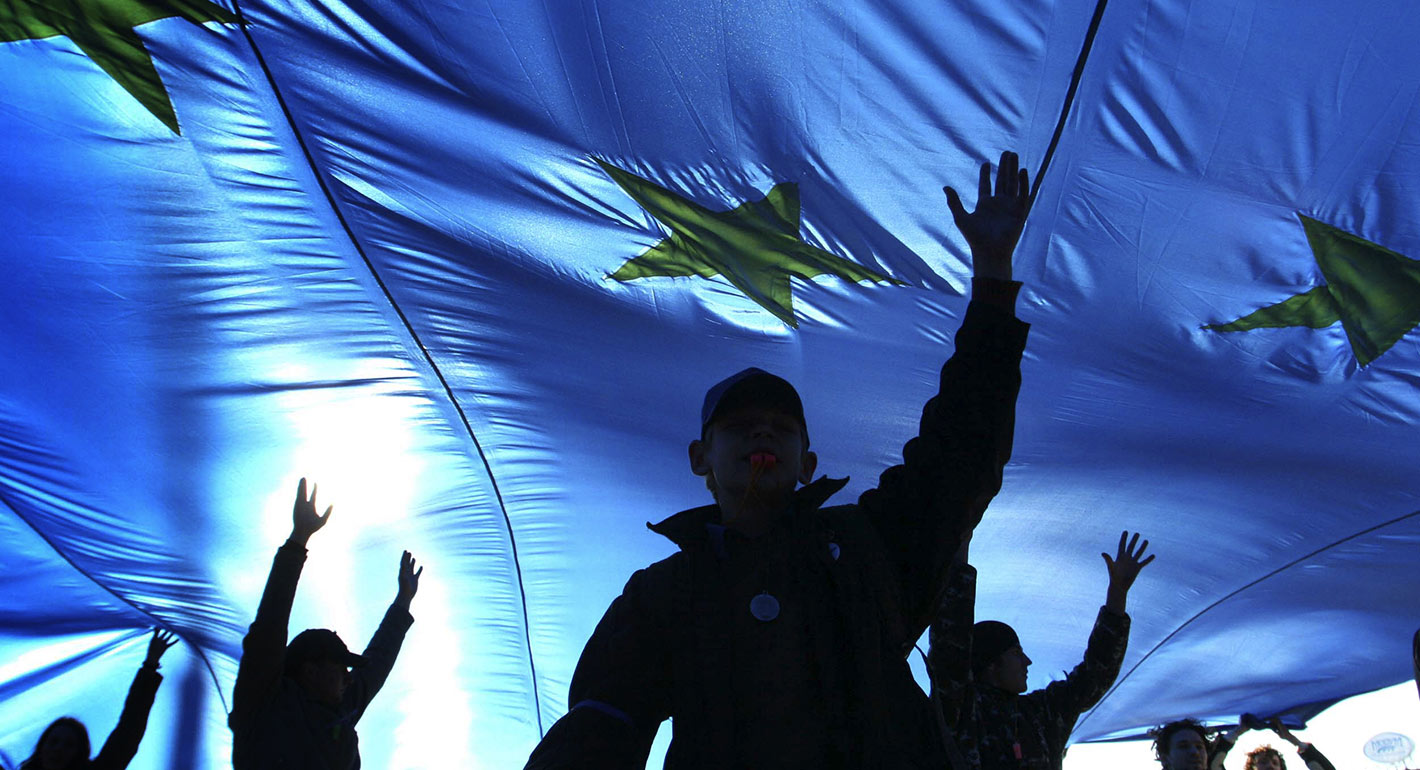
Source: Getty
Europe, like the rest of the world, will undergo powerful political, economic, and social transformations over the coming decades. Is the EU ready to manage the transitions?
It’s not that these issues do not matter, but the attention devoted to them is all out of proportion. Meanwhile, three changes are going to upend the way we work and live and revolutionize the relationship between the state and the individual. These are climate change, aging populations, and digital revolutions—the “Big 3,” as we call them in a new Carnegie Europe report.
Their effects are going to require Europeans to adapt in ways that we are only beginning to understand. The Big 3 will also have a domino effect. For example, if climate change makes parts of Europe uninhabitable, or if automation causes upheaval in labor markets, migration both within and into Europe will likely go up. The EU needs to do all it can to manage the transitions, which have already begun.
The EU is devoting some attention to the Big 3, but arguably too little and too slowly, partly because its leaders’ attention is elsewhere. Most mainstream parties are also running out of ideas. Voters sense that, and are being lured away by populist narratives.
Prioritizing the Big 3 could change the debate and lead to a more positive vision for the EU. And the timing is right, with new EU leadership taking office this year and citizens, especially youth, demanding radical change. But to put a new vision in place, the EU will need to redirect its resources and policies and make a clear argument to explain why it is adjusting course.
Out of the three, the EU has devoted the most attention to climate change, and with some success. But we argue that the current approach—essentially “greening” the current economic model—will not work. Even if wealthier societies ditch single-use plastics, for example, they cannot keep growing without creating an unsustainable impact on the environment.
Europeans should focus on well-being instead of growth, primarily by using fewer but higher-quality products and getting more mileage out of them. Reducing consumption is essential to building a sustainable, low-carbon economy.
One way the EU could ease this transition is to lead an overhaul of the tax system. Taxation should shift from focusing on income generated by labor to focusing on incentives for businesses and people to cut carbon emissions, use renewable energy, and build and use clean products and infrastructure.
The demographic change is going to be tough to tackle. Barring a large inflow of migrants—which many European voters have repeatedly shown they do not want—safety nets will run out of money. This is because the number of working-age people, who pay into the schemes, will shrink relative to the number of retirement-age people. Also, robots will take many jobs currently performed by humans, further eroding tax revenue.
People will likely need to work later in their lives and continually re-educate themselves to gain new skills that suit a changing labor market. Unemployment schemes, such as the European Fund for Transition, should be revamped to better support workers as they move between jobs and to reward caregivers and volunteers as populations age.
Of course, each country will be affected differently. That is why the EU has a vital role to play: unless people all across Europe use fewer natural resources, and some kind of EU-wide floor is put under job market uncertainty, people will travel en masse out of the most affected countries, putting other countries’ resources and safety nets under stress.
The EU could help, for example, by developing a common energy market and capping resource use. It could also pay into and accredit nonstandard education methods, such as online learning, and possibly create EU-wide unemployment funds.
Lastly, the EU is no slouch when it comes to addressing technological challenges. For example, it has already passed a directive requiring more stringent safety standards for critical IT networks. But the measure is not enough. Further steps are needed to make sure companies comply, such as financial penalties for lax security. The EU must also raise public awareness about digital safety, such as through early education and an EU-wide labeling system on product security. It could also help ensure that safeguards are built into the design of artificial intelligence technologies and could help define and dismantle harmful online content.
The encouraging bit is that at the national and local levels, many possible solutions to the Big 3 are being tested and implemented. In France, for example, people earn credit for volunteer work and apply it toward setting up a business or getting training. This is a good model for how to deal with the side effects of automation.
In Germany, numerous energy commons—essentially households or neighborhoods—have pooled their money to buy wind or solar power generators. So many people have done so that these commons now own one-third of all renewable power generation in the country. That is hugely encouraging; it shows that when the EU or states are not acting, communities and businesses are leading the way.
The EU and national governments need to literally watch, listen, and learn. Then they need to connect and support these initiatives through, for example, creating an EU community initiatives fund and developing joint business-community projects.
A lot of the predictability that governs our lives may disappear. For example, we have to move away from the “take-make-use-waste” lifestyle, in which companies use natural resources to make products that are used once or twice and then discarded. Products may need to last much longer, as they used to in the not-so-recent past. When they break down, it should be easier and cheaper to repair them than to replace them.
This could have a number of second-order implications: not only will the design of consumer goods need to change, but many shops will need to reorient from retail to repair, with the new jobs paying more than the old ones (essentially because repair is more complicated than retail)
They are huge. Failure to tackle climate change alone could lead to more conflict over resources and further divide states and communities. Failure to prepare health and welfare systems for aging populations could leave many citizens without care. Failure to support people during job transitions could lead to wider income gaps and increased poverty. Failure to tackle the impact of technology on democracies could make it increasingly easier for authoritarian politicians to dominate our societies.
But there are good reasons to be optimistic. Traditionally, the EU has had the convening power and assets to solve problems together. It has been able to draw on the extensive, diverse expertise of half a billion people and make commitments stick.
Yes, it can, and on some issues such as climate change, it must—in the sense that no other power, neither the United States nor China, currently seems willing to lead. If Europe does not lead on climate change and support poorer, developing countries to grow sustainably, the migration crisis could worsen, even if conflict over resources takes place far away.
The EU has a few comparative advantages. The standards it sets for the EU’s large internal market of $20 trillion tend to get adopted by other economies trading with it. It also has a history of setting rules that serve the public interest because no single country controls them, which adds to Europe’s global credibility.
Former Director, Carnegie Europe
Valášek was director of Carnegie Europe and a senior fellow, where his research focused on security and defense, transatlantic relations, and Europe’s Eastern neighborhood.
Recent Work
Erik Brattberg, Tomáš Valášek
Tomáš Valášek
Carnegie does not take institutional positions on public policy issues; the views represented herein are those of the author(s) and do not necessarily reflect the views of Carnegie, its staff, or its trustees.

With its public finances in shambles, the far right polling at 35 percent ahead of the 2027 presidential election, and a growing protest movement, is France’s crisis a threat to the EU’s geopolitical awakening?

Rym Momtaz, ed.

Ahead of a tough winter for Ukraine, Donald Trump’s swing back toward Russia bodes ill. But instead of panicking, Kyiv’s European allies are focusing on action.
Rym Momtaz

Funding Ukraine remains a priority for European leaders. As Russia’s war of aggression heads into another winter, two feasible options to mobilize support for Kyiv should be fast-tracked.


Vladyslav Rashkovan, Gregory P. Wilson

While the EU and European governments are embracing the much-lauded middle-power moment, this entails three difficult conundrums.

Richard Youngs

Europe is facing rising populism internally as well as external pressures from Russia, China, Turkey, and the United States.

Dimitar Bechev