

Paper
Noah Gordon, Liana Schmitter-Emerson
{
  "authors": [
    "Noah Gordon"
  ],
  "type": "commentary",
  "centerAffiliationAll": "dc",
  "centers": [
    "Carnegie Endowment for International Peace"
  ],
  "collections": [
    "Climate, Geopolitics, and Security"
  ],
  "englishNewsletterAll": "ctw",
  "nonEnglishNewsletterAll": "",
  "primaryCenter": "Carnegie Endowment for International Peace",
  "programAffiliation": "SCP",
  "programs": [
    "Sustainability, Climate, and Geopolitics",
    "Europe"
  ],
  "projects": [],
  "regions": [
    "Western Europe",
    "Germany",
    "North America",
    "Russia"
  ],
  "topics": [
    "Economy",
    "Climate Change",
    "Energy"
  ]
}
Source: Getty
Berlin’s seemingly technical energy debate is actually social and political.
The Russian energy giant Gazprom has further reduced its supply of gas to Germany. While Gazprom made dubious claims about technical issues with a gas turbine for the Nord Stream 1 pipeline, Germany called the move a “political decision.”
This kind of political tit-for-tat dressed up as a technical concern is to be expected from two countries on opposite sides of the war in Ukraine. But in truth there have always been longer-term political battles waged within ostensibly technical discussions about energy.
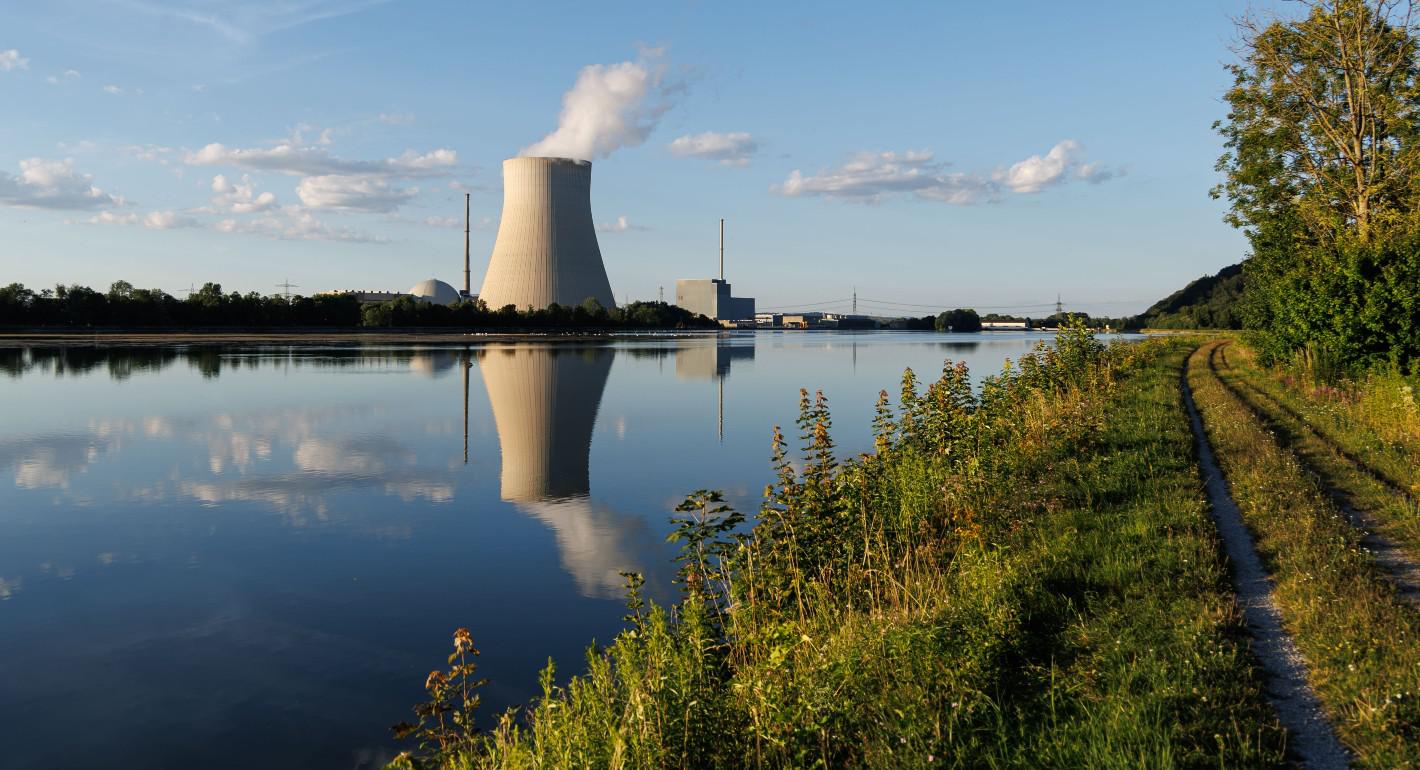
Even before Gazprom’s July 25 announcement, Germany faced a serious gas shortage that was the cause of intense political debate. To try to address the gap, the German government is reconsidering the possibility of extending the lifespan of the country’s three remaining nuclear power plants, which were due to shut down at the end of the year. It has emphasized the technical obstacles to keeping the plants open and doubted that an extension would be even practicable. Chancellor Olaf Scholz went as far as saying that “no one has proposed how this could work.” But to the German Greens, the most nuclear-skeptical party in the governing coalition, more power isn’t necessarily the solution to an energy crisis where the biggest problem is a shortage of gas for heating and industry. Vice Chancellor and former Green party leader Robert Habeck has argued Germany has “a gas problem, not an electricity problem”—and Green party faction leader Katharina Dröge has claimed that adding nuclear power would make “no meaningful contribution” to gas supply.
With nuclear technology in particular, the line between hard technical facts and socially determined assumptions has always been blurry. Is nuclear power dangerous, as the Greens argue? It certainly can be. The horrors of the Chernobyl and Fukushima disasters have made that clear. However, a number of studies have shown that nuclear power production has been responsible for significantly fewer fatalities than renewables like biomass and hydropower, let alone the fossil fuels that are cooking the planet and causing air pollution that kills millions every year.
Critics of nuclear power are correct to point out how expensive it is. With the cost of wind and solar power having fallen so fast over the last decade, it’s hard to argue that building new nuclear plants is the smartest way to produce the low-carbon power the world needs. Indeed, one reason that electricity is so expensive in Germany right now is that its neighbor, France, is reliant on a fleet of decrepit nuclear plants, forcing France to import power from Germany. Other planned nuclear plants across Europe, like the UK’s Hinckley Point C, are massively behind schedule and over budget, as nuclear plants tend to be. (To be fair to the anti-nuclear Greens, it’s true that keeping open nuclear plants would not save enough gas to solve Germany’s gas crisis: Professor Lion Hirth of the Hertie School in Berlin estimates that keeping nuclear plants open would reduce German gas demand by only 4 percent, whereas the European Commission is asking Germany to cut gas use by more than 15 percent to make it through the winter.)
Although nuclear power is very expensive, it’s worth noting that its cost per kilowatt hour is not solely a natural fact, either. The cost of producing nuclear power in the United States has actually increased in recent decades, and an MIT study found that safety-related considerations were responsible for about 30 percent of the observed cost increase between 1976–2017. Nuclear power advocates make a convincing case that at least some of those safety regulations, such as the “as low as reasonably achievable” standard for nuclear radiation, are excessive in view of the harms caused by burning fossil fuels for power instead.
Arguments about the assumptions that determine what’s technically possible are a constant feature of debates about energy systems. In 2017, Stanford Professor Mark Jacobson and his coauthors made headlines with a study arguing that “converting to 100% [wind, water, and solar] energy systems is technically and economically feasible.” Another group of scientists shot back that Jacobson’s team “made implausible and inadequately supported assumptions,” such as the supposition that it would be politically possible to build enough new power lines and batteries to make this renewables-only system work.
Even a seemingly knowable fact—like how much oil is underground—depends on how humans define “oil” and what technologies we develop and allow ourselves to use. In 2003 Canada surprised oil industry watchers by announcing that its oil reserves had increased from 5 billion barrels to 180 billion barrels, the second-largest oil reserve in the world. Geologically, underground, nothing had changed. But aboveground, the governing body of the energy industry in Alberta had decided that “tar sands,” from which oil can only be extracted by using massive quantities of water and energy to strip mine toxic sands, now counted as oil reserves.
In political theorist Timothy Mitchell’s words—drawing on philosopher Bruno Latour’s ideas about the overlap between the objective world of “nature” and the subjective world of politics and values—the amount of oil and gas left for humans to exploit is a “question of human choice and technical ingenuity.” By calling for Germany to lift its fracking ban, the country’s conservative politicians want to decide there is more gas down there after all.
As the energy transition proceeds, more and more seemingly technical debates about energy will reveal themselves to be bounded by political and social values. How large is global oil production capacity? If the left flank of the U.S. Democratic Party got its wish to ban U.S. crude oil exports—which President Joe Biden would have the power to do if he declared a “climate emergency”—the global oil supply would effectively shrink overnight. How many people can the Earth sustainably support? The number would rise if humans stopped devoting three-quarters of agricultural land to feeding livestock that provide just 20 percent of their calories, freeing up more land to produce food or provide housing for humans, or to host wildlife reserves or wind farms.
Carbon dioxide molecules will always be comprised of one carbon atom and two oxygen atoms. But so much of the rest of humans’ climate future comes down to what we decide to make technically possible, whether with new gas pipelines to autocratic countries or new transmission lines for cheap, inflation-reducing clean power.

Former Fellow, Sustainability, Climate, and Geopolitics Program and Fellow, Europe Program
Noah J. Gordon was a fellow in the Sustainability, Climate, and Geopolitics Program at the Carnegie Endowment for International Peace in Washington, DC.
Recent Work
Noah Gordon, Liana Schmitter-Emerson



Sophia Besch, Eric Ciaramella, Steve Feldstein, …
Carnegie does not take institutional positions on public policy issues; the views represented herein are those of the author(s) and do not necessarily reflect the views of Carnegie, its staff, or its trustees.

Europe is facing rising populism internally as well as external pressures from Russia, China, Turkey, and the United States.

Dimitar Bechev

A notable degree of participative democracy has firmly arrived in Europe. But to have more far-reaching impact, democratic deliberation needs to move into a radically new phase.

Richard Youngs

The European Commissioner for Trade is headed to China. But after President Xi’s bridge-building visit to Washington, can a more isolated EU overcome Beijing’s stranglehold on critical raw materials? Who will blink first?

Rym Momtaz, ed.

The domestic impacts of how long it is taking to end the war in Ukraine have pushed the French electorate to the political extremes and compromised the country’s diplomatic capacity.
Rym Momtaz

Before the next wave of EU enlargement takes place, the union needs to grapple with thorny questions of how power is distributed among its members.


Emil Sondaj Hansen, Ditte Brasso Sørensen