

Commentary
Judy Dempsey
{
  "authors": [
    "Judy Dempsey"
  ],
  "type": "commentary",
  "centerAffiliationAll": "",
  "centers": [
    "Carnegie Endowment for International Peace",
    "Carnegie Europe"
  ],
  "collections": [],
  "englishNewsletterAll": "",
  "nonEnglishNewsletterAll": "",
  "primaryCenter": "Carnegie Europe",
  "programAffiliation": "",
  "programs": [],
  "projects": [],
  "regions": [
    "North America",
    "United States",
    "Russia",
    "Eastern Europe",
    "Ukraine",
    "Western Europe",
    "Germany"
  ],
  "topics": [
    "Security",
    "Military",
    "Foreign Policy"
  ]
}
Source: Getty
The chancellor has rescued his country’s reputation with its allies while upending its relationship with Moscow.
He finally did it.
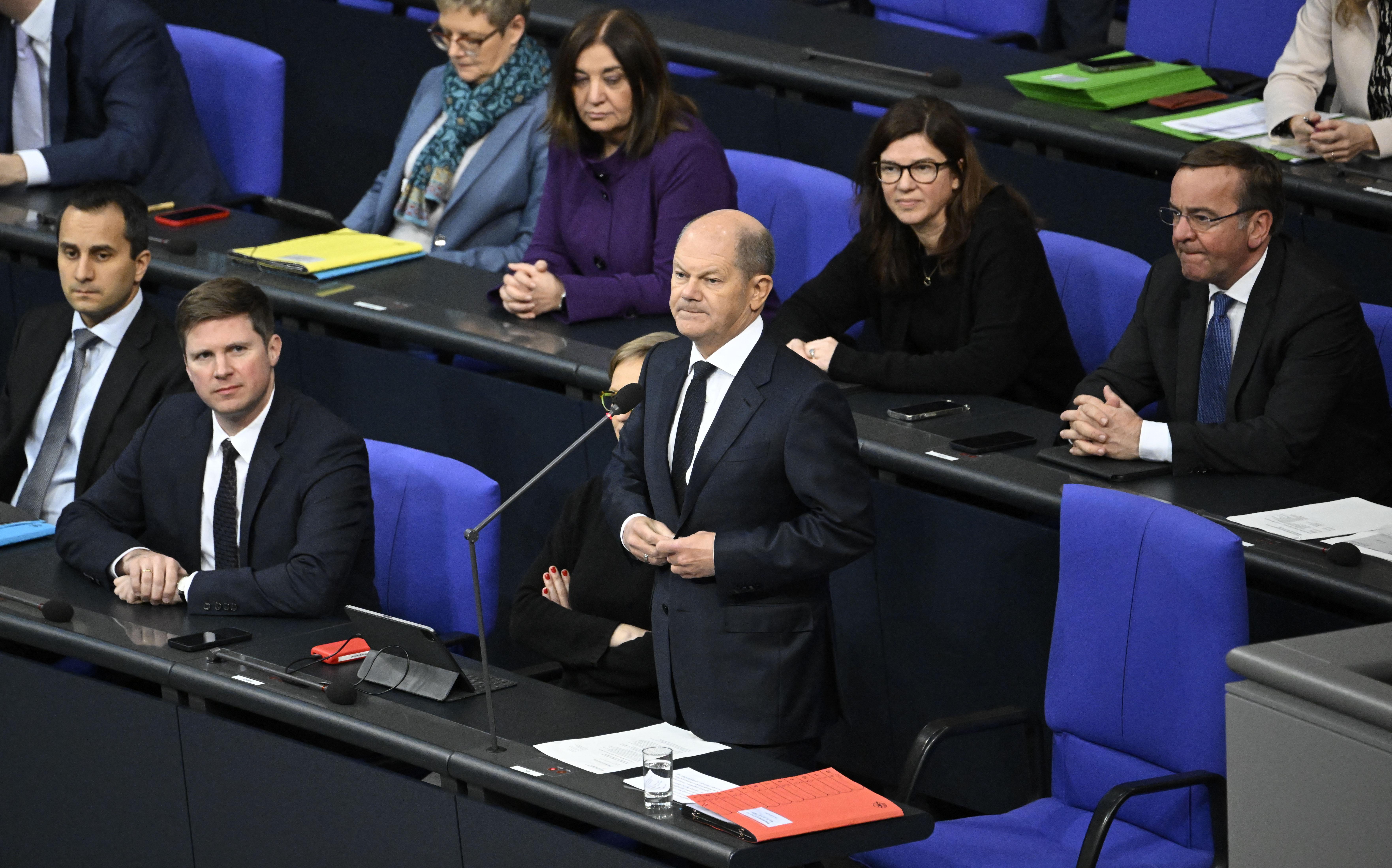
After months of dithering, Chancellor Olaf Scholz announced on Wednesday that Germany would send fourteen Leopard 2 tanks to Ukraine. He will also allow European countries that bought the tanks to send them to Kyiv.
After facing consistent pressure from the United States and from many of Germany’s European allies, Scholz has ended a chapter of his thirteen-month-old leadership that risked isolating Germany, dividing Europe, and seriously damaging Berlin’s relations with the United States.
Speaking to the Bundestag, Scholz said his decision was entirely consistent with his previous actions. Germany, he stated, did not want the war in Ukraine to escalate—which Russia claimed would be a consequence of sending tanks. For that reason, he was not prepared to allow other countries to supply the Leopard 2 tanks or go it alone without cover from the United States. President Joe Biden’s decision to send thirty-one M1 Abrams tanks to Ukraine robbed Scholz of any more excuses.
Now comes the chancellor’s next chapter. And it won’t be a straightforward narrative, even compared to the last one—for two reasons.
One is the fallout inside Scholz’s Social Democratic Party (SPD). The party’s left wing has always opposed sending the tanks and even arming Ukraine. It’s not just because they are pacifist and ambivalent about NATO and the United States. For them, the war that Russia began was gradually undoing decades of extremely close relations between Germany and Russia.
The relationship, enshrined in Ostpolitik (or “eastern policy”) was forged in the 1960s by Willy Brandt, the chancellor and SPD leader, to bring Russia closer to Europe, and even integrate it with Germany’s part of the European continent. When German leaders struck a deal with Moscow to build and finance the first gas pipeline in the early 1970s, the United States warned them of the dangers of this energy contract. For Washington, the contract was an attempt by Moscow to weaken the transatlantic link by establishing a special relationship with what was then West Germany. And for the SPD, the energy contract was one way of “liberating” Germany from some of America’s overwhelming dominance in Western Europe.
Any SPD leader who challenged Germany’s growing closeness to Moscow was almost deemed a heretic. When Helmut Schmidt, another SPD chancellor, faced down massive demonstrations against deploying U.S. Pershing missiles in response to Moscow deploying SS-20 missiles in East Germany, he got his way—but he was never forgiven for challenging the ideological and political premise of Ostpolitik.
Since the 1980s, the SPD (supported by the conservative Christian Democrats and the Christian Social Union) intensified these economic and political contacts with Russia. The biggest prize for the SPD and Russian President Vladimir Putin was the construction of the Nord Stream pipelines, which allowed Russia to send gas directly to Germany under the Baltic Sea. Poland, the Baltic states, and the United States repeatedly warned Germany about its growing energy dependency on Russia.
Only under immense pressure after Russia invaded Ukraine last February did Scholz abandon the Nord Stream 2 pipeline. As with the buildup of pressure he faced over the tanks, Scholz bowed to pressure over Nord Stream. Yet some SPD officials voiced resentment at the demise of the pipeline and the Leopard decision, saying that both decisions trampled on Germany’s special relationship with Russia and even ruled out Germany playing a mediating role to negotiate an end to the war in Ukraine. Such resentment could be channeled into creating an opposition to Scholz inside the SPD.
The second reason Scholz’s next chapter won’t be straightforward is the future of German-Russian relations. A Kremlin spokesman vowed that the tanks would “burn like all the others” and that they would not influence the outcome of the war. Russia’s state-run television news coverage of Berlin’s decision was vitriolic. This reaction shouldn’t surprise anyone, but it helps explain Scholz’s dithering. After 1945, Germany spent years trying to create trust with Russia in order to overcome the centuries of conflict and reshape this complex relationship. Now, Scholz now faces an uncharted path with Russia.
Scholz now has to accept, however reluctantly, that Berlin’s role as a mediator and its special relationship with Moscow are over for the moment. Perhaps the end of this chapter is a chance for Scholz to shift his country’s focus to Europe and its transatlantic relationship in this new global landscape.

Nonresident Senior Fellow, Carnegie Europe
Judy Dempsey is a nonresident senior fellow at Carnegie Europe
Recent Work
Judy Dempsey
Judy Dempsey
Carnegie does not take institutional positions on public policy issues; the views represented herein are those of the author(s) and do not necessarily reflect the views of Carnegie, its staff, or its trustees.

As we close out another season of Strategic Europe, it is worth taking stock of the deep shifts underway.

Rym Momtaz
The hybrid warfare landscape is evolving rapidly, leaving policymakers without clear strategies. To better inform their work in addressing emerging challenges, governments must dig deeper into the underlying dynamics at play.


Raluca Csernatoni, Alicia Wanless
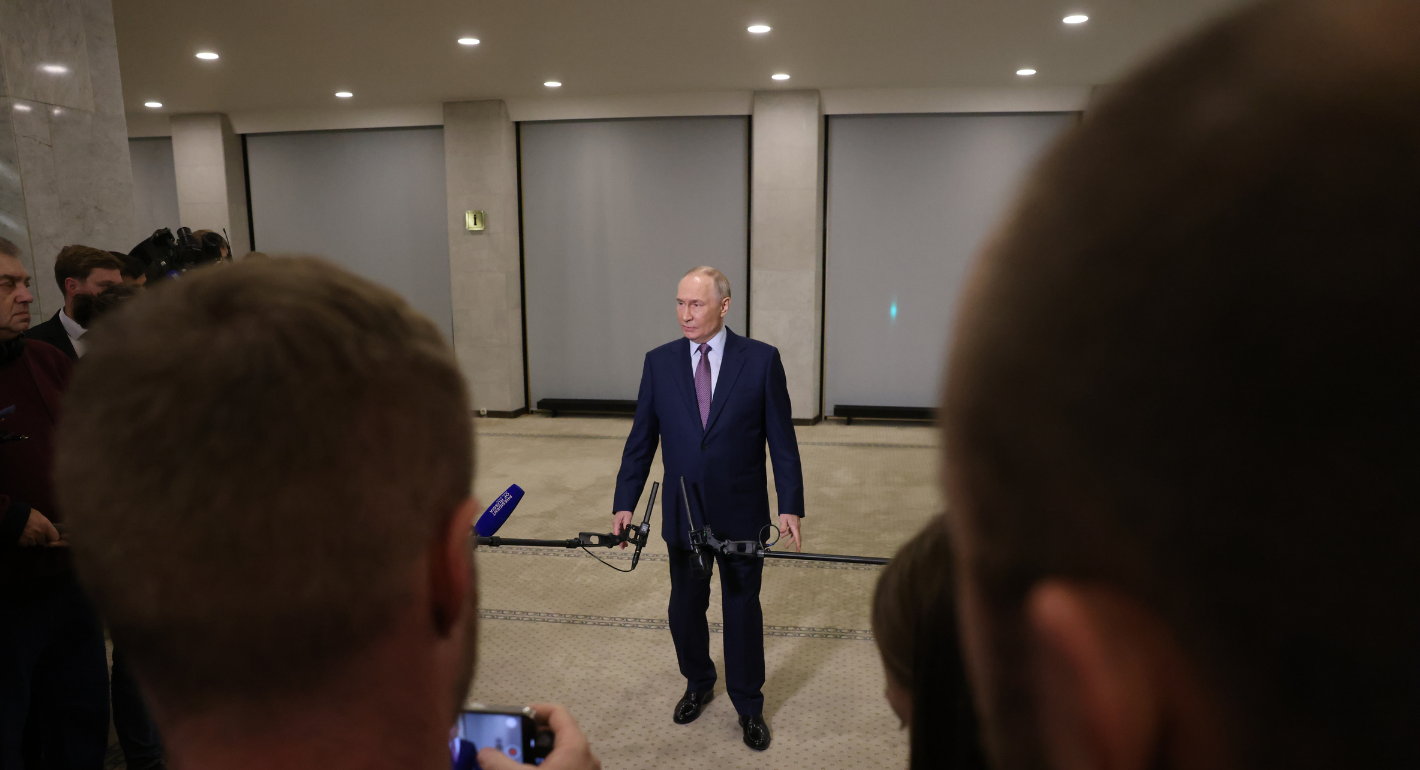
The EU had to compromise to adopt a twenty-first sanctions package against Russia, exposing growing cracks in the union’s resolve. Is this latest, weaker round worth it to keep pressure on Moscow?
Rym Momtaz, ed.

Trump is distracted and Ukraine wants Europe to step up. The continent’s leaders must find their voice and assert it in talks with Russia.

Alissa de Carbonnel

Mounting economic strain and battlefield losses will not necessarily make the Kremlin less dangerous. They could instead push Moscow toward a more aggressive hybrid campaign designed to test NATO’s Eastern flank, exploit allied hesitation, and fracture European resolve.

Maksym Beznosiuk