

Commentary
Trump is distracted and Ukraine wants Europe to step up. The continent’s leaders must find their voice and assert it in talks with Russia.
Alissa de Carbonnel
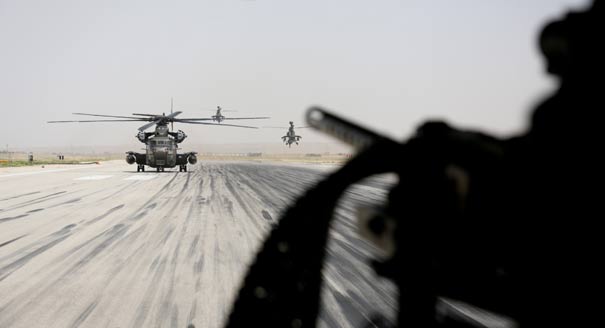
Source: Getty
Germany will take a low-cost, low-risk approach to the management of international peace and security no matter who governs the country.
Afghanistan aside, Germany’s military contribution to the management of international peace and security is best described as reactive, uncontroversial, low-cost multilateralism conducted under the auspices of the EU, NATO, and the UN. And thanks to the country’s strategic culture and the German population’s pacifist leanings, Berlin’s approach will be the same regardless of who wins the country’s federal election on September 22.
Germany will continue to go along with the mainstream view of its principal Western allies, provided that it does not annoy Israel or Russia or involve the deployment of German soldiers abroad on anything beyond small-scale, low-cost, and low-risk missions. As it has in the past, Berlin will resist reforms in the EU or NATO that involve spending more on defense or taking on responsibilities that enhance the risk of new out-of-area quagmires. Indeed, France’s recent decisions to rejoin NATO’s military command and to strengthen its military cooperation with Britain largely resulted from its frustration over Germany’s unwillingness to support bolstering the EU’s own military capabilities and deployments.
These trends stretch back to the end of the Cold War. Since then, Germany’s military contribution to international peace and security has primarily been determined by three factors: First, there is a deep-seated skepticism in Germany concerning the utility of force for purposes other than self-defense. Second is allied, especially American, pressure on German governments to contribute to out-of-area conflict management operations going beyond self-defense. And third, operational experience plays a part.
Over the past two decades, Germany gradually moved toward the greater use of force. It transitioned from checkbook diplomacy during the 1991 Gulf War to involvement in combat operations in Afghanistan because the operational experiences were primarily positive. The 1995 Srebrenica massacre of Bosnian Muslims by Bosnian Serbs demonstrated the need to move beyond self-defense. NATO’s growing involvement in the Balkans in the 1990s and the rise of the responsibility to protect doctrine reflected a growing Western optimism shared by Berlin that force could be used to “do good.” Thus, Berlin pushed for a NATO takeover of the UN peace operation in Afghanistan in 2003 expecting to make a positive difference Balkan-style and to repair the damage done to the alliance by its unwillingness to support the United States in Iraq.
The operational experiences in Afghanistan and Iraq killed this optimism, serving instead to cement the German belief that the use of force rarely contributes positively to conflict resolution. In Berlin, most now believe that Gerhard Schröder, the then chancellor of Germany, made the right call in rejecting German involvement in the 2003 invasion of Iraq and that NATO’s Afghanistan operation has been a costly failure. Peace has not been established. And German decisionmakers have found themselves caught in the crossfire between an increasingly hostile public and “ungrateful” allies that want Berlin to do more and take greater operational risks despite the fact that Germany is the third-largest troop contributor and third-largest aid donor for civilian reconstruction in Afghanistan.
The desire to avoid another Iraq or Afghanistan will make German governments extremely reluctant to move beyond using force in self-defense in future conflict management operations. Berlin thus emphasizes noncombat tasks, civil-military approaches, and the need for broad public support in the Defense Policy Guidelines published by the German Ministry of Defense in 2011. In future operations, Germany will limit its contribution to logistical and medical support and low-risk air and naval operations. Ground troops will only be provided for traditional observer and peacekeeping missions where the use of force is not expected.
This reaction is in step with the sentiment in other Western capitals. The Afghan model of 2001–2002 is back in vogue. The emphasis is now on indirect, small-footprint approaches that rely on airpower, capacity building, and the use of special operations forces. This approach is laid out in the strategic guidance published by the Obama administration in 2012. Washington’s “leading from behind” doctrine significantly reduces the pressure on Berlin to get involved in new military interventions. This is evident from the interventions in Libya in 2011 and in Mali in 2013, where the absence of sustained American pressure allowed Berlin to avoid any involvement in combat operations.
Berlin’s approach to the conflict in Libya was shaped by the lessons from Afghanistan and Iraq. Germany was determined not to get militarily involved and believed that the United States shared this view. When Washington suddenly supported the use of “all necessary means” to protect the civilian population of Libya, Berlin was caught off guard. In this case, the United States did not lean hard on Germany to persuade it to vote in favor of the UN resolution on Libya (it would pass no matter what Germany did), and the German government abstained to demonstrate its determination not to become involved militarily.
The Obama administration’s choice to leave most of the strike missions to its allies signaled to German decisionmakers that Washington did not regard Libya as a vital interest and that they could refuse to contribute militarily without damaging their relationship with the United States irreparably. The single most important factor inducing German governments to make a combat contribution to Kosovo and to stay on in Afghanistan after 2006 was the desire to keep the United States happy and NATO alive. Since this did not seem necessary in Libya, no overt military contribution was made. Berlin compensated for this by sending airborne warning and control system (AWACS) crews to Afghanistan and by allowing German NATO officers to continue their work in support of the operation.1
The politics of the Libya intervention highlight that the Afghanistan and Iraq experiences guarantee a low-cost, low-risk German approach to the management of international peace and security no matter who governs the country. Iraq’s and Afghanistan’s reinforcement of Germany’s deep-seated skepticism concerning the utility of force will not only make it harder for allies to pressure Germany to make combat contributions to future operations. It also means that such pressure will materialize on fewer occasions since the American appetite for new interventions has been dampened as well.
Germany’s unwillingness to fight for international security does not condemn it to continue its low-key and reactive strategy, however. A new, proactive approach to conflict management is urgently needed, and Germany could make a major difference by taking the lead in strengthening the EU’s and the UN’s capacity for civilian conflict management. This would not only help to reduce the need to use military force, but it would also allow Germany pull its weight in the management of international peace and security in a way that is in keeping with its strategic culture and the pacifist leanings of its population.
Peter Viggo Jakobsen is an associate professor at the Royal Danish Defense College.
1 The Libya case study is based on Peter Viggo Jakobsen, “The Indispensable Enabler: NATO’s Strategic Value in High Intensity Operations Is Far Greater Than You Think,” in Liselotte Odgaard (ed.), Strategy in NATO: Preparing for an Imperfect World (Houndmills: Palgrave MacMillan, forthcoming 2014).
Peter Viggo Jakobsen
Carnegie does not take institutional positions on public policy issues; the views represented herein are those of the author(s) and do not necessarily reflect the views of Carnegie, its staff, or its trustees.

Trump is distracted and Ukraine wants Europe to step up. The continent’s leaders must find their voice and assert it in talks with Russia.

Alissa de Carbonnel

Mounting economic strain and battlefield losses will not necessarily make the Kremlin less dangerous. They could instead push Moscow toward a more aggressive hybrid campaign designed to test NATO’s Eastern flank, exploit allied hesitation, and fracture European resolve.

Maksym Beznosiuk

Over the past ten years, NATO has held almost as many summits as it did during the entirety of the Cold War. Are they still useful, or is it time to stop holding annual meetings?

Rym Momtaz, ed.

As the EU confronts profound challenges, several leaders have called for fundamental reform to the union’s model—but only modest, superficial changes have resulted. What if Europe really could be reimagined from zero today: What should such a redesigned European order look like?

Richard Youngs, ed.
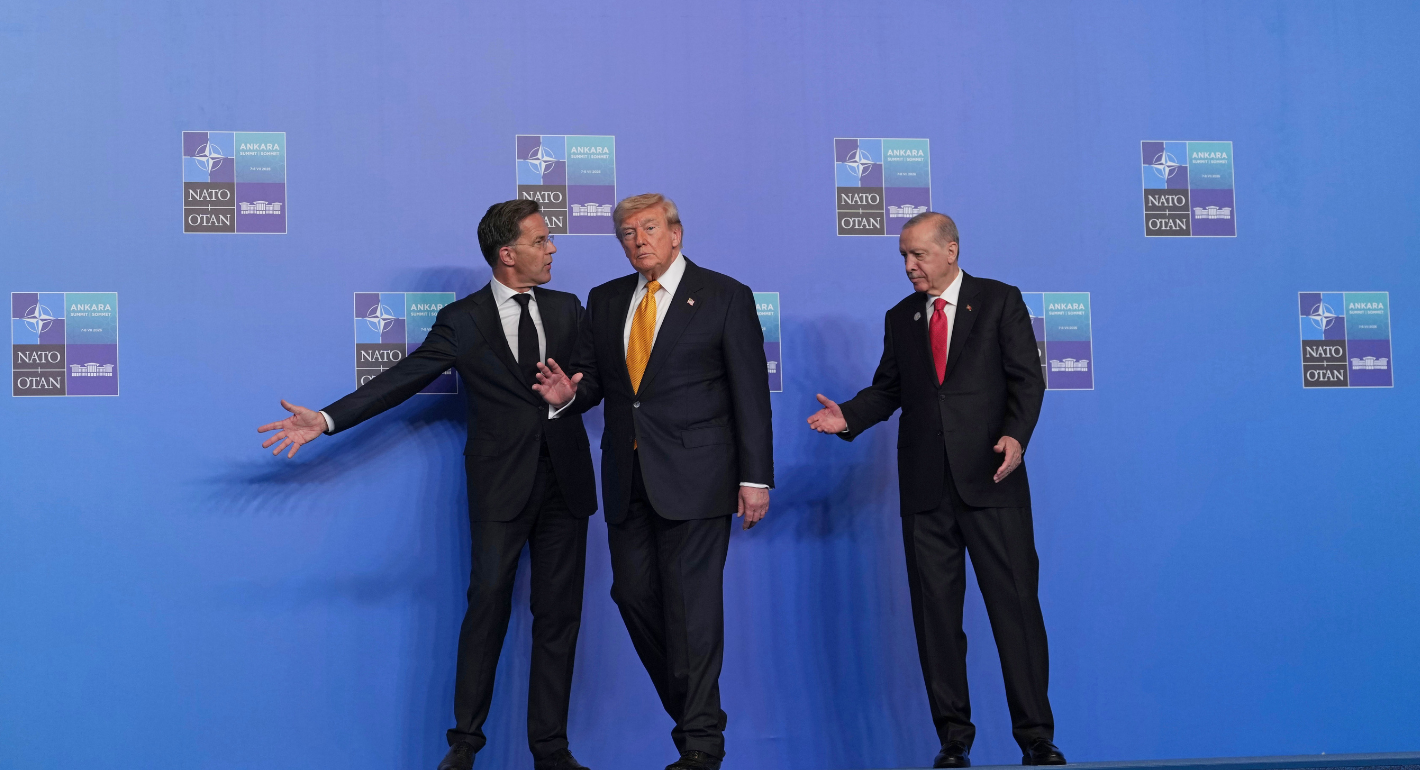
Nearly a year and a half after Europeans leaned into sucking up to Trump, the strategy has produced some benefits when it comes to Ukraine.
Rym Momtaz