

Commentary
The EU’s new migration policy is not suited to today’s realities. With climate change increasingly becoming a driver of displacement, Europe needs to rethink its deterrence-focused approach.
Shana Tabak

Source: Getty
The Taiwan Strait is not at immediate risk of a crisis, but a changing status quo and diminishing trust between Beijing, Taipei, and Washington signal possible trouble ahead.
Mounting mistrust between China and the United States over the past year or two has raised the specter of resurgent tensions about the status of Taiwan, a recurring flash point in the Asia Pacific. Ever since the Kuomintang (KMT) lost the Chinese Civil War and fled to Taiwan in 1949, Beijing has regarded eventual reunification with the island as a sacred national cause. While the United States (like many countries) has no formal diplomatic relationship with Taiwan, the U.S. government maintains robust informal ties with the island. Washington also periodically provides Taipei with defensive military equipment and advocates that the issue of Taiwan’s relations with mainland China should be settled in a peaceful, noncoercive manner.
Beijing views Taiwanese leader Tsai Ing-wen with mistrust because the Democratic Progressive Party (DPP) she belongs to has historically been sympathetic to the cause of outright Taiwanese independence. The relationship between mainland China and Taiwan has been quite strained since she took office in May 2016. Since then, Beijing, Taipei, and Washington all have taken actions that other parties have perceived as changing the uneasy status quo in the Taiwan Strait. While there are few reasons to expect an imminent crisis, the leaders of all three sides should keep an eye on worrying trends that could be signs of rougher waters ahead.
Taiwan’s leaders have taken a number of steps that China has found disconcerting. First and foremost, Tsai has not endorsed the 1992 Consensus as her predecessor Ma Ying-jeou of the KMT did, a choice that constitutes a major departure from the status quo in Beijing’s eyes. Simply put, the 1992 Consensus refers to an understanding reached by representatives from the two sides, who agreed that there is one China but that they can have different interpretations of what that China is. Although Tsai did acknowledge the “historical fact” of these 1992 talks, voiced respect for the “existing Republic of China constitutional order,” and vowed to “cherish” the results of “over twenty years of negotiations and interactions across the Strait,” her statements have not been sufficient to fully reassure mainland China.
Secondly, observers in Beijing see some of Tsai’s internal measures as manifestations of her purported (albeit less overt) stance in favor of Taiwanese independence or incremental progress toward Taiwanese independence, in contrast to former DPP leader Chen Shui-bian’s more radical pro-independence approach. In particular, mainland China has been highly alarmed by what it sees as a trend toward cultural Taiwanese independence and efforts to cut cultural and historical bonds across the strait, as embodied in measures such as the revision of Taiwanese textbooks to downplay elements of Chinese history. Furthermore, Tsai has not reined in other senior leaders in the DPP or pro-independence forces when they have made more radical statements. For example, Premier William Lai has claimed multiple times in the last year that he is a “Taiwan independence worker.” Although Tsai might have privately admonished Lai to be more low-key about cross-strait relations, many in mainland China find it very telling that such a high-ranking official in the Tsai government would dare to make such explosive remarks.
Meanwhile, pro-independence forces are pushing for what has been termed a name rectification referendum for the 2020 Olympics in Tokyo and seeking a Taiwanese independence referendum to be held in 2019. The former calls for the name Taiwan to be used instead of the politically less sensitive name Chinese Taipei when the island participates in the 2020 Summer Olympics, while the latter could trigger the use of force by Beijing as stipulated in mainland China’s Anti-Secession Law. In short, on top of not fully endorsing the 1992 Consensus, Tsai represents for many in Beijing an ominous trend toward Taiwanese independence, albeit in a more incremental way than Chen before her.
In fairness, Tsai also sees Beijing as changing Taipei’s status quo. Due to deep distrust of Tsai and displeasure at her refusal to fully recognize the 1992 Consensus, Beijing started to send signals and put pressure on her government, first by withholding certain benefits and later by what Taipei perceived as more coercive means of constraining its international space and displaying Chinese military power.
China’s response to Taiwan has taken various forms. After Tsai assumed power, official contact between the two sides was almost immediately suspended, and the number of tour groups and students from mainland China that visit Taiwan dropped significantly. The informal diplomatic truce that Beijing and Taipei had tacitly maintained during the Ma administration also ended, as China resumed efforts to encourage Taiwan’s few remaining allies to abandon formal diplomatic relations with the island. Since Tsai’s inauguration, Taiwan has lost five diplomatic allies: São Tomé and Príncipe in December 2016, Panama in June 2017, the Dominican Republic and Burkina Faso in May 2018, and El Salvador in August 2018.
Taiwan’s international space has shrunk in other respects as well. Taiwanese representatives were denied access to the UN World Health Assembly in 2017 and 2018 after attending under observer status since 2009. A similar situation transpired at the UN International Civil Aviation Organization’s Council Assembly in 2016. In the eyes of Taipei, the pressure campaign is intensifying as Beijing—to better reflect the One China principle—has pushed for changes to the names of the island’s representative offices in countries with unofficial relations with Taiwan. Similarly, China has made demands about how foreign airlines should refer to Taiwan on their websites. Militarily speaking, Taiwan has noted the increasing frequency of encirclement drills around Taiwan by People’s Liberation Army Air Force aircraft, appearances by Chinese aircraft carrier battle groups in the Taiwan Strait, and Chinese live-fire drills in waters not far from the island.
Despite all of these unsettling developments, the two sides are not yet on a path of irreversible hostility, and the possibility of salvaging cross-strait relations still remains. But recent U.S. policies under President Donald Trump could change that.
As in other policy areas, Trump’s 2016 electoral victory has brought a great deal of uncertainty and unpredictability to cross-strait relations. Trump’s unorthodox phone call with Tsai (something no U.S. president had done for about forty years) and his careless statement temporarily questioning whether the United States would continue to stand by its One China policy marked a rocky start.
For a time, Washington’s Taiwan policy seemed to return to normal after Trump reaffirmed the United States’ One China policy in February 2017 and held an amicable, fruitful summit with Chinese President Xi Jinping in April 2017. Yet toward the end of 2017, a series of moves by the U.S. Congress and the White House seemed to suggest to Beijing that Washington is determined to escalate its efforts to use the sensitive issue of Taiwan to exert geopolitical leverage over mainland China. To make things worse, these changes have taken place as the United States contemplates adjusting its China policy in fundamental ways and as Beijing and Washington are engaged in a highly contentious trade dispute with potentially disastrous consequences.
Most conspicuous from Beijing’s perspective were Trump’s decisions to sign into law the 2018 National Defense Authorization Act (NDAA) in late 2017 and the Taiwan Travel Act (TTA) in March 2018. The 2018 NDAA not only reaffirmed the long-standing Taiwan Relations Act (TRA) and the Six Assurances—provisions that set the terms of Washington’s informal relationship with Taipei—but also recommended that the United States expand and elevate military relations with Taiwan, including through the possibility of port of call exchanges between the two navies.
The TTA, meanwhile, was passed by voice vote in the House of Representatives and by unanimous consent in the Senate. The law aims to break self-imposed constraints on the level of official contact between government officials in Washington and Taipei. Although the TTA amounts to a nonbinding “formal opinion” known as a sense of Congress resolution, its passage and the level of congressional support it attracted sent a strong message to Beijing.
U.S. experts like to emphasize that such legislation requires few tangible policy actions for now, but these provisions do nonetheless increase the likelihood that these proposals will become routine practices in the future. Some pessimists in mainland China consequently worry that the United States’ long-standing One China policy could very well hang in the balance. Furthermore, many Chinese observers interpreted the fact that Trump signed the TTA instead of letting it automatically take effect after a set amount of time as proof that the White House is actively taking a revisionist stance on the One China policy.
Other parts of the U.S. government have done things that have reinforced China’s misgivings. In April 2018, the State Department approved a marketing license for U.S. companies to sell submarine technologies to Taiwan. Moreover, for two consecutive years in 2017 and 2018, U.S. Secretary of Defense James Mattis stressed U.S. commitments to Taiwan under the TRA at the Shangri-La Dialogue, a major security conference held each year in Singapore. The venue of such a prominent regional security forum heightened Beijing’s concerns that Washington is attempting to turn Taiwan’s security into a regional security issue. Although former secretary of defense Leon Panetta also mentioned the TRA at the 2012 Shangri-La Dialogue, he spoke about the Three Communiqués and One China policy too, delivering his speech in the context of improving cross-strait relations. By contrast, Vice President Mike Pence echoed Mattis's remarks when he gave a major October 2018 speech on U.S. policy toward China, in which he “condemned” mainland Chinese efforts to poach three of Taiwan’s Latin American allies.
In a nutshell, Beijing senses that there seems to be a collective interagency push in some parts of the U.S. government to elevate U.S.-Taiwan relations at the expense of the country’s One China policy. Even if the most pronounced pro-Taiwan views of U.S. officials such as National Security Adviser John Bolton and Assistant Secretary of Defense Randy Schriver are not yet totally reflected in formal U.S. policy, Beijing is understandably alarmed at how things in Washington seem to be trending.
In light of the already fragile relationship between Beijing and Taipei, cross-strait tensions could be aggravated or even driven to a crisis point in at least two ways. First, out of concern about Washington’s policy adjustments, Beijing could respond by retaliating against Taiwan as it is the easier target. If that were to happen, the Tsai government could conceivably conclude that the relatively restrained approach it has pursued to date does not work and switch to more radical tactics. Such a reversal on Tsai’s part could in turn convince Beijing that its fears about Tsai are completely justified, prompting the relationship to deteriorate further.
In fact, this kind of dynamic may already be at play. After Burkina Faso established diplomatic relations with China at the end of May 2018, Tsai’s response was much tougher than her past statements after losing previous diplomatic allies, as she accused Beijing of challenging Taiwan’s “bottom line” and stated that Taiwan will “no longer tolerate” such developments.
Second, Washington’s pro-Taiwan policies could make Taipei believe that it is possible to integrate the island’s security into U.S. defense arrangements in the region. Attempts to turn the Taiwan issue into a regional or international security matter have always been an extremely sensitive subject for Beijing, yet Taipei seems to be actively seeking that outcome. During a recent interview, Tsai tried to expose China’s purported ambitions to become a regional hegemon, and she appealed to the international community to “constrain China.” Then at the Double Ten Day celebration on October 10, 2018, Tsai again accused China of attempting to change the “regional status quo” and stated that “the entire world is dealing with the expansion of Chinese influence.”
Likewise, at a conference in Washington, DC, in July 2018, the Mainland Affairs Council’s Minister Chen Ming-tong cited the U.S. National Security Strategy’s characterization of China as a “revisionist power” and warned other countries about China’s “sharp power” and Beijing’s supposed intentions to change the international order. Chen emphasized that Taiwan, as an Indo-Pacific democracy, is willing to work with others to defend the so-called “rules-based international order.” In other words, Taipei saw an opportunity to align itself with the U.S. Indo-Pacific strategy and to turn Taiwan’s security into a broader Indo-Pacific security issue. If this rhetoric is translated into actions, Beijing can be expected to react strongly.
Despite these worrisome developments, the situation in the Taiwan Strait is unlikely to spin completely out of control for the time being for three reasons. Due to its growing power and influence, mainland China has gained much more confidence in its ability to keep things under control across the strait and believes that time is more or less in its side. This means that Beijing now has greater strategic calmness (zhanlue dingli) and is not likely to overreact. In July 2018, for instance, Xi met with former KMT chair Lien Chan and stressed that Beijing will continue to adhere to its existing Taiwan policies “steadfastly.”
Moreover, peace and stability across the Taiwan Strait seem to remain important interests for the United States. Any attempts by Washington to change its One China policy would risk disrupting these interests. On this point, a useful reference point is the opening of a newly constructed office complex in Taipei in June 2018 for the American Institute in Taiwan (AIT), where unofficial U.S. representatives facilitate the informal relationship between Taiwan and the United States. Two facts related to the AIT building’s opening probably suggest that Washington still takes Beijing’s sensitivity about Taiwan into consideration to some degree. The United States only sent an assistant secretary of state for educational and cultural affairs, a relatively low-level official with a nonsensitive policy portfolio, to the dedication ceremony. In addition, rumors that the U.S. Marines would be stationed to safeguard the building have not yet materialized.
Furthermore, the Tsai government has its own reasons to be cautious about switching to a more radical approach or accepting all of Washington’s offers of support without any reservations. After the phone call with Trump, for instance, Tsai had to downplay its significance by stating that it does not represent a policy change. As the smallest player in the strategic triangle between Beijing, Taipei, and Washington, Taiwan understands well that it would likely suffer the most from any potential confrontation or conflict across the strait. Trump’s unpredictable style and his talk about playing the Taiwan card only reinforces Taipei’s fears about being unduly reliant on Washington or being used as a bargaining chip. Furthermore, it seems that the DPP and Tsai have taken to heart the lessons from the Chen administration about the great damage an overly radical approach could do to Taiwan’s own interests.
Although these considerations somewhat moderate the risks of confrontation, if the negative interactions between Beijing, Taipei, and Washington continue and if relations keep deteriorating, it is certainly not inconceivable that another crisis across the strait could transpire. Such tensions could be triggered by any of the three parties, whether by strong pessimism on the part of China, a provocative redefinition by Taiwan of the nature of cross-strait relations, or the potential that Washington might sail a warship to a Taiwanese harbor.
However such a hypothetical crisis were to unfold, it could be more dangerous than previous ones. The 1995–1996 Taiwan Strait Crisis certainly unsettled the region, but mainland China’s policy toolkit was still quite small at the time, especially in military terms. The years of the Chen administration were turbulent indeed, but ironically Beijing’s and Washington’s aims seemed more aligned than ever before as they both grew frustrated with Chen’s policies and actions.
If another crisis were to take place in the next year or two, it would unfold amid an almost total lack of trust between Beijing and Taipei and during an emerging strategic competition between Washington and Beijing. Furthermore, when push comes to shove, a much more capable Chinese military could conceivably be deployed if tensions ran high enough. Such a crisis would be a losing proposition for all sides.
Jie Dalei is an associate professor in the School of International Studies at Peking University.
Jie Dalei
Jie Dalei is an associate professor in the School of International Studies at Peking University.
Carnegie does not take institutional positions on public policy issues; the views represented herein are those of the author(s) and do not necessarily reflect the views of Carnegie, its staff, or its trustees.

The EU’s new migration policy is not suited to today’s realities. With climate change increasingly becoming a driver of displacement, Europe needs to rethink its deterrence-focused approach.

Shana Tabak
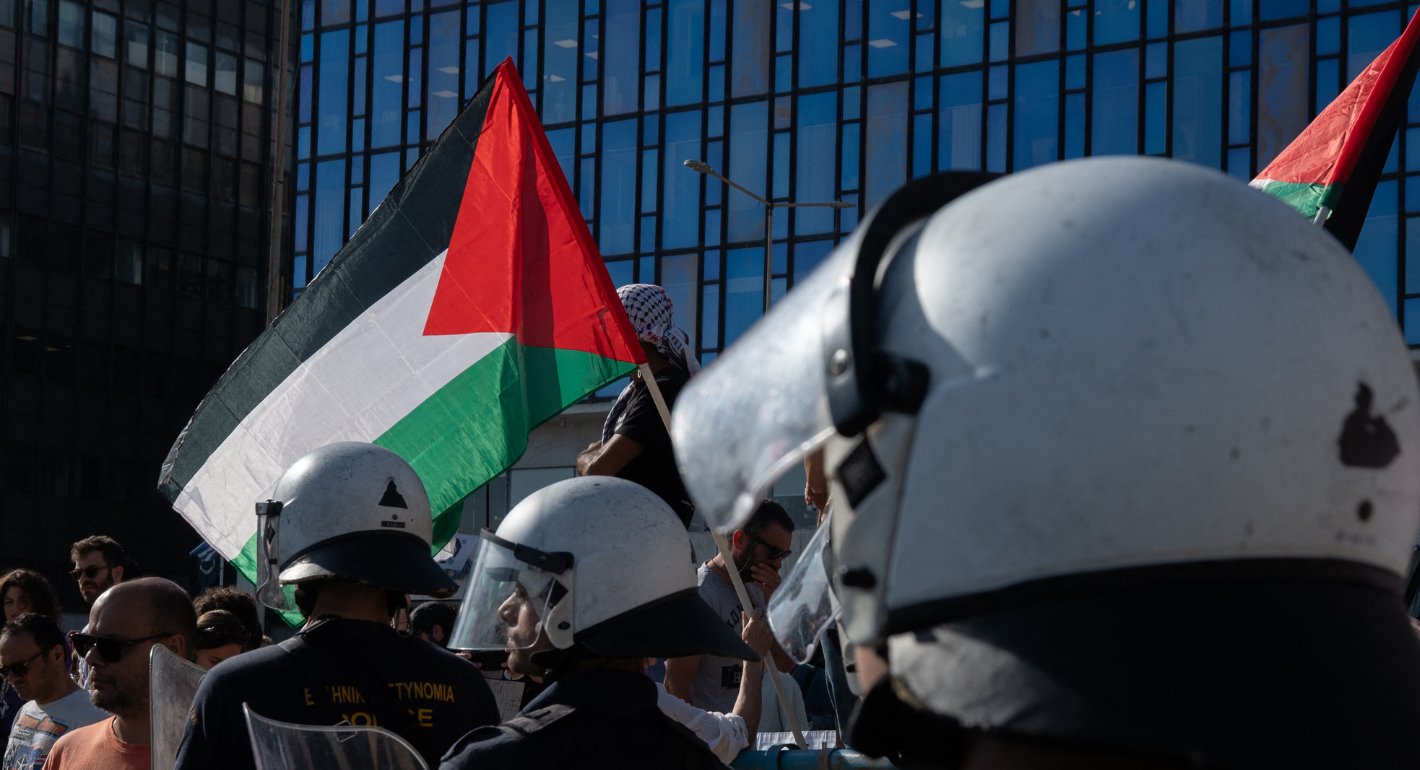
The battle over free speech has taken center stage since U.S. Vice President JD Vance accused Europe of censorship. From travel bans to social media regulation, especially around the Israel-Palestine conflict, are liberal democratic governments weaponizing free speech?

Rym Momtaz, ed.
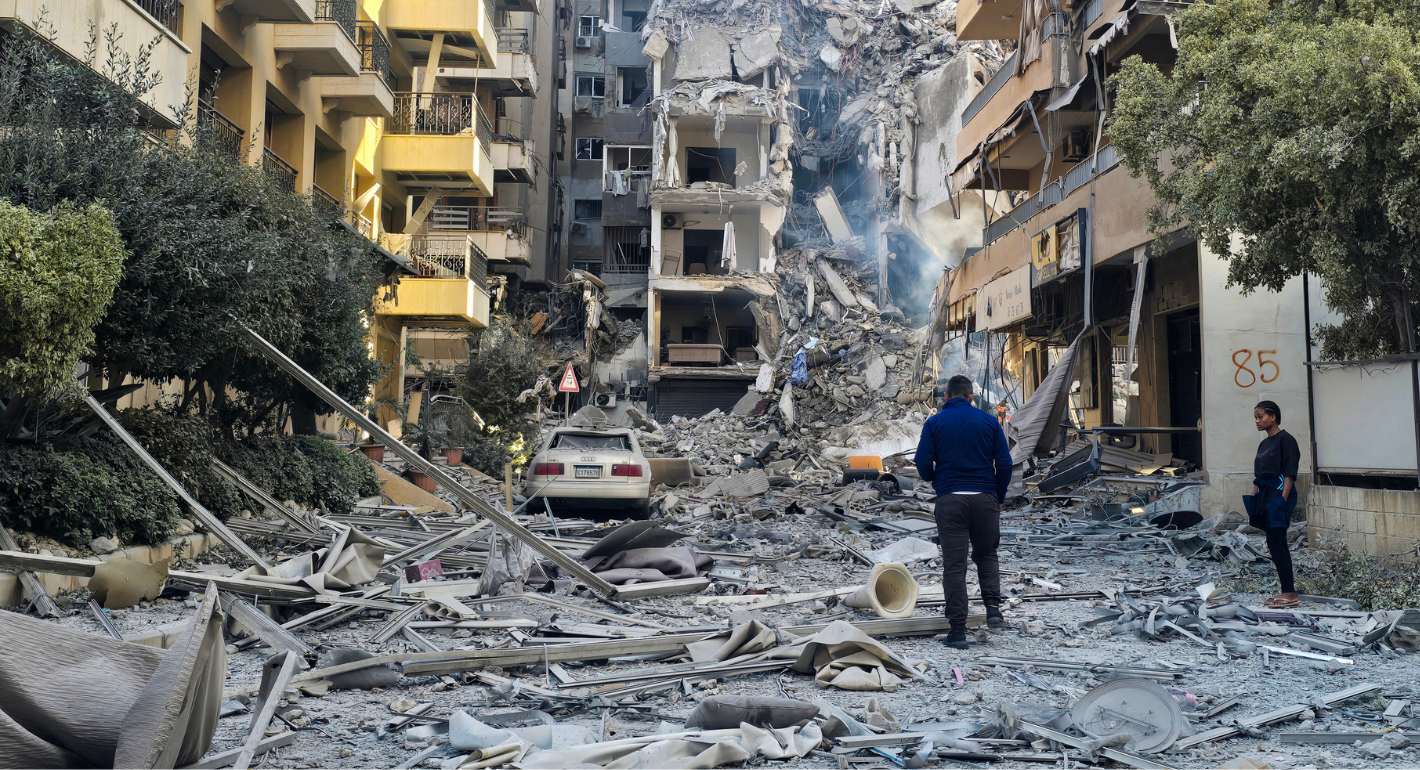
Europe seems to have accepted its sidelining in the Middle East. The EU must reassert its support for the international rules-based order and step up engagement.
Rym Momtaz

Amid uncertainty caused by the Iran war, the global drive for nonproliferation has stalled. With Europe diplomatically marginalized and countries reassessing their nuclear options, efforts to curb the spread of nuclear weapons risk becoming irrelevant.

Jane Darby Menton
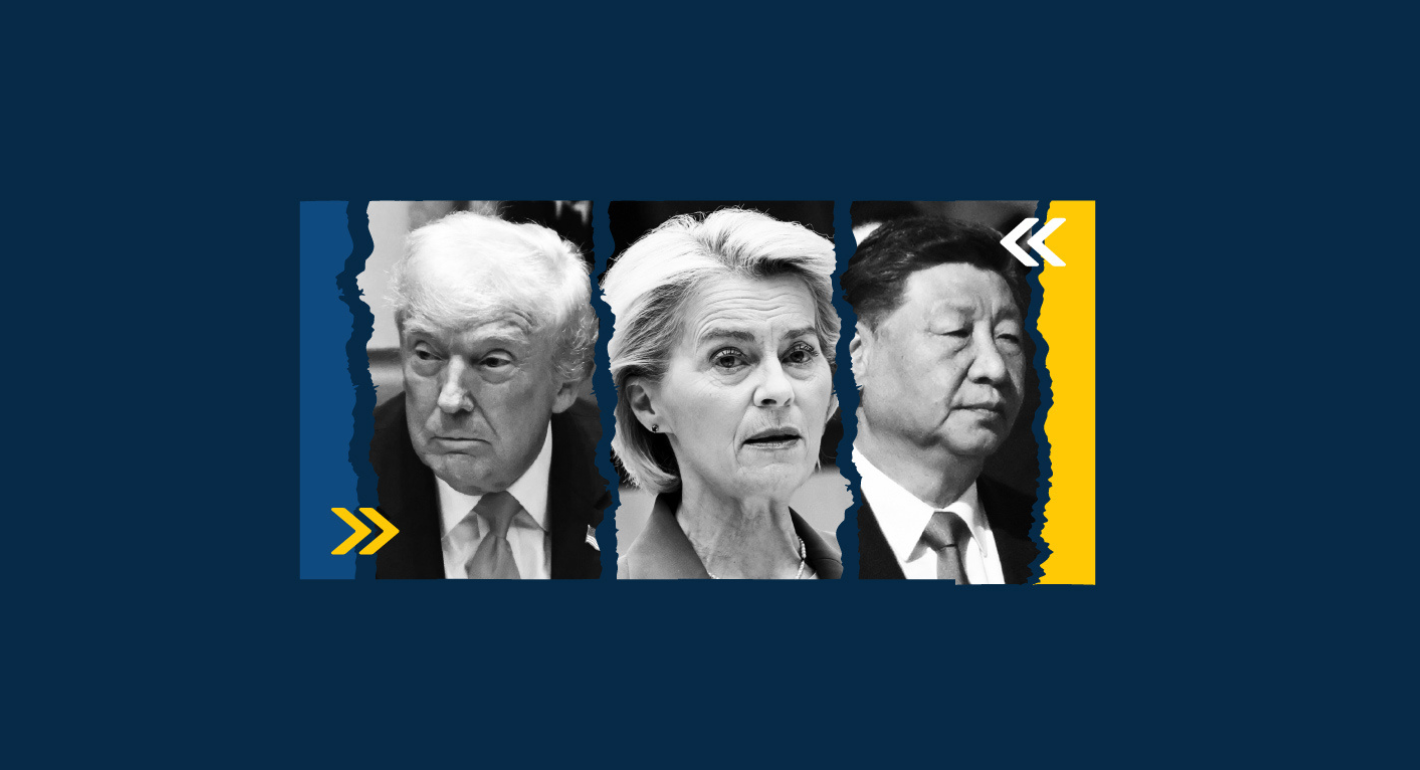
Between the United States’ market-driven approach and China's state-led industrial strategy, Europe is reckoning with how it can remain competitive in the global economy. But is Europe in danger of becoming a U.S. or China colony?

Noah Barkin, Anu Bradford