

Commentary
Marc Pierini
{
  "authors": [
    "Marc Pierini"
  ],
  "type": "commentary",
  "blog": "Strategic Europe",
  "centerAffiliationAll": "",
  "centers": [
    "Carnegie Endowment for International Peace",
    "Carnegie Europe"
  ],
  "collections": [],
  "englishNewsletterAll": "",
  "nonEnglishNewsletterAll": "",
  "primaryCenter": "Carnegie Europe",
  "programAffiliation": "",
  "programs": [],
  "projects": [],
  "regions": [
    "Europe",
    "Middle East"
  ],
  "topics": [
    "EU",
    "Security"
  ]
}
Source: Getty
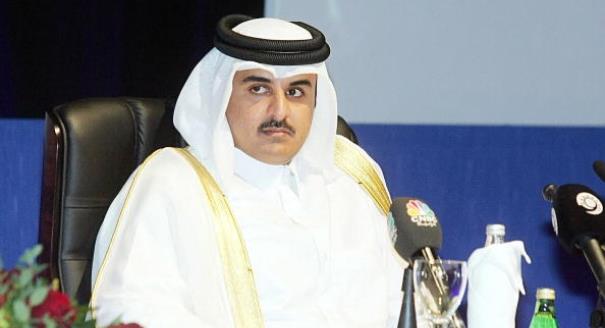
Qatar has become a more assertive regional player than ever before. Now, the new emir has an opportunity to finally explain his country’s long-term foreign policy agenda.
In a surprise move—unprecedented for a Gulf country—Qatar’s ruler, Emir Sheikh Hamad bin Khalifa Al Thani, handed power to his son, Sheikh Tamim bin Hamad Al Thani, on June 25.
Now comes the big question: What will this mean for Qatar’s foreign policy at a time when its Western and Gulf partners have been kept in the dark about its long-term intentions? Perhaps now they can expect at least a change in style and a smoother management of complex issues.
Even though Qatar is a small country, Sheikh Hamad put it on the map after seizing power from his father in 1995. The emir took a number of bold decisions: developing sustainable gas resources; transforming Doha into a prestigious hub; and setting up a top-notch airline, Qatar Airways, and a ubiquitous news channel, Al Jazeera. Qatar also snatched the prize of hosting the 2022 soccer World Cup.
He also imported skills from around the world in fields ranging from education to sports, architecture to art, and security to diplomacy. Under Sheikh Hamad, Qatar maintained close ties with the United States (including hosting a major U.S. Air Force base) as well as Iran (with which gas resources are managed in a coordinated manner).
In taking these steps, Qatar’s ruler made a notable departure from the traditions of a conservative society unaccustomed to bold moves on domestic or diplomatic issues—let alone foreign military intervention.
Domestically, the emir faced pressure to be more moderate, less daring, less rushed. Once, he even backtracked on the sale of alcohol within the luxury residential complex outside Doha known as The Pearl. The new ruler, Sheikh Tamim, is bound to be more cautious on the highly conservative home front.
Internationally, Qatar has become more involved in foreign affairs in the past decade than ever before. Supported by seemingly unlimited financial resources, Qatar’s foreign policy has been crafted and implemented by a handful of people: the emir, his wife Sheikha Moza, Sheikh Tamim, and Prime Minister and Foreign Minister Sheikh Hamad bin Jassim.
Qatar’s bold, almost invasive, presence in Arab affairs in recent years was not simply the brainchild of a small team acting swiftly and paying generously. Qatar’s opportunism took advantage of a number of troubled situations in other Arab countries.
Saudi Arabia’s leadership was hampered by an aging cast of rulers, Egypt was beset by former president Hosni Mubarak’s political paralysis in his later years, while Syria’s Bashar al-Assad has been facing isolation since well before the start of the current civil war. At the same time, Turkey’s phenomenal regional ambitions were curtailed both by the reluctance of Arab leaders toward perceived neo-Ottomanism and by Ankara’s changing policies.
So, the scene was set for Qatar’s entry. Doha seized the opportunity without hesitation. Yet Qatar’s Western partners were left wondering what its true colors were.
Indeed, Qatar’s foreign policy is a puzzling mix. Qatar promoted democracy in the Arab world and fostered the popular upheavals that started in January 2011, while at the same time providing money and arms to some of the most radical Islamist groups. When Qatar joined the NATO operation in Libya—itself an unprecedented move—all went well until Doha decided unilaterally to distribute weapons to brigades of its choice without informing its Western allies. Similarly, over Syria, many in Washington, Paris, and London are wondering what game Doha is really playing.
In the economic sphere, Qatar’s financial clout makes it an attractive partner, especially for cash-strapped European economies. But this doesn’t come without the occasional glitch.
Take Qatari investments in France, which for a long time were welcome without restrictions. But Doha’s recent attempt to acquire 100 percent of the Parisian luxury department store Le Printemps bruised French pride unnecessarily.
When Qatar decided to invest €50 million to support small businesses on the outskirts of Paris, suspicions arose of a hidden religious agenda, especially as these suburbs are largely Muslim. The fund was swiftly reshaped into a joint French-Qatari venture.
These glitches constitute some of the questions the new, young, well-traveled emir will have to answer in the months and years to come.
On the one hand, it is quite probable that developing and running Doha’s foreign policy will remain in very few hands and will continue to benefit from substantial financial resources. On the other hand, in his first address to the nation, Sheikh Tamim said that Qatar was “not part of any regional trends against any other.” That could be interpreted as a sign of moderation toward Arab neighbors, Iran, Russia, and Western partners alike, or indeed in response to the negative feedback it has received from those same countries.
Syria will be of particular concern as Russia and Iran take a harsher stance toward the West. That could create a delicate situation for Qatar because of its support for the Syrian rebels. Similarly, maintaining a smooth relationship with Saudi Arabia will be of utmost importance as the regional situation might deteriorate further as a result of the Syrian war and the Egyptian impasse.
Qatar’s boldness and financial clout will probably remain. But greater predictability and a higher degree of prior consultation with partners would clear some of the serious concern about Qatar’s foreign policy.

Senior Fellow, Carnegie Europe
Marc Pierini is a senior fellow at Carnegie Europe, where his research focuses on developments in the Middle East and Turkey from a European perspective.
Recent Work
Marc Pierini
Marc Pierini
Carnegie does not take institutional positions on public policy issues; the views represented herein are those of the author(s) and do not necessarily reflect the views of Carnegie, its staff, or its trustees.
The Franco-German relationship is on the rocks again. But unlike previous moments of tension, the epochal changes on the world stage require that both step up investment in their bilateral ties.

Rym Momtaz
The EU is putting together a new security strategy to meet today’s myriad challenges. But for any proposal to be effective, the union needs to grapple with its identity and ambitions.

Pierre Vimont
The EU’s new migration policy is not suited to today’s realities. With climate change increasingly becoming a driver of displacement, Europe needs to rethink its deterrence-focused approach.

Shana Tabak
The battle over free speech has taken center stage since U.S. Vice President JD Vance accused Europe of censorship. From travel bans to social media regulation, especially around the Israel-Palestine conflict, are liberal democratic governments weaponizing free speech?
Rym Momtaz, ed.
Europe seems to have accepted its sidelining in the Middle East. The EU must reassert its support for the international rules-based order and step up engagement.
Rym Momtaz