

Commentary
Judy Dempsey
{
  "authors": [
    "Judy Dempsey"
  ],
  "type": "commentary",
  "blog": "Strategic Europe",
  "centerAffiliationAll": "",
  "centers": [
    "Carnegie Endowment for International Peace",
    "Carnegie Europe"
  ],
  "collections": [],
  "englishNewsletterAll": "",
  "nonEnglishNewsletterAll": "",
  "primaryCenter": "Carnegie Europe",
  "programAffiliation": "",
  "programs": [],
  "projects": [],
  "regions": [
    "Western Europe",
    "Germany",
    "Europe"
  ],
  "topics": [
    "Climate Change",
    "Security"
  ]
}
Source: Getty
Germany’s ongoing energy revolution is beset with technical, regulatory, and economic challenges. For it to be a success, the country’s energy sector needs radical reform.
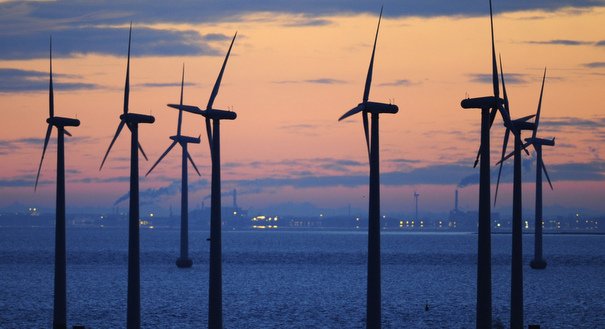
Riffgat is a big wind farm situated off Germany’s north coast where EWE, an energy company, has built 30 windmills. Like many German energy firms, EWE is hoping to reap the benefits of the Energiewende, or “energy turnaround,” that Chancellor Angela Merkel introduced in 2011.
This energy revolution—based on a pledge to phase out nuclear power and promote renewables—is an enormous gamble. If it works, it will prove that Europe’s largest economy and one of the world’s biggest exporters can survive without nuclear energy. If it fails, Germany’s economy will suffer badly, with dire consequences for the rest of Europe too.
Success will also depend on how fast the EU can create a genuine single and competitive energy market in which no country is dependent on Russia for its energy supplies. Such a market would have immense strategic implications for Europe as a global economic player.
Merkel’s outgoing center-right coalition government set 2022 as the deadline for closing the country’s nuclear plants. It also stipulated that by 2050, 80 percent of electricity should be generated by renewables. At the moment, the figure is about 20 percent.
EWE is one of those companies worried about the slow pace of change. It has already invested €450 million ($611 million) into its Riffgat wind farm. But its wind turbines are idle. That’s not for lack of wind. Christian Bartsch, EWE’s spokesman for Riffgat, said it was because the cable connecting the turbines to the electricity grid on land has not yet been completed.
Experts say this kind of snafu is typical of the cost overruns and delays of the Energiewende. “The Energiewende is a big experiment, from the technical, regulatory, and economic aspects,” said Katharina Umpfenbach, an energy expert at the independent Ecologic Institute in Berlin.
From a technical perspective, there are problems of sending energy into the grid, matching demand and supply, and developing ways to store energy. Building grid connections from the north, which has the most wind, to the south, which is the heartland of German manufacturing, is also proving difficult.
As for the regulatory problems, until recently, the regional states were responsible for granting planning permission for the grids, often leading to delays and bureaucracy. In the future, the federal government will take charge. That might speed things up.
There is also the issue of higher energy prices. Electricity prices have increased by 30 percent over the past five years, according to Germany’s Federal Bureau of Statistics. One of the main reasons for higher prices is the Renewable Energy Act of 2000.
That law was designed to foster renewable energy by giving private investors and home owners incentives to build wind and solar farms. The government offered those individuals guaranteed fixed prices for a period of twenty years for any amount of renewable energy they feed into the electricity grid. The offer, say experts, was too good to miss out on. The cost of the subsidies, however, was passed on to electricity consumers.
Peter Terium, chief executive officer of RWE, one of Germany’s biggest energy companies, told shareholders that “€16 billion [$22 billion] in subsidies for renewables are imposed on consumers every year, and this figure is rising.”
At the same time, he added, the Renewable Energy Act and the Energiewende have devastated producers of conventional power. Coal- or gas-fired plants are being forced out of the market. Yet at those times when there is little sun or wind, conventional power plants are still needed to fill the gap.
Another RWE executive, Chief Financial Officer Bernhard Günther, bemoaned the fact that the operating results of the company’s division for conventional power generation had fallen by almost two-thirds. “This is the greatest crisis our industry has faced for many decades,” he said recently.
Now that the German election is over, industry and consumers want to know where they stand.
Energy-intensive sectors such as steel, chemicals, and aluminum want affordable power. At issue, they argue, is German industry’s ability to compete globally.
But consumers, who have been made to pay more than their share of subsidies to renewables in order to lessen the burden on industry, are beginning to question that arrangement. Households have had to face steep price increases for several years now.
None of Germany’s main political parties has an answer to this problem. Merkel and all of her possible allies are committed to the Energiewende—bringing back nuclear power is not an option. The differences in energy policy between Merkel’s conservatives, the Social Democrats, and the Greens are relatively minor. But no matter what coalition emerges from last month’s election, Germany’s government will have its hands full with energy issues.
If Germany’s energy experiment is to succeed, the country’s energy sector needs much better management than it has had so far. However, this radical reform will only become credible once the wind farms off Germany’s north coast start sending their energy to the south, and at a competitive price.
Then it will be up to the EU to see through its energy liberalization program.

Nonresident Senior Fellow, Carnegie Europe
Judy Dempsey is a nonresident senior fellow at Carnegie Europe
Recent Work
Judy Dempsey
Judy Dempsey
Carnegie does not take institutional positions on public policy issues; the views represented herein are those of the author(s) and do not necessarily reflect the views of Carnegie, its staff, or its trustees.

The aftermath of the Ceuta crisis shows Europe has drawn the wrong lessons. Rather than doubling down on failed migration policies, the EU needs to address the underlying roots of such episodes.

Richard Youngs

An overwhelming victory by a far-right-wing party in a small state in eastern Germany will have major repercussions for Chancellor Friedrich Merz’s coalition.
Judy Dempsey

Canadian Prime Minister Mark Carney has twice inspired praise for standing up to U.S. President Donald Trump: at the 2026 World Economic Forum in Davos and on Canada-U.S. trade negotiations. Is Carney showing a third way better than the EU has in dealing with the Trump administration?

Rym Momtaz, ed.

The EU’s responses to two recent incidents expose the gulf between European perceptions and capabilities. Unless the union can bridge that gap, it will never become a real geostrategic power.
Rym Momtaz

In supporting Europe’s far-right, MAGA and Russia both want the same thing: a weaker EU. Europe must defend itself without abandoning the openness these forces exploit.

Armida van Rij