

Commentary
Judy Dempsey
{
  "authors": [
    "Judy Dempsey"
  ],
  "type": "commentary",
  "blog": "Strategic Europe",
  "centerAffiliationAll": "",
  "centers": [
    "Carnegie Endowment for International Peace",
    "Carnegie Europe"
  ],
  "collections": [],
  "englishNewsletterAll": "",
  "nonEnglishNewsletterAll": "",
  "primaryCenter": "Carnegie Europe",
  "programAffiliation": "",
  "programs": [],
  "projects": [],
  "regions": [
    "Western Europe",
    "Europe"
  ],
  "topics": [
    "EU",
    "Foreign Policy"
  ]
}
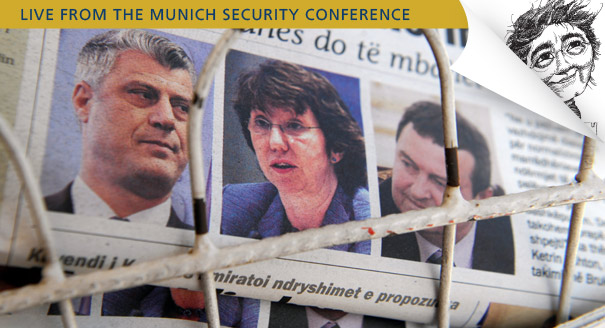
Source: Getty
Last year’s agreement between Serbia and Kosovo to normalize relations remains a major EU foreign policy success. Now, it should have a positive impact on the rest of the region.
It was an incredible sight. For anyone who had spent time covering the Balkan wars of the 1990s, it was highly emotional to hear the EU’s policy chief, Catherine Ashton, chatting with Ivica Dačić, the prime minister of Serbia, and Hashim Thaçi, the prime minister of Kosovo.
The three of them were facing participants during the third day of this year’s Munich Security Conference.
There was no animosity, no trading of insults, no long monologues about history and past grievances. Instead, Ashton, unusually relaxed, conducted a fascinating conversation with Dačić and Thaçi over how and why they decided to end a centuries-old dispute and normalize relations.
Both leaders immediately acknowledged that without any perspective of joining the EU, they would not have made the huge jump to the negotiating table in Brussels.
For Western Europeans, it is easy to forget how attractive the EU remains not only to countries in the Western Balkans but also to the many Ukrainians who, over the past two months, have been waving EU flags to show their desire to be part of the EU.
Dačić and Thaçi also had immense praise for Ashton’s endurance and persistence in starting and leading the talks that led to a deal in April 2013. “She didn’t impose things on us,” Dačić said.
When the talks began in 2011, few of Europe’s leaders held out any hopes of success. They willingly delegated such a thorny issue to Ashton, knowing that they would not have to accept responsibility if she failed. Today, European governments acknowledge that, on the right issue, the EU can be an effective and successful foreign policy player.
Yet Ashton reminded her audience in Munich just how difficult it had been to get the Serbian and Kosovar leaders even to sit at the same table in Brussels.
After all, mutual distrust ran deep. The memory of the war between Serbia and Kosovo in the late 1990s was always in the background, as was the Serbs’ sense of humiliation after NATO had bombed their country in 1999. There was little public trust or support for dialogue.
Even once Ashton managed to start a dialogue, with a minimum of publicity, it was so often touch and go that the talks would break down.
The two prime ministers recalled one such interruption. “I was on the way back to [the Kosovar capital] Pristina,” Thaçi said. “And I was on the way back to [the Serbian capital] Belgrade,” Dačić added. Ashton was almost distraught. But late at night, the authorities at Brussels airport told her that two planes were about to land: those of Dačić and Thaçi.
Having returned to the negotiating table of their own volition, the two delegations and Ashton’s team tackled immensely difficult issues. Questions ranged from how to determine the status of the Serb-majority area of Northern Kosovo to how to ensure that border controls would allow the free movement of people and goods. And of course, there was the extraordinarily challenging task facing the Serbian prime minister of persuading his people to recognize the breakaway region of Kosovo.
“I think that has been one of the most difficult things,” Dačić said. “After all, for so many Serbs, Kosovo belongs to Serbia. But I just had to recognize that the time had come to negotiate and then sell the deal.”
For Thaçi, the accord ended over fourteen years of uncertainty since the end of the war, when Kosovo was placed under UN administration. “With the beginning of the dialogue, it was the biggest victory,” he said. “We knew where we were going. The agreement was to liberate ourselves form the past.”
There is still a huge amount of work to consolidate the deal. But the possibility that Serbia and Kosovo will one day join the EU now provides both leaders and their populations with a compass.
Over time, the accord will hopefully have positive implications for the rest of the Western Balkans, where there is still much unfinished business, especially in Bosnia and Herzegovina and in Macedonia. An upbeat Thaçi said the success of the Serbia-Kosovo breakthrough was a success for the region. Let’s hope so.

Nonresident Senior Fellow, Carnegie Europe
Judy Dempsey is a nonresident senior fellow at Carnegie Europe
Recent Work
Judy Dempsey
Judy Dempsey
Carnegie does not take institutional positions on public policy issues; the views represented herein are those of the author(s) and do not necessarily reflect the views of Carnegie, its staff, or its trustees.

Trump is distracted and Ukraine wants Europe to step up. The continent’s leaders must find their voice and assert it in talks with Russia.

Alissa de Carbonnel

Mounting economic strain and battlefield losses will not necessarily make the Kremlin less dangerous. They could instead push Moscow toward a more aggressive hybrid campaign designed to test NATO’s Eastern flank, exploit allied hesitation, and fracture European resolve.

Maksym Beznosiuk

Over the past ten years, NATO has held almost as many summits as it did during the entirety of the Cold War. Are they still useful, or is it time to stop holding annual meetings?

Rym Momtaz, ed.
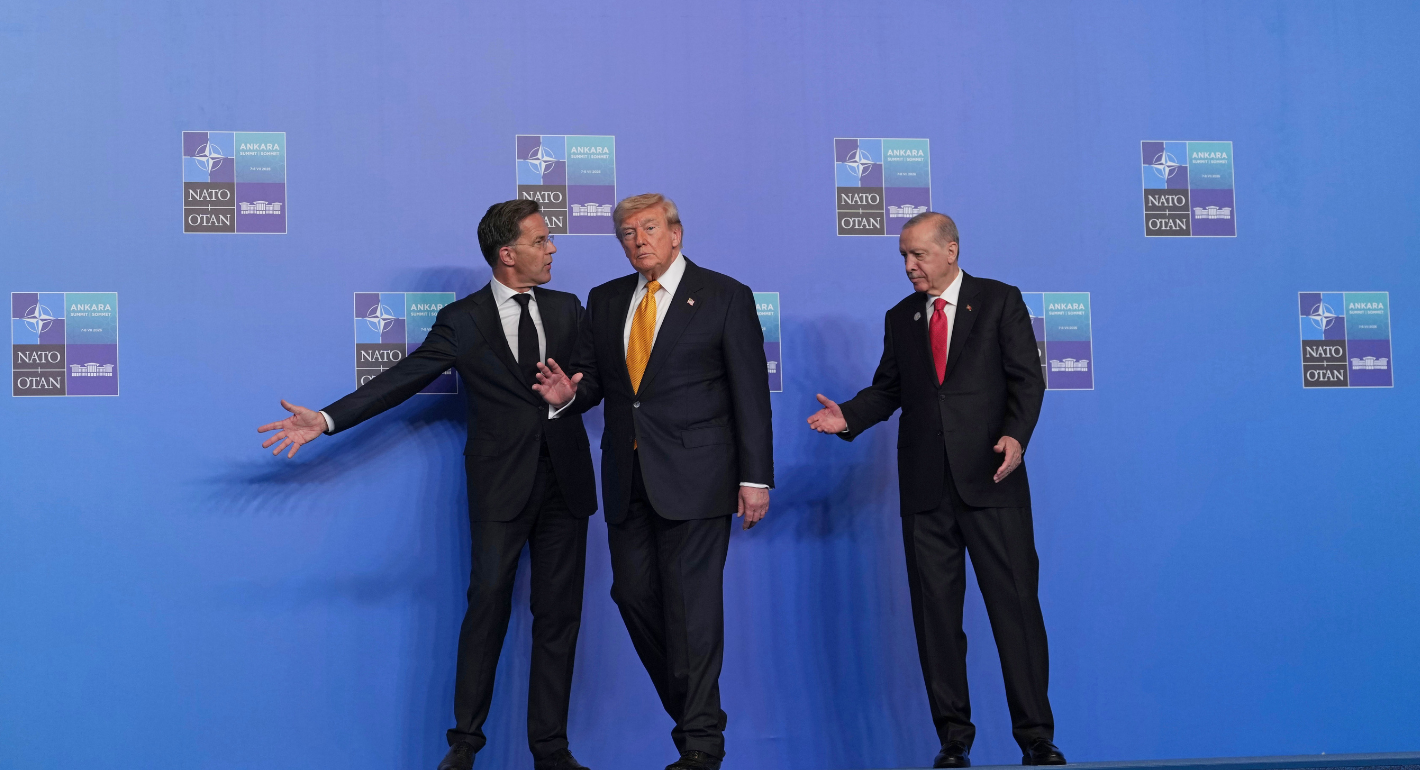
Nearly a year and a half after Europeans leaned into sucking up to Trump, the strategy has produced some benefits when it comes to Ukraine.
Rym Momtaz
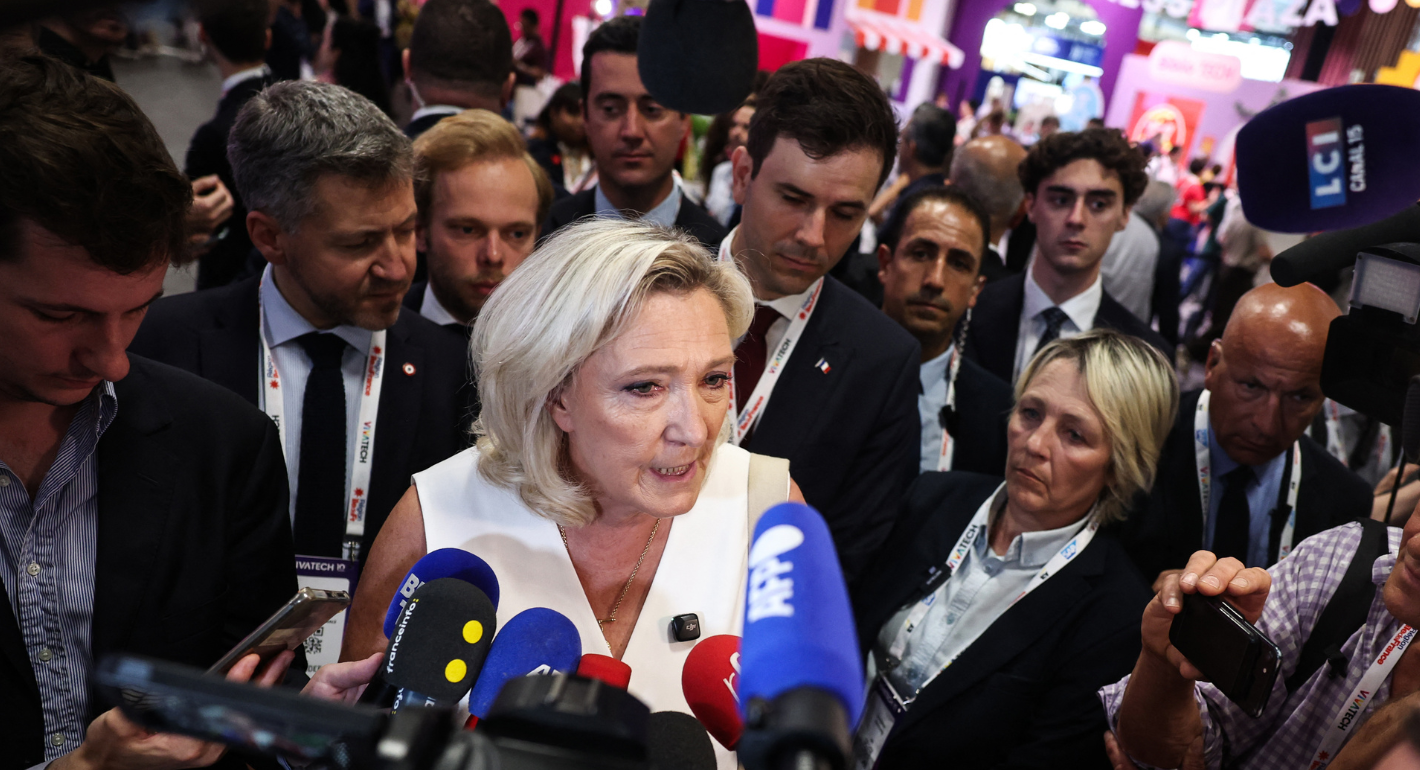
Far-right leader Marine Le Pen can—and will—run in France’s next presidential election. What does the outcome of her appeal against a 2025 embezzlement conviction mean for the country’s political future?
Catherine Fieschi