

Commentary
Nathalie Tocci, Jan Techau
{
  "authors": [
    "Jan Techau"
  ],
  "type": "commentary",
  "blog": "Strategic Europe",
  "centerAffiliationAll": "",
  "centers": [
    "Carnegie Endowment for International Peace",
    "Carnegie Europe"
  ],
  "collections": [
    "Europe’s Eastern Neighborhood"
  ],
  "englishNewsletterAll": "",
  "nonEnglishNewsletterAll": "",
  "primaryCenter": "Carnegie Europe",
  "programAffiliation": "",
  "programs": [],
  "projects": [],
  "regions": [
    "Russia",
    "Europe",
    "Eastern Europe",
    "Ukraine",
    "Western Europe"
  ],
  "topics": [
    "Democracy",
    "Foreign Policy",
    "EU",
    "Security",
    "Civil Society"
  ]
}
Source: Getty
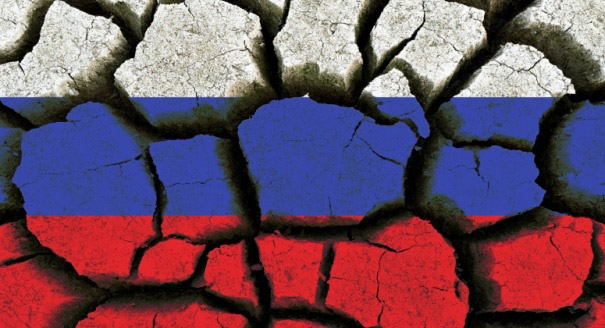
Regardless of how the ongoing crisis in Ukraine unfolds, one thing is clear: it has exposed Russia as a declining power masquerading behind insubstantial posturing.
No matter how the crisis engulfing Ukraine plays out, it has already produced one result that is probably more important than anything else: it has destroyed the myth of Russian strength.
Over the past decade, Russian President Vladimir Putin has tried to convince both the world and his fellow countrymen that Russia is a resurgent great power. He was aided by an unmatched talent for tactical maneuvering, a relatively stable oil price, and a West bogged down by distracting wars and economic woes.
Putin pulled off a war in Georgia, created a Eurasian customs area to rival the European Union, duped the West on Syria, cunningly played former U.S. National Security Agency contractor Edward Snowden, and then torpedoed Ukraine’s signing of a trade and association agreement with the EU. He did all this with resolve, shamelessness, and chutzpah.
And so the world started to believe that there was substance behind the posturing. European and U.S. nostalgists were only too eager to embark on a new Ostpolitik, based on the assumption that Russia was too powerful to deal with through regular diplomacy. Forbes magazine named Vladimir Putin the most powerful man in the world in 2013. And the Economist, as recently as February 1, announced “the triumph of Vladimir Putin.”
The few voices that tried to remind observers that none of this had much substance were not listened to. Audiences remained skeptical when they were told that Russia was actually a power in decline, equipped with the capacity to wreak havoc but not the ability to shape the world. Some liked to hear it because they disliked Russia, but almost all in the West continued to assign almost limitless power to the Kremlin.But now Russia’s bluff has been called. It is not yet clear what lasting impact the sudden downfall of former Ukrainian president Viktor Yanukovych will have in the region. But what is already clear is that the myth of Russian power has been thoroughly shredded. The heroic people of Ukraine’s Euromaidan protest movement, helped unwittingly by the EU and some eleventh-hour U.S. diplomacy, revealed Moscow’s real power status.
In summer 2013, a bureaucratic EU project, backed up with little money and no hard power and executed in a technocratic, apolitical way, was enough to instill mortal fear in the Kremlin. Negotiations on an association and free-trade agreement between the EU and Ukraine had entered their final phase and were scheduled to culminate in a big summit in Vilnius in November.
Dutifully, Putin mustered the Kremlin’s classic arsenal. To set a precedent, he bullied a smaller country, Armenia, into joining his bogus alternative Eurasian project. He then applied the right mix of threats and embraces to convince Yanukovych that his political survival was best guaranteed by staying with Russia instead of joining the West.
Western observers have long interpreted such moves as the outflow of a Russian grand strategy to reestablish a neo-Soviet empire. Those closer to the Kremlin have sought to debunk such imperial talk as nonsense, but they have been largely ignored. It was much more convenient to nurture old Cold War stereotypes than to see through the Kremlin’s scheme. In reality, Putin’s strong-arming of weak neighbors was and is symptomatic of a desperate fight for the survival of a rotten and hollowed-out political system.
In the months after November’s failed Vilnius summit, when Ukrainians flocked to Kiev’s Independence Square to demand a Western future, the weakness of Putin’s system became apparent. He showed an utter disregard for the people he aspires to rule over.
Russia’s human rights violations, corruption, and orchestrated pseudodemocracy are bad enough. But in Ukraine, Russia failed to understand that people are citizens, that they have autonomous ideas about the future they want—and that this future is not just about getting rich but also about having a say. There is no greater misreading of the Ukrainian protests, and no greater condescension, than to dismiss the situation as the product of Western conspiracies and terrorist agitation.
As a result, Putin lost Ukraine in the endgame on February 21. In the multiparty negotiations in Kiev that evening, Moscow agreed to early presidential elections in Ukraine, only to see the situation unravel within hours. Yanukovych had essentially forfeited power. It became clear that once the people had lost their fear, neither Yanukovych nor Putin had any substance left to offer. The spell had been broken, and the myth of universal power was gone.
As soon as apparatchiks, security forces, and puppet politicians sensed that the system would not hold together, they abandoned ship. The change of power happened in less than forty-eight hours, and peacefully.
Putin’s great strength lies in his tactical skill and ruthlessness. The West has long mistaken that for strategic depth and statesmanship. But Putin’s real power, as German journalist Clemens Wergin has noted, is relative: it depends on how much counterpower the West is willing to apply. With its economy, society, and military in decay, Russia’s strength does not have much of an original source of its own.
The EU’s half-baked neighborhood policy contained enough ideas firepower to inspire Ukrainians to call Russia’s bluff. They put the West to shame. No matter how much Europeans love the narcissistic tale of their own decline, liberal democracy remains an enduring attraction and a formidable foreign policy tool. Much that happens in Ukraine will now depend on the West’s ability to learn that all-important lesson from this astonishing episode.
Director, Europe Team, Eurasia Group
Techau is director with Eurasia Group's Europe team, covering Germany and European security from Berlin. Previously, he was director of Carnegie Europe.
Recent Work

Nathalie Tocci, Jan Techau
Jan Techau
Carnegie does not take institutional positions on public policy issues; the views represented herein are those of the author(s) and do not necessarily reflect the views of Carnegie, its staff, or its trustees.
The battle over free speech has taken center stage since U.S. Vice President JD Vance accused Europe of censorship. From travel bans to social media regulation, especially around the Israel-Palestine conflict, are liberal democratic governments weaponizing free speech?

Rym Momtaz, ed.
Europe seems to have accepted its sidelining in the Middle East. The EU must reassert its support for the international rules-based order and step up engagement.
Rym Momtaz

Amid uncertainty caused by the Iran war, the global drive for nonproliferation has stalled. With Europe diplomatically marginalized and countries reassessing their nuclear options, efforts to curb the spread of nuclear weapons risk becoming irrelevant.

Jane Darby Menton
Preparing candidate countries for EU membership is no longer enough. As the enlargement process becomes a reality, the union must also prepare its own societies.

Iliriana Gjoni
Five countries staged the biggest political boycott in Eurovision history over Israel’s participation. With the FIFA World Cup and other sporting or cultural touchstones on the horizon, are boycotts effective?
Rym Momtaz, ed.