

Commentary
Judy Dempsey
{
  "authors": [
    "Judy Dempsey"
  ],
  "type": "commentary",
  "blog": "Strategic Europe",
  "centerAffiliationAll": "",
  "centers": [
    "Carnegie Endowment for International Peace",
    "Carnegie Europe"
  ],
  "collections": [],
  "englishNewsletterAll": "",
  "nonEnglishNewsletterAll": "",
  "primaryCenter": "Carnegie Europe",
  "programAffiliation": "",
  "programs": [],
  "projects": [],
  "regions": [
    "North America",
    "United States",
    "Russia",
    "Western Europe",
    "Germany",
    "Europe"
  ],
  "topics": [
    "Foreign Policy",
    "EU"
  ]
}
Source: Getty
Europeans’ anger over U.S. spying will not simply go away. The sooner top American officials realize that, the sooner both sides can work to repair transatlantic ties.
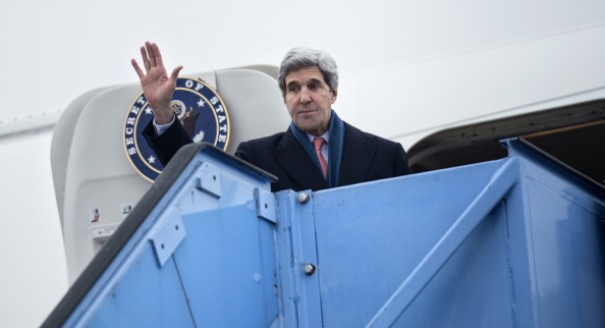
When U.S. Secretary of State John Kerry flew into Berlin on January 31, expectations were high that the United States was finally taking seriously its allies’ anger about the National Security Agency’s pervasive spying.
U.S. snooping is an issue that is refusing to disappear from German newspaper headlines. Crucially, it is increasingly straining transatlantic relations—a situation that neither the Americans nor the Europeans can afford to ignore.
At a meeting with German Chancellor Angela Merkel, Kerry spoke casually of “bumps in the road.” Yet he gave absolutely no reassurance about the United States’ future policy on spying, neither during his Berlin meetings nor afterward at this year’s Munich Security Conference.
In fact, when he spoke to his audience of high-ranking politicians, diplomats, and foreign and security policy specialists in the Bavarian capital, he didn’t even mention the NSA. Nor did U.S. Defense Secretary Chuck Hagel bother to raise the issue publicly.
That was a mistake.
It is not only the German public that needs reassurances and explanations about the scope of the NSA’s reach. It is about restoring trust between the United States and all its European allies. Given the huge issues that governments on both sides of the Atlantic have to tackle, such trust is necessary more than ever.
If the administration of U.S. President Barack Obama wants to start rebuilding trust in the transatlantic relationship, it needs to embark on much more active public diplomacy. “And that means sending very senior people to European countries to do just that,” said Toomas Hendrik Ilves, the president of Estonia, who also took part in the Munich summit.
In that sense, Kerry and Hagel squandered the opportunity to use the high-level conference as a platform to reach out to German and European audiences. The pair did nothing to address the trend identified in a recent poll by German public television that only 57 percent of Germans believe that relations with the United States are good, down from 92 percent in 2012.
Instead, Kerry spent much of his speech recalling his childhood in Europe and stressing America’s commitment to NATO and to Europe. He and Hagel cited all the places and all the conflicts in which the United States was engaged, to prove that America was not turning in on itself. In short, conference participants were told that everything was just fine with the transatlantic relationship.
Yet the State of the Union address that Obama gave in Washington on January 28 presented a very different picture, causing genuine concern not only to European governments but also to U.S. foreign policy experts. In that speech, there was scant mention of Ukraine. There was little serious attention paid to Syria, and nothing about Russia or China. NATO and Europe received only passing references.
But at least Obama did mention that U.S. surveillance methods were being reviewed. That is exactly what Kerry and Hagel should have said in Munich. They should have acknowledged how much the NSA scandal has hurt transatlantic relations, and they should have explained what Washington plans to do about that.
An equally important dimension to the spying scandal is Russia. Vladimir Putin, the Russian president, must be having a field day. The more Edward Snowden, a former NSA official who has been given asylum in Russia, leaks classified information, the more those revelations weaken transatlantic ties. Putin must be delighted about the wedge being driven between the United States and its European allies, in particular Germany.
Neither Obama nor Merkel can afford to ignore this state of affairs. They both need each other more than ever, on issues ranging from the unrest in Ukraine to the negotiations on a new Transatlantic Trade and Investment Partnership. It would be so damaging for the United States and the EU if certain political parties and influential nongovernmental organizations in Europe were to exploit the NSA scandal to jeopardize those talks.
The United States must understand that its allies’ anger over being spied on won’t simply blow over. Ignoring that sentiment carries real costs in terms of influence and policies. Some plain talking from John Kerry and others is sorely needed.

Nonresident Senior Fellow, Carnegie Europe
Judy Dempsey is a nonresident senior fellow at Carnegie Europe
Recent Work
Judy Dempsey
Judy Dempsey
Carnegie does not take institutional positions on public policy issues; the views represented herein are those of the author(s) and do not necessarily reflect the views of Carnegie, its staff, or its trustees.
The EU had to compromise to adopt a twenty-first sanctions package against Russia, exposing growing cracks in the union’s resolve. Is this latest, weaker round worth it to keep pressure on Moscow?

Rym Momtaz, ed.

Trump is distracted and Ukraine wants Europe to step up. The continent’s leaders must find their voice and assert it in talks with Russia.

Alissa de Carbonnel

Mounting economic strain and battlefield losses will not necessarily make the Kremlin less dangerous. They could instead push Moscow toward a more aggressive hybrid campaign designed to test NATO’s Eastern flank, exploit allied hesitation, and fracture European resolve.

Maksym Beznosiuk

Over the past ten years, NATO has held almost as many summits as it did during the entirety of the Cold War. Are they still useful, or is it time to stop holding annual meetings?
Rym Momtaz, ed.
Nearly a year and a half after Europeans leaned into sucking up to Trump, the strategy has produced some benefits when it comes to Ukraine.
Rym Momtaz