

Commentary
Nathalie Tocci, Jan Techau
{
  "authors": [
    "Jan Techau"
  ],
  "type": "commentary",
  "blog": "Strategic Europe",
  "centerAffiliationAll": "",
  "centers": [
    "Carnegie Endowment for International Peace",
    "Carnegie Europe"
  ],
  "collections": [],
  "englishNewsletterAll": "",
  "nonEnglishNewsletterAll": "",
  "primaryCenter": "Carnegie Europe",
  "programAffiliation": "",
  "programs": [],
  "projects": [],
  "regions": [
    "Eastern Europe",
    "Western Europe",
    "Europe"
  ],
  "topics": [
    "Democracy",
    "EU",
    "Foreign Policy"
  ]
}
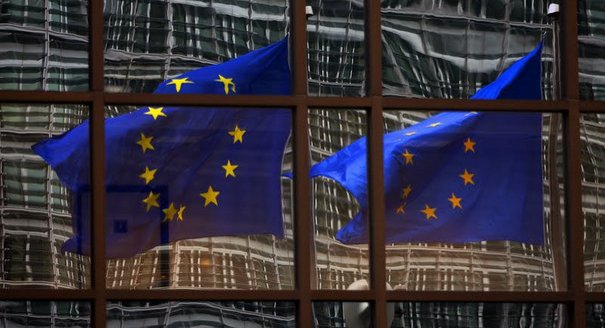
Source: Getty
The EU is facing a serious dilemma: how to reconcile the need for more integration with a growing sense of lost national identity. The answer is more democracy.
The EU has always attempted to square the circle between what’s needed and what’s possible. That has never been easy, but the bloc is now facing the most terrible—if not existential—dilemma of its six-decade history. If Europeans want to retain the great life they have, they will need a lot more European integration. At the same time, more integration would almost certainly destroy the EU.
In terms of necessities, most people agree that the EU needs to improve greatly. It is suffering from a lack of democratic participation. It must protect the economic and security interests of its member states in a globalized world. It must make its currency work, or abandon it. And it must do more to be a strong and credible partner for the United States in the global competition over who defines and enforces international norms and values.
Each of these agenda items will require more cooperation among EU countries. Taken together, these issues make a formidable case for “more Europe.” Of course, more cooperation does not automatically mean more integration. Often, cooperation can be done intergovernmentally, without integration.
But cooperation at the level required to tackle Europeans’ needs will demand significantly more integration, at least in some crucial fields. Cooperation is also a whole lot easier when member states share their sovereign rights through common, treaty-based organizations. Look at the EU today. The parts that work best are, by and large, those that are integrated, such as the single market and trade policy.
If the EU wants to tackle its democratic deficit, it needs two things. The first is subsidiarity, which means making decisions at the lowest level possible. If done right, subsidiarity is a powerful tool that can avoid the need for more integration. But there are some parts of the EU in which subsidiarity is not an option.
In those fields, the EU needs a second instrument: more democratic legitimacy. Shared markets, external policies, fighting crime, consumer rights, energy grids, and environmental standards all require top-level decisionmaking. In such cases, those making the decisions need a democratic mandate. Where law making exceeds the remit of member states, national constituencies are not sufficient to authorize such legislation.
Truly democratic decisionmaking on common European policies needs a common European electorate. In other words: making the EU more democratic will require a European body politic. And that means more integration.
On foreign policy, if the EU wants to protect its global interests, defend itself against external threats, and shape its neighborhood, it cannot do so with atomized external policies. Less and less national glory can be gained in the international market by comparatively small nations. If Europe wants to make its voice heard, it will have to become a more unified—and integrated—foreign policy player. The limits of intergovernmental cooperation have become all too obvious, especially in recent months.
The same goes for economic growth. Reform efforts are still primarily national issues, yet on closer inspection, reform agendas look strikingly similar across the EU. More open markets, smarter tax and spending policies, and better investment are among the priorities of many member states. In a system of closely integrated economies, business is about more than just free trade. Economic upswings and downswings are a shared fate. And that fate makes it desirable to adopt shared fiscal and social policies—and perhaps even shared taxation.
National reform plans have proven ineffectual. Germany violated the EU’s Stability and Growth Pact; Spain failed to regulate its banking system; Greece cheated its way into the euro; and Italy shunned labor market deregulation. The bottom line is that more prosperity in an aging continent will likely mean more economic integration.
The list goes on. No matter how one twists and turns the needs of Europeans in the twenty-first century, it is hard to avoid more integration—not across the board toward an ever closer union, but in select policy fields.
And yet that won’t happen.
That is because the EU’s need for integration clashes with its most formidable opponent: identity. The strongest form of identity in Europe is national identity. The nation-state is still the most powerful source of self-assurance for Europeans.
When globalization, European integration, and economic turmoil plunged nations into crisis, national identities were plunged into crisis too. The effects can be observed across the EU, from the UK to France, from the Netherlands to Hungary. All are engaged in deep soul-searching because they feel their identity is threatened.
Amid this soul-searching, simplistic exercises of “what to keep” versus “what to cut” in the EU won’t help much. It is easy to identify everybody’s personal preference for what the EU should or should not do. What is less easy—but more important—is to work out how to reconcile the sheer necessity of a bloc struggling for long-term survival with a growing sense of citizens’ lost identity.
The European Parliament elections in May this year offer no relief. They are not a single European race, but 28 simultaneous national contests. By promising a pan-European political relevance they can’t deliver, these elections will only widen the gulf between necessity and identity.
Only a truly democratic process at the European, not the national, level can resolve the EU’s dilemma. Only then can Europeans decide how much integration they want, and whether being a European must always be at odds with being a Frenchman, a Pole, a Dane, or a Brit.
Director, Europe Team, Eurasia Group
Techau is director with Eurasia Group's Europe team, covering Germany and European security from Berlin. Previously, he was director of Carnegie Europe.
Recent Work

Nathalie Tocci, Jan Techau
Jan Techau
Carnegie does not take institutional positions on public policy issues; the views represented herein are those of the author(s) and do not necessarily reflect the views of Carnegie, its staff, or its trustees.

While the EU and European governments are embracing the much-lauded middle-power moment, this entails three difficult conundrums.

Richard Youngs

Much has been said of the changes Brussels is trying to make to the EU enlargement process. Here’s why gradual integration might—or might not—be the answer.

Dimitar Bechev

The European Commissioner for Trade is headed to China. But after President Xi’s bridge-building visit to Washington, can a more isolated EU overcome Beijing’s stranglehold on critical raw materials? Who will blink first?

Rym Momtaz, ed.

The domestic impacts of how long it is taking to end the war in Ukraine have pushed the French electorate to the political extremes and compromised the country’s diplomatic capacity.
Rym Momtaz

Before the next wave of EU enlargement takes place, the union needs to grapple with thorny questions of how power is distributed among its members.


Emil Sondaj Hansen, Ditte Brasso Sørensen