

Commentary
Before the next wave of EU enlargement takes place, the union needs to grapple with thorny questions of how power is distributed among its members.
Emil Sondaj Hansen, Ditte Brasso Sørensen
{
  "authors": [
    "Roland Freudenstein"
  ],
  "type": "commentary",
  "blog": "Strategic Europe",
  "centerAffiliationAll": "",
  "centers": [
    "Carnegie Endowment for International Peace",
    "Carnegie Europe"
  ],
  "collections": [],
  "englishNewsletterAll": "",
  "nonEnglishNewsletterAll": "",
  "primaryCenter": "Carnegie Europe",
  "programAffiliation": "",
  "programs": [],
  "projects": [],
  "regions": [
    "Eastern Europe",
    "Russia",
    "Ukraine",
    "Western Europe",
    "Europe"
  ],
  "topics": [
    "Security",
    "Foreign Policy",
    "EU"
  ]
}
Source: Getty
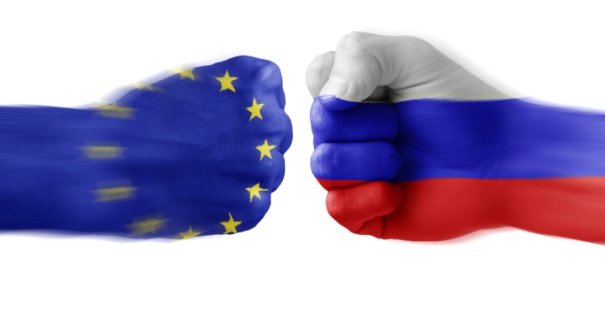
The Ukraine crisis is not about geopolitics, it is a struggle between two political systems. That is good news for the EU—if it can harness its soft power effectively.
In any word cloud about the Ukraine crisis and Russia’s aggression, the word “geopolitics” would probably be one of the biggest. I think it is remarkably overused. Geopolitics essentially means that geographical location—more than culture, history, or ideas—influences, even predetermines, political developments. Napoleon used to say that geography is the destiny of nations.
I beg to differ. If that were true, then neither Ukraine nor Georgia, neither Belarus nor Kazakhstan, would ever have the chance to be free countries and choose their own alliances as long as Russia remains as big as it is. Of course, a geopolitical perspective very much suits the Kremlin, which views NATO enlargement (and, increasingly, EU enlargement or even association) toward Russia’s borders as a hostile act, because it allows the West to penetrate Russia’s sphere of “privileged interest.”
Zoom in on Ukraine’s Euromaidan protest movement, and it’s easy to see that the geopolitical perspective is profoundly mistaken. What is it that hundreds of thousands of Ukrainians took to the streets for? What did many of them risk their careers, their health, their personal freedom, and their lives for? And what did about 90 of them actually die for? For this or that empire? For a direction on the compass? Definitely not!
What these Ukrainians wanted was something ultimately very simple: a decent future in a modern, corruption-free state, with freedom of expression, a functioning justice system, and the ability to choose their own alliances. Or, as Anne Applebaum put it, this conflict “pits Ukrainians (both Russian- and Ukrainian-speaking) who want to live in a ‘European’ democracy with human rights and the rule of law, against Ukrainians (also both Russian- and Ukrainian-speaking)—who support an undemocratic, oligarchic capitalist regime that is politically and economically dependent on Russia.”
That is not geopolitics. That is a struggle of political systems. Incidentally, this also puts the alleged conflict between Western and Eastern Ukraine into perspective. For in the southeast of the country, there are both pro- and antigovernment demonstrations, but the anti-Euromaidan protests are violent and evidently supported by Russia with weapons and special forces.
In fact, even Russian President Vladimir Putin and Russia’s power elite seem to have enriched their erstwhile purely geopolitical narrative with an increasingly comprehensive Eurasian ideology that casts itself as a grand alternative to the West. Admittedly, however, it stands on clay feet as far as stringency and philosophical underpinnings are concerned.
The Kremlin and its ideologues blend nationalism and, increasingly, “traditional values” with imperial rhetoric. They believe liberal democracy is finished. Hence, like all important conflicts between political models, the Ukraine crisis is ultimately about which system owns the future and which one belongs to the past.
This is actually good news for the EU. The union’s soft power finds traction with the people of Eastern Europe—or, at least, with their most dynamic parts, including Russians, by the way. But in this case, soft power will only work under four conditions.
First, for the EU’s soft power to be effective, it has to be backed up by NATO’s hard power, both to deter further aggression and to reassure allies. That requires political resolve.
Second, the EU has to be serious about answering the aspirations of the people who want to live in “European” countries. That requires short-term help as well as a long-term perspective, which must, in the end, include membership. All this will be a hard sell inside the EU.
Third, the West will have to reinvent itself by strengthening the EU and rebuilding the transatlantic alliance. That also means that Western Europeans must take Central and Eastern Europeans more seriously.
Fourth and maybe most importantly, this conflict with Putin’s Russia must be seen for what it is: a political struggle not identical to, but with a similar intensity to, the Cold War. And just like the systemic conflict between 1945 and 1989, this one is winnable.
Roland Freudenstein is deputy director and head of research at the Wilfried Martens Center for European Studies.
Roland Freudenstein
Centre for European Studies
Carnegie does not take institutional positions on public policy issues; the views represented herein are those of the author(s) and do not necessarily reflect the views of Carnegie, its staff, or its trustees.

Before the next wave of EU enlargement takes place, the union needs to grapple with thorny questions of how power is distributed among its members.


Emil Sondaj Hansen, Ditte Brasso Sørensen

A summer of escalation in the Black Sea has hurt Ukraine economically and is exacerbating world food security. A truce is needed—as is a broader reframing of Europe’s Ukraine strategy.

Thomas de Waal

Are Germany’s economic, industrial, and political struggles becoming a liability for the EU’s ability to rise to the geopolitical moment?

Rym Momtaz, ed.

European Commission President Ursula von der Leyen is about to give her annual address on the state of the EU. Here’s what she won’t—but should—say.
Rym Momtaz

The aftermath of the Ceuta crisis shows Europe has drawn the wrong lessons. Rather than doubling down on failed migration policies, the EU needs to address the underlying roots of such episodes.

Richard Youngs