

Commentary
Judy Dempsey
{
  "authors": [
    "Judy Dempsey"
  ],
  "type": "commentary",
  "blog": "Strategic Europe",
  "centerAffiliationAll": "",
  "centers": [
    "Carnegie Endowment for International Peace",
    "Carnegie Europe"
  ],
  "collections": [],
  "englishNewsletterAll": "",
  "nonEnglishNewsletterAll": "",
  "primaryCenter": "Carnegie Europe",
  "programAffiliation": "",
  "programs": [],
  "projects": [],
  "regions": [
    "Western Europe",
    "United Kingdom",
    "Germany",
    "Europe"
  ],
  "topics": [
    "EU"
  ]
}
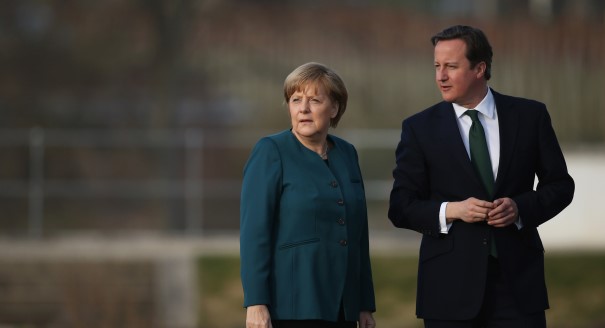
Source: Getty
Merkel and Cameron have boxed themselves into corners over the question of who will be the next European Commission president. Whoever gets the job won’t have an easy start.
Wouldn’t it be marvelous to be a fly on the wall on June 26, when EU leaders meet in Brussels to decide who will become the next president of the European Commission?
Over the past few weeks, the squabbling among Europe’s big countries over the successor to José Manuel Barroso has been fascinating as well as unseemly. This time round, their choice really matters. Europe cannot afford another weak commission president.
The two leaders holding the cards over Europe’s future are Angela Merkel, the German chancellor, and David Cameron, the British prime minister. They are locked in a major disagreement over whether Luxembourg’s former conservative prime minister Jean-Claude Juncker should get the post.
But Merkel has been maneuvered into supporting Juncker. The reason is that the conservative group, of which Merkel’s Christian Democratic Union party is a member, polled the most seats at last month’s European Parliament elections. Juncker, without running for the parliament himself, was the conservatives’ choice of candidate for commission president.
Yet this business of party candidates rests on a very far-reaching interpretation of the EU treaties. It still is the European Council—the EU’s heads of state and government—that chooses the commission president, even if, according to the Lisbon Treaty, the council is required to “take into account” the outcome of the European elections.
The parliament’s major groups seized on this sentence to declare that they would never approve of a new commission president who had not run as an official candidate for one of the groups. This institutional quarrel received much publicity, as a result of which Merkel was eventually pushed into backing Juncker’s claim on the top job in Brussels.
There is little doubt that Juncker would push for more European integration. Integrationists believe this is the only way for the EU to move forward and achieve much greater coherence in economic, foreign, and security policy.
That, of course, is why the idea of Juncker heading the commission horrifies Cameron, who has insisted he will vote against him on June 26. Indeed, Cameron seems to have his back against the wall on this issue.
Back home, he is under enormous pressure from Euroskeptics within his own Conservative Party and his new political rivals in the UK Independence Party (UKIP) to oppose Juncker. UKIP, which did very well in the European elections, wants Britain to leave the EU. Cameron himself has promised a referendum on Britain’s EU membership in 2017, assuming he is reelected as prime minister at the 2015 general election.
Merkel dreads the idea of Britain leaving Europe, which is why she has been trying to find an alternative to Juncker. She needs Britain to remain in Europe for many reasons.
A British exit would seriously weaken the EU’s security, defense, and foreign policy ambitions. Britain’s deep and long experiences of diplomacy, defense, and security cannot be underestimated. And as the United States makes its pivot away from Europe to Asia, Britain’s role in Europe will be even more essential. Finally, despite the travails of its own economy and society, Britain is still valued for its market economy and liberal values.
It is not only Germany but also other important EU countries including the Netherlands, Poland, Finland, and Sweden that dread the idea of Britain quitting Europe. Yet not all of them are prepared to meet Cameron’s demands in rejecting Juncker. And even if they did make concessions to Cameron over certain EU competences, would that be enough to appease Britain’s Euroskeptics? June 26 will show if Cameron and Merkel can find ways to escape their respective boxes.
Whoever the new European Commission president will be, one thing is clear already: he or she will be off to a difficult start given this unhappy squabble. If it is Juncker, he will have to make enormous efforts to prove his value and usefulness to Britain and the other countries that are critical of further integration. If it is anybody else, he or she will be hard pushed to reconcile the European Parliament and the European federalists.

Nonresident Senior Fellow, Carnegie Europe
Judy Dempsey is a nonresident senior fellow at Carnegie Europe
Recent Work
Judy Dempsey
Judy Dempsey
Carnegie does not take institutional positions on public policy issues; the views represented herein are those of the author(s) and do not necessarily reflect the views of Carnegie, its staff, or its trustees.
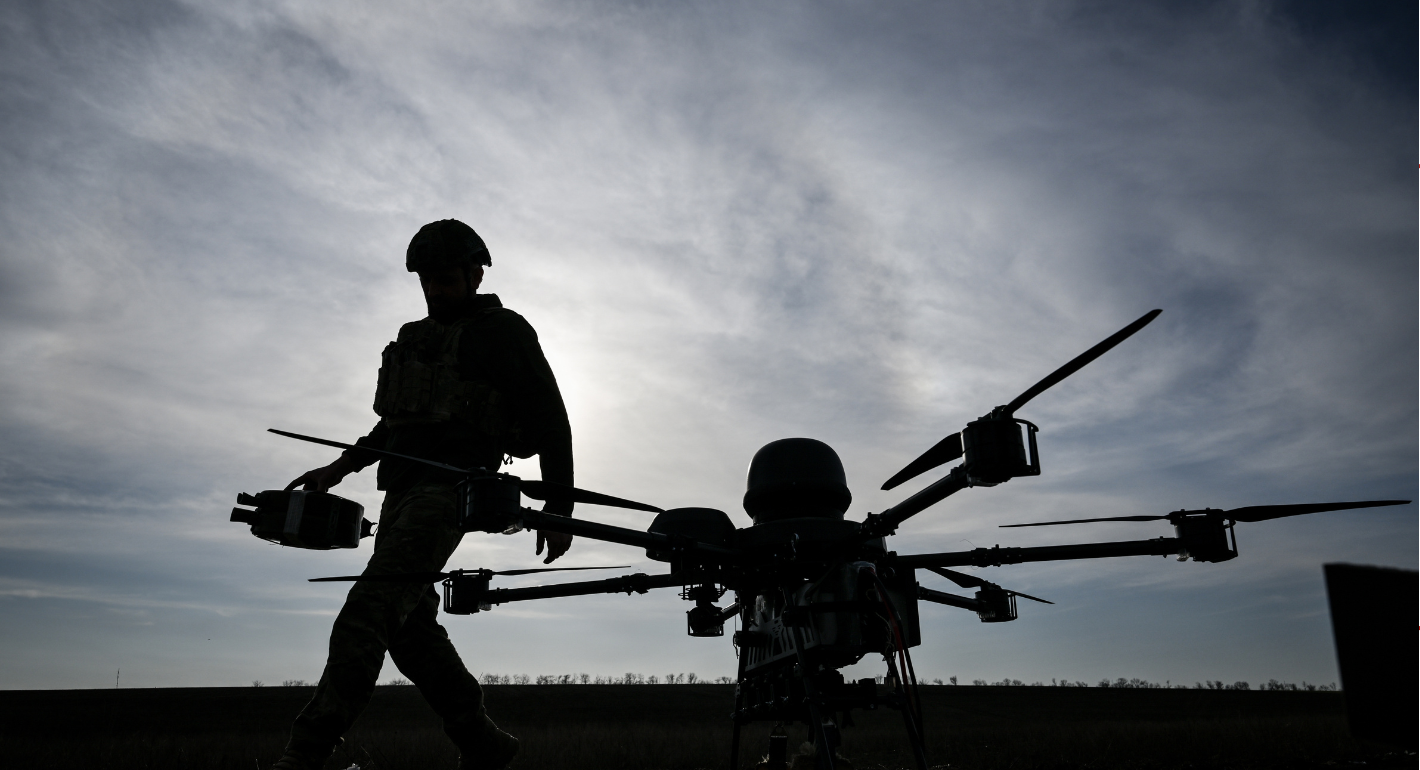
Defense tech innovations will be at the heart of Europe’s new security strategy. But so far, Brussels has been making moves without a broader plan, undermining readiness and credibility.

Raluca Csernatoni

When the U.S.-Iran memorandum of understanding was announced, the UK, France, Germany, and Italy declared their readiness to help demine the Strait of Hormuz and lift nuclear sanctions on Tehran. But does Europe need new tools to recover a diplomatic role?

Rym Momtaz, ed.
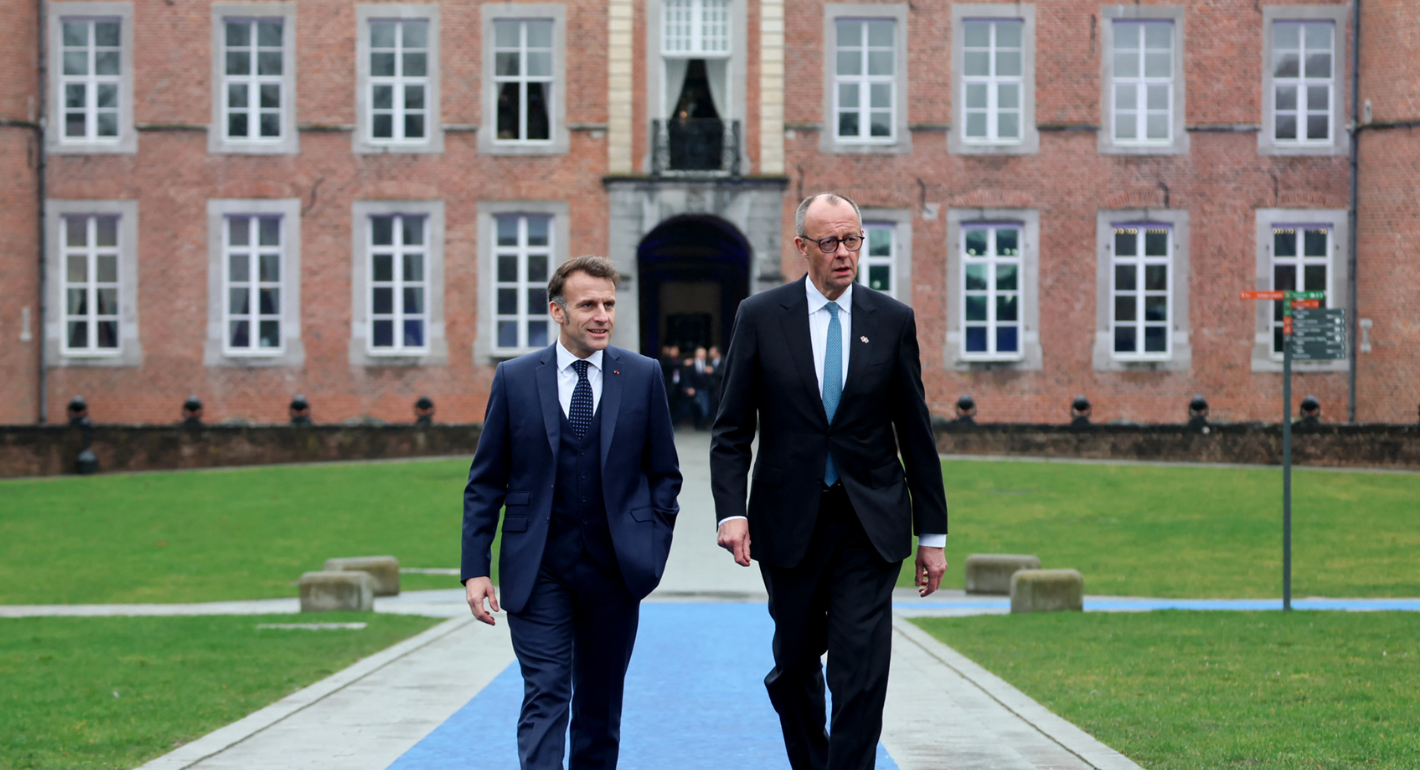
The Franco-German relationship is on the rocks again. But unlike previous moments of tension, the epochal changes on the world stage require that both step up investment in their bilateral ties.
Rym Momtaz
The EU is putting together a new security strategy to meet today’s myriad challenges. But for any proposal to be effective, the union needs to grapple with its identity and ambitions.

Pierre Vimont
The EU’s new migration policy is not suited to today’s realities. With climate change increasingly becoming a driver of displacement, Europe needs to rethink its deterrence-focused approach.

Shana Tabak