

Commentary
Defense tech innovations will be at the heart of Europe’s new security strategy. But so far, Brussels has been making moves without a broader plan, undermining readiness and credibility.
Raluca Csernatoni
{
  "authors": [
    "Roderick Parkes"
  ],
  "type": "commentary",
  "blog": "Strategic Europe",
  "centerAffiliationAll": "",
  "centers": [
    "Carnegie Endowment for International Peace",
    "Carnegie Europe"
  ],
  "collections": [
    "Europe’s Eastern Neighborhood",
    "Transatlantic Cooperation"
  ],
  "englishNewsletterAll": "",
  "nonEnglishNewsletterAll": "",
  "primaryCenter": "Carnegie Europe",
  "programAffiliation": "",
  "programs": [],
  "projects": [],
  "regions": [
    "Asia",
    "Russia",
    "Europe",
    "North America",
    "United States",
    "China",
    "Western Europe"
  ],
  "topics": [
    "Security",
    "EU",
    "Foreign Policy"
  ]
}
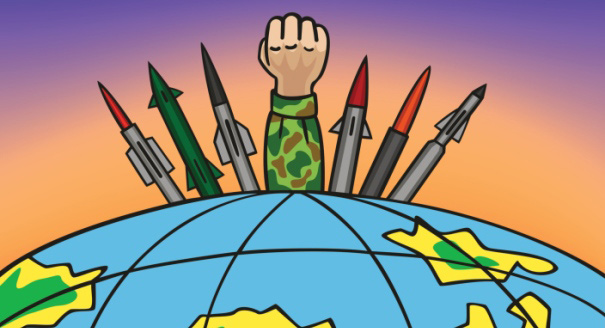
Source: Getty
Tensions in eastern Ukraine do not mark the start of a new cold war. But they may be the prelude to a global conflict that is deeper, wider, and colder still.
After Russia’s annexation of Crimea in March 2014, history is back. It turns out the Cold War was not, in fact, the cold war to end all cold wars but a mere prelude to a second cold war.
That, at least, is the flavor of much recent commentary. And Europeans are asking: What would they have to say for themselves today, those bullish U.S. academics who saw 1989 as the decisive step in the global spread of capitalism and liberal democracy, the end of ideology, the end of history?
The simple answer, one suspects, is that the academics would see no grounds to reconsider their earlier triumphalism. But what if this were not just a case of dented egos, and they were right to stand firm? Two reasons to support U.S. political scientist Francis Fukuyama et al stand out.
The #Crimea conflict involves the same protagonists as the Cold War but that does not make it CWII.Tweet This
The first is that current tensions in Ukraine do not a cold war make. The Crimean conflict happens to involve some of the same Eastern and Western protagonists as the Cold War, but that does not suffice to qualify the crisis as CWII.
The Cold War was characterized by deep ideological bipolarity, wide geographic reach, and a tense international standoff. As such, it marked something of a follow-up and intensification of the wars of 1803–1815, 1914–1918, and 1939–1945. Any new conflict should therefore involve more of the same, not less. It should be deeper, wider, colder.
Yet that does not currently seem to be the case. One recent article on the “new cold war” is typical in conceding that “the world is no longer bipolar, and . . . key players, such as China and India, will avoid being drawn in. . . . The new conflict will not pit one ‘ism’ against another, nor will it likely unfold under the permanent threat of nuclear Armageddon.” So not a new cold war at all, then, just a bit of local trouble between the West and Russia. End of story.
The second reason to sympathetically revisit the U.S. academics’ writings is perhaps more productive. It lies in the fact that predictions of the end of history have always been followed by a return of history. When German philosopher Hegel called Napoleon’s attack on the old order the end of history, his world promptly split into Marxists and reactionaries. When U.S. sociologist Daniel Bell heralded Nazism’s downfall as the end of ideology, implacable East-West blocs emerged.
As #Crimea is not the next ideological standoff, where will that come from?Tweet This
Therefore, those who, following Hegel and Bell, predicted the end of history in 1989 must presumably expect cyclical reversals. If that is so, it raises another, more pressing question. As Crimea is not the next cyclical ideological standoff, where will that come from?
The obvious answer is the growing geostrategic rivalry between China and the United States. But that is a shortcut: as English writer Geoff Dyer has shown, you cannot simply identify the only two superpowers still standing and christen them the world’s next ideological rivals. The starting point needs to be in the tensions created by the spread of capitalism and liberal democracy, in the new global ideological standpoints still looking for protagonists.
Bipolar conflict is inherent to Western capitalism—say followers of Italian philosopher Norberto Bobbio. Left seeks a balancing Right in a bid to create a binary choice on the question of equality. This bipolar conflict spilled out of the national arena with the Napoleonic Wars, and again with twentieth-century totalitarianism. Liberal international institutions have emerged to deal with that overflow, even if they have tended to avoid a bipolar, majoritarian logic.
The next conflict could be global and bipolar, led by the United States and China.Tweet This
So the next conflict could be both global in reach and bipolar, led by the United States as a conservative incumbent and by China as a future-oriented challenger on the emerging Left. Crimea may well be its prelude. That crisis involves a struggling status quo power (the EU) and a backward-looking revisionist one (Russia). As such, the episode mirrors a number of other regional conflicts—not least in the Middle East. This infighting between conservatives and archconservatives, between Right and Right, may be a preparation for a new Right versus Left.
One last question: What might actually make these new tensions cold?
At present, things are said to be chilly primarily because China is holding back, biding its time as the United States and other incumbents are worn down by revisionists like Russia or Iran. This coolness might well be prolonged by the continued threat of nuclear destruction. And yet the nature of such standoffs must surely have advanced since 1989—not least thanks to the development of global political institutions.
And so it may prove. The financial crisis and the Ebola outbreak are just the latest problems to show the depth of global interdependence and the need for well-functioning international institutions. But far from forcing states to cooperate, such situations actually invite a game of chicken. Political challengers like China can enter a battle of brinkmanship with incumbents like the United States, withholding support even at an existential risk to themselves, to leverage a political takeover. Future conflicts may well be deeper, wider, colder—and MAD-er, too.
Roderick Parkes heads the EU Program at the Polish Institute of International Affairs.
Roderick Parkes
Stiftung Wissenschaft und Politik
Carnegie does not take institutional positions on public policy issues; the views represented herein are those of the author(s) and do not necessarily reflect the views of Carnegie, its staff, or its trustees.
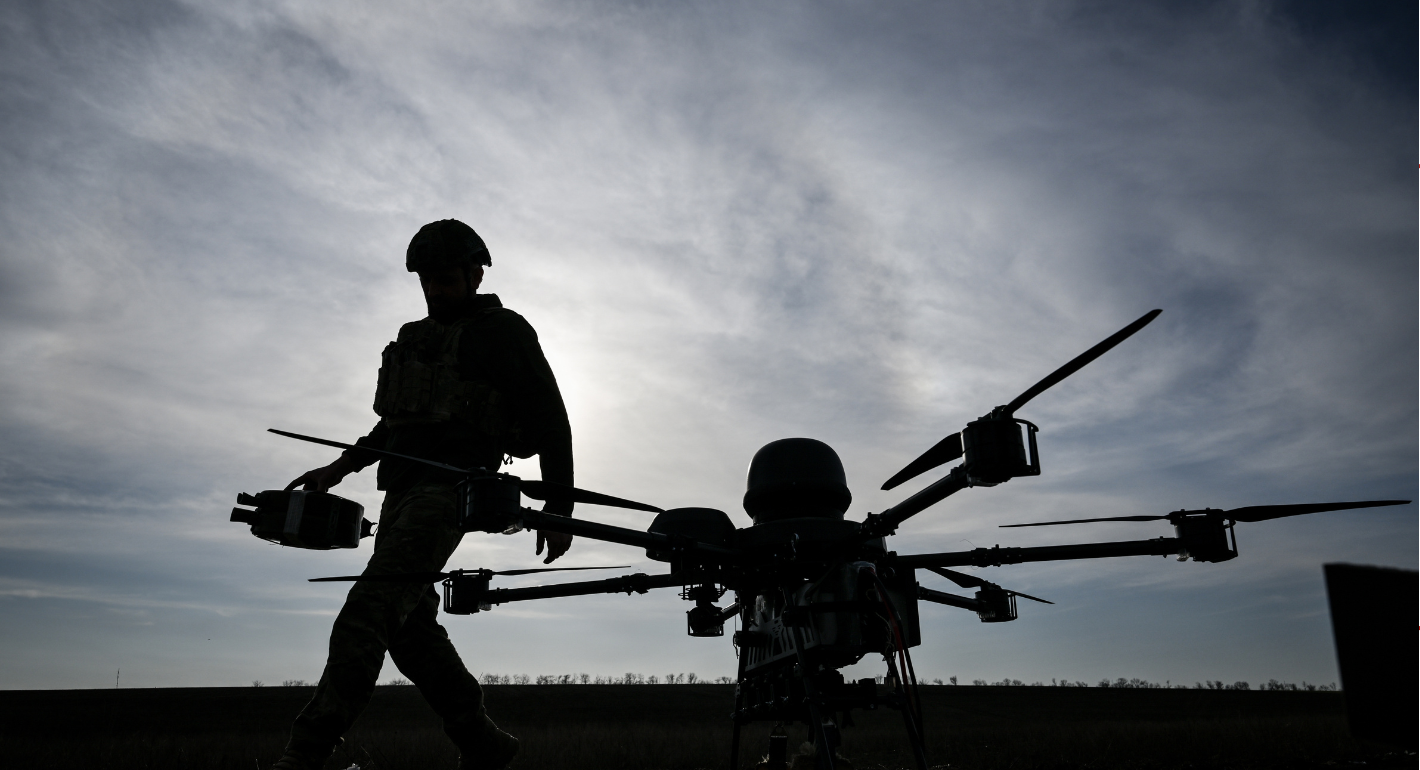
Defense tech innovations will be at the heart of Europe’s new security strategy. But so far, Brussels has been making moves without a broader plan, undermining readiness and credibility.

Raluca Csernatoni

When the U.S.-Iran memorandum of understanding was announced, the UK, France, Germany, and Italy declared their readiness to help demine the Strait of Hormuz and lift nuclear sanctions on Tehran. But does Europe need new tools to recover a diplomatic role?

Rym Momtaz, ed.
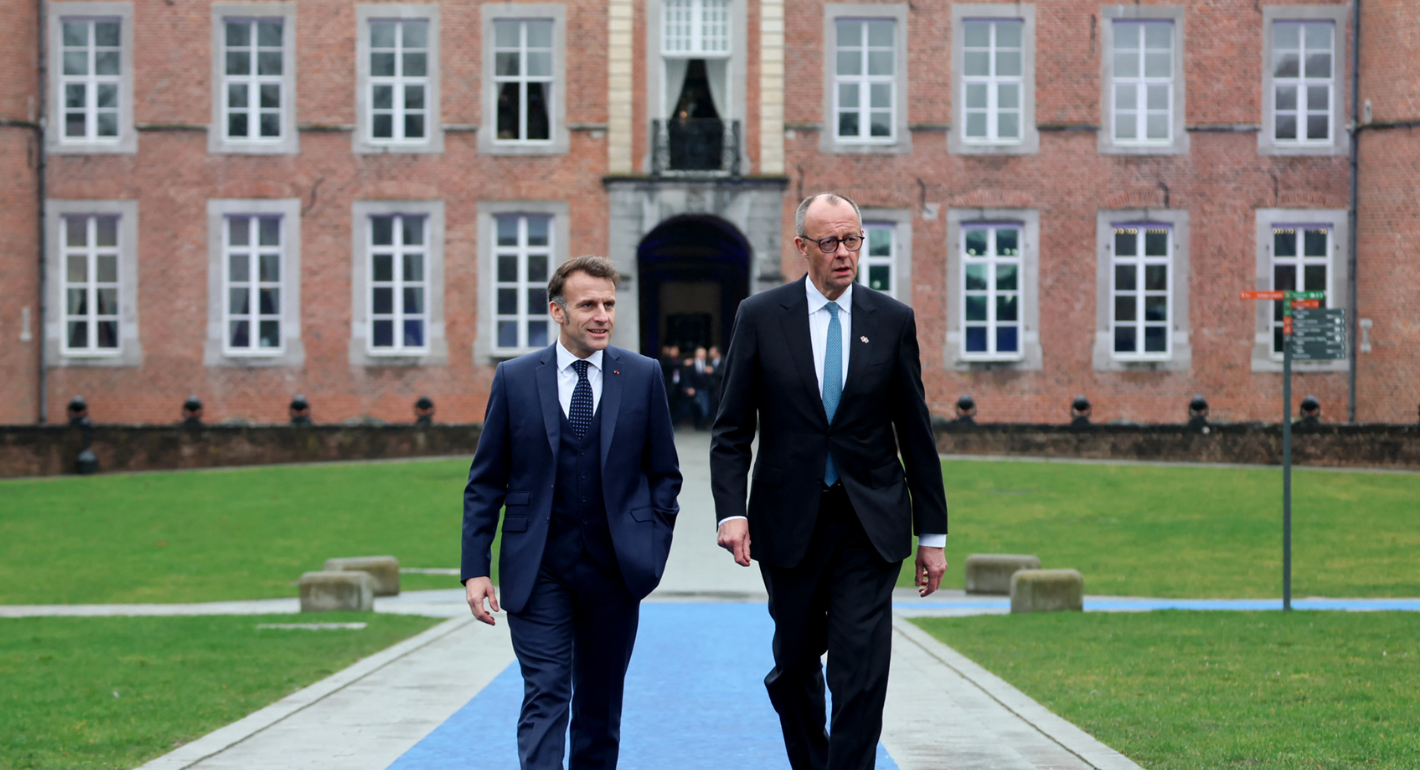
The Franco-German relationship is on the rocks again. But unlike previous moments of tension, the epochal changes on the world stage require that both step up investment in their bilateral ties.
Rym Momtaz
The EU is putting together a new security strategy to meet today’s myriad challenges. But for any proposal to be effective, the union needs to grapple with its identity and ambitions.

Pierre Vimont

The EU’s new migration policy is not suited to today’s realities. With climate change increasingly becoming a driver of displacement, Europe needs to rethink its deterrence-focused approach.

Shana Tabak