

Commentary
Judy Dempsey
{
  "authors": [
    "Judy Dempsey"
  ],
  "type": "commentary",
  "blog": "Strategic Europe",
  "centerAffiliationAll": "",
  "centers": [
    "Carnegie Endowment for International Peace",
    "Carnegie Europe"
  ],
  "collections": [
    "Europe’s Eastern Neighborhood"
  ],
  "englishNewsletterAll": "",
  "nonEnglishNewsletterAll": "",
  "primaryCenter": "Carnegie Europe",
  "programAffiliation": "",
  "programs": [],
  "projects": [],
  "regions": [
    "Russia",
    "Eastern Europe",
    "Caucasus",
    "Georgia"
  ],
  "topics": [
    "Security"
  ]
}
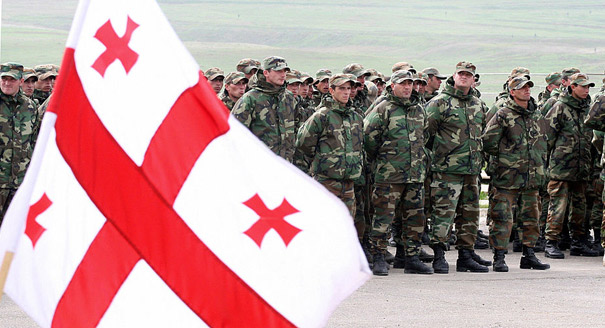
Source: Getty
Georgia’s defense minister spoke candidly about her expectations for the July 2016 NATO summit and about the security vacuum in Eastern Europe.
The notion of a Europe whole and united hardly got a look-in at this year’s Globsec forum of foreign and security policy experts in Bratislava. Yet becoming part of the Euro-Atlantic structures of NATO and the EU is key to Georgia’s future direction and stability. Since 2012, when the Georgian Dream coalition defeated the party led by then president Mikheil Saakashvili, reforms have lost their momentum, stagnation has set in, and corruption and nepotism have been on the rise, according to a new report by the Center for Eastern Studies. There are disagreements too about Georgia’s relations with Russia.
None of the above has made things easier for Tinatin Khidasheli, who was appointed Georgian defense minister nearly a year ago. In an interview on April 16, she spoke candidly about Georgia’s expectations for the July 2016 NATO summit in Warsaw, the security vacuum in the region, and relations with Russia. I began by asking her about the summit.
Judy Dempsey: What does Georgia expect from the NATO summit in Warsaw?
Tinatin Khidasheli: Of course we would like to become a member of NATO. Georgia has been a loyal partner and a reliable partner, and at the same time the security and defense sector has been undergoing considerable transformation. So I think these three things—loyalty, reliability, and transformation—correspond to NATO’s standards.
JD: We heard here at Globsec that no NATO member has a veto over any country joining the alliance. Do you really believe that?
TK: I want to believe it. I also want to believe that aspiring members will be judged on their own merits and not necessarily as parts of a package deal for a group of countries.
JD: That’s not the reality. Within NATO, aren’t there are several big member states that don’t want to offer Georgia membership—or even a Membership Action Plan, which would put the country on a firm path to joining the alliance? They see Georgia’s security through the prism of Russia. They don’t want to antagonize Russia.
TK: Yes. That is so. But we have a completely different vision of things, which is obvious. We want others to see Georgia as an opportunity rather than as a threat to anybody’s security.
JD: In what way?
TK: The outcome of the NATO summit in Bucharest [in 2008] proved that if there had been more courage, the August war [in which Russia attacked Georgia in 2008] could have been avoided.
JD: In other words, Georgia should have been offered a Membership Action Plan, which could have deterred Russia—but instead, Berlin and Paris opposed granting Georgia that status?
TK: And something else. Georgia presents an opportunity for another reason. In today’s difficult world, many values are being challenged. Georgia stands out as a showcase to prove that values matter. And Georgia is a country that can prove it can do the necessary reforms, prove its patience, prove it can perform well, and prove it can transform its entire system according to the standards of the EU and NATO. If you carry out that transformation of your own country for yourself, then the next logical step will come, and the experience will serve as an example for other countries that it is worth trying despite the difficulties.
JD: A logical step it should be, but it probably won’t be. Since you refer to the region, let’s look at the security vacuum that exists in Georgia and Ukraine, to name just two countries. Would Georgia’s membership in NATO enhance the security of the region?
TK: Yes, definitely it would enhance the security of the region. But more importantly, it would enhance the democratic process in the region, which is no less important than security in today’s world.
JD: It would presumably also send a signal to Russia.
TK: It would send a signal to everybody. A positive signal in this case. We always say—and we mean it—that Georgia’s membership in NATO and the EU would not be aimed against anyone. It would have its own value. It would serve its own cause, namely that this country is destined to be a member of the European family. It would also show that countries are evaluated on their own merits. [Members of NATO and the EU] have benefited by having safer people and more developed societies.
JD: Maybe the idea of a Europe whole and free has gone off the radar screens of most EU and NATO countries. How do you deal with this?
TK: When the new government was elected in Georgia in 2012, from day one we said, “strategic patience.”
JD: What does that amount to in terms of substance?
TK: That’s our policy on security. We don’t want anyone to stop Georgia anymore. The sacrifices of the 2008 war were high for a small country. Georgia lost lives, and it lost territory. There is an ongoing effective occupation of 20 percent of the country. On top of that, the war stopped the development of the entire country. Our economic growth was much higher before the war. It took quite a while before we regained that momentum. Our integration process was on the up, then it stopped because of the war. The war even killed the country’s optimism to a certain extent.
When a country is on the up, people become more enthusiastic. More optimistic, naturally. They invest more and work more because they have a feeling that there is stability and that they can work as normal human beings. And then when the war happens, everything stops. No one knows what is going to happen.
JD: And now, eight years on?
TK: We have regained this confidence, this self-confidence as a state. When the new government came to power, we said we were not going to allow that to happen again.
JD: Which is why NATO membership is so important to you?
TK: NATO membership is not the only answer to our problems, but it is a substantial one. It’s also about how we behave. How responsible we are. How we work strategically to secure the country from the immediate threats that it is facing. And obviously, we need much bigger support than we have today.
JD: There’ll always be countries in NATO that would say that Georgia can’t join because it does not have territorial integrity.
TK: Of course. But no one ever asked that question when West Germany joined NATO [in 1955], when Germany was divided in two and there were occupying forces standing on the other side of the Berlin Wall. If someone is looking for an excuse—and it is just an excuse and not a real concern—then we need to respond to that excuse.

Nonresident Senior Fellow, Carnegie Europe
Judy Dempsey is a nonresident senior fellow at Carnegie Europe
Recent Work
Judy Dempsey
Judy Dempsey
Carnegie does not take institutional positions on public policy issues; the views represented herein are those of the author(s) and do not necessarily reflect the views of Carnegie, its staff, or its trustees.
While Russia is not ready to sue for peace on Europe’s terms, it could still either seek a ceasefire in Ukraine or try escalation. Brussels needs to prepare for both and prioritize that preparation over normative discussions.
Kadri Liik
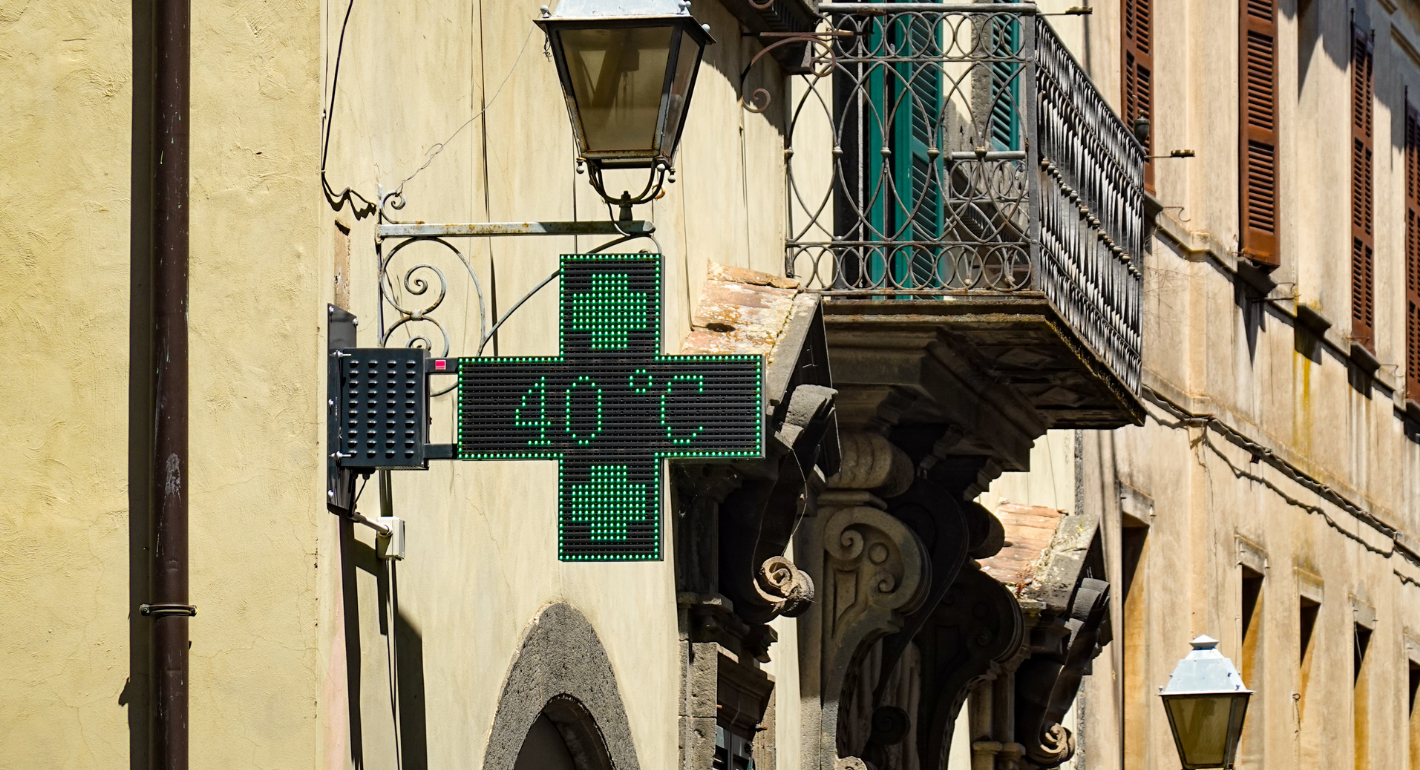
Western Europe’s dual-use infrastructure melted down during its latest heat wave. If a predicted hot weather event can take the continent by surprise, what chance does it have to withstand unexpected geopolitical crises?

Rym Momtaz
There is an elephant in the room when it comes to the EU’s upcoming security strategy: Donald Trump. Unless European leaders acknowledge the depth of the transatlantic crisis, true autonomy will remain out of reach.

Stefan Lehne
The Franco-German relationship is on the rocks again. But unlike previous moments of tension, the epochal changes on the world stage require that both step up investment in their bilateral ties.
Rym Momtaz
The EU is putting together a new security strategy to meet today’s myriad challenges. But for any proposal to be effective, the union needs to grapple with its identity and ambitions.

Pierre Vimont