

Commentary
Marc Pierini
{
  "authors": [
    "Marc Pierini"
  ],
  "type": "commentary",
  "blog": "Strategic Europe",
  "centerAffiliationAll": "",
  "centers": [
    "Carnegie Endowment for International Peace",
    "Carnegie Europe",
    "Carnegie Russia Eurasia Center"
  ],
  "collections": [
    "Turkey’s Transformation",
    "Europe’s Eastern Neighborhood",
    "Europe’s Southern Neighborhood"
  ],
  "englishNewsletterAll": "",
  "nonEnglishNewsletterAll": "",
  "primaryCenter": "Carnegie Europe",
  "programAffiliation": "",
  "programs": [],
  "projects": [],
  "regions": [
    "Russia",
    "Europe",
    "Türkiye",
    "Middle East"
  ],
  "topics": [
    "Foreign Policy"
  ]
}
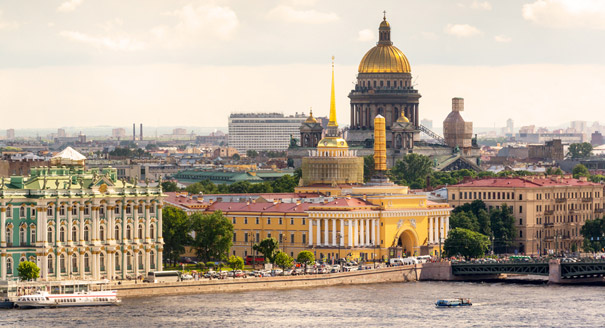
Source: Getty
At a meeting in Saint Petersburg between the Russian and Turkish presidents, an opportunistic convergence of minds could emerge between the two leaders.
In the wake of the failed putsch in Turkey on July 15 and the ensuing perplexities in Western military circles, questions have been asked about Ankara’s reliability in NATO and in the coalition against the self-proclaimed Islamic State. My question today is different: Will Russia’s long game of undermining the EU’s cohesion, the U.S. status as the major superpower, or the role of NATO find fertile ground in post-coup Turkey? One hypothesis is that Russia may go for a long-term game-changing move and lure Turkey away from the West as part of a broader geopolitical reconfiguration.
In Turkey, the state and the people are in shock, the army is being reorganized, and a wide-ranging purge is ongoing. Anti-Western sentiments are on the rise among a number of politicians and a large segment of the population. There is unease at the thought that Western powers are evaluating the coup’s potential damage to NATO’s second-largest conventional army, the possible consequences for the defense of Europe, and the implications for operations of the anti–Islamic State coalition.
Russia, for its part, has a long-standing policy of challenging NATO, the United States, and the EU, for example through the harassment of NATO’s defenses around Europe or through its good relations with the most vocal anti-EU forces on European soil in, say, France, Hungary, or the UK. Similarly, the Russian military intervention in Syria that began in September 2015 illustrated a willingness to counter Western influence in the Middle East in addition to rescuing the regime of Syrian President Bashar al-Assad.
Against this complex background, the presidents of Russia and Turkey will meet in Saint Petersburg on August 9.
Their first objective will be to close the dispute triggered by the downing of a Russian aircraft over Turkish territory in November 2015. Exports, construction contracts, and tourism have been badly affected by the resulting Russian sanctions, so reconciliation will bring welcome economic benefits to Turkey. Also, Russia—already a major partner of Turkey in the energy sector, providing 58 percent of Turkey’s gas consumption and building a nuclear power plant—could resume work on the suspended Turkish Stream pipeline across the Black Sea, which would boost Turkey’s hub as a gas supplier to Europe.
The two leaders will discuss another set of issues: counterterrorism cooperation, fighting the Islamic State, and the future political settlement in Syria. Moscow’s demands that Ankara seal the border between Turkey and Islamic State–controlled territory in Syria do not differ much from similar Western requests; but discussions about the future of the Assad regime and the role of Syrian Kurds will be more delicate.
Given Russia’s predominant role in rescuing the regime in Damascus and shaping the military and diplomatic landscape in Syria since September 2015, there is very little chance that Ankara can alter Moscow’s view on a political transition in Syria. The price for a real Russian-Turkish reconciliation might well be an admission by Ankara that the best formula for ending the Syrian civil war and containing the Islamic State is to maintain the regime in place, including Assad, whose fate will be ultimately determined by Russian-style free elections.
Incidentally, an evolution of Ankara’s policy toward overt acceptance of the Assad regime might usefully ease up some tensions at home, as Turkey’s main opposition party, the Republican People’s Party (CHP), has long viewed the Assad regime as a guarantor of Turkey’s security.
Concerning the Syrian Kurds, who are currently the best partners of Russia and the United States in fighting the Islamic State, Ankara will probably want to obtain firm guarantees that the combat role of the People’s Protection Units (YPG), the armed wing of the Syrian Kurdish Democratic Union Party (PYD), does not connect with the activities of the insurgent Kurdistan Workers’ Party (PKK) in Turkey. If such guarantees are not possible, Moscow and Ankara will have to agree to disagree.
Either way, the outcome of the Saint Petersburg talks will be a major occasion to check where Turkey stands on the future of Syria and the fight against the Islamic State.
But there might be an even bigger game in town. Like Berlin, Brussels, Paris, and Washington, Moscow immediately supported the legitimacy of elected institutions in Turkey in the wake of the failed coup attempt. But unlike Western capitals, Moscow has not bothered much with rule-of-law considerations. A trend toward a more authoritarian leadership in Turkey, one with fewer checks and balances than in any Western democracy, is not something to worry Russian President Vladimir Putin much. On the contrary, it helps him demonstrate that the Russian style of muscular governance is useful to Turkey, at a time when the EU and the United States keep reminding Ankara of their own brand of liberal democracy.
At the same time, the Turkish leadership is forging ahead with the reformation of the armed forces, the elimination of conspiratorial forces within the state and the society, and the organization of an executive presidential system, closer in nature to the Kremlin’s political architecture than that of France or the United States. While doing all this, Ankara also needs demonstrations of untainted support from third countries.
In Saint Petersburg, an opportunistic convergence of minds might therefore emerge between the two leaders, with each having his own reasons. Although the Turkish foreign minister was prompt on July 30 to state that relations with Russia and with the West were not alternatives, the temptation for Moscow could be to use its reconciliation with Ankara to shame the Western response to Turkey’s attempted putsch, or as an opportunity to promote Russia’s Eurasian policy framework.
The fact remains that Turkey operates within two fundamentals: its biggest economic anchor by far is the EU, with few viable alternatives; and its proven security anchor is the United States and NATO. Save in the energy sector, today there is little in Russia’s economic or military attractiveness that can compete with these realities, other than a purely political narrative.
In the short term, an easy diplomatic move for Russia could consist of a rapprochement between the Shanghai Cooperation Organization and Turkey—that is, beyond the “dialogue partner” status that Turkey currently enjoys. This would satisfy pride on both sides without costing much. In the longer term, if Russia decided to discuss with Turkey a partnership on political and defense matters, it would be part of a much broader game across the European continent.

Senior Fellow, Carnegie Europe
Marc Pierini is a senior fellow at Carnegie Europe, where his research focuses on developments in the Middle East and Turkey from a European perspective.
Recent Work
Marc Pierini
Marc Pierini
Carnegie does not take institutional positions on public policy issues; the views represented herein are those of the author(s) and do not necessarily reflect the views of Carnegie, its staff, or its trustees.
When the U.S.-Iran memorandum of understanding was announced, the UK, France, Germany, and Italy declared their readiness to help demine the Strait of Hormuz and lift nuclear sanctions on Tehran. But does Europe need new tools to recover a diplomatic role?

Rym Momtaz, ed.
The Franco-German relationship is on the rocks again. But unlike previous moments of tension, the epochal changes on the world stage require that both step up investment in their bilateral ties.
Rym Momtaz

The EU is putting together a new security strategy to meet today’s myriad challenges. But for any proposal to be effective, the union needs to grapple with its identity and ambitions.

Pierre Vimont

The EU’s new migration policy is not suited to today’s realities. With climate change increasingly becoming a driver of displacement, Europe needs to rethink its deterrence-focused approach.

Shana Tabak
The battle over free speech has taken center stage since U.S. Vice President JD Vance accused Europe of censorship. From travel bans to social media regulation, especially around the Israel-Palestine conflict, are liberal democratic governments weaponizing free speech?
Rym Momtaz, ed.