

Commentary
Judy Dempsey
{
  "authors": [
    "Judy Dempsey"
  ],
  "type": "commentary",
  "blog": "Strategic Europe",
  "centerAffiliationAll": "",
  "centers": [
    "Carnegie Endowment for International Peace",
    "Carnegie Europe"
  ],
  "collections": [
    "Europe’s Eastern Neighborhood"
  ],
  "englishNewsletterAll": "",
  "nonEnglishNewsletterAll": "",
  "primaryCenter": "Carnegie Europe",
  "programAffiliation": "",
  "programs": [],
  "projects": [],
  "regions": [
    "Russia",
    "Europe",
    "Eastern Europe",
    "Ukraine",
    "Western Europe",
    "Germany"
  ],
  "topics": [
    "Foreign Policy",
    "Security",
    "EU"
  ]
}
Source: Getty
European leaders should exploit the way in which Russia’s attempts to divide the EU and get sanctions lifted have backfired.
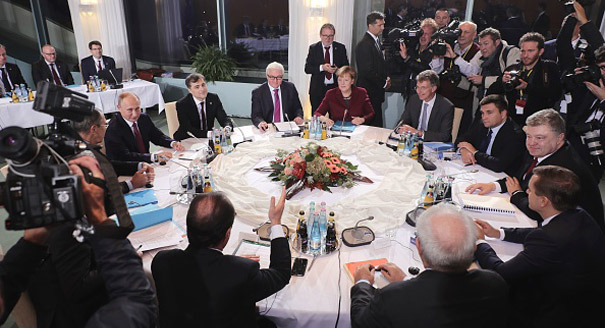
By inviting Vladimir Putin to Berlin on October 19 to discuss the continuing conflict in eastern Ukraine and Russia’s bombardment of the Syrian city of Aleppo, German Chancellor Angela Merkel confirmed her pivotal role in the European Union.
During six hours of talks with the Russian president in the German Chancellery along with French President François Hollande and his Ukrainian counterpart, Petro Poroshenko, Merkel not only hardened her position toward Russia. She also set the tone for a summit of EU leaders, who gathered in Brussels on October 20.
There are now increasing calls from politicians in several European countries for further sanctions on Russia because of its relentless bombing of civilians in Aleppo. Merkel has not excluded additional measures, which shows just how much the once-close relationship between Germany and Russia has changed. With Merkel at the helm in Germany—and in Europe—Moscow can no longer depend on Germany to adopt a more conciliatory approach toward the Kremlin.
There is also a consensus that the EU as a bloc and the member states have to defend themselves against Russian cyberattacks and disinformation campaigns. With elections due in the Netherlands, France, and Germany in 2017, European leaders are increasingly aware that Russia will step up its anti-Western propaganda and indirectly support populist and Euroskeptic movements.
As for the sanctions on Russia for its annexation of Crimea and subsequent invasion of parts of eastern Ukraine in early 2014, these measures are certain to be rolled over when they come up for renewal.
The conflict in Ukraine is now being conflated with Putin’s military campaign in Syria, something that Merkel wanted to disentangle during her talks with the Russian leader. But the two issues are linked: they are both about Russia’s projection of power.
In the case of Ukraine, Russia is trying to undermine the country’s stability and sovereignty besides serving as a permanent distraction to Ukraine’s efforts to build strong democratic institutions. In the case of Syria, Russia is attempting to reestablish its presence in the Middle East and prove to the United States that it is a major global and military power that has to be taken seriously.
Merkel’s comments in Berlin after her talks with Putin gave a different slant to Russia’s ambitions. Russia’s bombardment of civilians in Aleppo was “criminal,” she told a news conference. “We agree that terrorism must be combatted, but not at the price that 300,000 people there must lose their lives and suffer without all necessary supplies,” she said. Russia, she added, “has a great responsibility that extends far beyond the bombardment.”
The issue of responsibility cannot be ducked, either by European leaders or by Russia. Since the Europeans and the United States discarded the responsibility to protect after NATO’s military campaign in Libya in 2011, their only way to respond—as in the case of Ukraine—is by imposing sanctions on Russia.
Leaving aside the pros and cons of the effectiveness of sanctions, the fact that all 28 EU member states have remained united over the measures despite reservations by some governments has dented Putin’s ability to split the EU. Furthermore, despite Russia’s bravado about being able to withstand the sanctions, they do affect Russian pride. In retrospect, a decision by the EU to impose sanctions on its neighbor and a superpower was an extraordinary act.
For all that, Merkel doesn’t want sanctions to replace attempts to end the conflict in eastern Ukraine, nor does she want any trade-off between Russia’s bombardment of Aleppo and the EU’s lifting or reducing of sanctions on Russia for its blatant military interference in Ukraine.
The Minsk II accord, which Merkel negotiated in February 2015, is aimed at putting in place a durable ceasefire in eastern Ukraine. But there is also a major political dimension to this accord. It is about the future status of the eastern Ukrainian regions of Donetsk and Luhansk, which are under the control of Russian-backed fighters. Ukraine is loath to adopt any legislation that would devolve powers to these parts of eastern Ukraine until Kyiv can regain control of its border with Russia. Russia remains determined not to cede ground to Ukraine over Kyiv’s right to control its own border.
During the talks in the German Chancellery, the four leaders agreed to a road map for implementing the Minsk deal. Details of the plan would be worked out in November. With Crimea all but lost to Russia, the deaths of 9,600 people in eastern Ukraine, and over 1.7 million internally displaced civilians, Poroshenko can’t be seen to cave in to Russia’s demands over the future status of Donetsk and Luhansk.
No wonder Merkel warned that “hard work” remained ahead. She has no illusions about the difficulty for Kyiv of regaining territorial integrity in the east of Ukraine or what compromises, if any, Putin would make. Nor has she any illusions about how far Putin will go to hold on to eastern Ukraine and do everything possible to underpin the Syrian regime.
With the United States gripped (or paralyzed) by the presidential election campaign, Putin can exploit the West’s weakness. All the more reason for Merkel and her European counterparts to use what soft-power tools they have at their disposal. They haven’t much else.

Nonresident Senior Fellow, Carnegie Europe
Judy Dempsey is a nonresident senior fellow at Carnegie Europe
Recent Work
Judy Dempsey
Judy Dempsey
Carnegie does not take institutional positions on public policy issues; the views represented herein are those of the author(s) and do not necessarily reflect the views of Carnegie, its staff, or its trustees.
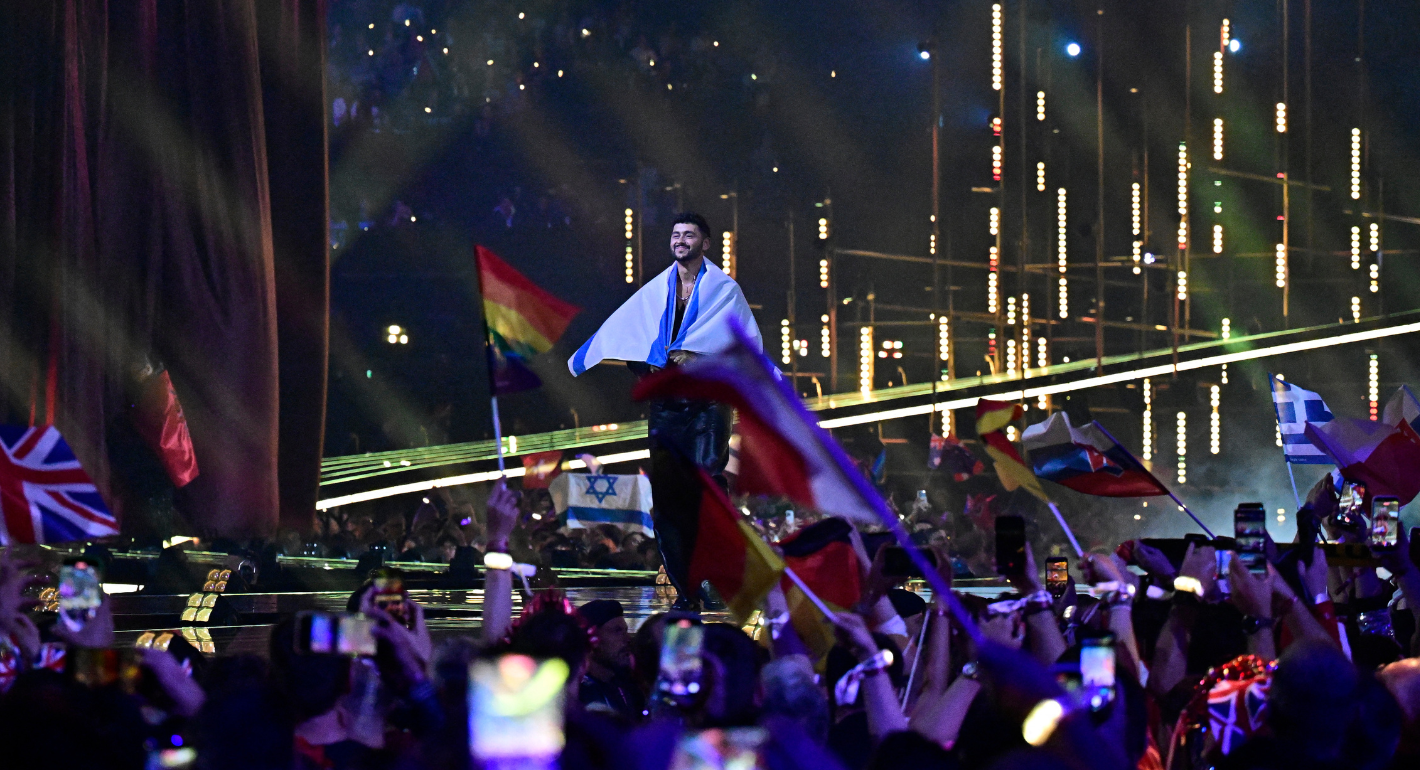
Five countries staged the biggest political boycott in Eurovision history over Israel’s participation. With the FIFA World Cup and other sporting or cultural touchstones on the horizon, are boycotts effective?

Rym Momtaz, ed.
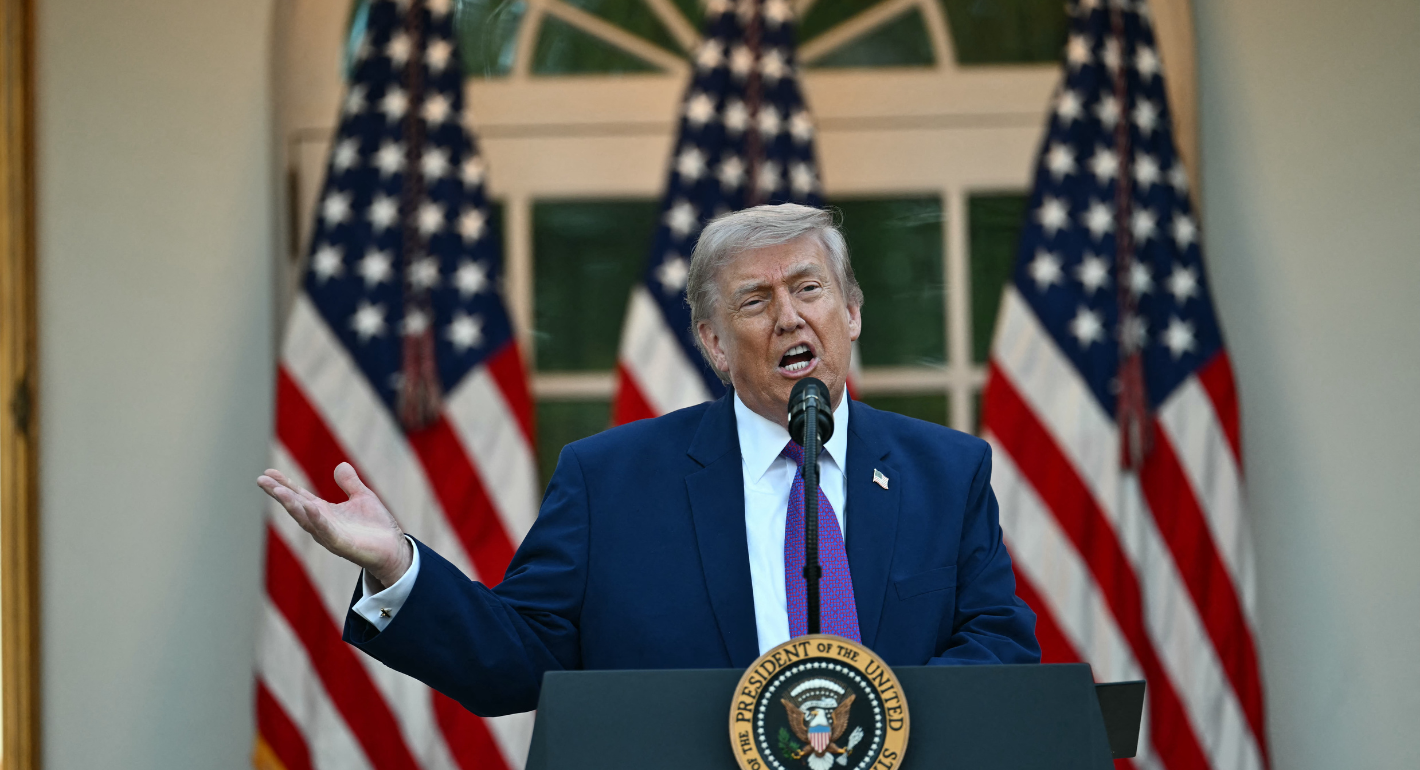
The full list of humiliations Europe has endured since Donald Trump returned to the White House makes for grim reading. But Washington’s adversarial approach to its allies undermines its own power base.
Rym Momtaz
The closure of the Strait of Hormuz has triggered a global energy crisis, but Europe is stuck in reaction mode. Without more strategic foresight, the EU will remain dependent on fossil fuels and will never be truly secure.

Milo McBride, Pauline Gerard
After spending much of 2025 trying to placate Donald Trump, some European leaders are starting to change posture. But is even a hostile Washington still so important to Europe that the U.S. president’s outbursts are worth putting up with?
Rym Momtaz, ed.
European leaders have now not only lost faith in Donald Trump’s U.S. presidency, but also in America’s hegemony as a whole. But short-term challenges make an immediate divorce unwise.
Rym Momtaz