

Commentary
Trump is distracted and Ukraine wants Europe to step up. The continent’s leaders must find their voice and assert it in talks with Russia.
Alissa de Carbonnel
{
  "authors": [
    "Daniel Keohane"
  ],
  "type": "commentary",
  "blog": "Strategic Europe",
  "centerAffiliationAll": "",
  "centers": [
    "Carnegie Endowment for International Peace",
    "Carnegie Europe"
  ],
  "collections": [],
  "englishNewsletterAll": "",
  "nonEnglishNewsletterAll": "",
  "primaryCenter": "Carnegie Europe",
  "programAffiliation": "",
  "programs": [],
  "projects": [],
  "regions": [
    "Europe",
    "Western Europe"
  ],
  "topics": [
    "Foreign Policy",
    "EU",
    "Security",
    "Military"
  ]
}
Source: Getty
The EU treaties allow willing and capable member states to cooperate more closely on defense. But it is hard to believe that this mechanism will add much to EU security efforts.
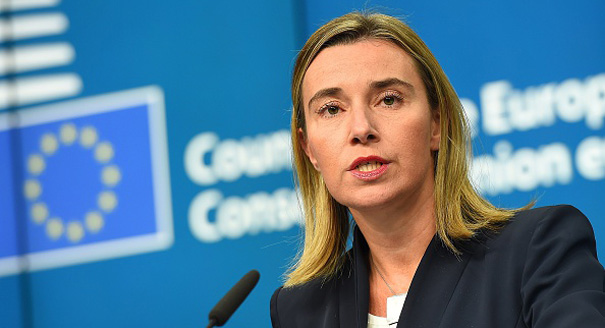
In October 2016, four EU governments—those of France, Germany, Italy, and Spain—sent a letter to their other EU counterparts. They said that they wished to use a mechanism in the EU treaties that allows a core group of countries to cooperate more closely on military matters. This mechanism is known as permanent structured cooperation, or PESCO for short. EU foreign policy chief Federica Mogherini is expected to present some ideas on using PESCO at a summit on March 9–10 in Brussels.
In principle, the treaty article establishing PESCO makes a lot of sense. Those member states that meet a set of capability-based entry criteria can choose to work together after securing a majority vote from EU governments. Military capabilities and ambitions vary widely among member states, so the EU could rely on the most willing and best-prepared countries to run its more demanding military missions.
At first glance, the defense group seems—in some respects—to resemble the eurozone: some countries may stay outside because they choose to, and some because they do not fulfill the entry criteria. EU defense ministries are discussing what precisely those criteria should be, and some governments worry that they might be left out, depending on the stringency of the requirements.
That said, the wording of the treaties suggests an easy-to-meet set of capabilities thresholds for participation in the defense vanguard. The treaties say that one of the basic criteria that EU member states should meet is to supply a combat unit—either as a national unit or as part of a multinational formation—that can be deployed in five to thirty days. In fact, EU members already supply these combat units through a battle groups plan that EU defense ministers approved as long ago as 2004 (although, despite being on standby since 2007, the battle groups have never been deployed).
Therein lies the nub of the PESCO challenge for Mogherini. If she focuses on military quality, then some member states will be excluded. Politically, this would be a counterintuitive move when 27 EU governments are trying to maintain their unity and solidarity following the British decision in June 2016 to leave the EU.
If, however, Mogherini emphasizes quantity by involving as many EU governments in the PESCO vanguard as possible, then the entry criteria would be so easy as to offer no extra military value beyond what member states already provide. And it has become a cliché to observe that Europeans greatly need to up their military game.
When the PESCO mechanism was first conceived in the early 2000s (during the European Convention, a body that drafted what became the Lisbon Treaty), the idea was that France and the UK, the EU’s leading military powers, would define an exclusive set of criteria. This way, London and Paris would set the military gold standard that others would aim to meet.
Yet over time, the UK lost interest in using the PESCO mechanism, preferring to pursue deeper bilateral military cooperation with France based on the 2010 Lancaster House treaties. In a way, those Anglo-French accords are a type of PESCO outside the EU, because they produce a permanent and structured form of military cooperation between London and Paris.
The French, for their part, have also discovered that excluding some smaller and less capable member states from military cooperation via PESCO may have political downsides. When France wanted to send an EU military mission to Chad in 2008 to protect refugees fleeing the Darfur conflict in neighboring Sudan, it was tiny non-NATO EU countries like Austria and Ireland that were most willing to deploy with French forces. Germany and the UK, in contrast, rejected French calls for military support, in part because they considered the Chad crisis more a French concern than a European one.
As the UK, the largest European military spender in NATO, prepares to leave the EU, and considerable differences in strategic culture remain between France, Germany, Italy, and Spain (and other EU governments), it is difficult to believe that using the PESCO mechanism will add much concrete military value to EU security efforts.
Ideally, France, which will become the leading military power in the EU by some distance after Brexit, would take the lead with Mogherini on determining the entry criteria for PESCO. But it is far from certain that other governments would accept French leadership on this issue. As François Heisbourg of the Foundation for Strategic Research in Paris put it, “without Britain we will be surrounded by herbivores.”
Cheerleaders for EU military cooperation have seized on the UK’s Brexit decision as an opportunity to bolster that policy area, including through the use of EU treaty mechanisms like PESCO. But permanent structured cooperation was conceived in a very different political and security era, and governments should not employ this tool simply for the sake of it. If PESCO cannot be used well, then it should not be used at all.
Daniel Keohane is a senior researcher at the Center for Security Studies at ETH Zürich.
Daniel Keohane
Carnegie does not take institutional positions on public policy issues; the views represented herein are those of the author(s) and do not necessarily reflect the views of Carnegie, its staff, or its trustees.

Trump is distracted and Ukraine wants Europe to step up. The continent’s leaders must find their voice and assert it in talks with Russia.

Alissa de Carbonnel

Mounting economic strain and battlefield losses will not necessarily make the Kremlin less dangerous. They could instead push Moscow toward a more aggressive hybrid campaign designed to test NATO’s Eastern flank, exploit allied hesitation, and fracture European resolve.

Maksym Beznosiuk

Over the past ten years, NATO has held almost as many summits as it did during the entirety of the Cold War. Are they still useful, or is it time to stop holding annual meetings?

Rym Momtaz, ed.
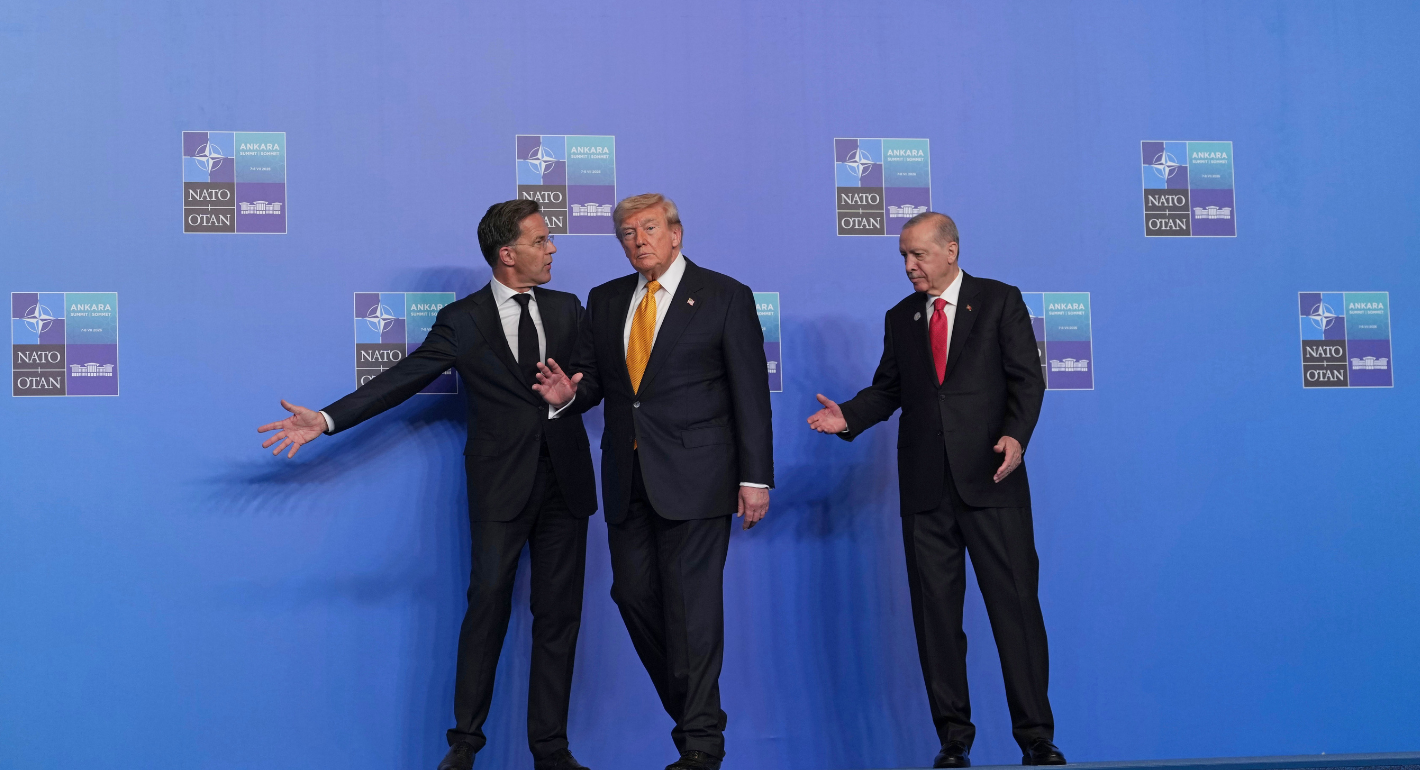
Nearly a year and a half after Europeans leaned into sucking up to Trump, the strategy has produced some benefits when it comes to Ukraine.
Rym Momtaz
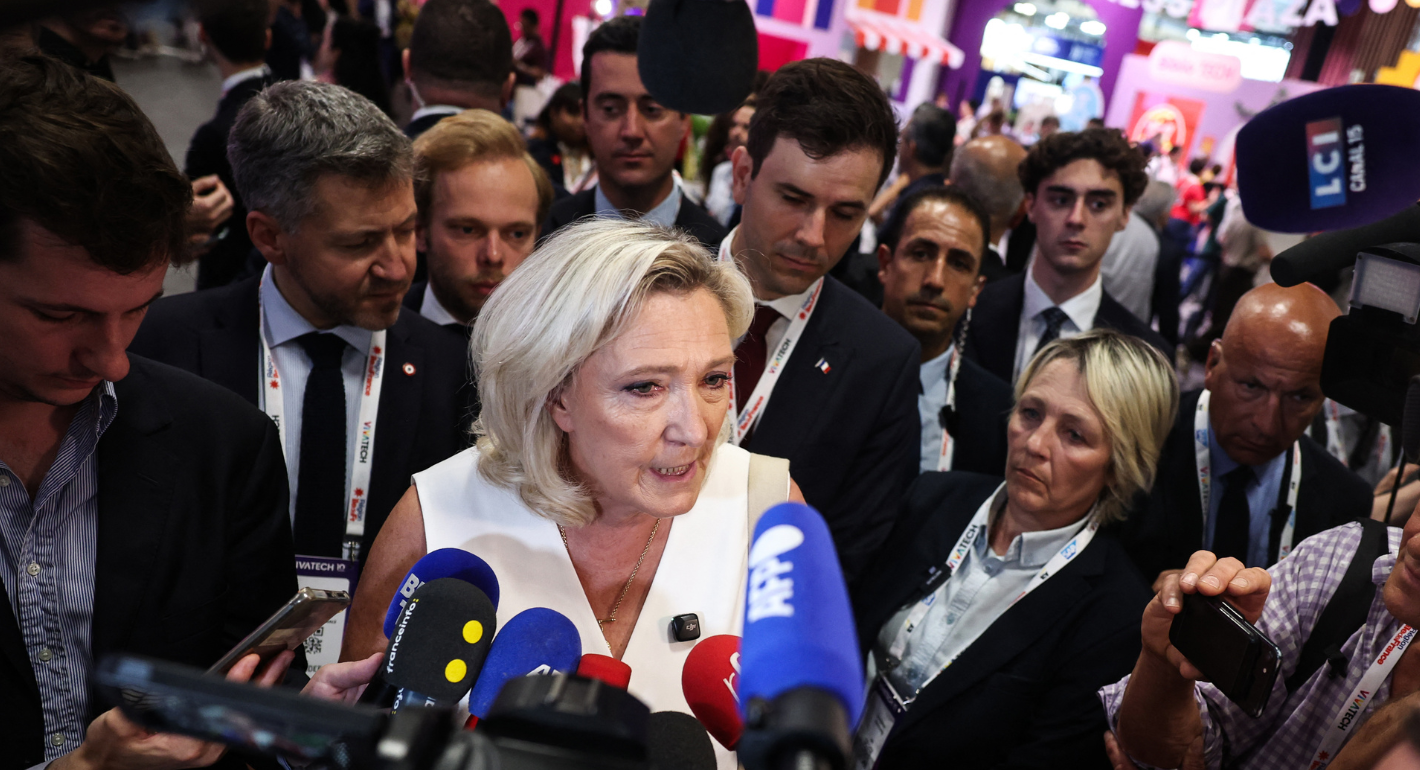
Far-right leader Marine Le Pen can—and will—run in France’s next presidential election. What does the outcome of her appeal against a 2025 embezzlement conviction mean for the country’s political future?

Catherine Fieschi