

Commentary
Peter Kellner
{
  "authors": [
    "Peter Kellner"
  ],
  "type": "commentary",
  "blog": "Strategic Europe",
  "centerAffiliationAll": "",
  "centers": [
    "Carnegie Endowment for International Peace",
    "Carnegie Europe"
  ],
  "collections": [
    "Transatlantic Cooperation",
    "Brexit and UK Politics"
  ],
  "englishNewsletterAll": "",
  "nonEnglishNewsletterAll": "",
  "primaryCenter": "Carnegie Europe",
  "programAffiliation": "",
  "programs": [],
  "projects": [],
  "regions": [
    "Europe",
    "North America",
    "United States",
    "Western Europe",
    "France",
    "Germany"
  ],
  "topics": [
    "EU",
    "Democracy"
  ]
}
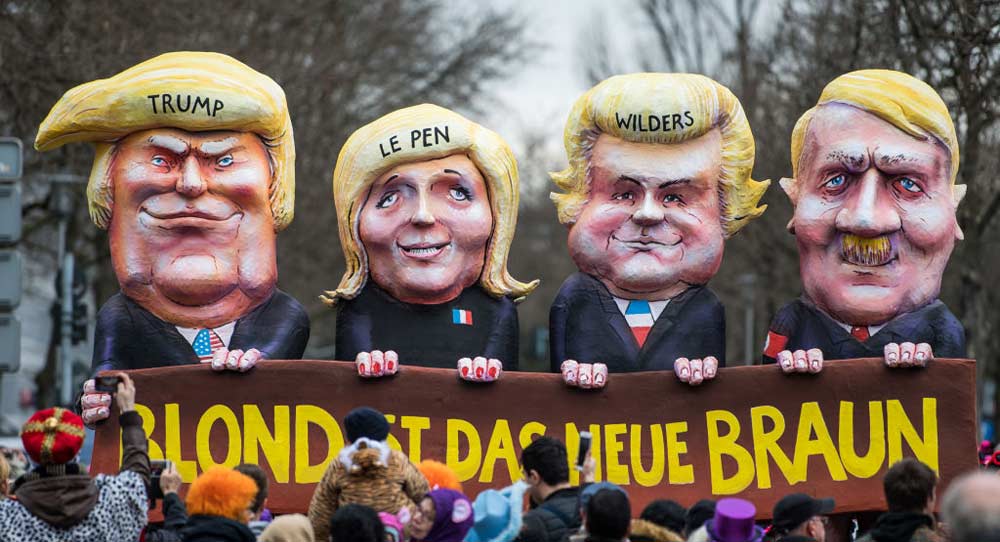
Source: Getty
Since Donald Trump was elected U.S. president in November 2016, reality has gained ground in the battle against populism.
Here is a question. It is only a question; so far, the evidence is too patchy for it to be a hypothesis, let alone a proven fact. However, if the answer is yes, then the consequences could be profound.
The question is this: Did populism in Europe and the United States peak on November 8, 2016? This was the day Donald Trump was elected U.S. president. A few months earlier, the UK had voted to leave the EU. Since then, forests have been laid bare to provide the paper on which speculation has been printed about the populist future of the Western world. Austria might elect a neofascist president; far-right politician Geert Wilders might dominate Dutch politics; National Front Leader Marine Le Pen might win the 2017 presidential election in France; and the anti-immigration Alternative for Germany (AfD) might drag German politics way to the Right.
Let’s look at what has actually happened since November. Six weeks after his inauguration, Trump is the least popular new U.S. president in polling history. His administration is mired in scandal. He has had to tone down a number of the policies on which he was elected, from repealing his predecessor’s healthcare reform, known as Obamacare, and withdrawing from the July 2015 international agreement with Iran on nuclear weapons to weakening support for NATO and getting Mexico to pay for a wall on the United States’ southern border.
Trump’s speech to the U.S. Congress on February 28 was widely praised—and cheered by the financial markets—because it signaled a reversion to a conventional right-of-center agenda. In the battle between reality and populism, reality is now winning.
In the UK, the picture is more mixed. Prime Minister Theresa May is expected to formally start the process of Brexit this month when she triggers Article 50 of the Treaty on European Union. Britain will probably be out of the EU by spring 2019.
But it is becoming clear that Brexit will not lead the people who voted for it to a land of milk and honey. Even though the British economy continued to grow in the months after last June’s referendum, signs of fragility are beginning to emerge. Rising inflation is eating into living standards; the housing market is weak; international investors are holding back; and advertising on the UK’s main commercial television channel has suffered an unexpected fall as a result of business nervousness. It is far too early to predict the political consequences of all this, but the possibility of an anti-Brexit backlash cannot be ruled out.
Meanwhile, the Euroskeptic UK Independence Party (UKIP) is in bad shape and getting worse. Its former leader, Nigel Farage, has been having a furious row in public with its only member of parliament, Douglas Carswell. On March 2, the party’s new leader, Paul Nuttall, fought a parliamentary by-election that he was widely expected to win. Instead, he came a distant second, after claims about his past on his website turned out to be untrue. The party’s days as a significant force may be drawing to a close.
In mainland Europe, Austria rejected Norbert Hofer, the far-right Freedom Party of Austria candidate, in its presidential election. In the initial vote in May 2016, he came within 31,000 votes of Alexander Van der Bellen, an independent candidate supported by the Green Party, in a total vote of 4.5 million. After the Constitutional Court ruled that there had been irregularities in the count, the contest was rerun in December 2016. This time, Van der Bellen won by almost 350,000 votes.
Le Pen is heading for defeat in France’s presidential election. She is likely to be in the second-round runoff on May 7, but polls suggest she will struggle to win more than 40 percent of the vote in that ballot. Indeed, she is no longer as certain as she seemed a few weeks ago to win the first-round ballot. The latest polls put her first-round support at 25–27 percent, only fractionally ahead of the independent candidate Emmanuel Macron, on 23–25 percent. Her support has stalled, while his is rising—and the polls have yet to measure the impact of the Republican candidate François Fillon being placed under investigation over payments to his wife. A clear Macron victory in May would suggest that it is possible for a centrist leader to defeat a populist insurgency.
In the Netherlands, Wilders’s Party for Freedom (PVV) may also fail to come first in the March 15 parliamentary election. Polls in December 2016 suggested that the PVV might win as many as 37 seats in the 150-member parliament, comfortably ahead of any other party. The latest surveys suggest that the PVV may end up with around 25 seats and may even cede first place to the center-right People’s Party for Freedom and Democracy (VVD).
In Germany, support for the AfD peaked in early January at around 15 percent. An average of more recent polls puts its support at 10 percent, down one-third since the start of the year.
In Finland, support for the far-right Finns Party has halved since the 2015 parliamentary election, from 18 percent to 9 percent. This is largely because the party has paid the price of doing well enough last time to join the governing coalition. The compromises of power and the need to accommodate to reality have deprived the party’s message of its populist clarity. Coming third last time, the Finns Party may struggle to avoid coming sixth at the next election, due in 2019.
Perhaps these are no more than flimsy straws in a fickle wind. Perhaps Trump will shrug off his recent setbacks. Perhaps Britain’s UKIP, the Freedom Party of Austria, France’s National Front, the Netherlands’ PVV, Germany’s AfD, and Finland’s Finns Party will all come roaring back. This is certainly no time for the opponents of right-wing nationalism to relax their guard.
But perhaps November 8 did represent peak populism. Future historians may look back on the political turmoil of recent years in many Western countries not as the overture to a new age of nationalism but as a short-lived threat that challenged, but did not in the end destroy, the international liberal order.
Peter Kellner is a journalist, political commentator, and former president of YouGov.

Peter Kellner
Former Nonresident Scholar, Carnegie Europe
Kellner was a nonresident scholar at Carnegie Europe, where his research focused on Brexit, populism, and electoral democracy.
Recent Work
Peter Kellner
Peter Kellner
Carnegie does not take institutional positions on public policy issues; the views represented herein are those of the author(s) and do not necessarily reflect the views of Carnegie, its staff, or its trustees.
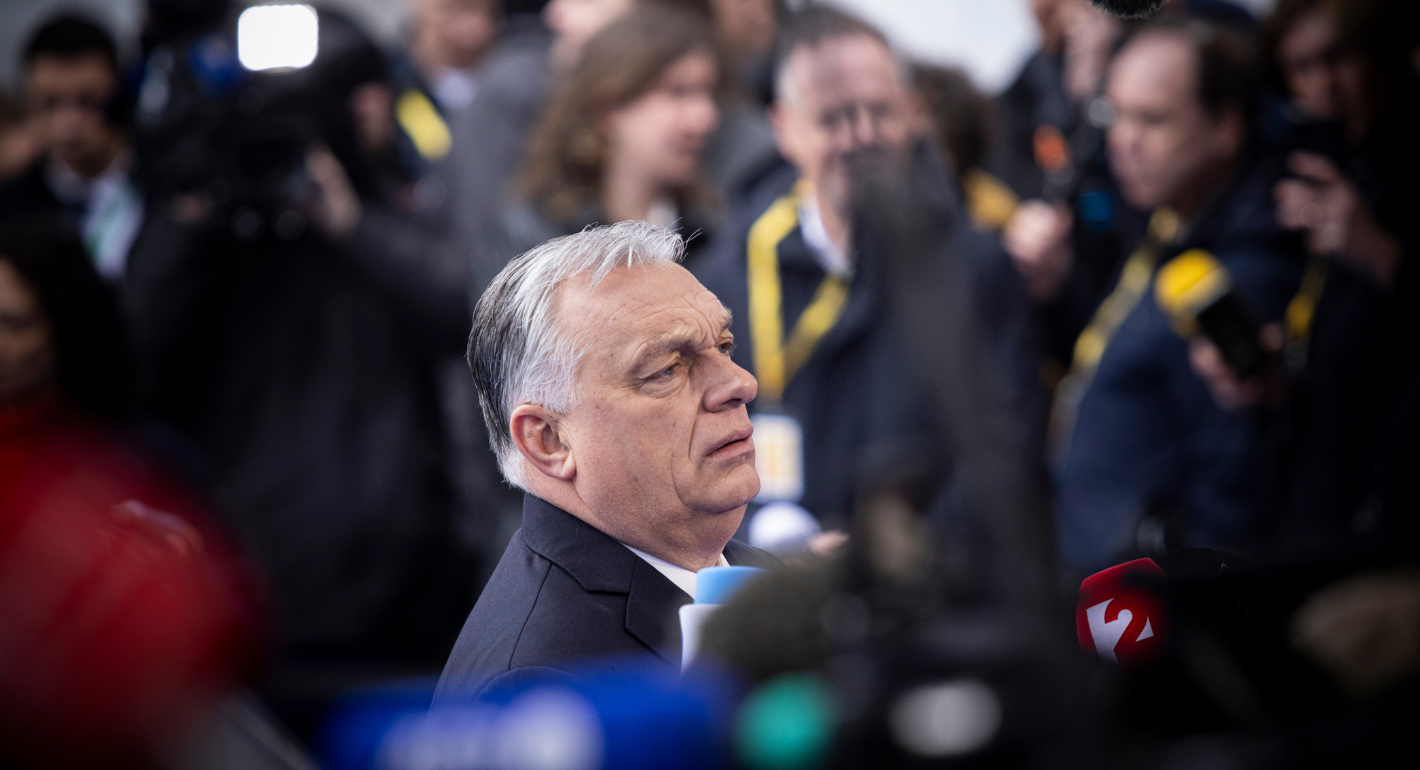
Hungarians head to the polls on April 12 for an election of national and European consequence. Three different outcomes are on the cards, each with their own implications for the EU.

Zsuzsanna Szelényi
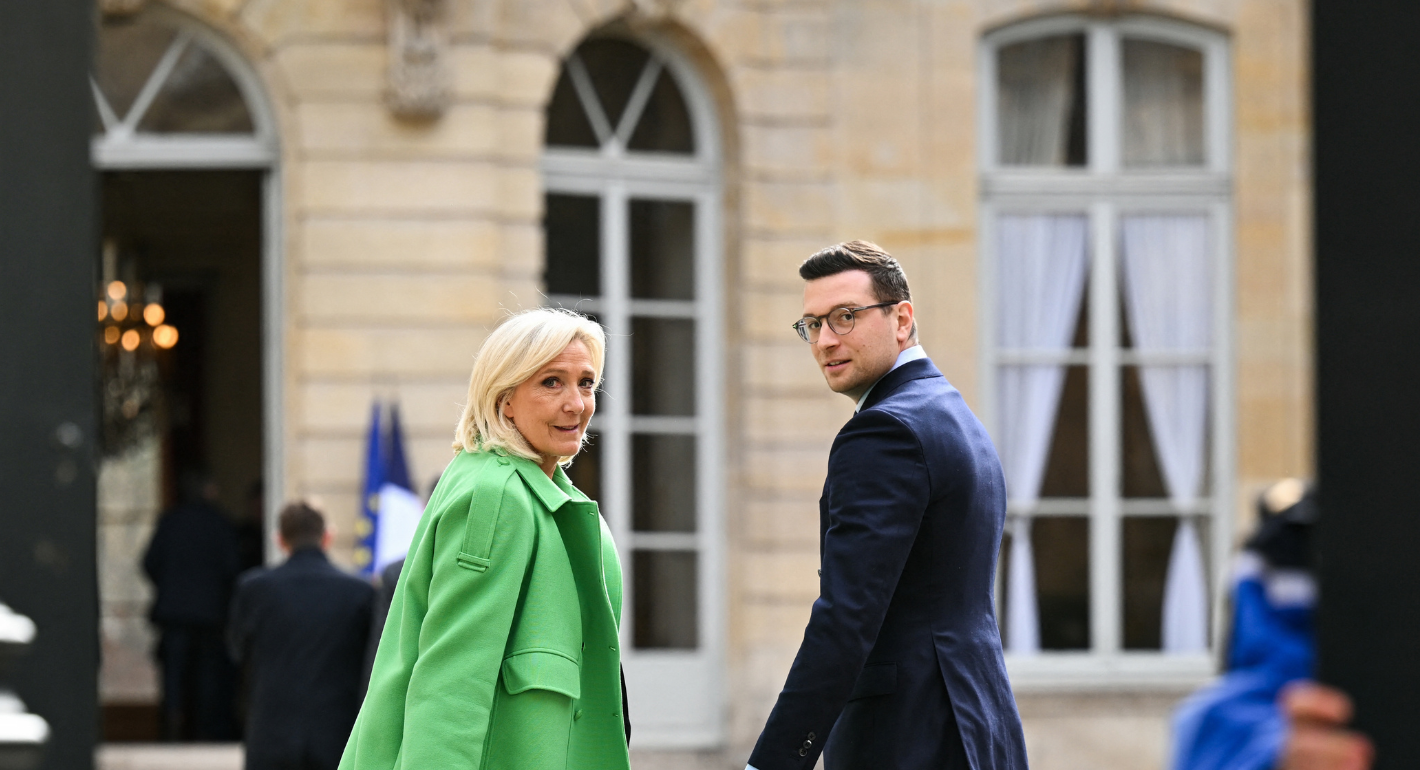
The far right failed to win big in France’s municipal elections. But that’s not good news for the country’s left wing, which remained disunited while the broader right consolidated its momentum ahead of the 2027 presidential race.

Catherine Fieschi
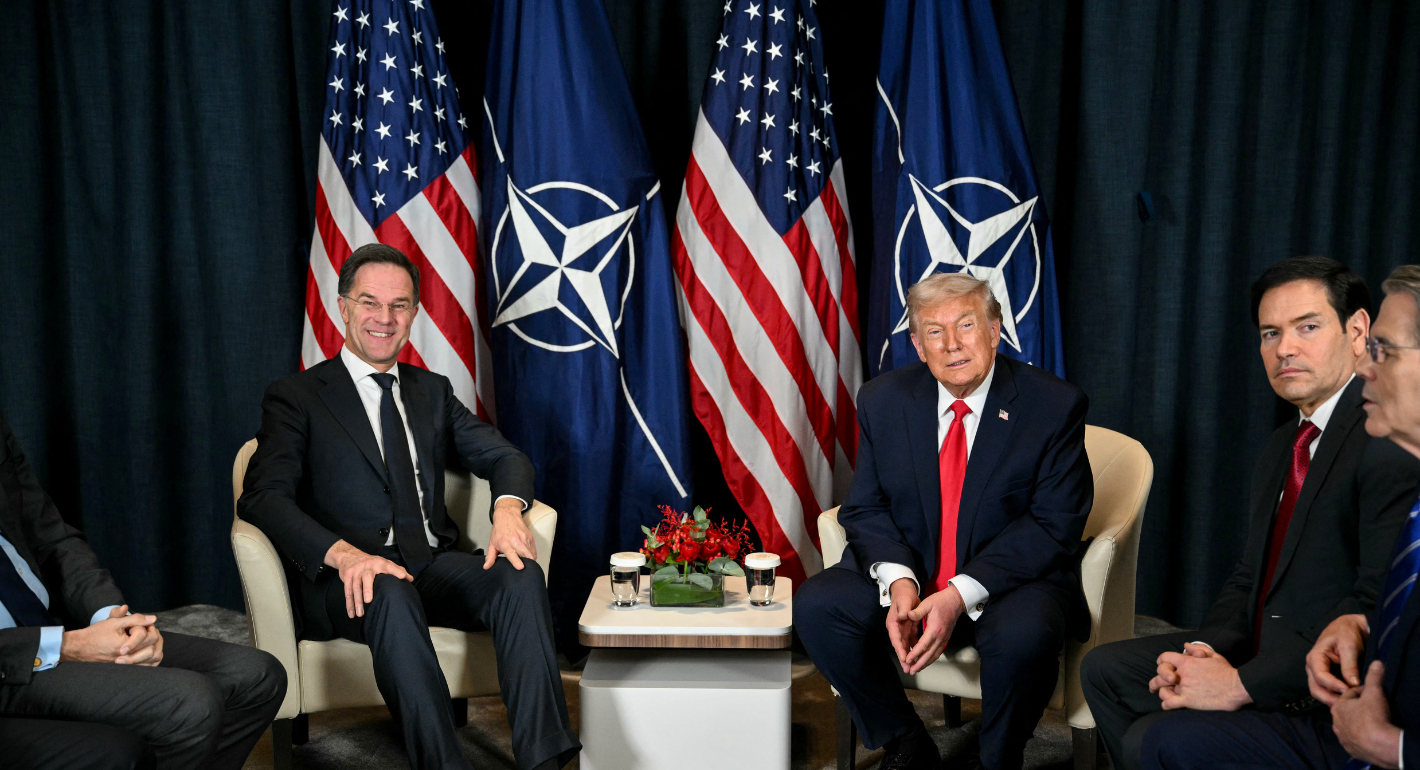
Donald Trump has demanded that European allies send ships to the Strait of Hormuz while his war of choice in Iran rages on. He has constantly berated NATO while the alliance’s secretary-general has emphatically supported him.

Rym Momtaz, ed.
The EU is structurally incapable of reacting to today’s foreign policy crises. The union must fold the EEAS into the European Commission and create a security council better prepared to take action on the global stage.

Stefan Lehne
The war in Ukraine is costing Russia its leverage overseas. Across the South Caucasus and Middle East, this presents an opportunity for Europe to pick up the pieces and claim its own sphere of influence.


William Dixon, Maksym Beznosiuk