

Commentary
The EU had to compromise to adopt a twenty-first sanctions package against Russia, exposing growing cracks in the union’s resolve. Is this latest, weaker round worth it to keep pressure on Moscow?
Rym Momtaz, ed.
{
  "authors": [
    "Joe Leahy"
  ],
  "type": "commentary",
  "blog": "Strategic Europe",
  "centerAffiliationAll": "",
  "centers": [
    "Carnegie Endowment for International Peace",
    "Carnegie Europe"
  ],
  "collections": [],
  "englishNewsletterAll": "",
  "nonEnglishNewsletterAll": "",
  "primaryCenter": "Carnegie Europe",
  "programAffiliation": "",
  "programs": [],
  "projects": [],
  "regions": [
    "North America",
    "South America",
    "Western Europe",
    "Europe"
  ],
  "topics": [
    "Foreign Policy",
    "Economy",
    "Trade",
    "EU"
  ]
}
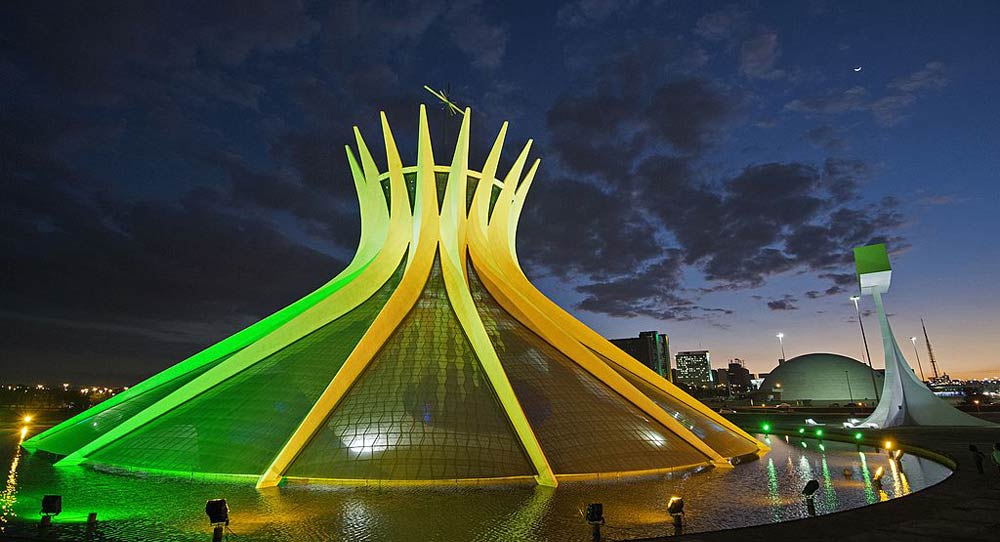
Source: Getty
Despite relative stability at home, Brazilians are increasingly concerned about the decline of globalization in advanced economies, particularly in Europe.
Strategic Europe continues its Capitals Series exploring how EU foreign policy is viewed by major non-European countries. We have asked each of our contributors to give a frank assessment of their country’s relations with the EU and rank five key issues in order of their importance in those relations. This week, the spotlight is on Brazil.
*
Brazil has traditionally viewed the developed Western world as a beacon of democracy and trade, even if the country has sometimes resented what it sees as occasional lecturing or condescension toward emerging nations by advanced economies.

In the United States, the emergence of President Donald Trump, with his rejection of globalization and tacit support for the breakup of the EU through his cheering of Brexit and reported affinity with Russia, has stunned Brazilians. The South American nation is used to seeing untrammeled populism south of the Rio Grande but never expected to see a South American caudillo–style strongman leading its once-staid northern neighbor.
Brazil takes careful note of events in Europe in particular because of its strong cultural and economic ties with the continent. Brazil is often touted as a kind of South American United States, a country with a large population of immigrants—or, at least, their descendants—who admire U.S. consumerism. But culturally, Brazil is closer to Europe. Not only do Brazilians speak a continental European language, but voters also prefer a state that resembles the European social welfare model. In the home, Brazilian culture is closer to that of the Latin nations of Southern Europe, with the family playing a central role in people’s lives.

The political chaos in the West has therefore caused Brazilians to reexamine their own political and economic system, and to their surprise and satisfaction, it is looking quite sturdy in comparison. To be sure, Brazilian institutions have been badly tested over the past five years. The impeachment of former left-wing president Dilma Rousseff for manipulating the national budget represented a severe test of Brazil’s constitution and rule of law. But in spite of criticisms from the Left that the impeachment was a parliamentary coup, most legal experts believe the congress, the supreme court, and the executive functioned better than expected under the strain of the process.
Brazil’s economy has collapsed into its worst downturn in more than a century, partly due to the populism of Rousseff’s Workers’ Party government, which fueled a fiscal crisis by overspending. But this has taken the form of an orthodox, cyclical recession rather than a balance-of-payments crisis or hyperinflation, as would have happened in the past.
The relative stability at home, however, has not stopped Brazilians from worrying about the decline of globalization in advanced economies. Unfortunately for Brazilian policymakers, rising protectionism in Western democracies comes exactly at a moment when Brazil is contemplating opening up its largely closed economy.
In particular, Brazilian President Michel Temer, the centrist former vice president of Rousseff who replaced her after her impeachment, is pushing through liberal reforms, including to limit budgetary spending, overhaul the pensions system, and make labor laws more flexible. His government is also on the hunt for trade deals—Brazil has only a handful of bilateral trade deals outside Latin America with small economies.
The EU is a crucial potential partner for Temer in this initiative. Negotiations under way between the EU and Mercosul, the South American trade bloc of which Brazil is the biggest member, represent the Temer government’s best hope of a landmark trade deal. Given Brazil’s convoluted bureaucracy and myriad vested interests, however, trade deals remain elusive. In an environment of increasing protectionism in the advanced world, they might become impossible for Brazil, due to the country’s inherent reluctance to open up.
Brazil has traditionally been closely aligned with Europe on environmental issues. Brazil’s stewardship of the Amazon—the country accounts for about 60 percent of the tropical forest—makes it a heavyweight in the global debate on climate change. This is unlikely to alter, but the presence in Washington of a government skeptical of the need to protect the environment will make it even harder for Brazil and Europe to convince other nations of the need to address these issues.
On its website, Brazil’s foreign ministry, known as Itamaraty, boasts that the South American nation was one of the first to establish diplomatic relations with the then European Economic Community in 1960. Those close ties, based on deep cultural and economic relations, will always be there. But that will not stop Brazil from viewing with concern any attempt to break up the EU, one of its most important markets and an example of the benefits of globalization.
Joe Leahy is the Brazil bureau chief at the Financial Times.

Joe Leahy
Carnegie does not take institutional positions on public policy issues; the views represented herein are those of the author(s) and do not necessarily reflect the views of Carnegie, its staff, or its trustees.
The EU had to compromise to adopt a twenty-first sanctions package against Russia, exposing growing cracks in the union’s resolve. Is this latest, weaker round worth it to keep pressure on Moscow?

Rym Momtaz, ed.

Trump is distracted and Ukraine wants Europe to step up. The continent’s leaders must find their voice and assert it in talks with Russia.

Alissa de Carbonnel

Mounting economic strain and battlefield losses will not necessarily make the Kremlin less dangerous. They could instead push Moscow toward a more aggressive hybrid campaign designed to test NATO’s Eastern flank, exploit allied hesitation, and fracture European resolve.

Maksym Beznosiuk

Over the past ten years, NATO has held almost as many summits as it did during the entirety of the Cold War. Are they still useful, or is it time to stop holding annual meetings?
Rym Momtaz, ed.
Nearly a year and a half after Europeans leaned into sucking up to Trump, the strategy has produced some benefits when it comes to Ukraine.
Rym Momtaz