

Paper
Erik Brattberg, Tomáš Valášek
{
  "authors": [
    "Tomáš Valášek"
  ],
  "type": "commentary",
  "blog": "Strategic Europe",
  "centerAffiliationAll": "",
  "centers": [
    "Carnegie Endowment for International Peace",
    "Carnegie Europe"
  ],
  "collections": [
    "Transatlantic Cooperation",
    "EU Integration and Enlargement"
  ],
  "englishNewsletterAll": "",
  "nonEnglishNewsletterAll": "",
  "primaryCenter": "Carnegie Europe",
  "programAffiliation": "",
  "programs": [],
  "projects": [],
  "regions": [
    "Europe",
    "North America",
    "Western Europe"
  ],
  "topics": [
    "EU",
    "Security"
  ]
}
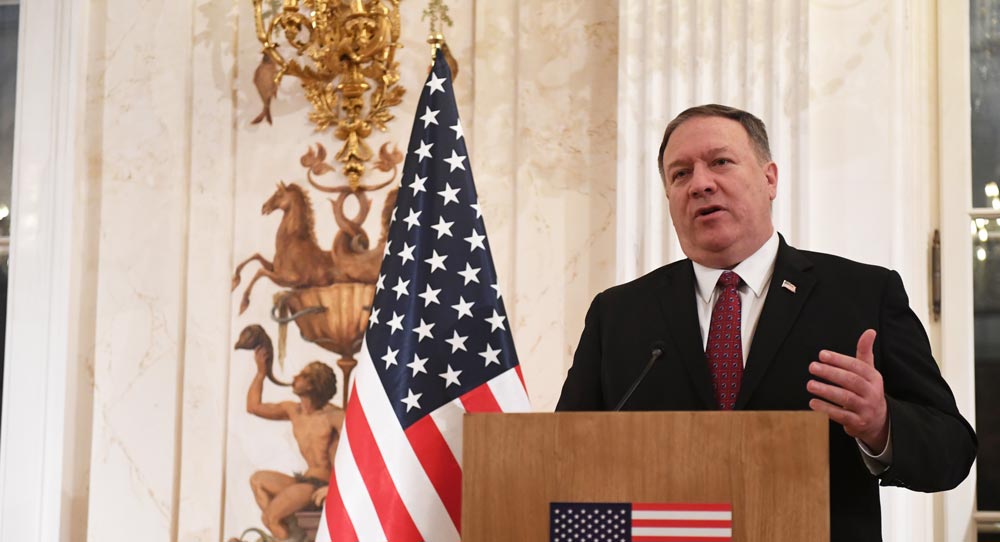
Source: Getty
U.S. policy toward Central Europe is driven by a blend of mercantilism and great power competition, with a dash of U.S. domestic politics. It also opens opportunities for cooperation with the EU.
Some reaction in Europe to Mike Pompeo’s swing through three of the Visegrád countries echoes fears of a Trump-Orbán stitch-up to break the EU. Those fears are misplaced: Pompeo is not Steve Bannon. Actual U.S. policy toward Central Europe is driven by a blend of mercantilism and great power competition, with a dash of U.S. domestic politics. Some of it—particularly the business bit—is at odds with the interests of other European countries. But there are surprising overlaps with other European goals, particularly on fighting corruption.
Mike Pompeo is no fan of the European Union. He took gratuitous, Trump-like jabs at EU “bureaucrats” in speech to a room full of them on December 4, 2018, in Brussels. Pompeo’s is a view shared by many in the administration, but, occasional diplomatic slight notwithstanding, it is one that shows few signs of becoming an operational principle of U.S. policy. Nor would his visit to Europe make sense as an exercise in rallying forces to oppose the EU. Hungary may have had its run-ins with Brussels but Slovakia sticks close to the EU’s core. If building alliances with euroskeptics were the goal, Italy’s Deputy Prime Minister Matteo Salvini would have presumably been on the list.Instead, when it comes to Central Europe, the United States appears to have three broad goals, none of which involve the European Union per se.
The first is business. The Central Europeans are raising defense budgets faster than the rest of Europe; a trend that started with Russian aggression against Ukraine and that precedes Trump, but one on which the president seems determined to capitalize. Poland is buying a U.S. Patriot missile defense system and Slovakia a fleet of U.S.-made F-16 fighter jets; Hungary got a nudge to follow the formers’ example.
The second goal is part political, part psychological. Like in so many other policy areas, Trump appears animated by the desire to reverse everything that Obama did and stood for. The previous U.S. government kept Central Europe at an arm’s length. It believed, as one former Obama official told me, that the preceding president, George W. Bush, had “overinvested in the region”— a reference to NATO enlargements, and overtures to Ukraine and Georgia. The Obama crowd regarded those as an imperial overreach. A part of the reason behind Pompeo’s tour is simply to reengage, and thus to show Trump as the un-Obama.
The third and most important objective for Pompeo was to roll back Russian and Chinese influence. Keep in mind that this U.S. government sees itself as living in an all-out competition with Moscow and Beijing for global influence. It has codified this belief in the national security strategy. It regards Central Europe—minus, perhaps, Poland—as enemy beachhead. Pompeo’s message to the countries on his tour was to stop coddling Russian spies and Chinese businesses doing the work of spies.
These three interests and goals overlap fluidly. If Hungary stops buying Russian gas—one of Pompeo’s points made to Budapest—the United States, which is bidding to ship more liquified natural gas to Europe, would benefit.
Crucially for the rest of the EU, the United States has come to believe that weak governance and corruption is what allows Beijing and Moscow to gain undue influence. This is where broader European interests actually align with Washington’s. While European populists and euroskeptics come in various stripes, the ones currently in government in Hungary, Slovakia, and Czech Republic have fed off access to tax receipts and EU funding. Much of these governments’ interference with police, prosecutors, and courts is driven not by power preservation per se but desire to secure impunity from prosecution for corruption.
To fight back, the United States is stepping up funding for investigative journalists and independent media, and tightening law enforcement cooperation, which is going beyond what the EU arguably should be doing. The irony of Washington promoting free media abroad while its president rails against journalists at home will be lost on few, but this does not mean that such assistance would not help.
In a different era, of much more mutual trust, the European Union and the United States would have teamed up to share intelligence and coordinate aid on the ground. This may not come to pass given Washington’s hostile attitude towards the EU, and suspicions in parts of the EU about U.S. goals. But if so, this will be to the detriment to what is, for once, a shared objective.
Former Director, Carnegie Europe
Valášek was director of Carnegie Europe and a senior fellow, where his research focused on security and defense, transatlantic relations, and Europe’s Eastern neighborhood.
Recent Work
Erik Brattberg, Tomáš Valášek
Tomáš Valášek
Carnegie does not take institutional positions on public policy issues; the views represented herein are those of the author(s) and do not necessarily reflect the views of Carnegie, its staff, or its trustees.

The EU is putting together a new security strategy to meet today’s myriad challenges. But for any proposal to be effective, the union needs to grapple with its identity and ambitions.

Pierre Vimont

The EU’s new migration policy is not suited to today’s realities. With climate change increasingly becoming a driver of displacement, Europe needs to rethink its deterrence-focused approach.

Shana Tabak
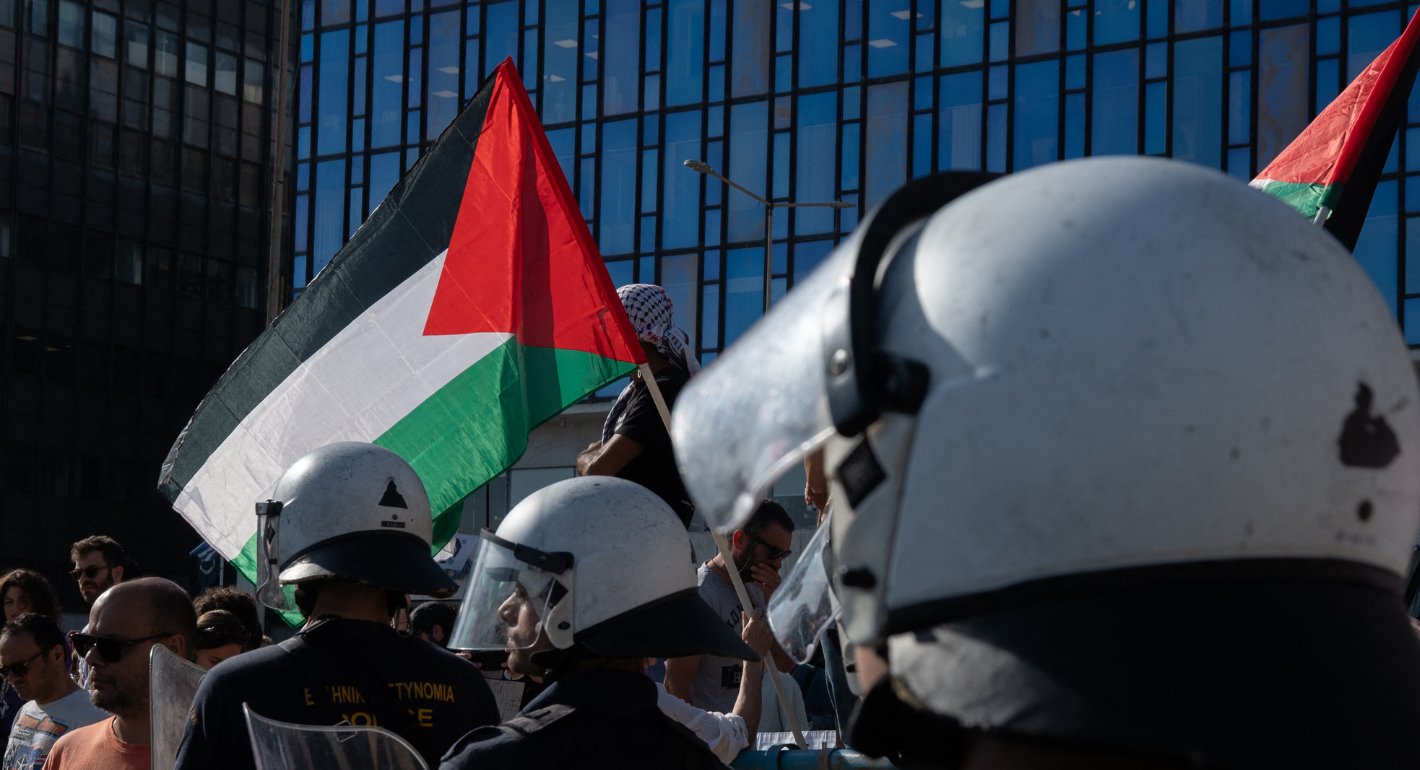
The battle over free speech has taken center stage since U.S. Vice President JD Vance accused Europe of censorship. From travel bans to social media regulation, especially around the Israel-Palestine conflict, are liberal democratic governments weaponizing free speech?

Rym Momtaz, ed.
Europe seems to have accepted its sidelining in the Middle East. The EU must reassert its support for the international rules-based order and step up engagement.
Rym Momtaz
Amid uncertainty caused by the Iran war, the global drive for nonproliferation has stalled. With Europe diplomatically marginalized and countries reassessing their nuclear options, efforts to curb the spread of nuclear weapons risk becoming irrelevant.

Jane Darby Menton