

Commentary
Trump is distracted and Ukraine wants Europe to step up. The continent’s leaders must find their voice and assert it in talks with Russia.
Alissa de Carbonnel
{
  "authors": [
    "Claudia Major",
    "Christian Mölling"
  ],
  "type": "commentary",
  "blog": "Strategic Europe",
  "centerAffiliationAll": "",
  "centers": [
    "Carnegie Endowment for International Peace",
    "Carnegie Europe"
  ],
  "collections": [
    "Transatlantic Cooperation",
    "EU Integration and Enlargement",
    "Coronavirus"
  ],
  "englishNewsletterAll": "",
  "nonEnglishNewsletterAll": "",
  "primaryCenter": "Carnegie Europe",
  "programAffiliation": "",
  "programs": [],
  "projects": [],
  "regions": [
    "Europe",
    "Western Europe"
  ],
  "topics": [
    "Foreign Policy",
    "EU",
    "Security"
  ]
}
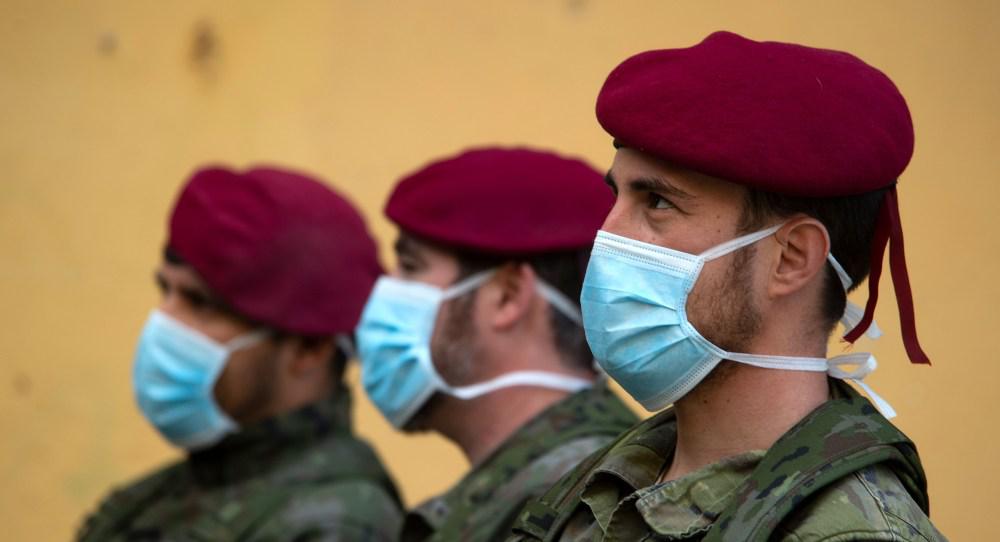
Source: Getty
The coronavirus pandemic will harm European defense strategically, politically, and financially. To mitigate these consequences, Europeans must start shaping joint and immediate answers.
When NATO defense ministers met virtually on April 15, 2020, they praised the alliance’s role in offering support during the coronavirus pandemic, from transport aircraft to medical supplies. After a difficult start, NATO’s crisis management is working. But such praise deflects attention from the long-term economic, strategic, and political risks that the pandemic carries for the defense sector.
Europeans can limit these consequences if they devise joint solutions now. If they miss this opportunity and insist on national responses, they threaten to reduce Europe to strategic irrelevance. European countries will not have the capacity to manage military risks. The 2007–2008 financial crisis showed that pursuing national approaches is a recipe for failure, particularly in Europe, where most armed forces have already shrunk to bonsai armies.
The political reactions to the current pandemic have been shaped by an increasingly inward-looking mindset. Most European states stress the importance of managing the crisis together; on April 10, EU finance ministers agreed on the biggest economic support program in the union’s history. But many states struggle to follow this advice in practice. Traditional cleavages persist, as the debate about so-called coronabonds demonstrates: this joint debt instrument has been proposed by southern European countries, like Italy and Spain, but opposed by northern ones, such as Germany and the Netherlands.
There’s also the transatlantic cleavage. In strategic terms, the pandemic risks further U.S. disengagement from its global role. The United States has not built an international coalition to shape a global answer to the spread of the coronavirus, as it did in the 2013–2016 Ebola virus pandemic in West Africa. On the contrary, Washington is failing to manage the crisis at home, hardly coordinating with its allies, and struggling in a battle of narratives with China.
This is a particular challenge for Europe. The pandemic means the United States is likely to reinforce its focus on China and neglect Europe further. As a result, the already strained transatlantic relationship will become more difficult. But it is clear that the Europeans remain dependent on the United States for their defense.
The coronavirus crisis will affect strategic stability globally, and it will have a different impact on each urgent issue that Europeans face—from the war in Syria to North Korea, Iran, terrorism, and relations with Russia. Yet in every case, the stress on decisionmakers has increased. They have to contend with radical and parallel changes in several areas, from finance to energy, from contingency planning to extraordinary measures for managing the pandemic.
The risk of misperceptions that can lead to bad decisions is growing, as is the danger that Europe’s opponents will aim to seize opportunities to advance their influence in European affairs. Shrinking conventional capabilities can not only limit military activity—from deterrence to air policing—but also lower the nuclear threshold. Each Russian plane that approaches NATO airspace is a bigger problem than the last. Stability in Europe suffers as a result.
Current inward-looking tendencies in Europe could lead Europeans to react nationally to these challenges. They should remember the dire consequences such decisions had in the past.
A decade ago, observers warned that European armies would be decimated by the radical cuts that European governments introduced after the 2007–2008 financial crisis. What emerged were incomplete and militarily useless miniature armies. Many states believed it was an expression of national sovereignty to make cuts on their own, rather than in coordination with their European partners. The Dutch gave up their tanks, and the British scrapped their newly built and heavily needed reconnaissance aircraft.
Governments ignored EU-NATO coordination channels and denied the reality that operations from the Western Balkans to Afghanistan could make a meaningful contribution only if European armed forces worked together.
The result of this downsizing was shocking. Europeans lost about 30 percent of their defense capabilities. Cooperation schemes set up later, such as NATO’s Smart Defense, which encourages allies to acquire, operate, and maintain military capabilities jointly, could not correct earlier mistakes. Europeans had unilaterally shrunk their armed forces to the point of being incapable of action in many areas. Countries seemed to value their national decisionmaking capacity more highly than their military capacity to act.
Now, Europeans face a choice: repeat this experience of late and national action or opt for a joint and preventive approach. If they go for the second option, the first tasks for the Europeans will be to inform each other fully and transparently about the state of defense in their countries, to jointly assess the consequences of potential austerity measures, and to discuss how to guarantee Europe’s defense.
If defense cuts cannot be avoided, the EU and NATO are the forums in which to cooperate to mitigate the effects. Coordination with Washington is urgently needed because despite the transatlantic turmoil, Europe’s defense depends on U.S. contributions.
At the moment, defense is not a priority on Europe’s agenda. Yet, neglecting the sector would mean failing to draw a lesson from the current crisis. Pandemics, like military risks, have featured in the strategy documents of many governments—but so far, neither has translated into effective European preparations. This pandemic should urge Europe to change that mindset.
Claudia Major is the head of the International Security Division at the German Institute for International and Security Affairs (SWP) in Berlin and a member of Women in International Security (WIIS) Germany.
Christian Mölling is the research director of the German Council on Foreign Relations (DGAP) in Berlin.
Claudia Major
Christian Mölling
Carnegie does not take institutional positions on public policy issues; the views represented herein are those of the author(s) and do not necessarily reflect the views of Carnegie, its staff, or its trustees.

Trump is distracted and Ukraine wants Europe to step up. The continent’s leaders must find their voice and assert it in talks with Russia.

Alissa de Carbonnel

Mounting economic strain and battlefield losses will not necessarily make the Kremlin less dangerous. They could instead push Moscow toward a more aggressive hybrid campaign designed to test NATO’s Eastern flank, exploit allied hesitation, and fracture European resolve.

Maksym Beznosiuk

Over the past ten years, NATO has held almost as many summits as it did during the entirety of the Cold War. Are they still useful, or is it time to stop holding annual meetings?

Rym Momtaz, ed.
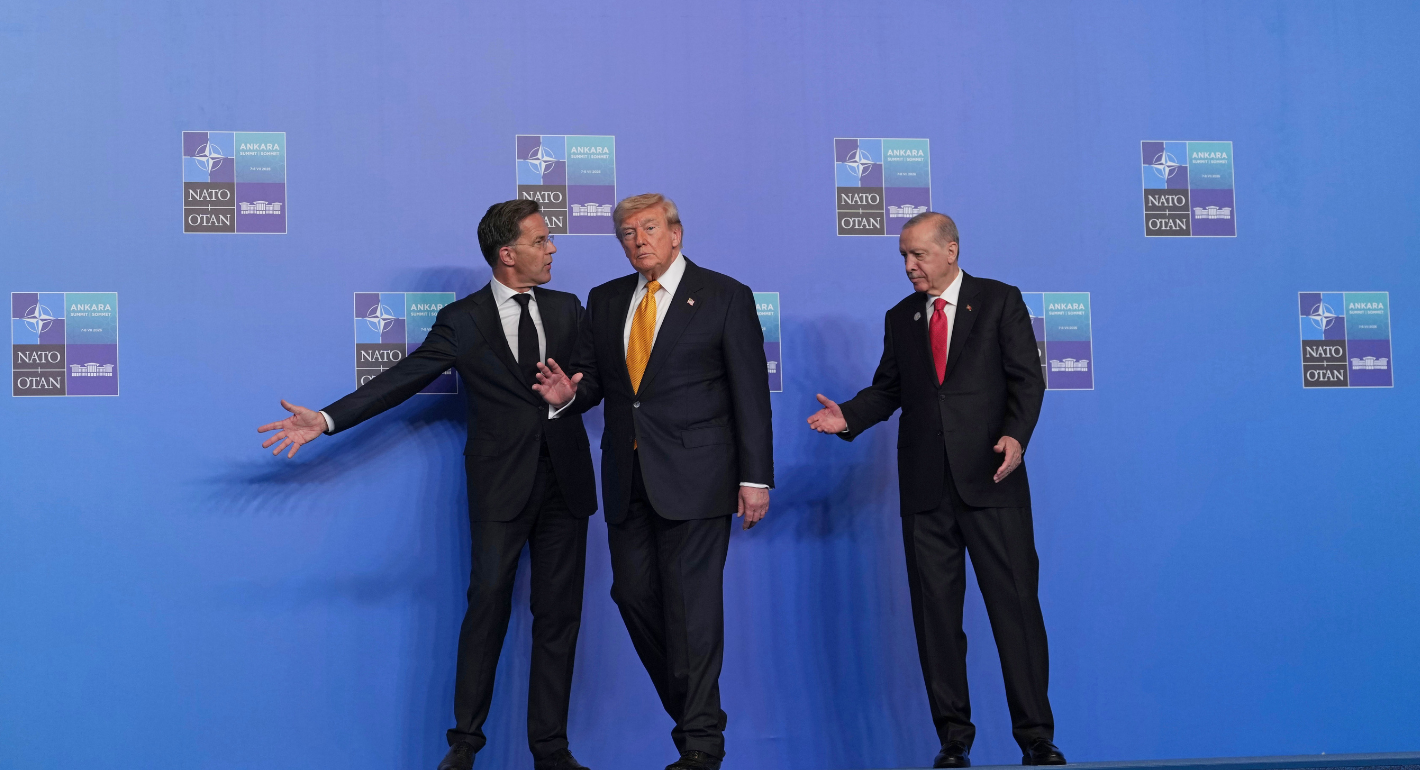
Nearly a year and a half after Europeans leaned into sucking up to Trump, the strategy has produced some benefits when it comes to Ukraine.
Rym Momtaz
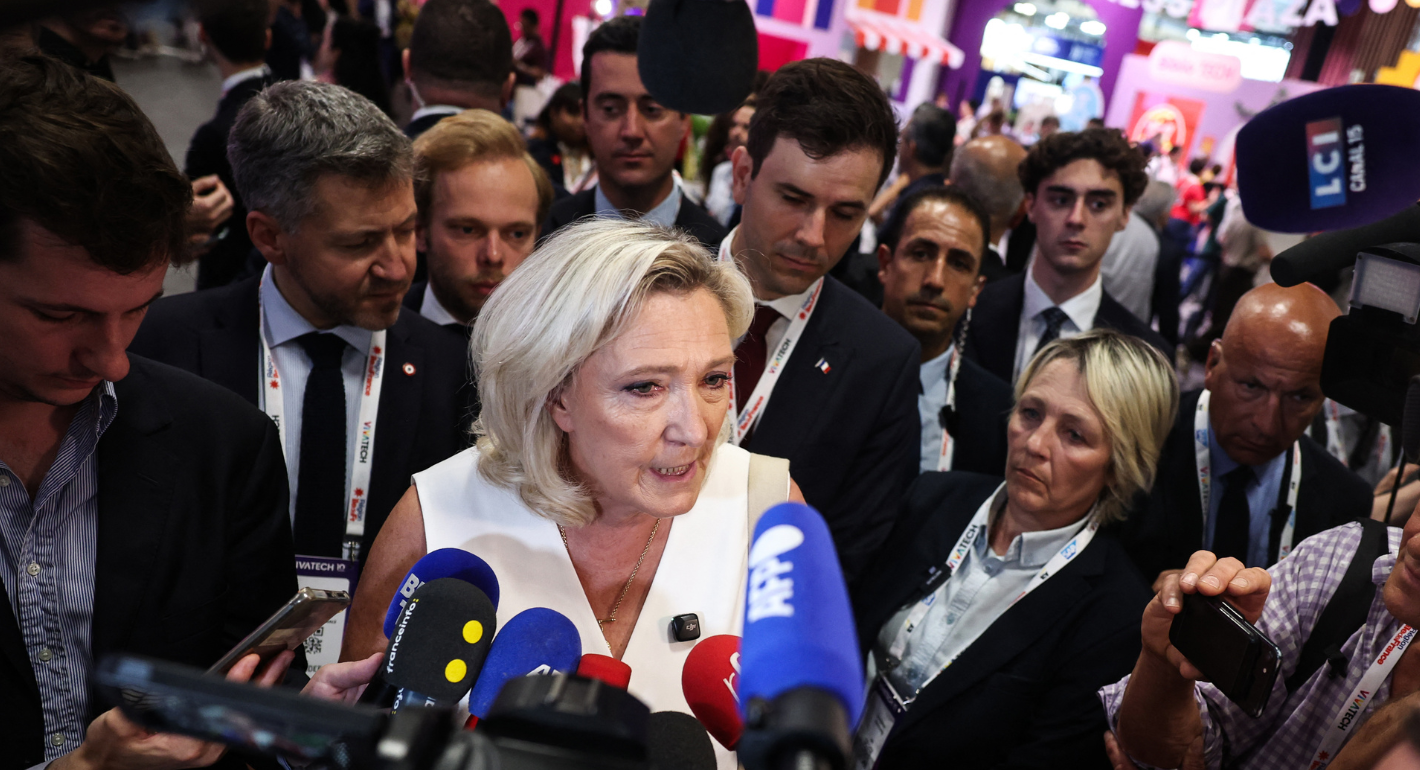
Far-right leader Marine Le Pen can—and will—run in France’s next presidential election. What does the outcome of her appeal against a 2025 embezzlement conviction mean for the country’s political future?
Catherine Fieschi