

Commentary
Judy Dempsey
{
  "authors": [
    "Judy Dempsey"
  ],
  "type": "commentary",
  "blog": "Strategic Europe",
  "centerAffiliationAll": "",
  "centers": [
    "Carnegie Endowment for International Peace",
    "Carnegie Europe"
  ],
  "collections": [
    "Transatlantic Cooperation"
  ],
  "englishNewsletterAll": "",
  "nonEnglishNewsletterAll": "",
  "primaryCenter": "Carnegie Europe",
  "programAffiliation": "",
  "programs": [],
  "projects": [],
  "regions": [
    "Europe",
    "North America",
    "United States",
    "Western Europe",
    "Germany"
  ],
  "topics": [
    "Foreign Policy",
    "Security",
    "Military",
    "EU"
  ]
}
Source: Getty
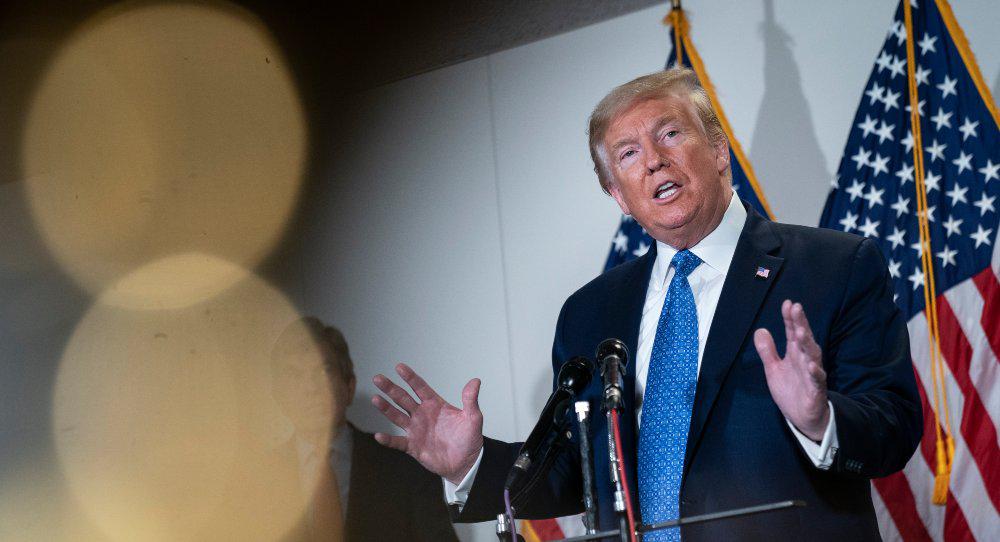
U.S. President Donald Trump uses troops as leverage against Germany, a move that will undermine America’s strategic and global interests and further sour the transatlantic relationship.
The U.S. military base in Stuttgart occupies a vast area of land. Located in the state of Baden-Württemberg—Germany’s economic power house—the base is crucial for the Pentagon’s strategic and global reach.
This is because Stuttgart is the headquarters for the U.S. European Command. From there, it coordinates the Pentagon’s military forces across fifty-one NATO and non-NATO countries.
As if that wasn’t enough, under the command, apart from the U.S. Army Europe, is the U.S. Air Forces in Europe and the U.S. Marine Corps Forces Europe and Africa. And like Ramstein, another major U.S. military base in Germany, Stuttgart provides immensely important logistical and training facilities for America’s operations in Africa and in Iraq and Afghanistan.So when U.S. President Donald Trump announced that he was going to withdraw up to 10,000 troops from Germany, without going into any detail, it caught the Pentagon and the State Department off guard—not to mention their German counterparts or NATO’s top brass. None were apparently informed of the decision.
No doubt Russia will be pleased with such news since Trump’s announcement could fuel anti-American and anti-NATO sentiment in Germany. The opposition Left party has repeatedly called for all American troops to leave Germany.
But America’s allies in Europe and in Africa should be worried. Using troop reductions abroad to score political points at home damages America’s strategic and global interests. It also has the potential for weakening NATO solidarity.
In an extraordinary, damning statement directed at Germany, Trump said the country was delinquent.
“We’re protecting Germany and they’re delinquent. That doesn’t make sense,” Trump said at the White House. “We are going to bring down the count to 25,000 soldiers,” he continued, adding that the deployment of troops comes at “a tremendous cost to the United States.”
The U.S. president said Germany was one of the only countries that had not paid its dues to NATO, primarily by failing to spend 2 percent of its GDP on defense. The last time statistics on NATO defense expenditure were published, eighteen other NATO countries hadn’t met that target, which was agreed in 2014 at the summit in Wales.
German officials are by now accustomed to Trump’s tirades against their country. They tend not to rise to the bait. When German Chancellor Angela Merkel was recently asked about her relationship with Trump—not that there is any kind of chemistry between them—she diplomatically replied that she has to deal with every American president.
Germany’s defense minister, Annegret Kramp-Karrenbauer, who is not known to mince her words, said that “NATO is not a trade organization, and security is not a commodity.”
“NATO is founded on solidarity, on trust. And it is based on common values and common interests,” she told an audience at the Konrad Adenauer Stiftung. She did admit that it was a “bit of an agitated time” for German-U.S. relations. That’s putting it mildly.
Trump’s latest tirade against Germany is linked to Merkel’s unwavering support for Nord Stream 2. This gas pipeline will bring gas directly from Russia via the Baltic Sea to Germany. It will also make Germany even more dependent on Russian gas. Trump has won bipartisan support to impose U.S. sanctions on those companies involved in the project, which is headed by Russian state-controlled energy giant Gazprom.
He will undoubtedly continue to win praise from Poland and the Baltic states for criticizing Nord Stream 2. But linking security, in this case troop reductions, to German commercial and trade issues is not in the interests of any NATO country, including the United States.
Emily Haber, Germany’s ambassador to Washington, nailed it down when she was asked about the troop reductions during a virtual discussion hosted by the Council on Foreign Relations: “U.S. troops . . . are not there to defend Germany. They are there to defend the transatlantic security. . . . They are also there to project American power in Africa, in Asia,” she said.
The Stuttgart military base, for instance, gives backup to U.S. troops in Nigeria and provides support for French military operations in Mali.
Indeed, NATO should have used the opportunity to spell out the role of American troops based not only in Germany but in other NATO countries. It’s not only about America defending Europe. It’s about Europe providing an infrastructure for America’s global military operations.
Some NATO countries, notably Poland, will try to profit from any troop reductions in Germany. The hope of the governing Law and Justice party is that the United States will redeploy some of them to Poland. But Poland can in no way replace or replicate the Stuttgart and Ramstein bases. These have been built up over the years as vital strategic hubs for the Pentagon.
Germany and its NATO allies could choose to sit out Trump’s threats until the U.S. presidential election in November 2020 in the hope of a change of guard in the White House. But this is not the time to wage bets. Nor, when it comes to military issues, is it the time for NATO’s European members to rail against Trump. They don’t have the leverage.

Nonresident Senior Fellow, Carnegie Europe
Judy Dempsey is a nonresident senior fellow at Carnegie Europe
Recent Work
Judy Dempsey
Judy Dempsey
Carnegie does not take institutional positions on public policy issues; the views represented herein are those of the author(s) and do not necessarily reflect the views of Carnegie, its staff, or its trustees.

While the EU and European governments are embracing the much-lauded middle-power moment, this entails three difficult conundrums.

Richard Youngs

Much has been said of the changes Brussels is trying to make to the EU enlargement process. Here’s why gradual integration might—or might not—be the answer.

Dimitar Bechev

The European Commissioner for Trade is headed to China. But after President Xi’s bridge-building visit to Washington, can a more isolated EU overcome Beijing’s stranglehold on critical raw materials? Who will blink first?

Rym Momtaz, ed.

The domestic impacts of how long it is taking to end the war in Ukraine have pushed the French electorate to the political extremes and compromised the country’s diplomatic capacity.
Rym Momtaz

Before the next wave of EU enlargement takes place, the union needs to grapple with thorny questions of how power is distributed among its members.


Emil Sondaj Hansen, Ditte Brasso Sørensen