

Commentary
Judy Dempsey
{
  "authors": [
    "Judy Dempsey"
  ],
  "type": "commentary",
  "blog": "Strategic Europe",
  "centerAffiliationAll": "",
  "centers": [
    "Carnegie Endowment for International Peace",
    "Carnegie Europe"
  ],
  "collections": [],
  "englishNewsletterAll": "",
  "nonEnglishNewsletterAll": "",
  "primaryCenter": "Carnegie Europe",
  "programAffiliation": "",
  "programs": [],
  "projects": [],
  "regions": [
    "Europe",
    "Western Europe",
    "Germany"
  ],
  "topics": [
    "EU",
    "Economy",
    "Democracy",
    "Climate Change"
  ]
}
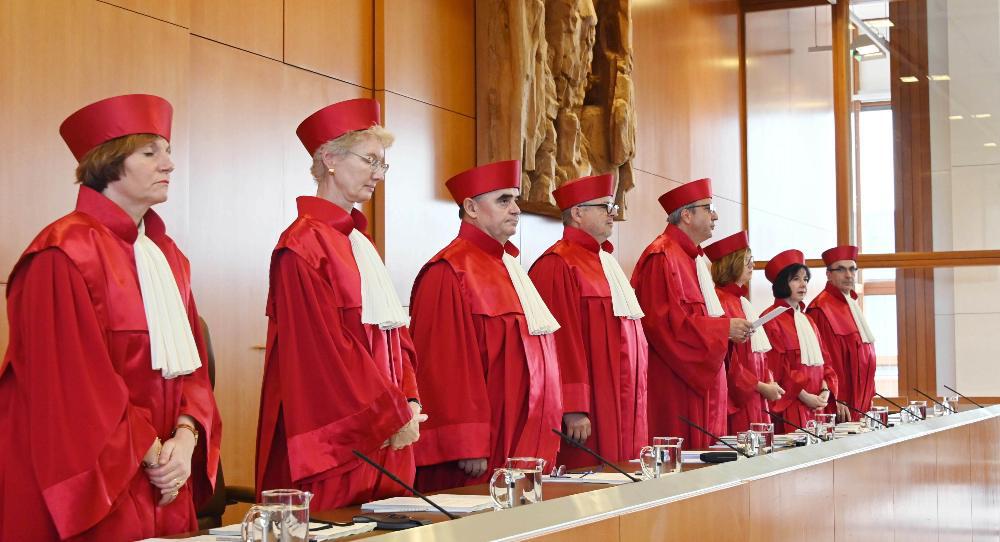
Source: Getty
On March 26, the German Constitutional Court ordered the country’s president not to sign off on legislation to ratify the EU’s €750 billion post-coronavirus recovery fund. At stake is Europe’s ability to recover after the pandemic is over.
It’s hard to say, but the impact of the EU’s post-coronavirus recovery fund will come late and may be less than meets the eye. Not being a sovereign state, the EU is ill equipped to run policies on the fly.
On the first account, even by the EU’s standards of bureaucratic crawl, the spigot will open slowly. A comparison with the United States is not fair, but here it is. The 2021 American Rescue Plan Act took less than two months from proposal to ratification. Europe is eight months into ratification of the NextGenerationEU recovery plan, and sixteen of the twenty-seven EU member states have OK’d it so far. It’s fair to expect that just a quarter of the money will reach the recipients by the end of 2023.
In terms of impact, the plan’s priorities are a good many. Aside from recovery support, they run the gamut from green transition through digital transformation to policy modernization. With so many mouths to feed, few effective euros will support any one program.
EU member states can’t afford to wait, so many have stepped in on their own. From the €100 billion ($117 billion) France Relance (France Relaunches) through Poland’s 312 billion zloty ($78 billion) Tarcza antykryzysowa (Anticrisis Shield) to the €130 billion ($153 billion) Kraftpaket für Deutschland (Strength Package for Germany), they share swiftness of action with local purpose. For the wonkishly inclined, it’s called subsidiarity.
Yes. The EU’s post-coronavirus recovery instrument has a sound legal and economic basis. It was approved unanimously by all EU member states. In the German Bundestag, the fund was supported by an overwhelming majority across the political spectrum. And the German Constitutional Court has never shown any appetite for causing irreparable operational damage to an ongoing EU economic policy.
Therefore, the most likely scenario is still that the court will allow the ratification process to go ahead. More generally, observers knew that the recovery instrument’s legal basis was a new construction that would be challenged in court. This case will now make its usual way up to the European Court of Justice, which will decide whether the instrument is legal under EU law. This will take a while. And unless something dramatic and completely unexpected happens before that, the recovery fund will go ahead as planned.
Yes. Until recently, the German Constitutional Court’s approach to questions of European integration has been “yes, but . . .”—often likened to a dog that barks but does not bite. The court’s May 2020 judgment that the European Central Bank’s public-sector purchase program went beyond the bank’s remit marked a notable difference. But even then, the German government seemed to resolve the case easily enough without causing actual damage to the program at hand.
It would be surprising if the court were now to halt the EU’s post-coronavirus recovery fund altogether, which poses very little risk to the German budget. The stakes for the EU and its member states are simply too high.
The court’s March 26 order for the German president not to ratify the recovery fund until the entry into law of the EU’s own resources decision, which would increase the maximum amount of member state resources that can finance EU expenditure, might be a welcome pretext for other member states to hold off on their own ratifications of the own resources decision.
For now, the ratification timelines of Austria, Hungary, the Netherlands, and Poland are still unknown. If the experience of the December 2020 European Council negotiations are anything to go by, it is not unthinkable that some member states may hijack the ratification process to force the European Commission’s hand in other dossiers.
Most likely, yes. The German Constitutional Court’s March 26 order might delay the package’s ratification by some weeks, but it is unlikely that the whole process will come to a halt. This delay should not be cause for concern because other countries are also likely to ratify at or after the end of April.
Another country where the ratification process might meet some obstacles is Poland, where a junior coalition partner threatens to oppose the EU’s post-coronavirus recovery fund. Even there, however, there is still enough time for the government to solve its internal struggles and find the necessary votes.
Additionally, the EU member states’ national recovery and resilience plans will not be approved until well into the summer. That will allow sufficient leeway for national debates over the ratification of the proposed own resources decision, which, if approved, will raise the maximum amount of resources that can be called from member states to finance EU spending.
Yes! The German Constitutional Court loves to flex its power and assert the Bundestag’s budgetary sovereignty. But it has never yet killed a major EU initiative—let alone in the middle of a crisis—despite repeated lawsuits by Euroskeptic professors against the European Central Bank’s bond-buying policies. The red-robed sages of Karlsruhe, where the court sits, won’t want to take responsibility for such a massive blow to economic recovery and market confidence. At most, the court’s March 26 order means the EU faces a few weeks’ delay.
The court is far more likely to try to draw lines in the sand for the future than to stop an EU recovery fund that has already been approved by both houses of the German parliament and is widely backed by German public opinion. For example, the court could cement the fund’s one-off nature to prevent it from morphing into a permanent EU borrowing capacity by ruling that any such step would require changes to the EU treaties and the German constitution.
That would be a setback for those, including me, who believe the EU should be able to issue debt for long-term public investment in green and digital transformation. It would increase pressure for treaty change to achieve that objective—but alas, everyone knows how accident prone treaty change can be.
In the end, it is more likely than not that the EU’s post-coronavirus recovery fund will happen. But the German Constitutional Court is fiercely independent, so there are no guarantees. This case also increases the possibility that there will be delays in the fund starting to pay out, which would reduce its positive economic impact. This controversy decreases the likelihood of a German commitment to additional steps in the future, which will be necessary to deal with the depth of this economic crisis.
More generally, the German political and legal systems need to answer some questions both about their suitability to deal with crises and about Germany’s commitment to European integration. Dealing with crises requires unbureaucratic and speedy decisions, but this seems to be a challenge, as has also been witnessed in the slow rollout of coronavirus vaccines.
Germany is in danger of becoming the awkward partner in European integration. Even when there is a broad consensus for action, the country’s legal system raises barriers and difficulties. This was seen in the German Constitutional Court’s May 2020 decision that the European Central Bank’s public-sector asset-purchase program overstepped the bank’s powers. Given its size and history, Germany carries a special responsibility for addressing economic crises and supporting European integration.

Nonresident Senior Fellow, Carnegie Europe
Dempsey is a nonresident senior fellow at Carnegie Europe
Recent Work
Judy Dempsey
Judy Dempsey
Carnegie does not take institutional positions on public policy issues; the views represented herein are those of the author(s) and do not necessarily reflect the views of Carnegie, its staff, or its trustees.
The war in Iran proves the United States is now a destabilizing actor for Europe and the Arab Gulf. From protect their economies and energy supplies to safeguarding their territorial integrity, both regions have much to gain from forming a new kind of partnership together.

Rym Momtaz

French President Emmanuel Macron has unveiled his country’s new nuclear doctrine. Are the changes he has made enough to reassure France’s European partners in the current geopolitical context?
Rym Momtaz, ed.
European reactions to the war in Iran have lost sight of wider political dynamics. The EU must position itself for the next phase of the crisis without giving up on its principles.

Richard Youngs
Europe isn’t as weak in the new geopolitics of power as many would believe. But to leverage its assets and claim a sphere of influence, Brussels must stop undercutting itself.

Dimitar Bechev

Europe’s reaction to the war in Iran has been disunited and meek, a far cry from its previously leading role in diplomacy with Tehran. To avoid being condemned to the sidelines while escalation continues, Brussels needs to stand up for international law.

Pierre Vimont