

Commentary
Marc Pierini
{
  "authors": [
    "Marc Pierini"
  ],
  "type": "commentary",
  "blog": "Strategic Europe",
  "centerAffiliationAll": "",
  "centers": [
    "Carnegie Endowment for International Peace",
    "Carnegie Europe"
  ],
  "collections": [],
  "englishNewsletterAll": "",
  "nonEnglishNewsletterAll": "",
  "primaryCenter": "Carnegie Europe",
  "programAffiliation": "",
  "programs": [],
  "projects": [],
  "regions": [
    "Russia",
    "Europe",
    "Türkiye",
    "Middle East"
  ],
  "topics": [
    "Security",
    "Economy",
    "Democracy",
    "EU",
    "Climate Change",
    "Foreign Policy"
  ]
}
Source: Getty
In the run-up to the 2023 elections, Turkey’s foreign policy will be shaped by domestic politics. To stand a chance of winning, the opposition must unite and put forward a cohesive electoral program.
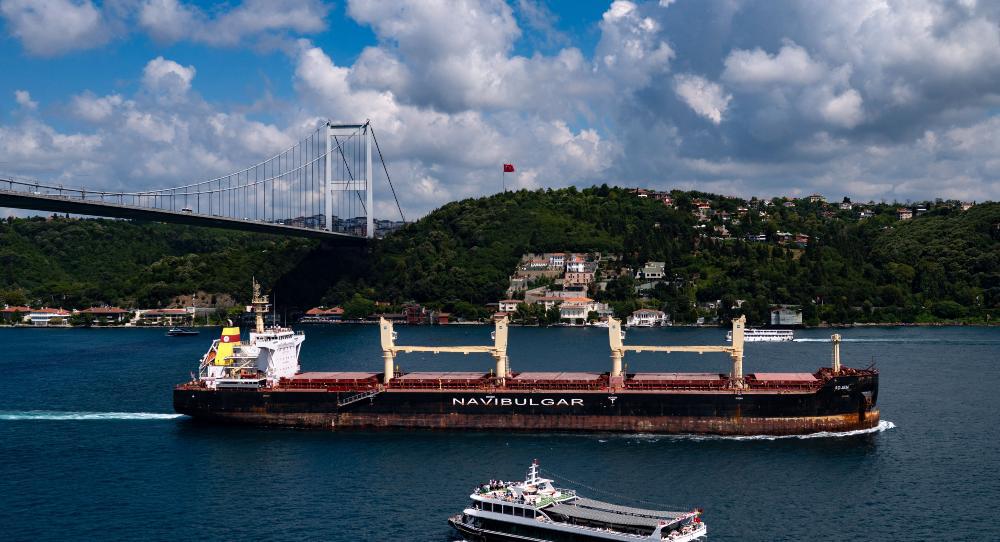
Russia’s unprovoked invasion of Ukraine looms large on Turkey’s foreign policy. Ankara’s balancing act between Russia and Ukraine makes the issue even more difficult to manage. Despite several attempts at peace mediation, successes have so far been limited in scope: a prisoner swap and a grain deal allowing cereals to be shipped from Odessa and neighboring ports under a monitoring mechanism set up in Istanbul with the United Nations.
Even when Russia declared that it was withdrawing from the arrangement, Turkey went ahead, probably on the condition that Ukraine would not use the shipping corridors to hide attacks on the Russian Black Sea fleet. These efforts are worthy of praise, but as such do not lead to peace.
If they occur at all in the medium-term, peace talks between Russia and Ukraine will probably be triggered by the United States rather than Turkey, simply because of the crucial military supplies and guidance Washington provides to the valiant Ukrainian forces.
In addition, the naked truth is that Moscow would probably not like Ankara to facilitate peace discussions, while NATO members would not necessarily trust the only country that has dented the alliance’s defense architecture by taking delivery of Russian missiles—and, as a consequence of expected U.S. sanctions over the F-35 stealth fighters, self-inflicted a loss of strength to its own air force.
Yet, in election times, publicity matters. When the Central Intelligence Agency’s (CIA) Director William Burns met his Russian counterpart, Sergei Naryshkin, in Ankara on November 14, the Turkish intelligence agency made sure to specify that the meeting took place at their headquarters.
In addition, when Ankara delayed Finland’s and Sweden’s accession to NATO for domestic reasons, it also dented Turkey’s image within the alliance at a historical time for the European continent and the Western world. It is improbable that this deadlock will be resolved soon, since Turkey’s accusations against Sweden are exclusively linked to Kurdish activism in the latter.
The tragic bombing on a busy pedestrian street in the heart of Istanbul on November 13 has once again showed that no political cause can justify the indiscriminate killing of families and children. Although the tragedy was condemned by the Kurdish-affiliated People’s Democratic Party (HDP), the Kurdistan Workers’ Party (PKK) leadership itself, and the Syrian People’s Defense Units (YPG), the security apparatus promptly exposed links between the captured suspect and the PKK, as well as her confession. In short, the authorities have made Kurdish terrorism a prominent issue in the 2023 election campaign.
The next steps could include more military actions against the PKK militias in Northern Iraq and, Russia permitting, possibly in the Kobanê region of Syria; an eventual banning of the HDP party before the elections; the muting of opposition parties and media on the subject (a media ban was immediately imposed on news about the bombing); and renewed accusations against the United States for its support to Syrian Kurdish forces fighting the Islamic State (ISIS). More generally, the fight between “us” and “them” will inevitably become a key narrative of the electoral campaign.
Where does this intricate set of issues—and their electoral consequences—leave European countries and NATO?
Domestic politics come first, as always.
With inflation officially at 80 percent and a mesmerizing interest rate policy, the Turkish economy is in bad shape, but generous measures to help the poor, teachers, students, and other subsets of voters are being announced with great fanfare and few details on their funding. This is where the incumbent leadership aims to win the votes it needs. Meanwhile, tight control on the media and civil society will ensure that the real state of the country’s economy is not discussed too prominently. The newly-minted disinformation law will help.
Turkey’s foreign policy will be put at the service of domestic political imperatives in order to demonstrate that in dire times the country needs a leadership able to resist pressure from outside forces and to impose its own independent course.
A few cases will be used to rally the nation around the flag and hence mute the opposition coalition: disputes on maritime boundaries with Greece (if not the relevance of the Lausanne Treaty itself), the case of a two-state solution for Cyprus, and additional military operations in Northern Syria.
The irony is that more bellicose narratives against Greece, more talk of direct or indirect recognition of the “Turkish Republic of Northern Cyprus,” and battalions sent to Kobanê will directly hurt Turkey’s international standing, both politically and financially.
It remains to be seen what the six-party opposition coalition will have to propose as an electoral platform. This coalition has so far been united mainly by its opposition to President Recep Tayyip Erdoğan. Its domestic ambitions are clear—returning to the parliamentary system, reinstating the rule of law and fundamental freedoms, and moving toward a sounder economic policy—but its foreign policy proposals are far less known and cohesive. The publication of a comprehensive platform is expected.
Whether the opposition coalition will be able to get their act together and stand united will be a litmus test for them and for Turkey’s democracy.

Senior Fellow, Carnegie Europe
Marc Pierini is a senior fellow at Carnegie Europe, where his research focuses on developments in the Middle East and Turkey from a European perspective.
Recent Work
Marc Pierini
Marc Pierini
Carnegie does not take institutional positions on public policy issues; the views represented herein are those of the author(s) and do not necessarily reflect the views of Carnegie, its staff, or its trustees.

Before the next wave of EU enlargement takes place, the union needs to grapple with thorny questions of how power is distributed among its members.


Emil Sondaj Hansen, Ditte Brasso Sørensen

A summer of escalation in the Black Sea has hurt Ukraine economically and is exacerbating world food security. A truce is needed—as is a broader reframing of Europe’s Ukraine strategy.

Thomas de Waal

Are Germany’s economic, industrial, and political struggles becoming a liability for the EU’s ability to rise to the geopolitical moment?

Rym Momtaz, ed.

European Commission President Ursula von der Leyen is about to give her annual address on the state of the EU. Here’s what she won’t—but should—say.
Rym Momtaz

The aftermath of the Ceuta crisis shows Europe has drawn the wrong lessons. Rather than doubling down on failed migration policies, the EU needs to address the underlying roots of such episodes.

Richard Youngs