

Commentary
Before the next wave of EU enlargement takes place, the union needs to grapple with thorny questions of how power is distributed among its members.
Emil Sondaj Hansen, Ditte Brasso Sørensen
{
  "authors": [
    "Viktor Szép"
  ],
  "type": "commentary",
  "blog": "Strategic Europe",
  "centerAffiliationAll": "",
  "centers": [
    "Carnegie Endowment for International Peace",
    "Carnegie Europe"
  ],
  "collections": [],
  "englishNewsletterAll": "",
  "nonEnglishNewsletterAll": "",
  "primaryCenter": "Carnegie Europe",
  "programAffiliation": "",
  "programs": [],
  "projects": [],
  "regions": [
    "Europe",
    "Western Europe"
  ],
  "topics": [
    "Foreign Policy",
    "EU",
    "Security"
  ]
}
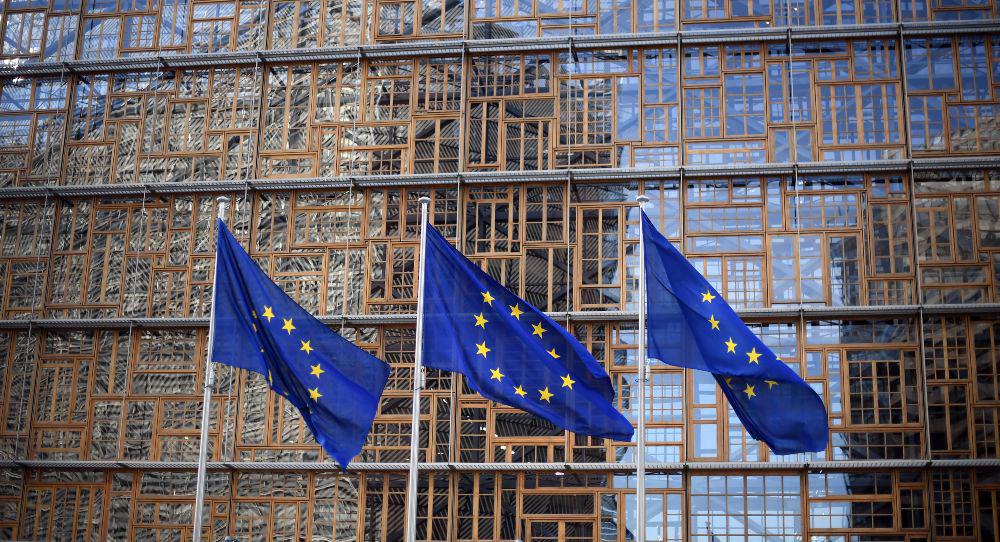
Source: Getty
Unanimity has been the default voting rule in EU foreign policymaking. Multiple crises could change that status quo.
This blog is part of ENGAGE, a project that examines challenges to global governance and EU external action. A consortium of thirteen academic institutions and think tanks seeks to assess the EU’s ability to harness all its foreign policy tools and identify ways to strengthen the EU as a global actor.
***
The Common Foreign and Security Policy (CFSP) is one of few remaining policy areas of the European Union that still requires unanimity—meaning the agreement of all twenty-seven member states. At a time when the EU increasingly faces geopolitical challenges, that requirement may be becoming obsolete.
A research report written for the European Parliament shows that between 2016 and 2022, member states used their veto rights at least thirty times, preventing the union from taking action, or at the very least delaying foreign and security policy measures, including sanctions against third states.
It is highly likely that this number is just the tip of the iceberg. Some vetoes may have been used in an informal setting and remained invisible to researchers working with open-source data.
For too long, the expert community has held that the CFSP consists of purely intergovernmental cooperation where unanimity must be used in every single foreign policy action. The fact is that EU treaties already offer the possibility to shift from unanimity to qualified majority voting (QMV). Indeed, research suggests that some of the existing EU sanctions regimes are actually modified by QMV.
In the last couple of years, there were twenty-five major calls to expand the use of QMV in CFSP issues. These demands came mostly from the European Commission and the European Parliament, but also from some member states, including Germany.
Moreover, in 2020, the European Commission and EU high representative for foreign affairs and security policy also tried to activate one of the QMV options in relation to human rights issues, but member states rejected that proposal.
There are two main reasons why EU institutions, in particular the commission and the parliament, are increasingly committed to using QMV.
First, within the framework of the Conference on the Future of Europe, EU citizens recommended to fully abolish the requirement of unanimity in all areas of EU policymaking except for future enlargement issues. The parliament wants to seize this opportunity and has initiated, for the first time in its history, a revision of EU treaties to realize that objective.
Second, geopolitical challenges, including Russia’s war in Ukraine and a more assertive China, have once again showed the need for prompt EU (re)actions. A painful experience included the 2020 fraudulent election in Belarus, when post-Brexit UK was quicker to adopt sanctions than the EU due to one of its member states’ resistance.
While opening and changing the treaties could indeed be an option to change the status quo, there is a faster and easier way to activate QMV in CFSP matters. That option is the so-called special CFSP passerelle clause.
In short, this treaty provision allows the union to shift from unanimity to QMV in CFSP issues if the European Council supports such a move.
One could rush to the hasty conclusion that this is simply not possible because the member states will anyway reject such proposals given that unanimity has been the default voting rule in EU foreign policy for several decades. Old habits die hard, right?
But in fact under the Czech Presidency of the Council of the EU, which lasted from July through December 2022, there were serious discussions between EU affairs ministers to map out the preferences of the member states in relation to the wider use of QMV. While there are clearly more sceptical countries, former Swedish minister for European affairs Hans Dahlgren said that he “did not hear anybody who slammed the door.”
More importantly, Czech Minister for European Affairs Mikuláš Bek referred to a possible package deal that could lead to the activation of the special CFSP passerelle clause. Bek said that “some of the former opponents of [QMV] are simultaneously strong proponents of the enlargement.” The Czech Council presidency probably referred, among others, to Hungary, which remains reluctant to accept QMV in CFSP matters but wants to see Serbia and other Western Balkan states in the EU.
While a package deal may indeed make it possible to expand QMV to CFSP matters, it is important to underline that in the short term, QMV will not be the default voting rule in this policy domain. Instead, as a first step member states could use QMV in a selected area of the CFSP, including in relation to some horizontal sanctions regimes.
Member states should be given time to see and experience the use of QMV in an area where all of them have been socialized “in the shadow of veto.” After a certain period of time, a new round of discussions could start, where the member states may decide to further expand QMV to other areas. These could include defense, where the treaties currently rule out such a possibility.
One cannot predict the future. But if a shift from unanimity to QMV is ever going to happen, it is exactly around 2023. One indicator is the fact that after the many rounds of discussions the Czech Council presidency sent a letter to the member states with a list of specific policy areas that may benefit from the use of QMV. Time will tell if the magic happens …
Viktor Szép is assistant professor at the University of Groningen in the Netherlands.


Viktor Szép
University of Groningen
Viktor Szép is assistant professor at the University of Groningen in the Netherlands.
Carnegie does not take institutional positions on public policy issues; the views represented herein are those of the author(s) and do not necessarily reflect the views of Carnegie, its staff, or its trustees.

Before the next wave of EU enlargement takes place, the union needs to grapple with thorny questions of how power is distributed among its members.


Emil Sondaj Hansen, Ditte Brasso Sørensen

A summer of escalation in the Black Sea has hurt Ukraine economically and is exacerbating world food security. A truce is needed—as is a broader reframing of Europe’s Ukraine strategy.

Thomas de Waal

Are Germany’s economic, industrial, and political struggles becoming a liability for the EU’s ability to rise to the geopolitical moment?

Rym Momtaz, ed.

European Commission President Ursula von der Leyen is about to give her annual address on the state of the EU. Here’s what she won’t—but should—say.
Rym Momtaz

The aftermath of the Ceuta crisis shows Europe has drawn the wrong lessons. Rather than doubling down on failed migration policies, the EU needs to address the underlying roots of such episodes.

Richard Youngs