

Commentary
Judy Dempsey
{
  "authors": [
    "Judy Dempsey"
  ],
  "type": "commentary",
  "blog": "Strategic Europe",
  "centerAffiliationAll": "",
  "centers": [
    "Carnegie Endowment for International Peace",
    "Carnegie Europe"
  ],
  "collections": [],
  "englishNewsletterAll": "",
  "nonEnglishNewsletterAll": "",
  "primaryCenter": "Carnegie Europe",
  "programAffiliation": "",
  "programs": [],
  "projects": [],
  "regions": [
    "Middle East",
    "Europe",
    "Syria"
  ],
  "topics": [
    "Foreign Policy",
    "Migration",
    "Democracy",
    "EU",
    "Security"
  ]
}
Source: Getty
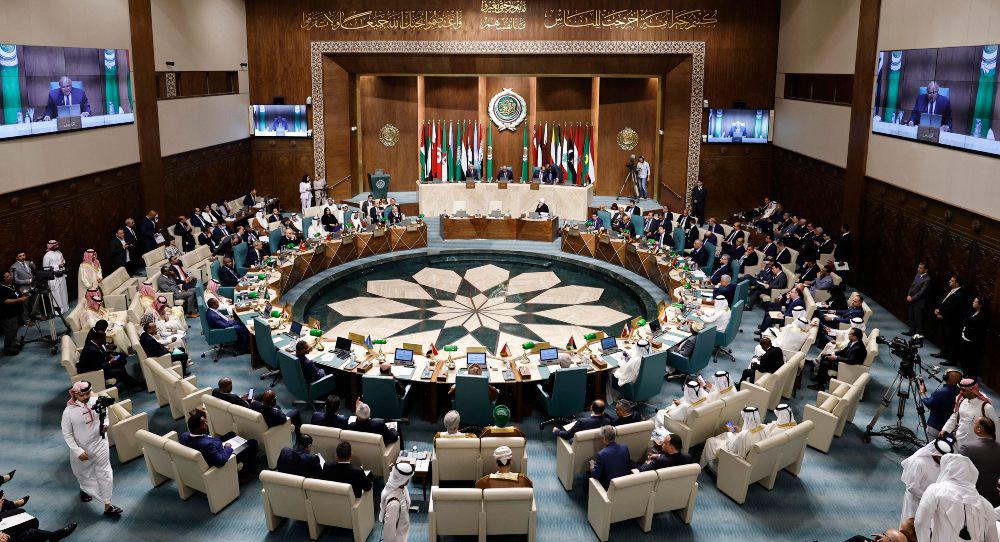
The Arab League’s decision to readmit Syria rewards brutality and betrays victims. It also confirms the marginalization of the United States and the irrelevance of Europe in the region.
A collection of Arab countries grouped in the Arab League has brought President Bashar al-Assad back into its fold.
The twenty-two-member-strong Arab League, a largely toothless organization, had taken the unusual decision to suspend Syria’s membership in 2011, when Assad began a ruthless war against protestors demanding an end to his authoritarian rule.
Assad’s readmission is a damning indictment of the growing impotence of Europe and the United States in a region plagued by instability, internal displacement, authoritarianism, and a younger generation lacking economic and political prospects.
It could also provide solace to other authoritarian leaders, including Russian President Vladimir Putin. Subjected to a battery of Western sanctions and isolated in Europe because of his brutal war against Ukraine, Putin has an open door in the Arab world. Russia’s violent military role in Syria and its support for Assad has given Moscow a substantial foothold and allies in the Middle East.
But Assad’s rehabilitation is also about impunity and the raw reality of realpolitilk.
“Arab states have put their own cynical realpolitik and diplomatic agendas above basic humanity,” said Laila Kiki, executive director of The Syria Campaign, an international advocacy group. The move, she added, has “cruelly betrayed tens of thousands of victims of the regime’s war crimes and granted Assad a green light to continue committing horrific crimes with impunity.”
The scale of the violence and destruction is numbing. Since 2011, at least half a million people have been killed and 23 million have been displaced. Refugees have fled to Lebanon, Jordan, Turkey, and Europe. A whole generation of children is without education.
Against this background, the Arab League used the spillover to the wider region to justify its decision—even though some members still oppose the move.
“The Syrian crisis has been spilling over very negative effects on the neighboring countries. The neighboring countries and the region, especially the Arab countries, feel that this situation needs to be resolved. This is why we reached this point,” Assistant Secretary-General of the Arab League Hossam Zaki told Al Jazeera.
“The understanding that has been growing for the past several months, especially after the catastrophe of the earthquake [in Syria and Turkey], is that there is no clear international attention that is supposed to be driving for a solution in Syria,” he added.
The United States was skeptical about Assad ending the war. “We do not believe Syria merits readmission into the Arab League at this time,” a U.S. State Department spokesperson said. They added that sanctions on Syria would remain in place—not that they deterred Assad.
History is littered with examples in which leaders who ruthlessly suppressed their citizens have been rehabilitated, or escaped justice by seeking protection by other like-minded regimes or managed to hold onto power simply through sheer force (and a degree of Western realpolitik).
There have been cases, like the war in the former Yugoslavia or in Rwanda, after which special tribunals were established with the aim of seeking justice. It was also about giving the victims some hope that such courts will serve as a deterrent to future atrocities and indiscriminate killings.
In the case of Syria, so far, the International Criminal Court has not issued a warrant for Assad—though it has issued one for Putin.
And now, Assad can thank the Arab League for prolonging his regime. As for most of the Arab League members, they have seen off pro-democracy movements that emerged during the short and ill-fated Arab Spring. They have clamped down on Islamists. Political reforms are not on their agendas.
It is also hard to see how Assad’s return to the Arab League will have an impact on this divided and contested country. Russia and Iran, Saudi Arabia and Turkey have all bombed Syria as they vie for influence and a strategic position in the region.
There is, however, one new element entering the region: China. Its recent role, notably mediating between arch-enemies Iran and Saudi Arabia, brings a new dimension to the changing geostrategic dynamics of the Middle East.
Indeed, the presence of Beijing exposes the absence of Europe—never a great player but now further reduced to irrelevance—and the political weakness of the United States’ role.
Their poor strategies—if they ever had them—were exploited at the start of the war in Syria by Damascus’s foes and allies. Those neighbors and players in the country will now have to calculate their next moves in ending the war.
Several Arab League members see the decision to readmit Syria as a slap in the face for the West. Iran, itself facing months of protests, congratulated Syria on regaining its place in the organization.
Russia was full of praise: “We proceed from the premise that reinstating Syria’s participation in the operations of the [Arab League], with it being one of its founding countries, will facilitate a healthier atmosphere in the Middle Eastern region and the swiftest overcoming of the consequences of the Syrian crisis,” Russian foreign ministry spokeswoman Maria Zakharova said.
Such an atmosphere is unlikely to include justice and is just as unlikely to include Western engagement.

Nonresident Senior Fellow, Carnegie Europe
Judy Dempsey is a nonresident senior fellow at Carnegie Europe
Recent Work
Judy Dempsey
Judy Dempsey
Carnegie does not take institutional positions on public policy issues; the views represented herein are those of the author(s) and do not necessarily reflect the views of Carnegie, its staff, or its trustees.

As we close out another season of Strategic Europe, it is worth taking stock of the deep shifts underway.

Rym Momtaz
The EU had to compromise to adopt a twenty-first sanctions package against Russia, exposing growing cracks in the union’s resolve. Is this latest, weaker round worth it to keep pressure on Moscow?
Rym Momtaz, ed.

Trump is distracted and Ukraine wants Europe to step up. The continent’s leaders must find their voice and assert it in talks with Russia.

Alissa de Carbonnel

Mounting economic strain and battlefield losses will not necessarily make the Kremlin less dangerous. They could instead push Moscow toward a more aggressive hybrid campaign designed to test NATO’s Eastern flank, exploit allied hesitation, and fracture European resolve.

Maksym Beznosiuk

Over the past ten years, NATO has held almost as many summits as it did during the entirety of the Cold War. Are they still useful, or is it time to stop holding annual meetings?
Rym Momtaz, ed.