

Commentary
Gwendolyn Sasse
{
  "authors": [
    "Gwendolyn Sasse"
  ],
  "type": "commentary",
  "blog": "Strategic Europe",
  "centerAffiliationAll": "",
  "centers": [
    "Carnegie Endowment for International Peace",
    "Carnegie Europe"
  ],
  "collections": [
    "Europe’s Eastern Neighborhood"
  ],
  "englishNewsletterAll": "",
  "nonEnglishNewsletterAll": "",
  "primaryCenter": "Carnegie Europe",
  "programAffiliation": "",
  "programs": [],
  "projects": [],
  "regions": [
    "Russia",
    "Europe",
    "Eastern Europe",
    "Western Europe"
  ],
  "topics": [
    "Security",
    "EU",
    "Foreign Policy"
  ]
}
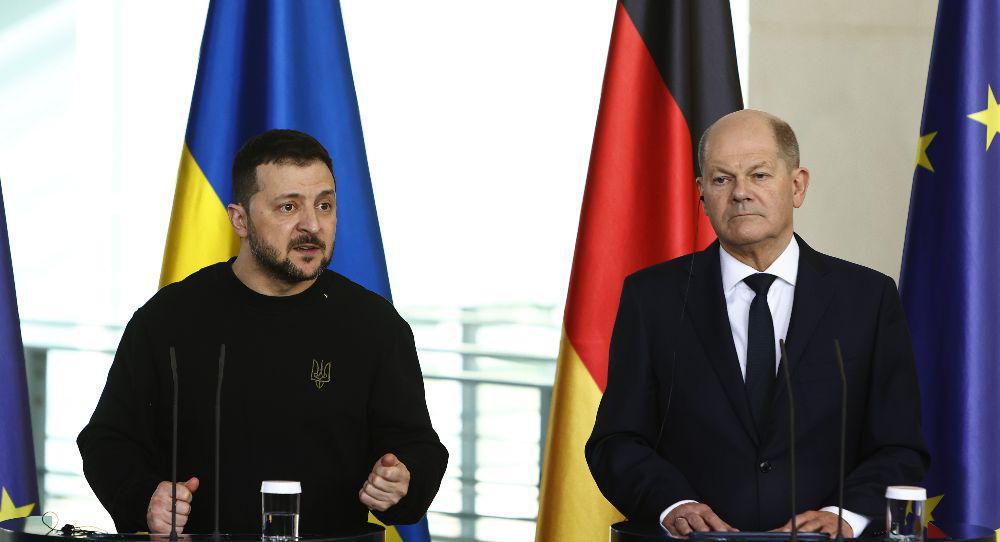
Source: Getty
Gloomy speeches at the Munich Security Conference reflect the general mood two years into Russia’s war on Ukraine. Rather than drawing conclusions and analogies that benefit the Kremlin, the West should bolster support for Kyiv.
Compared to 2023, the atmosphere at this year’s Munich Security Conference was much more somber.
Despite the repeated calls for EU and NATO unity and for the need to rebuild a rules-based international order, the underlying tone of many of the speeches, side-events, and conversations in the corridors was marked by doubt and uncertainty. Russia’s war against Ukraine dominated the conference. This was not least due to the news about Russian opposition figure Alexei Navalny’s death in a Siberian penal colony and his wife Yuliya Navalnaya’s address at the conference.
The speeches of German Chancellor Olaf Scholz and Ukrainian President Volodymyr Zelensky—and the distance between them—reflected the general mood.
Scholz posed a question on the main stage: “Is Europe doing enough?” The implied answer was “no,” but the speech fell short of answering the question with concrete new proposals, apart from references to additional German aid and defense expenditure.
The contrast between Scholz and Zelensky, who spoke right after him, could not have been starker: Zelensky’s voice was hoarse, he looked tired and his words conveyed utmost urgency. He ended his speech with a poignant sentence: “Do not ask Ukraine when the war will end; ask yourself why Putin can continue it.”
This weekend will mark the second anniversary of the start of Russia’s full-scale invasion. Despite widespread references to “the start of the war” in 2022, political and public perception in the West has yet to catch up with the fact that this is in fact already a ten-year-long war. It started with Russia’s occupation and annexation of Crimea in February–March 2014, continued with Russia’s war in part of Donetsk and Luhansk regions in the spring of 2014, and culminated in the full-scale invasion since February 24, 2022.
At the Munich Security Conference and in European political and public discourse more generally, opinion polls have been quoted as proof that in the EU, support for a Ukrainian-Russian settlement and the willingness among Ukrainians to accept territorial concessions are on the rise.
Two caveats are in order. Opinion polls are an important source and, at times, a corrective to widely shared assumptions, but they also need to be presented and interpreted with care. A lot depends on the wording of the actual questions: Asking people whether they expect the war to end in a victory for either side or in a compromise settlement is not the same as asking for their view on the best possible outcome. Most wars end in (attempted) settlements; the answer may simply reflect this empirical fact rather than a policy preference.
Similarly, Ukrainian opinion poll data can easily be misrepresented. According to a poll by the Kyiv International Institute of Sociology (KIIS), conducted in the Ukrainian-controlled territory in December 2023, the share of those who expressed readiness to accept territorial concessions stood at 19 percent in December 2023, up from 10 percent in May 2023. Variation across Ukraine remained limited: by region of origin, readiness to cede territory ranged between 15 percent in central Ukraine to 20 percent in the country’s west and 24 percent in the east; by current region of residence, it ranged between 16 and 25 percent.
However, a deeper look at these figures shows that a clear majority—71 percent—of those expressing readiness for territorial concessions believe in Ukraine’s “success” as long as the West provides “proper support.” In other words, Ukrainians expect the West to step up its political will to provide military and financial aid, military production, and speedy supplies. Moreover, among those who say that they are ready for territorial concessions, close to 70 percent deem Western security guarantees necessary and close to a third expect hostilities to continue regardless of a territorial settlement.
Thus, speculation at conference side events and beyond about a possible West Germany scenario as a response to a prematurely declared change in the public mood in Ukraine and the West leads into a dead end. According to this scenario, the territories under Ukrainian control would become firmly integrated into the EU and NATO, and therefore offer security to at least parts of Ukraine. The comparison with West Germany does not hold, however: It suggests that a policy reversal might be possible several decades later, but it ignores the fact that on the Russia-controlled side, Ukraine would not be preserved but rather dissolved as a nation and part-state in line with Russian imperial thinking.
Russia is already investing large sums of money in the resocialization of the population in the occupied territories—in Russian official speak, they are called “the new regions”—and, if this trend continues, there will not be any Ukraine left there several decades from now.
These are uncertain times. But policymakers, analysts, and journalists should not make matters worse by jumping to conclusions based on an imprecise interpretation of opinion polls in Ukraine and the EU, or analogies that do nothing but provide the Kremlin and its allies with additional room for maneuver.
Gwendolyn Sasse is a non-resident senior fellow at Carnegie Europe and director of the Centre for East European and International Studies (ZOiS) in Berlin.
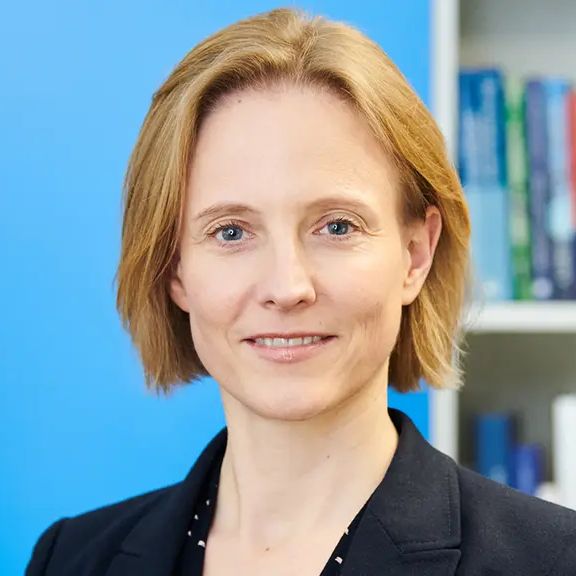
Nonresident Senior Fellow, Carnegie Europe
Gwendolyn Sasse is a nonresident senior fellow at Carnegie Europe. Her research focuses on Eastern Europe, with a particular focus on Ukrainian politics and society, EU enlargement, and comparative democratization.
Recent Work
Gwendolyn Sasse
Gwendolyn Sasse
Carnegie does not take institutional positions on public policy issues; the views represented herein are those of the author(s) and do not necessarily reflect the views of Carnegie, its staff, or its trustees.

Ahead of a tough winter for Ukraine, Donald Trump’s swing back toward Russia bodes ill. But instead of panicking, Kyiv’s European allies are focusing on action.

Rym Momtaz

While the EU and European governments are embracing the much-lauded middle-power moment, this entails three difficult conundrums.

Richard Youngs
Much has been said of the changes Brussels is trying to make to the EU enlargement process. Here’s why gradual integration might—or might not—be the answer.

Dimitar Bechev

The European Commissioner for Trade is headed to China. But after President Xi’s bridge-building visit to Washington, can a more isolated EU overcome Beijing’s stranglehold on critical raw materials? Who will blink first?
Rym Momtaz, ed.

The domestic impacts of how long it is taking to end the war in Ukraine have pushed the French electorate to the political extremes and compromised the country’s diplomatic capacity.
Rym Momtaz