

Article
Stefan Lehne
{
  "authors": [
    "Stefan Lehne"
  ],
  "type": "commentary",
  "blog": "Strategic Europe",
  "centerAffiliationAll": "",
  "centers": [
    "Carnegie Endowment for International Peace",
    "Carnegie Europe"
  ],
  "collections": [
    "EU Integration and Enlargement"
  ],
  "englishNewsletterAll": "",
  "nonEnglishNewsletterAll": "",
  "primaryCenter": "Carnegie Europe",
  "programAffiliation": "",
  "programs": [],
  "projects": [],
  "regions": [
    "Western Balkans",
    "Ukraine",
    "Europe"
  ],
  "topics": [
    "EU Enlargement",
    "EU",
    "Foreign Policy"
  ]
}
Source: Getty
EU enlargement remains the union’s most potent tool to strengthen unity and stability in Europe. But to succeed in this era of geopolitical standoffs between great powers, enlargement requires greater EU engagement and an innovative, differentiated approach.
Enlargement and geopolitics are polar opposites. Geopolitics is fast and unstoppable. Enlargement is slow and eminently stoppable. Geopolitics is disruptive, divisive, and often follows a zero-sum logic. Enlargement is transformative, unifying, and the ultimate positive-sum game.
Previous EU enlargements, of course, also had a geopolitical dimension. They were first about consolidating a Western Europe threatened by the Soviet Union, then about integrating Southern countries after their democratization, and finally about bringing in Central and Eastern Europe, thus filling the space left by the collapse of the Soviet empire.
However, in earlier enlargements, geopolitics remained in the background. Big external powers were either supportive—like the United States—or remained passive—like Russia. So, progress was determined by economic interests and the inherent difficulties of adapting national law and institutions to a body of EU legislation that grew to 120,000 pages over the years.
Today, enlargement—and its Eastern dimension in particular—has turned into a key factor in a geopolitical contest, primarily with Russia but also, in a different way, with the United States.
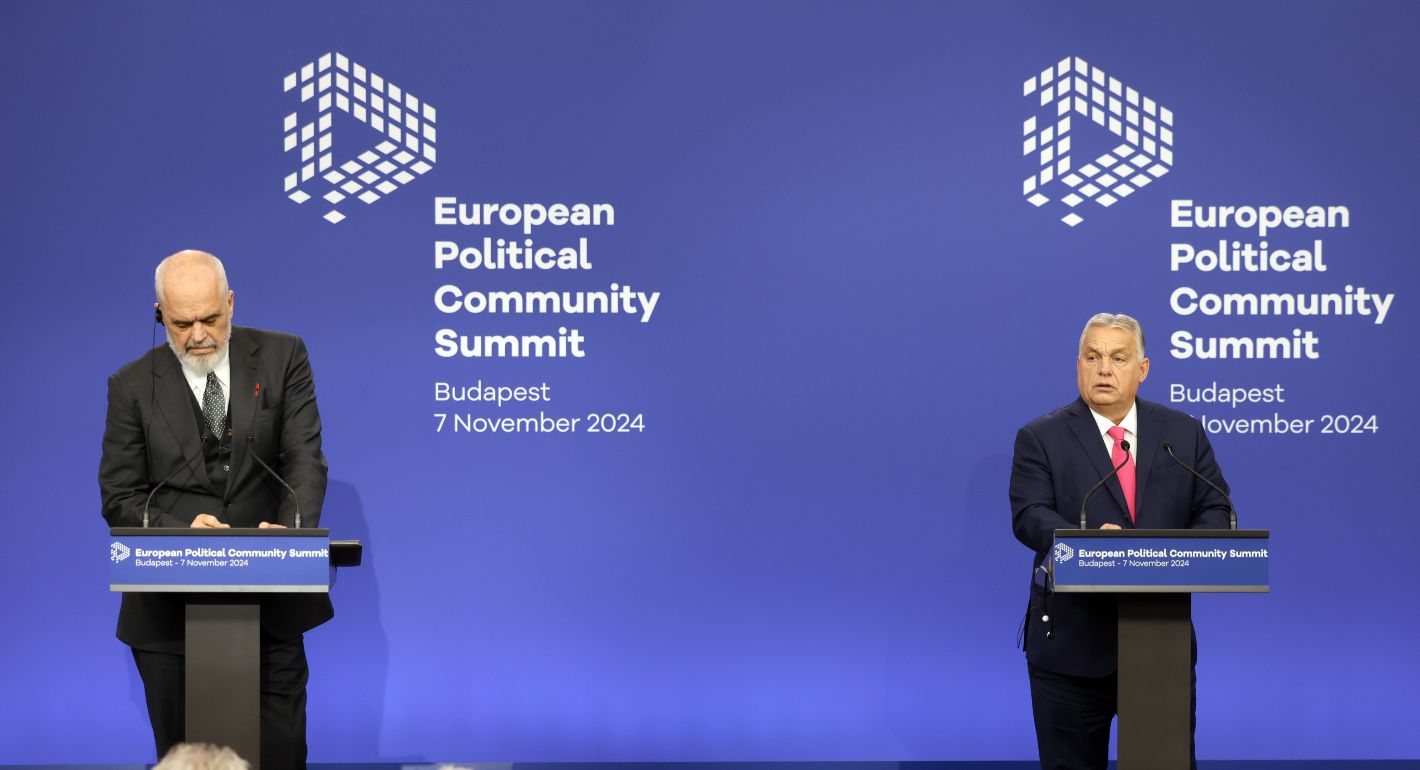
On May 16, 2025, the European Political Community (EPC) will bring European leaders—except those of Russia and Belarus—together in Tiranë for its sixth meeting. It is taking place at a moment when Europe—both EU and non-EU countries—has to rethink its defense and security architecture in light of its simultaneous challenges from Russia and the United States.
As part of those discussions, EU leaders, together with their colleagues from the ten states aiming to join, should reflect on how the EU’s role as an anchor of European stability can be developed and how enlargement can be used to enhance security and prosperity in the current geopolitical context.
With Russia, the EU faces an opponent committed to making this process as difficult as possible. This was on display in Russian efforts to defeat a 2024 referendum on the EU in Moldova and interfere in the country’s presidential election. Russia was also a factor in the decision of Georgia’s governing party, the Georgian Dream, to abandon EU enlargement. In the Western Balkans, Moscow is using its relations with Serbia and with Bosnia and Herzegovina’s Republika Srpska to work against European objectives in the region.
Long-standing U.S. support for EU enlargement projects has also come to an end. U.S. President Donald Trump considers the EU an enemy. He has celebrated Brexit, has launched a trade war against the EU, and certainly has no interest in a stronger and bigger union. It remains to be seen whether a deal with Russian President Vladimir Putin will threaten the future existence of Ukraine as a sovereign and functioning state. What is already clear is that Washington’s extraordinary demand for a large share of the Ukrainian mineral industry will complicate Kyiv’s progress toward the EU.
Also, the transactionalism taking over international relations has infected several EU member states, which is increasing the risk of deadlock and disunity in the bloc at a crucial moment. Hungary is already set to block the renewal of EU sanctions against Russia in June and veto the beginning of membership negotiations with Ukraine. If this veto persists, some member states that support Ukraine may consider blocking any progress on the Western Balkans to put pressure on Hungarian Prime Minister Viktor Orbán.
Conversely, the friends of the Western Balkans will make sure that any move to accelerate the process for Ukraine and Moldova also applies to the Balkan candidates. The challenges to enlargement in Eastern and Southeastern Europe are asymmetrical and require a differentiated approach, but internal dynamics in the EU will push the union toward doing the same in both regions, even if this comes at a cost to effectiveness.
Two approaches will soon come to a head. The traditionalist approach focuses on Montenegro and Albania, hoping that if these two countries join the EU before 2030, this will restore the credibility of enlargement and encourage other countries to step up their reforms. The geopolitical approach considers anchoring Ukraine as quickly and as fully as possible in the EU as the top priority. But the concept of how to achieve earlier integration is not yet fully developed. The thinking goes in the direction of some kind of associated membership, which would leave the implementation of parts of the EU’s legislation until later. Deciding between these approaches or finding a way to combine them will be a key challenge for the coming months.
Of course, the EU’s approach to Ukraine’s membership depends in large part on factors the union does not control: how the war ends or at least is frozen, and the political and economic situation of the country at that time. The EU needs to be able to respond rapidly and creatively to an evolving situation, cooperate closely with Ukrainian leaders, and be ready to go beyond established methods and templates.
Finally, in the current political climate, with populists on the rise across Europe, getting member states to ratify accession treaties will be anything but straightforward. To prepare the ground, the EU and the member states need a public communication strategy now that makes the case for enlargement in a convincing and understandable way.
Enlargement remains the EU’s most powerful instrument to strengthen unity and stability on the continent. However, business as usual will not deliver on this promise. The EPC meeting in Tiranë is unlikely to offer concrete solutions, but it can help leaders understand what is at stake: To succeed in the geopolitical age, enlargement requires real determination, a much higher level of engagement, and a genuine readiness to innovate.

Senior Fellow, Carnegie Europe
Stefan Lehne is a senior fellow at Carnegie Europe in Brussels, where his research focuses on the post–Lisbon Treaty development of the European Union’s foreign policy, with a specific focus on relations between the EU and member states.
Recent Work
Stefan Lehne
Stefan Lehne
Carnegie does not take institutional positions on public policy issues; the views represented herein are those of the author(s) and do not necessarily reflect the views of Carnegie, its staff, or its trustees.

The domestic impacts of how long it is taking to end the war in Ukraine have pushed the French electorate to the political extremes and compromised the country’s diplomatic capacity.

Rym Momtaz

Before the next wave of EU enlargement takes place, the union needs to grapple with thorny questions of how power is distributed among its members.


Emil Sondaj Hansen, Ditte Brasso Sørensen

A summer of escalation in the Black Sea has hurt Ukraine economically and is exacerbating world food security. A truce is needed—as is a broader reframing of Europe’s Ukraine strategy.

Thomas de Waal

Are Germany’s economic, industrial, and political struggles becoming a liability for the EU’s ability to rise to the geopolitical moment?
Rym Momtaz, ed.

European Commission President Ursula von der Leyen is about to give her annual address on the state of the EU. Here’s what she won’t—but should—say.
Rym Momtaz