

{
  "authors": [
    "Nathan J. Brown",
    "Daniel Levy",
    "Marina Ottaway"
  ],
  "type": "event",
  "centerAffiliationAll": "dc",
  "centers": [
    "Carnegie Endowment for International Peace"
  ],
  "collections": [],
  "englishNewsletterAll": "democracy",
  "nonEnglishNewsletterAll": "",
  "primaryCenter": "Carnegie Endowment for International Peace",
  "programAffiliation": "DCG",
  "programs": [
    "Democracy, Conflict, and Governance",
    "Middle East"
  ],
  "projects": [],
  "regions": [
    "Middle East",
    "Israel",
    "Palestine"
  ],
  "topics": [
    "Political Reform",
    "Democracy"
  ]
}
The Peace Process Has No Clothes
Mon, June 25th, 2007
Washington, D.C.
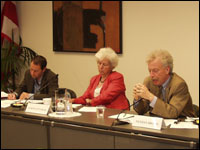
IMGXYZ720IMGZYXPresenter:
Nathan Brown, Senior Associate, Carnegie Endowment for International Peace
Discussant:
Daniel Levy, Senior Fellow and Director of the Middle East Policy Initiative of the American Strategy Program, New America Foundation
Moderator:
Marina Ottaway, Director of the Middle East Program, Carnegie Endowment for International Peace
Nathan Brown argued that the conflict in Gaza had been brewing for a long time, while all the international diplomacy was focused on the mirage of a two-state solution. Today, the situation is Gaza is beyond crisis. The decay of Palestinian political institutions means that Palestinians have neither institutions nor leaders who could negotiate on their behalf. U.S. policy has contributed to this outcome. Over the last six years, the United States has continued to champion the two-state solution in theory but to undermine it in practice. It has actively encouraged Abbas to take to extra-constitutional measures. In sum, official U.S. statements reflect a deep disconnect from and a denial of the realities on the ground.
With regards to recent events, Brown pointed out that it is noteworthy that other Islamist movements in the Arab world, while sympathetic to Hamas, have basically distanced themselves from the crisis. Some have hinted that it may have been wiser if Hamas had surrendered political power. On the ground, Palestinians are left with two governments, neither of which has any real claim to be accountable to Palestinian citizens. This is potentially very destabilizing because, for a number of years, Palestinian in-fighting was kept in check by institutions and legal frameworks, however weak. Given these conditions, Palestinians are beginning to discuss radical alternatives to the two-state solution, such as the Jordanian option and a one-state solution. The two-state solution could be revived only if Fatah and Hamas come to terms with each other. It is time for the international community to step back and realize these unpleasant realities.
Daniel Levy noted that neither the Israelis nor the Palestinians have a strategy for moving forward. On the Israeli side, Prime Minister Ehud Olmert, unlike his predecessors, does not yet have an overarching strategy for dealing with the Palestinian-Israeli conflict. On the Palestinian side, factional struggles within Hamas are becoming more pronounced and Fatah is not under pressure to reform itself. From a policy standpoint, it is clear that the United States, even if it were serious about backing Abbas, is not ready to do what it requires to revive the peace process. Despite this, the two-state solution is still achievable. It requires creating a stable environment now that can lead back to strong Palestinian institutions and a power-sharing arrangement. There will also need to be a dialogue between the Palestinians and the Israelis, a process which the United States could lead if there is a change of policy.
During the subsequent question and answer period, Brown stressed that the United States needs to have a long term strategy and warned that factional splits within Hamas are starting to cause decay within the movement. Another challenge for Hamas-Fatah co-habitation will be the integration of Hamas forces into Palestinian security forces.
Carnegie does not take institutional positions on public policy issues; the views represented herein are those of the author(s) and do not necessarily reflect the views of Carnegie, its staff, or its trustees.
Event Speakers
Nonresident Senior Fellow, Middle East Program

Nathan J. Brown, a professor of political science and international affairs at George Washington University, is a distinguished scholar and author of nine books on Arab politics and governance, as well as editor of five books.
Daniel Levy

Daniel Levy is the President of the U.S. / Middle East Project. He was previously director for the Middle East and North Africa at the European Council on Foreign Relations, an advisor in the Israeli Prime Minister's office, and a member of the Israeli peace negotiating team.
Former Senior Associate, Middle East Program
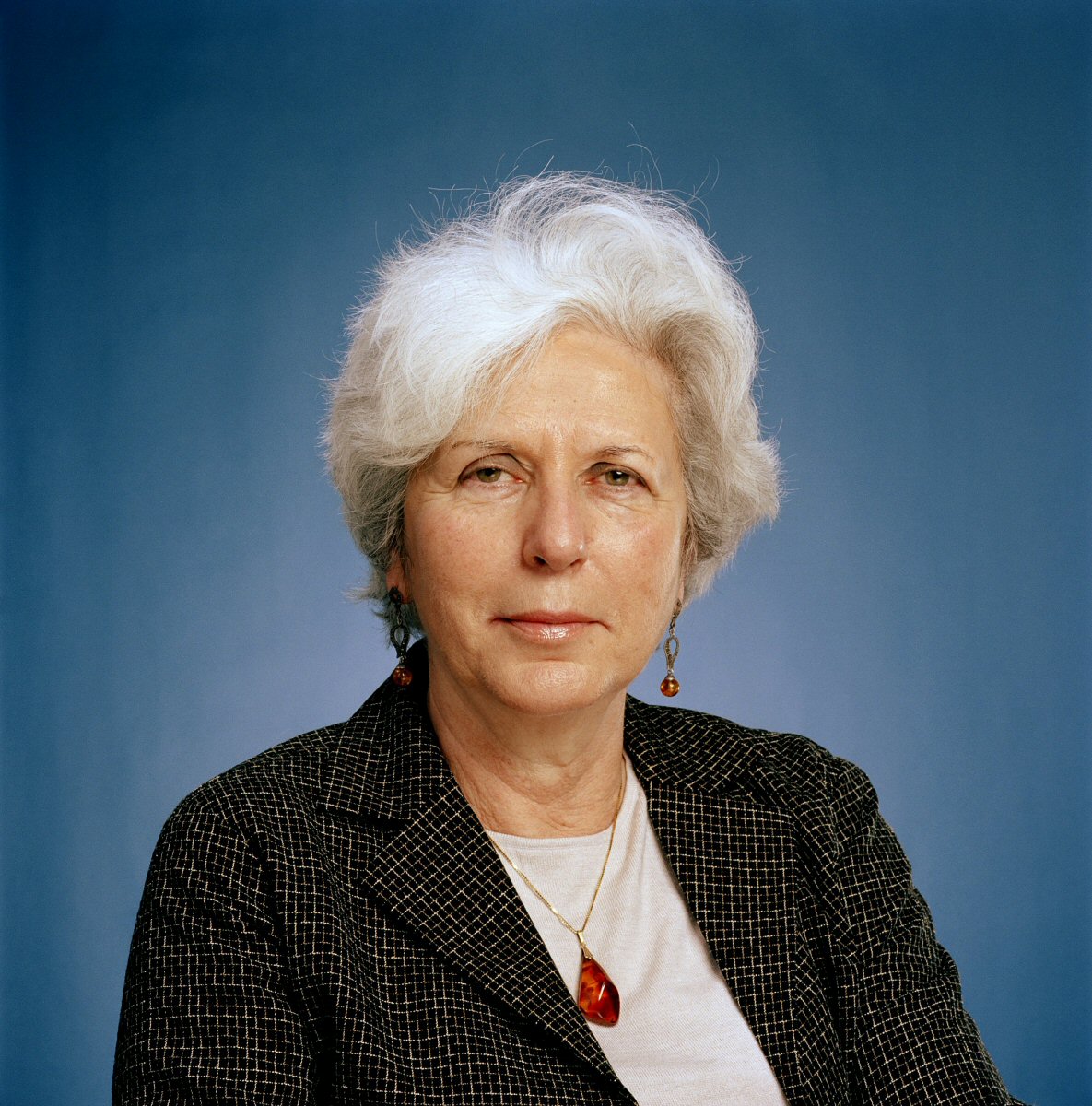
Before joining the Endowment, Ottaway carried out research in Africa and in the Middle East for many years and taught at the University of Addis Ababa, the University of Zambia, the American University in Cairo, and the University of the Witwatersrand in South Africa.