This year, the non-profit Educate Girls became the first Indian organization ever to receive the Ramon Magsaysay Award—often called Asia’s Nobel Prize. The foundation recognized the group for its groundbreaking work enrolling out-of-school girls, improving learning outcomes, and shifting social norms in some of India’s most underserved communities. It’s a remarkable milestone for an NGO that began in rural Rajasthan and now reaches millions of households across the country.
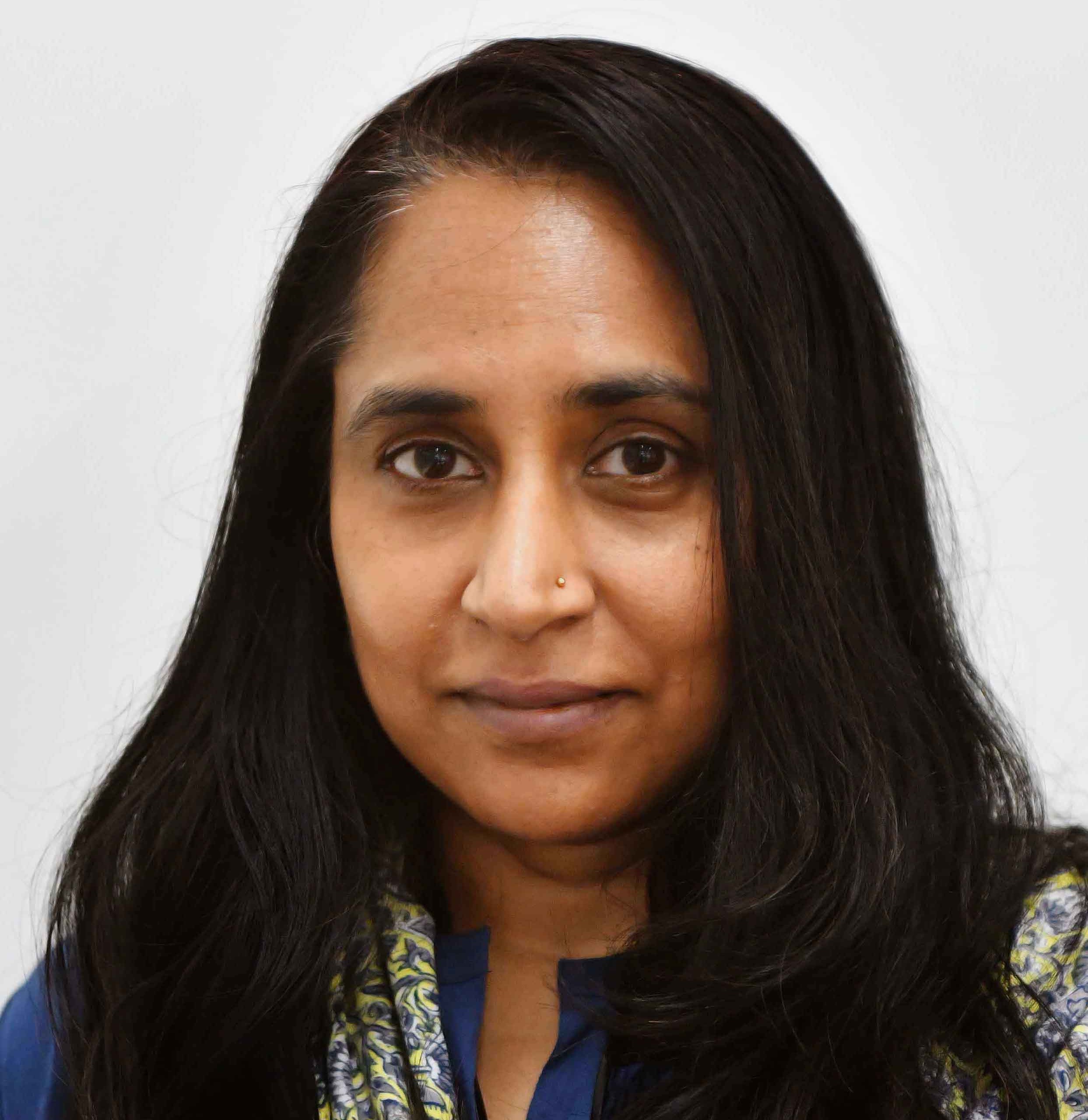
To discuss the challenges—and the opportunities—surrounding girls’ education in India, Milan is joined on the show this week by Gayatri Nair Lobo, the CEO of Educate Girls. Gayatri has more than 25 years of experience across the consulting and development sectors. Before joining Educate Girls, she led the ATE Chandra Foundation and the India School Leadership Institute. She has also held senior roles at Dalberg Advisors and Teach For India.
Milan and Gayatri discuss the origins of Educate Girls, the supply and demand-side barriers to girls’ education, and the launch of the world’s first Development Impact Bond. Plus, the two talk about the use of tools like randomized controlled trials (RCTs) and machine learning in delivering education and how to forge lasting partnerships with state governments.
Episode notes:
1. “A Blueprint for India’s State Capacity Revolution (with Karthik Muralidharan),” Grand Tamasha, May 23, 2024.
2. “Understanding the Delhi Education Experiment (with Yamini Aiyar),” Grand Tamasha, January 22, 2025.
3. “How India’s Women Are Redefining Politics (with Ruhi Tewari),” Grand Tamasha, November 5, 2025.
4. “Rohini Nilekani on the Secret to Successful Governance,” Grand Tamasha, October 5, 2022.
Transcript
Note: this is an AI-generated transcript and may contain errors
Milan Vaishnav: Welcome to Grand Tamasha, a co-production of the Carnegie Endowment for International Peace and the Hindustan Times. I'm your host, Milan Vaishnav. This year, the nonprofit Educate Girls became the first Indian organization to ever receive the Magsaysay Award, often called Asia's Nobel Prize. The foundation recognized the group for its groundbreaking work enrolling out-of-school girls, improving learning outcomes, and shifting social norms in some of India's most underserved communities. It's a remarkable milestone for an NGO that began in rural Rajasthan and now reaches millions of households across the country. My guest on the show this week is Gayatri Nair Lobo, the CEO of Educate Girls. She has more than 25 years of experience across the consulting and development sectors. Before joining Educate Girls, she led the ATE Chandra Foundation and the India School Leadership Institute. She has also held senior roles at Dahlberg Advisors and Teach for India. To talk more about the challenges and the opportunities surrounding girls' education in India, I am delighted to welcome Gayatri to the podcast for the very first time. Gayatri, thank you for joining us and congrats on this huge award.
Gayatri Nair Lobo: Thank you, Milan. Thanks for the invitation to be on your podcast, but also for the wishes.
Milan Vaishnav: So I want to start with the big news. I mean, tell us a little bit about how you found out about the award, you know, and how did you and the entire team, how did you kind of take this information in?
Gayatri Nair Lobo: So funny story, as one would imagine. So, you can't apply for this award. In fact, applying for the award means you're automatically canceled. So it's not something that we were expecting. Our founder, Safina, she got a call, or rather, she got a text saying, hey, want to talk to you about your data. It's not a number she recognized. It was not a country code she recognized, and so she ignored it. She got another text. And then she said, “It’s Saturday, let's talk Monday when the office is open.” And then the person on the other line said, “I just need 10 minutes. Please answer your phone.” So then when she answered the phone, it was actually Susan, who's the president of the Ramon Magsaysay Foundation, who then, you know, shared the news with her and then said, you can't tell anyone.
Milan Vaishnav: It's like here's this massive news, don't tell anyone.
Gayatri Nair Lobo: Exactly. So, she did get permission to tell me as CEO. So, I get this calendar invite which says confidential on that weekend. So, you can imagine the entire weekend I'm thinking, oh my god, what did I do? I've screwed something up.
Milan Vaishnav: You're like going to get a pink slip and this is it, you're done, you're fired.
Gayatri Nair Lobo: I've done something major that … I checked with my assistant. I said, “Do you have, do you have any idea what this is about?” And she's like, “No, I have no clue. I just see this on your calendar.” Anyway, come Monday morning, I get on this call and Safina's like, Turn your camera on. I want to see your reaction. And I was like, That's a strange request. But yeah, it was just incredible to hear this news. And then keeping it for the team was really hard. But we had to go a month and a half without telling anyone. But on the day of the announcement, which is thirty-first August, Safina just sent an text actually, a WhatsApp message to all our employees across the country saying, I know tomorrow is Sunday and I've never asked you this before, but please come to office at nine AM with your entire family. And they all did. Everyone showed up. I was in Kochi then.
Milan Vaishnav: Well you and I were together, so you did not show up. And I found the news with the rest of the world on August 31st.
Gayatri Nair Lobo: Yeah. So, you can imagine how I went through that entire conference not telling anyone what's happening the next morning. But my kids and my husband and my father, they all showed up to the office with everyone else and it was fantastic. I mean, I felt so much FOMO being online with everyone else in office, but it was an incredible celebration. Even though the announcement was in English and a lot of our field teams don't speak English. They recognize the logo, they recognize the name, so there was an absolute eruption of celebrations.
Milan Vaishnav: And tell us a little bit about, I know you've just had the kind of award ceremony. I mean, where was it? What is it, what was it like? I mean you mentioned when we were just chatting before we turned the recording on that it was very regal. I mean, give us, paint us a picture.
Gayatri Nair Lobo: It was very ceremonial. We, Safina and I, had to be there the entire week. But the actual ceremony was on the seventh of November.
Milan Vaishnav: And this is where?
Gayatri Nair Lobo: In Manila. In Manila, in the Philippines, in this beautiful metropolitan theater. And it was packed. And not because of us. There was another wonderful awardee from the Philippines who had a following. So, the audience was packed. It was live streamed. But it was very solemn, very meaningful. I think my biggest job on stage was to not break down into tears because it was just so moving. Seeing pictures of Educate Girls and a video that they made that we had never seen before. And actually for me, most touching was we managed to bring about 30 of our staff members and field coordinators, team Balika volunteers, learners, and they were sitting in the audience, and I said if I make eye contact with any one of them, I'm going to break down on stage. But just bringing them there, we had you know, Air India sponsor a few tickets, we had other people jumping in and sponsoring these girls so that they could come and join us. It was just incredible to have everyone there.
Milan Vaishnav: I mean this is just to give our listeners a sense, like I mean obviously people will know it's a huge award, but also a historic milestone because I believe it's the first time an Indian organization has received this award and I just want to ask you, what does it mean for Educate Girls? We're going to talk more about your mission in a second, but kind of both practically but also at a kind of meta or like symbolic level.
Gayatri Nair Lobo: So it comes with so much of credibility, right? I mean, the motto for the award is “Greatness of Spirit.” And the fact that it was given to the organization means it recognizes just the hardships that our girls go through to show up in school every day. The kind of greatness of spirit the families have to show where they go against all odds to send their daughters to school. You know, our donors, our donor number one, donor number two, donor number three are all still with us from 2007 until today. So, it was, I think, it's so special that it can be shared with everyone. And the credibility it brings with it, right? It's not an application form; it's not people lobbying on your behalf. They do it very Michelin star like. So, they've come to our office, they've interviewed our staff, they've gone in the field, they've seen our work. And for me, that is testament to the work because it's not a curated, you know, donor visit. They've gone on their own and they've seen that it works on the ground.
Milan Vaishnav: I mean, it's totally random, but I was listening to a podcast today about Wicked Two, you know, the sequel to the movie Wicked with Ariana Grande. And this podcast that was talking about how amazing she is in the movie and how she's definitely going to be up for an Oscar. But is the studio going to back her for Best Actress or Best Supporting Actress? Because, you know, you have to kind of put someone forward, and then there's this massive lobbying campaign, right? Which the nice thing about this award, as you said, is it's like you have nothing to do with it, right? Like somebody came to you, sight unseen, and said, “We think that you're deserving of this amazing recognition.”
Gayatri Nair Lobo: Yeah, that and hey, we've actually gone down and seen whether everything we've read online is true or not. That that gave me goosebumps, right? I was like, Wait, they met our girls?
Milan Vaishnav: So you didn't think we were going to be like putting you and Ariana Grande in the same sentence on this podcast, but we've managed to do that.
Gayatri Nair Lobo: This will get me credibility at home.
Milan Vaishnav: Let’s, we've kind of put the cart before the horse, let's step back a little bit and talk about the origin story of this organization. Not all of our listeners might be familiar with Educate Girls. Tell us a little bit about how and where the organization got off the ground and what do you think were the sort of gaps that you were trying to fill?
Gayatri Nair Lobo: So Educate Girls was founded by Safina Hussein back in 2007 in the district of Pali in Rajasthan in 50 schools. That was, I mean, when you normally say pilot [program], you think one school, two schools. But this was an NGO that she upfront said needs to scale and I need to design for scale. When we were thinking about where to work as an organization, Safina went to the government of India and said, This is the kind of work I want to do. I want to work on girls' education. She herself had a break in her education, and so this was something that was deeply meaningful. We were given a list of districts which had the greatest gender differences. And Rajasthan, unfortunately at the time had several of those districts. And so [we] zeroed in on Pali is one of the districts where we would start in. And the idea was mainly to enroll girls into school. This was before the Right to Education Act, where there weren't actually schools. It wasn't an accepted norm that both boys and girls should go to school. So, it required a lot of changing of mindsets, working with government, trying to figure out how to get these girls to schools close by. Come RTE, on the right to education, there were schools built in every village. And so, accessing a school was not as hard, but changing mindsets is—it’s a long-term battle. I mean we're still battling with it. So that was the origin from those 50 schools in Rajasthan. We grew to 30,000 villages across the country. And today we have two programs. One is Vidya, which is for school-going children, girls, to make sure that they're enrolled in school, they stay in school, and they're actually learning in school. So, we have a 90% retention rate. We've done we do remedial learning in schools where we've done RCTs, which show you know really high standard deviation of 1.25. I don't need to get into the technicality of that. We're doing well, we're teaching well, kids are learning. And we've now started a second program, which is for older girls. So, a lot of the schools, while there are schools now in the villages, most of them end at grade five or grade eight. Beyond that, they need to go to a senior secondary school or secondary school, which is sometimes you know five kilometers away. So, for every hundred schools, there are 20 secondary schools. So, girls drop out. So, what we're trying to do is help these girls do their exams through what is called an open school system. So, it's kind of like distance learning, but it's much more accessible, it's a lot more adhered…or rather designed for people who've dropped out of school.
Milan Vaishnav: I want to try to give a picture of the environment in which you work. And when you read the Magsaysay award citation—we’ll link to that because it's really powerful actually just to read the citation—it paints this picture of, kind of a familiar picture, in a way, of India's contradictions, right? You have this fast-growing economy, rising affluence alongside very deep and entrenched inequalities, especially for girls and especially for rural girls and for tribal girls in particular. I wonder if you could just say a word about the girls you're working with, right? I mean, how do their stories fit into the kind of larger India story, or in what ways have they been sort of left behind? And that's kind of what you're trying to remedy.
Gayatri Nair Lobo: So they have definitely been left behind when it comes to India's progress, India's development. And I mean if I think from an India point of view, if fifty percent of your population isn't meeting its potential, then there's imagine what more can be done. Maybe I can, you know, give you examples of some of the girls I've met.
Milan Vaishnav: That would be great.
Gayatri Nair Lobo: That will help paint a picture. So, the first girl that I met was this girl named Puja. I actually wrote one long LinkedIn post because I was so moved by her story. Puja was 13 years old, or rather is 13 years old, and had never been to school. Ever, right? And we are sitting right outside her house. I'm saying house, but it was maybe eight feet by eight feet, no furniture. They lived out of plastic bags, like their clothes were rolled up in plastic bags, maybe three utensils and firewood. That was what the interior of her home looked like. And I asked Puja in Hindi, like, would you, don't you want to go to school? And she said, “I would if they'd let me.” And so, in my head, I was like, oh my gosh, they're now letting her go to school. So, we started speaking to the parents and realized that the parents were migrants who worked on a farm in another state. So, for nine to ten months of the year, they're not in Madhya Pradesh where we were. They had to migrate to this other state, they'd work there, they'd take their three daughters with them. Puja was the oldest of their daughters. And he said, “Of course I want to send my daughter to school, but how? Like I can't leave her here alone, it's not safe.” And that's when it hit me that, you know, his is not coming from a place where he doesn't want to send his daughter to school. He's just worried about her safety, like any other father would. It was just poverty. And so, we were trying to figure out different ways. Can she stay with her, you know, uncles or somebody else? And they said, no, they're all migrant laborers. We did find a solution where we were able to enroll her in a government residential school. But that, I'm cutting to the end of the story, but the fact is they didn't have documents for her. Getting her Aadhar card would have taken a few days of them missing out on work. So, it was really hard. The team stepped in, of course, and got all of that done, but the only thought in my head was that if she doesn't go to school this year, she's going to be outside of the RTE purview and she's going to go through life never having gone to school. And I have kids the same age. And I just, this is a thought of how different their lives are just by that sheer luck of what family you are born into.
Milan Vaishnav: You know, there's a huge academic literature on the barriers to secondary education and primary education, and, you know, economists and others point to demand side issues, supply side issues. That can feel very abstract. You know, tell us a little bit about what some of those barriers look like in real life terms for adolescent girls and young women like Puja. I mean, what do you see when you go into the field?
Gayatri Nair Lobo: Yeah, so we largely see three issues. If I can sound like an MBA student and say there are three Ps of barrier.
Milan Vaishnav: I mean it's the trick to sounding smart is to come to any conversation to say I have three points to make, so…
Gayatri Nair Lobo: Yeah, three points, all starting with P. So, the first I told you about poverty. Right? It's really hard to get somebody who's focused on just getting a meal in front of their family to say, Hey, what about your daughter's education? So that's one. I mean, one is migrating for work, the other is the girl herself working because they need to feed their families. Or the entire family's working and this girl is in charge of the younger siblings. Right? So, poverty is one. The second P is patriarchy. Why should I bother educating my daughter? She's going to get married and live in another family anyway. Let me make most use of her now while I have her. There are still enough cases of young girls below the age of 18 who get married. And therefore, that's the end of their schooling. There's this mindset that, oh, if a girl goes to school, she's going to get too big for her boots and she's going to start, you know, answering back. And why should I have that? So, there's all of those mindset issues that I'm clumping under patriarchy. And the third is policy. Like for school admission, I need to have an Aadhar card. A lot of these guys don't actually have other cards, or they have mistakes on their other card, and they could not be bothered to go and get it changed. So, our team then has to help them do that. For like I said, there aren't enough secondary schools. Right? That's a policy issue. Not all states have open schools where girls can do their exams remotely, or rather their studies remotely. So those kind of policy issues I would say on the on the supply side exist.
Milan Vaishnav: You know, one of the big innovations as I understand it with Educate Girls was launching, I think it was the world's first development impact bond in education. This was back in 2015. For listeners who aren't familiar, could you just kind of in layperson's terms, tell us what is a development impact bond and how did it change the way that your organization was able to work?
Gayatri Nair Lobo: Yeah. So, the development impact bond, if I put it really simply, is a pay for performance contract. Essentially, you get paid if you meet your results. So, you get a certain amount of money to do the work, but if you meet your results, you get an upside. There are multiple actors in this bond. One is the entity that takes the risk. So, they're an investor and they're expecting a return on their investment. In our case, it was the UBS Optimus Foundation. So, they put the initial capital, that money was then used by Educate Girls to do its work and to try and meet the outcomes that we committed to. There's a whole lot of details I won't get into, but we committed to two outcomes. One is enrollment of girls, and the other is that they will meet a certain learning standard, or they will do better than girls who don't work with Educate Girls. If we, since we met our outcomes, the idea was that if we met our outcomes, there would be a larger sum of money that comes back from an outcomes payer. That money, some of it goes to Educate Girls as a bonus for meeting your outcomes, but also a lot of it goes back to the risk investor with the increase in how much they've given so that that's their return.
Milan Vaishnav: You don't have to name names, but I mean who is giving the outcome payment provided you meet the stated outcomes?
Gayatri Nair Lobo: Yeah, in our case it was CIF.
Milan Vaishnav: Which is Children's Investment Fund.
Gayatri Nair Lobo: Investment fund. So, they were the outcomes payer. And we had various other people who measured that we were actually meeting our outcomes. We had an RCT in place. We had Dahlberg, which did the whole process, a mapping of the entire process of this, so that this model could be replicated by others. We had Instiglio who helped, you know, manage all of our performances and document all of that. So, it was like a lot of people. So, it's actually a fairly expensive contract to do. We were okay since we were the ones implementing it. I mean okay in the sense we had to meet our we had to meet our targets. And I think your second question was what did it do for us as an organization?
Milan Vaishnav: Well, I mean, I guess what I'm wondering is, you know, did it change the way that the organization worked going forward? I mean, what long-term impact did the success of this kind of bond issuance have?
Gayatri Nair Lobo: Yeah, maybe I'll just step back for one second on why we decided to go down this route, right? I mean, we were we were growing okay, we were raising funds. The amount of money that we got from this was not so huge that it made sense to go through this entire process. But the idea was to say that as we grow—and we were scaling pretty fast—are we still meeting the outcomes that we claimed that we were? And can we as an entire organization become really outcomes focused? I think the unintended impact was that the development sector started talking about outcomes much more than they did before. So, I would like to think that that was because of us. Which was very needed, right? Because until then, I mean, I was already working in education then and a lot of conversations with donors were around, well, how many backpacks are going to have our company logo on them and things like that. But to go from there to saying, we're going to focus on inclusion and we're going to focus on learning outcomes, I think was a big, big change for the sector. For the organization, it really helped us streamline our processes to ensure that our inputs were actually leading to measurable outcomes. So, our ME got really tight, our we built an app before apps were being made, so that we could constantly monitor how we're performing, quickly course correct where things weren't going okay. We tied up with an external another nonprofit. We collaborated with them to really sharpen our curriculum. So yeah, a lot of benefits and all of that is something that we're still using today.
Milan Vaishnav: So, I want to go back to something you said earlier. You mentioned, I think it was when we were talking about who was able to come to the award ceremony, some of the girls and some of the coordinators, this Team Balika. A lot of your field presence comes through this Team Balika, which is a kind of grassroots, as I understand it, grassroots volunteer network, which is part of a larger initiative known as Vidya. Tell us a little bit about how Vidya, that initiative, mobilizes these volunteers and what does this sort of door-to-door campaign what does it actually look like in practice?
Gayatri Nair Lobo: So let me start with first identifying a village, right? So, we've identified that this is the village that we want to work in. Initially, Educate Girls would go in there and do a kind of mapping of that village. Sit with the with the elected members of the village and say, this is the kind of work we want to do; we want to make your village inclusive towards girls' education, get their buy-in. We then do a massive recruitment drive. So, it's a lot of fanfare around finding who these Team Balika volunteers are going to be. And the reason we have Team Balika volunteers is just that proximate leadership, right? I mean, if I go into a village and say, Milan, you should be educating your daughter, you'd say, yeah sure, okay, bye. But it's somebody from within your village, someone you know, you know can connect with, and they keep coming back to you and saying, I'll help you. Let's get your daughter educated. This is why you should get her educated. The likelihood of you listening to this local person is much more. And for us, our Team Balika volunteers don't have to be women. They can be men who are gender champions. In our recruitment process, we usually would find someone who has a deep connection and a deep personal reason for wanting to do this. Sometimes they have sisters who didn't get educated. Or one of our Team Balika volunteers who's now on staff. He was married at the age of eight.
Milan Vaishnav: Wow. Eight.
Gayatri Nair Lobo: Eight, and this is somebody who's younger than me. And he says, “I know what it's like to not have a choice or to have that choice taken away from me. So, this is what I want to do.” And so, there's this deep intrinsic reason or motivation for them to do this work. And so, it's very important for us to find that right Team Balika volunteer. Not just for them to enroll the girls in school then and there, but also to be able to build that entire community around supporting girls' education. Because the minute there's any calamity or any adverse situation, the girl is pulled out of school. But if the community is saying, hey, wait, why is your daughter not in school? You know, even if Educate Girls team members aren't there, that creates some kind of pressure on them to.
Milan Vaishnav: I mean it's kind of social sanctioning, kind of a peer effect, right? Which is if there's somebody who's in your village who sees you, who's embedded in your network, it's going to be harder for you to make that trade off if you have a household shock. You may think twice about pulling the girl child from school.
Gayatri Nair Lobo: The door-to-door part is…so we first do a survey of the entire village where it's almost like a census. So, our volunteer and a field coordinator would go to every single household in that village and map out how many households in each house, and when I say households, I mean how many how the how many mothers in each house. How many of them have children, which of those children are girls, are those girls in the school? This is entire mapping. We actually draw our logo out which is like a like a girl with braids outside every house and your little code there, which we can understand, but the household can't. And everybody seems to be okay with us drawing outside their houses. It's just really fun and in paint. In fact, they'll come and say, I think you missed one house there, you know, there's no logo there.” So, it's very, it's symbolic, but it's also really important for us to be able to do the survey because based on this survey we then do our planning. So okay, these are the households that we need to work on. Our app will actually draw out the map for the volunteer and for the field coordinator to be able to visit these households and actually have those conversations, record what those barriers are in the app and so yeah. So that door-to-door campaigning part of us is really important.
Milan Vaishnav: Could you just kind of compare and contrast for a second the you know, you mentioned what you do with the kind of younger girls, but you also have gone beyond enrollment with another program called Pragati, which supports young women who are like between the ages of fifteen and twenty nine, roughly through open schooling. Tell us a little bit about first of all, what is open schooling and kind of how does this differ from your work with younger girls?
Gayatri Nair Lobo: So, we felt the need for open schools because like I was saying earlier, there aren't schools, there aren't physical schools for girls to go to beyond grade eight in a lot of the villages we work in. Does that mean that girls should stop studying? Of course not, right? So, this, even as per the national education policy 2020, there is a provision saying that alternative means of education should be identified for these girls. What we've… in the state of Rajasthan, they had an open school. So basically, an open school is: you study on your own, and at the end of the year you come and write your exam. You can choose five subjects out of as many as the state offers. You can actually you can choose up to seven, I think. As long as you pass five of them, you can get your tenth and your twelfth-grade credentials. A lot of states don't have that. There is a national open school which gives girls and boys a second chance to appear for their exams, but it's expensive. And their exam centers are usually in the cities. So, it's kind of not an option for our girls, right? If you have five exams to write, you're not going to tell your family, see you after one week, I need to go write my exams, right? So, what we've tried to do is work with the state governments to say, let us help you build out this policy which gives girls access to writing these exams. It's worked in some states. Some states already had it, but it's kind of defunct, so we're working with them to make it accessible, make it free for girls so that fees are not a barrier for them. So, Rajasthan, for example, is free. So, in Rajasthan, two-thirds of the students writing the exams are girls. Whereas in the national open school where it's paid, only 20% are girls, right? So, you can clearly see that fees are a barrier. And then what we do on the demand side is to actually enroll girls. So, we'll go again, we go into a village, identify girls who haven't, you know, finished school, create like a focus group discussion with them to understand are they motivated to finish school. If they finish school, why are they doing it? What are they hoping to get out of it? You know, can they commit three hours a day to come together and study? So, we run a kind of camp in every village with about, you know, I would say median 15 girls in a camp. They come together and study three hours a day. And we've created a curriculum which allows them to study on their own. So, the actual textbooks are quite cumbersome. What we've done is simplified it, you know, made the language a lot easier, have them help them learn how to like exam strategies, studying strategies. So, we actually help them through that through a [inaudible] or a facilitator, so not a teacher, but a village-based person, and this is only women. Here we only hire women because they are working with adolescent and young women. So, and in fact I was looking at some of the data. In the villages we are working, fifty-six percent of our prayer's this is their first job. So, they're educated themselves, but they've never actually worked anywhere. So, this gives them that ability to then teach somebody else.
Milan Vaishnav: But how do you deal, I mean, you know, when you, I'm not an economist, but when you read the kind of development literature on education and particularly the education literature from India, you know, there's a lot of talk, not just on this demand side issue, but on the supply side issue, namely the problem with government schools, right? I mean, you have questions of poor infrastructure, you may have lack of sanitation facilities for girls, you have this problem of teacher absenteeism, right, which is a perennial issue. I mean, the list kind of goes on and on and on. So, once you get girls enrolled in school, which is I don't want to minimize the magnitude of that challenge, but then you still have the problem on what is the government school providing? I mean, how do you think about that part of the equation?
Gayatri Nair Lobo: Absolutely. And to your point, if the government's not providing what they are expecting in school, they'll drop out again. So, we'll never solve this inclusion issue unless you fix that. So, what we do is a couple of things. One is we work to strengthen the school management committees. So, every school has to have a school management committee comprising parents. A lot of these parents are not educated themselves, right? So, there's lack of confidence, there's even like what do I go and talk to the school about? So, we strengthen the school management committee, we help them. We've actually created a very visible chart in the school where each component that the school is expected to have is pictorially represented. Against that, you would color code it [on the] basis whether they have it in school, they've applied but they haven't got it yet, or it's there but not functioning, or this it's not there at all. Right? So, the parents understand the color codes, the parents understand the pictures, they'll identify what they want to prioritize in terms of school improvement, and we help them create a school improvement plan, get it cleared by the panchayat and get money to actually do that. So, we've built compound walls, we've built new classrooms because there are too many kids in a classroom. When I say we, I mean the school management committee.
Milan Vaishnav: Right.
Gayatri Nair Lobo: We've built girls' toilets. We've ensured that the girls' toilets have water, not just a physical structure. There's clean drinking water. So various parameters that we help strengthen. So that's on the school infrastructure side. On the actual teachers showing up, there's little we can do there, and therefore our remedial education actually makes sure that they're actually still learning in school. In a lot of the villages that we've been working in, the teachers do show up. Quality is questionable. And so, that's where our remedial learning helps. Because we've been able to make it very activity based. You know, each kit that we send to a school has workbooks, has teaching guides, which then are, either Team Balika volunteers or our paid coordinators are able to deliver in the classrooms.
Milan Vaishnav: I want to kind of ask you a bit of a nerdy question. I mean, which is about, you know, you mentioned several times in this conversation data and how you use data. And I was reading this piece which you pointed out to me from the Stanford Social Innovation Review. And this was about how development organizations use, kind of, big data machine learning to try and increase social impact and Educate Girls was one of the organizations profiled. I wonder, you know, because this is kind of all the rage now, everyone's trying to figure out like how to use big data, AI, machine learning to kind of, you know, increase well, effectiveness, a whole range of things, not least social impact. Walk us through how you're sort of using data algorithms on the ground. What has it allowed you to do that you wouldn't have been able to do otherwise?
Gayatri Nair Lobo: So one of the other outcomes of the dib in addition to the student learning outcomes was we realized that the out-of-school girls are not evenly distributed across the district. So, while we were going door to door and saturating every village and every district, we realized that there are these clusters where you can find out-of-school girls. But how do you know where the cluster is unless you've gone door to door? And that's where machine learning came in. So, this was 2018 or 2017, where we had already got around four hundred thousand girls into school. And we said, if we continue down this path, it's going to take us forty-five years to touch the two million mark. But if there was some way that we could predict where these girls are, we can hasten that. So, we looked at the data, we looked at our data. We had data of about a million houses at that point. We had government data, and then we married the two. We worked with ID Insight and they helped us develop this algorithm, which actually showed us that forty percent of out-of-school girls come from five percent of India's villages. So now we have to work in thirty thousand villages and are you know, and we can get to that forty percent. So, we made a big task for ourselves, a big goal, saying that we're going to get to this forty percent in the next five years. We applied for the audacious price and got it on the basis of that claim. What the algorithm was also able to do was able to tell us in those villages how many we can expect to get, how many girls we can expect. And a lot of the ground truthing in those villages then helped us, you know, perfect that model as much as we could so that we could be so targeted, and you know with precision, be able to identify girls and then bring them back to school. So, we did that. We completed our audacious goal this January. We also had to make sure that they were still learning, not just adding numbers and learning levels would drop. So, we did another RCT and you know the dip showed a point three standard deviation. Now we were able to show a 1.25 standard deviation. So, our learnings actually went up despite our numbers growing up. So as of Jan this year we touched the two million mark.
Milan Vaishnav: So sorry, just to continue on with the nerdy questions, there's a lot of debate in the development world about the use of RCTs, randomized control trials, right? I mean, it's become all the rage has been for decades now in economics and in my own field too in political science, to perhaps a lesser extent, but still very popular. And there's a lot of pushback to them, right? Saying that you know, one of the classics is, you know, how many RCTs did China do to figure out how to grow at, you know, above eight percent for 40 years and so on and so forth. But it seems to me that in this space we're talking about girls' education, this has actually been a very meaningful and useful tool for you to carry out your work. And I wonder if you could just elaborate a little bit on that. I mean, why have you employed RCTs, worked with academics, worked with researchers, and firms like ID Insight? I mean, what payoff has there been in the way you see things?
Gayatri Nair Lobo: So primarily most people think of us as just enrollment, right? And nobody is disputing the fact that we are getting girls into school. Nobody is disputing the fact that the girls are staying in school because those are numbers you can go to every school and verify. But is our learning actually, our learning component actually working? Or is something that well we didn't know ourselves at the point, right? We could see visibly that okay, go there are, you know, there are students in our classrooms who now can do A, B, and C, and we don't know if that would have happened anyway. A lot of our donors, rightly so, need evidence that our work is actually making impact. So, we've done these two RCTs, not in a way that it the control group is harmed in any way because we are depriving them of something, right? It's not like medicine where you're giving somebody a placebo when they are unwell. And even then, I'd argue what other alternative do you have, right? So, my counter argument is I'd love to know a better way, in fact, cheaper way, because these RCTs are also expensive.
Milan Vaishnav: They’re not cheap.
Gayatri Nair Lobo: So show me a better, cheaper way to do it. I'm all, I'm open. Until then we have to continue this. We do push back on, you know, requests for doing multiple RCTs, saying, you know it's working. Why do you need one? We've not changed anything. We've not changed who's deploying it on the ground. We've not changed the profile of our volunteers or field staff. So, we won't keep doing RCTs, but I felt like we needed to do it to prove we can scale without numbers dropping. We are outcomes driven. And I think what it did, the upside that it had for the rest of the sector was worth that.
Milan Vaishnav: So, you know, another word that we've come around to a couple of different times you've used is the word scale, right? I mean, you had ambitious goals of scaling up. You mentioned when Safina first started, right? It wasn't just like a mini pilot. It was like, we're going to do this in 50 places. And of course, now you're working all across the country. At the end of the day, sustainable change in any country, but certainly one like India, is going to require the public delivery system to do a lot better, right? Because there's so only so much that NGOs, the civil society, individuals, can sort of do unless they can operate at the scale that governments can. I wonder how do you think about partnering with state governments and as you reflect on your experience working in a bunch of different places, what makes those partnerships succeed or fail?
Gayatri Nair Lobo: I think for me there is scale without working with government. In our case in education, it needs to be with the state government. So, while we do have partnerships at the central level, the actual implementation can only happen at the state. I think the big difference is that we need to take a much longer term view. We have very little control when it's not our team, it's not our staff, it's not our donor money that we can dictate what happens. But I feel like if we don't build government capacity to do what we are doing, then the job's left half done. You know, we've worked with forty percent of the out-of-school girls. For us to do the remaining sixty percent means spreading ourselves across the country. There's no way we can do that through being a donor-funded organization. The good news is that state governments are very open to knowing what works and how they can implement it. So given [that] our RCT results, I'm coming back to that, were good in the last one we did especially, state governments have come to us saying, Hey, can you help us deploy your we call it Gyan ka Pitara, your Gyan ka Pitara curriculum in our classrooms. So, we said we will teach your teachers to use it. We'll give you soft copies of everything and you can use it. We're not printing them out. We're not going to hire staff to teach in your schools, but this can actually be yours. In Uttar Pradesh, we've actually contributed to the work for actually older grades as well, 9th and 10th curriculum. And they've given us credit. We've they've given us our logo space on the textbook, but they've also checked it through their own mechanism, right? So SERT will go through their reviews and all of that. But that's where you can make the scaled up impact. Because we've learned what it takes how to build micro skills and micro competencies in children, and then we've deployed that to help state governments do that. The open schools, we have technical assistance units across 12 states where we are helping them either build the policy, build a curriculum that's accessible and relevant, that's not rote-based, that's actually you know, based on learning and application. We are helping them build awareness around open schools as a viable option. We're helping them find budgets in their own state governments that can give scholarships to girls. So we've built out what our offering is, and we're working with these 12 state governments. A lot of them make going from this sounds like a great idea to this is policy can take I mean, in I'm not going to name the state, but in one of the states it's been three years already. But we're not giving up. This is a long-term view. Our commitment to girls and girls education is not going to waver because it's taking time.
Milan Vaishnav: So in the spirit of long-term view, let me maybe wrap up this conversation by just asking you about the future. I mean, as you look ahead, what is the sort of next frontier for Educate Girls, right? I mean, where, as you look out of the education landscape today, where do you see the biggest opportunities? What are the biggest challenges over the, say, next five to ten years?
Gayatri Nair Lobo: Yeah. So, our tenure goal is ten million learners. So, we have a ten-by-ten goal. It's right written in front of me right now, impacting ten million learners in the next ten years. How we get there is largely going to be through partnerships. One with other NGOs. We're already working with about sixteen partners on the ground or seventeen partners to build their ability to be able to enhance girls' education. So, these are already NGOs already working deep in communities. It doesn't make sense for Educate Girls to start and replicate their work. Instead, we just work with them. They have the ability to be able to do this work. We give them the technical assistance to be able to do a little more. But more than that, the growth's going to come from government. We just talked about the challenge of that. But given that we have a ten year view, I'm not in a rush to push things through. We want to do it well, we want to let it take its time. But when we do it, we make sure that all components of learning for girls are strengthened. Whether it's what a study center would look like for open schools or what a curriculum would look like, how the exams should be written, we'll work across all of that and strengthen governments to be able to do that better.
Milan Vaishnav: So we are approaching the holiday season. It's about to be Thanksgiving as we record in the United States and then the Christmas holidays and Jewish holidays, high holidays coming up. It's a time of giving and giving back. For people who are listening on the show, either in India or outside of India, who are moved by your work and want to contribute, what's the best way for them to get involved?
Gayatri Nair Lobo: Our website would be but the best way to donate to us. It's educategirls.ngo. And if it's money, that's the best way. If you want to give us time, drop us an email. We'll find a way to get you involved, whether it's being in our villages or making reels for us or you know helping us analyze our data. We'll find a job for you.
Milan Vaishnav: My guest on the show this week is Gayatri Nair Lobo. She's the CEO of Educate Girls. It's an organization that has just become the first Indian NGO ever to receive the Ramon Magsaysay Award. Gayatri, congratulations. It's a massive honor. It's been a pleasure to talk to you. Keep up the great work. Thanks so much for taking the time.
Gayatri Nair Lobo: Thanks so much, Milan. It was so much fun chatting with you.