Over the past year, Europe–India relations have entered a markedly upbeat phase. What was once a diffuse partnership—long on rhetoric, short on strategy—now looks far more purposeful.
From the announcement on a long-delayed EU-India Free Trade Agreement to expanding cooperation on security, technology, and migration, Europe and India appear to be—finally—converging around a shared strategic logic.
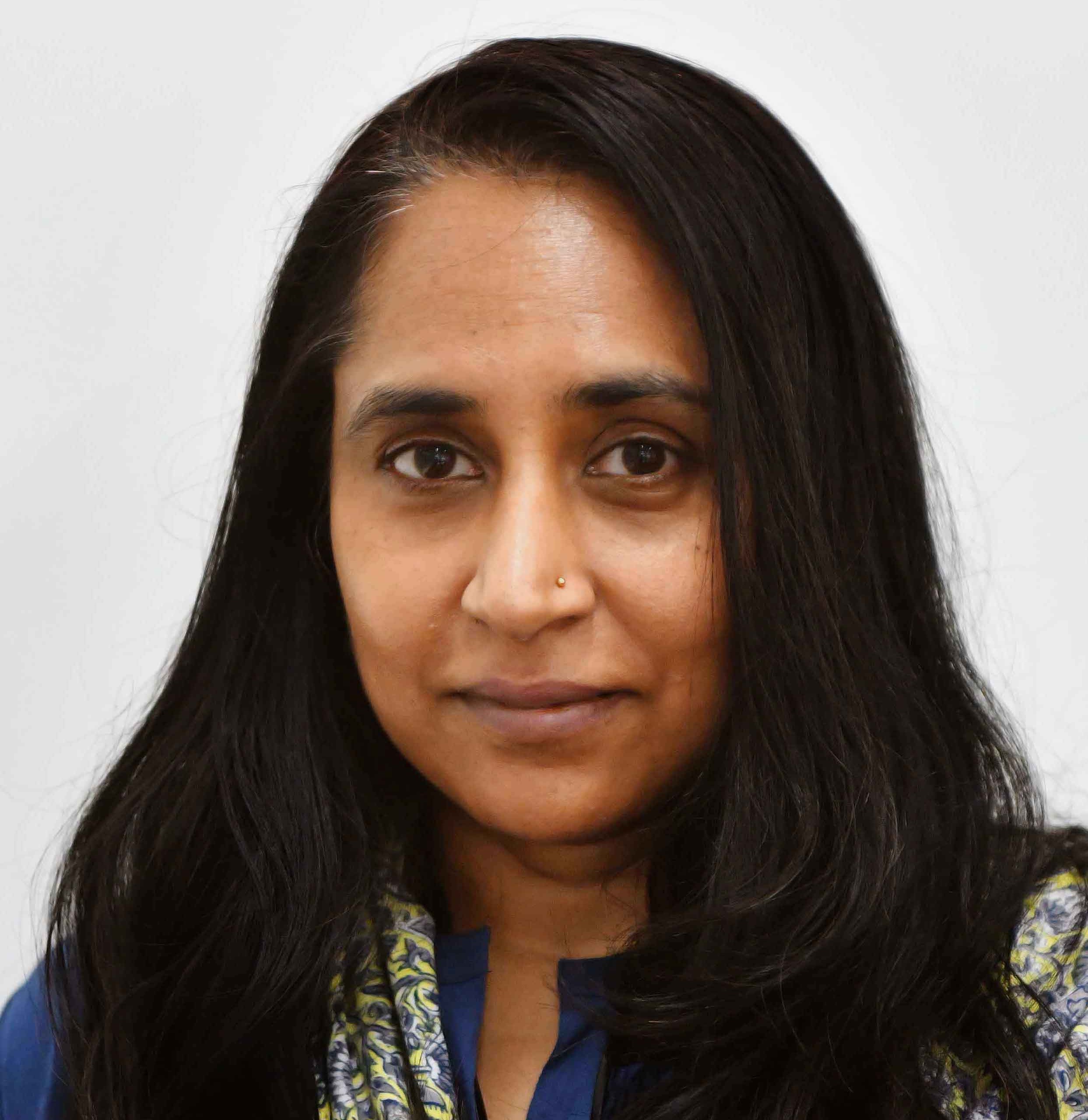
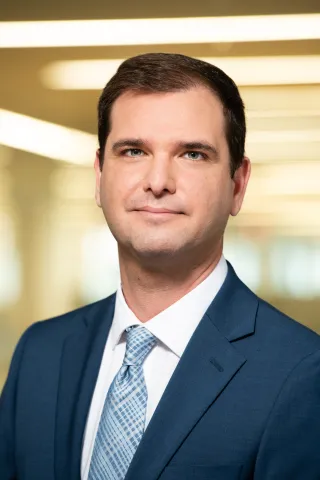
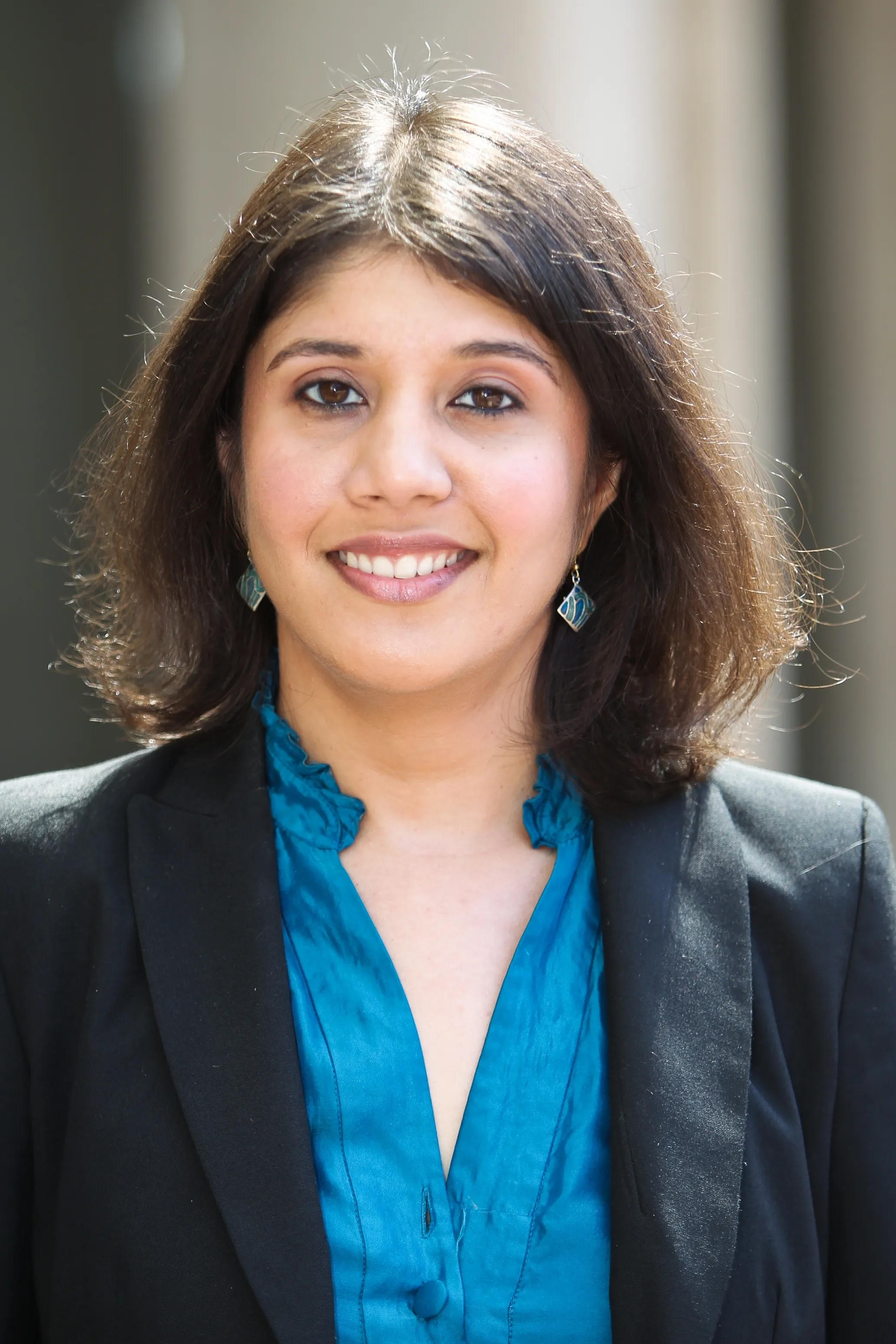
To unpack what’s driving this convergence—and where its limits lie—Milan is joined on the show this week by Garima Mohan. Garima is a senior fellow in the Indo-Pacific program at the German Marshall Fund based in Brussels. In this capacity, she leads GMF’s work on India and serves as convenor of the India Trilateral Forum.
Her research focuses on Europe-India ties, EU foreign policy in Asia, and security in the Indo-Pacific. She’s also the author of a new GMF report titled, “A Long Time Coming: Europe and India have discovered a strategic partnership,” published in January 2026.
Milan and Garima discuss the geopolitical drivers that are bringing the EU and India closer together, Europe’s views on the limits to India’s potential, and the key takeaways from the EU-India FTA. Plus, the two discuss how Russia might derail Indo-European security cooperation and the urgent need for Europe to invest in India expertise.
Episode notes:
- “Europe’s long-awaited free-trade deal with India,” The Economist, January 25, 2026.
- Garima Mohan, “As Trump takes Office, Planets Align for the EU and India,” India’s World, March 6, 2025.
- “Can Europe be India's Plan B? (with James Crabtree),” Grand Tamasha,
- September 17, 2025.
“India and the Reordering of Transatlantic Relations (with Tara Varma),” Grand Tamasha, March 11, 2025. - “Mr. Modi Goes to Europe (with Garima Mohan),” Grand Tamasha, May 11, 2022.
Transcript
Note: this is an AI-generated transcript and may contain errors
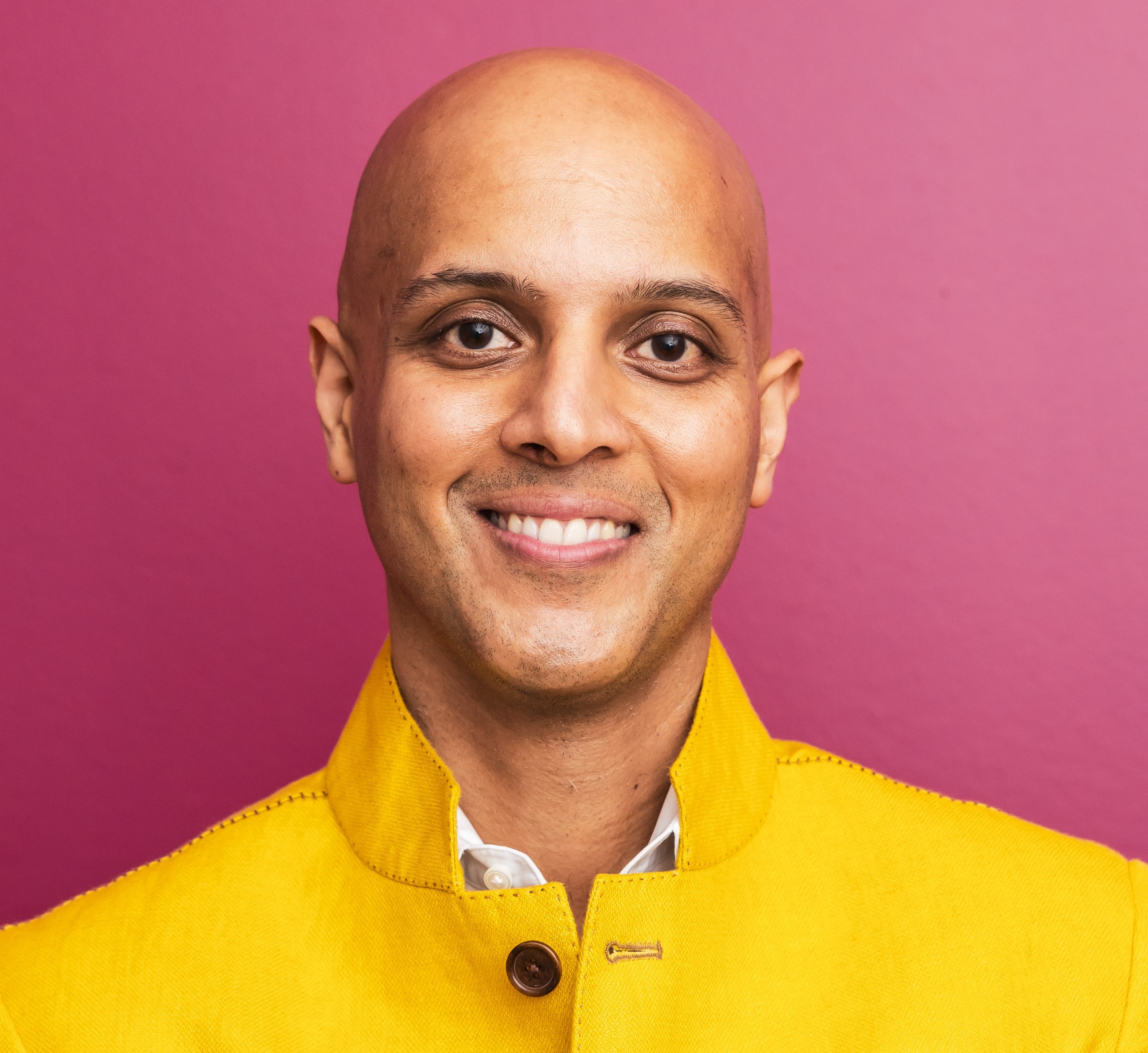
Milan Vaishnav Welcome to Grand Tamasha, a co-production of the Carnegie Endowment for International Peace and the Hindustan Times. I'm your host, Milan Vaishnav. Over the past year, Europe-India relations have entered a markedly upbeat phase. What was once a diffuse partnership, long on rhetoric, short on strategy, now looks far more purposeful. From the announcement of a long-delayed EU-India free trade agreement to expanding cooperation on security, technology, and migration, Europe and India appear to be finally converging around a shared strategic logic. To unpack what's driving this convergence and where its limits lie, I'm joined today by Garima Mohan. Garima is a senior fellow in the Indo-Pacific program at the German Marshall Fund based in Brussels. In this capacity, she leads all of GMF's work on India and the region. Her research focuses on Europe-India ties, EU foreign policy in Asia, and security in the Indo-Pacific. She's also the author of a new GMF report titled, “A Long Time Coming: Europe and India Have Discovered a Strategic Partnership,” which was published in January 2026. I am pleased to welcome her back to the show. Garima, so good to see you again.
Garima Mohan It's a pleasure to be back. Thank you for having me, Milan.
Milan Vaishnav So I want to start actually with, I think it's a subtitle of your new report for GMF, A Long Time Coming, and we'll link to that in our show notes. In that piece, you write that Europe and India have finally, quote unquote, discovered a strategic partnership. And I think that's a good place to start. Tell us a little bit about, kind of, what has changed in recent times that has made this recognition possible in this moment and not earlier.
Garima Mohan So in the paper, Milan, I look at inflection points in the Europe-India relationship and turning points that have brought us to the moment that we are in today. For a long time, the relationship was just chugging along. There was not much happening, a lot of rhetoric, nice summits, but not so many strategic takeaways from the conversations. India had started renewed outreach to Europe back in 2014 just as competition with China started heating up in South Asia and beyond. But for Europe, really the turning point came around COVID. When China's weaponization of supply chains led to this understanding across Europe that economic diversification is needed. Europe needs new partners. And here India was highlighted as, first and foremost, the country that Europe needs to figure out its relationship with. The second turning point came shortly after with the Russian invasion of Ukraine that made Europe realize that it needs to build a coalition of support and it has very few partners, particularly in the Global South. And it also started seeing China as a security threat given Russia-China alignment around Ukraine. And here, Europe and India finally started talking with the same voice or were on the same page regarding the China challenge. And the final inflection point, the final push is, of course, the second Trump administration that made Europe feel it was really alone in the world as the transatlantic alliance fractured. And it became absolutely necessary both for Europe and India to look for trusted partners and therefore, as I say, it was a long time coming, but these factors made the turn of Europe towards India and India towards Europe quite decisive.
Milan Vaishnav So, there's a lot to unpack there. Let me just pick up on one thing that you have in the report, which you kind of alluded to just a moment ago. In the report you talk about for years, India kind of ranked below China and ASEAN in Europe's, kind of, broader thinking about the Indo-Pacific region. And you said that the shift towards India, which did happen earlier, was often seen through the prism of summitry in pageants. But you say that India now is really hardwired into European policy and organizational priorities. And I wonder if you can kind of tell us a little bit about that shift from the kind of pageantry before to this new kind of hardwiring that you observed today.
Garima Mohan If you look at decision making in Europe and bureaucratic politics, a lot of the bandwidth was of course taken up by the transatlantic partnership. Then when it came to European foreign policy towards Asia, China was the most important actor for many European countries, the country they had invested in the most, particularly in terms of economic ties. And then ASEAN was interesting as another model of regional integration and the EU found different ways of cooperating with ASEAN, and India was always on the sidelines. And the shift began along with the shift on China policy, and under, for instance, Germany's Chancellor Merkel, the most influential, arguably the most influential European leader. Her first trips to Asia were always to China, massive delegations that went along with her to China. She really tried to save and salvage the China partnership. But the two chancellors who've come after her, Chancellor Schultz and now Friedrich Metz, went to India as the first destination of their foreign trips in Asia, but also outside to a non-NATO ally. Now we've also seen India divisions expanded, new strategies put into motion, particularly Germany's focus on India paper, that for the first time recognizes India not just as an important partner in the Indo-Pacific, but crucial for German foreign policy writ large. And that has become the template and blueprint that a lot of other European countries are following. Many governments are in the process of coming up with their made in India strategies. And that's really interesting to me that finally Asia is not just seen through the prism of China. There's an understanding they've put all their eggs in the China basket before. And India policy needs to be figured out. And this is how India has been hardwired, both at the working level in ministries, at the leadership level, all within the umbrella of diversification and the need to find new partners.
Milan Vaishnav I think that's very helpful because for those of us who are not EU specialists, it can be very difficult to, kind of, discern all the moving pieces, because you have the EU, you have the member states, you have The Commission, you the External Action Service, right? It's hard for people who don't know it as well as you do to, kind of, make sense. I want to just ask you, kind of, one follow-up on China, if I might, which is, I mean, clearly you mentioned that, you know, the kind of European experience with China has been central to this, kind of, new urgency that they felt in bolstering Europe-India ties. Europe, like the United States and others, have been worried about economic dependence and they want to take steps towards de-risking. I wonder if you could just say a word about, given that you're in Brussels, what's the current mood on China, because at the same time that Europe may have woken up to the China threat? At the same time, you know, people are looking for partners and you see a lot of capitals, you know look at the Canadian Prime Minister, for instance, and the outreach he's been making to China start to say, okay, well, we actually need to strike some kind of balance here because we can't totally afford to alienate China in our quest for, kind of, you know, multipolarity, multi-alignment, diversification.
Garima Mohan It is difficult to use a broad brush to paint European China policy, because as you noted, there are different actors, different calculus in Eastern Europe, in Western Europe, among European governments, companies, for instance, within the Commission. But a narrative that dominates conversations across Europe today is the China shock argument. It was very interesting for me to observe this as an Indian sitting here. How the China shop argument has really gained ground, which means that the overcapacity from China and its export will have debilitating consequences for European industry, for jobs, for manufacturing, and the ability of Europe to compete both internally and externally. And I think this is pretty much hardwired in many policy circles. So, you would be hard-pressed to find anybody, maybe outside of Hungary and Spain, who still believe in the unfiltered idea of China as a land of opportunity without any costs attached. And even when we see countries like France wanting to engage in a limited way with China, for instance, inviting China to G7 discussions, also in the news recently, there's a clear understanding that there's a ceiling to the China partnership. And it is very important to de-risk, if not fully de-couple. So, there are differences in the degrees of de-risking from China that is being pursued across Europe, but the consensus that there are clear limits in a ceiling to the China relationship is evident across [the world], including in industry. We find German companies who have been very bullish on the promise of China, asking the European Commission to put in place trade defense measures and industrial competitive acts. And we have a whole economic security legislation working its way through the machinery in Brussels. It is difficult to understand and explain. Therefore, it's not always in the news, but there's certainly a domino effect building up around China policy, let's say.
Milan Vaishnav So, you know, that was one critical driver. Obviously the other one that you mentioned is the kind of, you know, Trump's, kind of, second coming. And I want to try to understand a little bit better the role that Trump 2.0 has had, because in the piece you say, look, obviously Indo-European cooperation and this imperative to do more pre-dates this recent, kind of, transatlantic rupture, though clearly these new strains that have been introduced have accelerated those tendencies. I guess maybe just elaborate a little bit more if you could on how Trump 2.0 has updated or influenced, kind of, Europe's thinking on India.
Garima Mohan United States, interestingly, has played a role in the evolution of the India debate in Europe and not just Trump 2.0, but the Biden administration and Trump One also had an impact on the development of India policy. As I was interviewing policymakers across Europe for this piece, I asked about the role of the US and I was surprised to hear that both Democrats and Republicans had actually pushed their counterparts in Europe to take India seriously, and to look at India as an important actor in the overall strategy of competing with China. And so, this, this push was done by the United States played a positive role. It also had a sort of a more negative impact of the third shock, let's say, that Europe has faced most intensely under the second Trump administration. And, you know, the questions around invasion of Greenland have really shaken the transatlantic alliance to its core. Yes, there have been other areas around Ukraine, NATO, defense spending, all of that was seen by some in Europe as a sort of push for Europe to do more by this administration and, you know, take responsibility for its own security. But questions like Greenland, they're much more fundamental. And even though some of these trends between Europe and India were in motion already, there is an undeniable feeling in many capitals in Europe that they're really alone and they need to look for new alignments and new partners. And a refrain, a quote I heard quite often was, we can't afford to get India wrong. We can't afford to miss the India boat. And that urgency stems not just from China, but also the rupture of the transatlantic partnership.
Milan Vaishnav I think it's easy to, kind of, get very carried away in these conversations, but you do issue a note of caution in your report to say, look, European policymakers obviously want to derisk from China. They're nervous or feeling uncertain about the future of the transatlantic relationship. But at the same time, they are not blind to the limits of India's potential. And I thought it might be worth just pausing on that for a second. How do you think European policymakers view those potential limits on what more they could do with India?
Garima Mohan The European Commission in particular is realistic about the options that India offers. So, if you want to de-risk, de-risking first of all is not easy. It's not very easy to move supply chains overnight outside of China. And they do realize that even in areas where India is an important partner like semiconductor manufacturing or pharmaceuticals, a lot of critical materials still come from China, a lot of components still come from China. And this is not just an India issue, it's also for other countries like Vietnam and Indonesia, other, sort of, manufacturing partnerships that Europe is looking at, assembly versus manufacturing, how much office done within these countries and how much of supply chain dependencies on China still remain is a concern. I do think that many in Europe are realistic about the potential that India offers in terms of solution and to the question around de-risking, but at the same time, they do feel that it is in Europe's interest to bolster manufacturing in India. And the European and the Indian economies are complementary enough that a strong manufacturing sector in India would complement Europe's needs. Rather than compete against, for instance, European industry. So, I think the calculation around this has been carefully done, particularly in quarters of the European Commission, where they have assessed sectors where a stronger partnership with India would help the risk to a certain extent, dependencies on China. This is clean technology, for instance, semiconductors is another example. But they have done their homework in this regard.
Milan Vaishnav We've been talking a lot about the, kind of, calculations, the political logic, some of this very careful work which you just talked about that's happening in Brussels and other European capitals. Let me just kind of flip the script a bit and ask you about New Delhi's view. If you're sitting in New Delhi viewing things from their perspective, what does Europe offer today that the US or other partners can't or won't? You know, particularly as we know, India is seeking technology. It's seeking capital. It's taking greater strategic autonomy. What do you think they see or hope for from Europe?
Garima Mohan India's investment in Europe started much before the current time, and I have to say that the Indian administration was more forward-looking and far-thinking about this and had started outreach to Europe, which was not always reciprocated, around 2015-2016. Since then, we at GMF, we looked at all the different agreements India was signing with different European countries, you know, Poland, Finland, Spain, Portugal, Italy. And we found four elements that were common throughout all of these engagements. And that forms the core of India's view of why Europe is important. First is innovation and technology. Second is security and defense. The third was migration and mobility. And fourth was around trade and investment. And now, if we look at the outcomes of the recent EU-India Summit in New Delhi, all four have really paid off. On the trade and investment front, we of course have the signing of the FTA. On migration and mobility, they also have a new pact and a new EU legal migration office in India, first of its kind to help more skilled migration come to Europe, particularly important at a time when H1B visa processes are under pressure. On security and defense, it's been European companies that have been the biggest beneficiaries of India's push to diversify away from Russia. France is the source of 33% of India's defense imports. 36% are Russia, 33% is France. India and Germany are in the process of working around an $8 billion summary deal. That would be the biggest India has ever signed. And then around advanced security equipment deals with companies from Italy, from Sweden, from Spain. Really, it has been European partners who've been the biggest beneficiaries of the security defense push in this partnership. And then finally, innovation and technology. And I think here there is more work to be done, but the U.S.-India iCET Trust framework is, sort of, forming the basis of India's offer to many European countries bilaterally as well as the commission to work with India on these advanced and critical technologies. And here I think we'll see more coming in this year and next.
[…]
Milan Vaishnav I want to ask you about at least one of these four pillars, because I thought it was quite interesting how you lay that out, and let me just, kind of, pick up on this question of migration and labor mobility. I mean, obviously, there is a context and a backdrop to this. On the one hand, India continues to grow at a healthy clip, but not creating the kinds of jobs that it needs to, kind of, fulfill labor demand. Of course, it has a massive diaspora, has been sending high-skilled workers all over the world. The US in particular has become less hospitable because of the new regulations on H1B visas. Do you think that there's enough of a consensus in Europe to try and take advantage of that talent pipeline, to try to entice or divert some of that talent from going to a place like the U.S. to coming to Europe? Because obviously there are a lot of cross pressures, right? I mean, European leaders themselves are under fire from their own domestic publics due to migration. We've seen the rise in many countries of, kind of, far-right parties or, kind of, parties that are more nativist and anti-immigration. So, [I’m] wondering, you know, just how do you, when you take the temperature of, kind of, where Europe is, you know, how do see this particular issue playing out?
Garima Mohan There is definitely a consensus among many, many European governments that they need to take advantage of the talent pipeline coming from India and the restrictions currently in the US. I'll give you an example. The German ambassador to India released this very popular video on social media right after the H1B restrictions were announced that Germany provides EU blue card to Indian skilled migrants and they are known for not changing rules overnight. And I think that was extremely popular. Germany is also one of the first European countries who have started giving Indian migrants the EU blue card while they're in India so they don't have to come and live and work and pay taxes in Europe they can already apply for the process starting in India. So, this has been a very important part of the Germany-India relationship, but also at the EU level. They've just established an office where the EU will coordinate with all of its member states internally and then channel the demand and push from India and see who wants to go where and streamline that process. And as far as I know, India is the first country this way…anywhere in the world where the EU is doing this. So, we do see some sort of consensus on attracting this talent pipeline. The question of anti-immigrant sentiments and the role of the far-right parties, I think that is one to watch. As skilled migrants from India start moving to Europe, I think this question will become more salient and we haven't quite seen a backlash yet. But we need to watch this for the next four, five years. We've also seen some reporting done, again, coming out of Germany where migrants from India, skilled migrants came and left within a few months because they did not find the administration hospitable. It's a different language. There are many other barriers. So, it will not be as easy as it is maybe in the Anglophone sphere. And so, these questions, I think, are still open and we need to watch how this progresses.
Milan Vaishnav It's amazing that we've made it this far, and I haven't asked you yet about the Europe-India FTA, but of course, we have to spend some time talking about that. We're obviously still waiting for the final text of the agreement. We know that there's still some fine print which needs to be worked out. But I wonder, you know, because you have followed this for so long, we were discussing before we hit the record button that, you know, this was kind of many, many, years in the coming. What do you think, from your perspective, are maybe two or three big takeaways from the outlines of the agreement that have been put out in the public domain?
Garima Mohan I think there are three things to note about this FTA. So, while a lot of people think that this was 20 years in the making, the current offer that has been approved by both sides was put on the table at the end of 2021-22. Certain sensitive chapters were removed from the outset to make it easy to negotiate. And I say easy in quotes because I'm sure DG Trade and Ministry of Commerce would disagree with that description. But agriculture sensitivities were removed. The FTA has led to elimination of tariffs on 95 percent of all trade between Europe and India. For India, the biggest beneficiaries will be labor-intensive sectors like textile, jewelry, leather, agri products like seafood. On the European side, the biggest beneficiaries are sectors like machinery, agri products like olive oil, wines, and then chemicals, pharmaceuticals, medical devices, avionics, and of course the famous auto industry that has been facing incredible pressures and competition from Chinese companies. So, this is the, sort of, big picture view that we know of the FDA right now. There are lots of removal of questions around non-tariff barriers that have also been removed, ease of business, that remains to be seen when the full text of the agreement comes out and the investment bit, the investment agreement, investment protection is still being negotiated and hopefully… both sides want that concluded by the end of 2026.
Milan Vaishnav There's obviously a whole host of views, a spectrum of views on this FTA. You will find some commentators who say, you know, we shouldn't overhype it. Ursula von der Leyen, the president of the Commission, talked about it being the mother of all trade deals, and that's kind of hyperbole. You have others who say that this is going to kind of cement, you know, one of the most consequential kind of partnerships in the 21st century. And you have kind of people, you know, everywhere in between on that spectrum. And I'm wondering, kind of, how you assess it, right? Because, I mean, some people say, look, even if it's not everything one would have wanted on the economic side, that matters less than the, kind of, political symbolism, right? Because even if the deal is near, it's going to do certain things to bring these two giants together. You know, ss you kind of think about, you know, whether the half of a glass is half full/ half empty, I mean, what would your assessment be?
Garima Mohan Even before we were anywhere close to the conclusion of the FTA, there were many commentators who were already decrying this agreement as narrow and shallow and I find that category unhelpful in understanding this FTA with India. Sources within DG Trade and the Trade Commissioner Sefkovic say that they don't view this agreement with India, as narrow-shallow as compared to the EU's FTAs, say with New Zealand or Indonesia, because the starting points have been very, very different. India has been so protectionist, has such a thorny relationship with FTAs, and the market has been closed, that it does not make sense to compare this with other agreements like, you know, with advanced economies like New Zealand or countries like Indonesia. And it is true that it does remain the most far-reaching agreement that India has ever signed. It does give Europe a strategic advantage in India's markets, you know, till the next such agreement, obviously, comes around. So even on the economic front, these facts are, sort of, undeniable. Yes, could there have been more concessions in certain sectors? Yes. Would it be extremely important to conclude the investment agreement to see real benefit on that front? Yes. But it is still important to note that it is a substantial milestone, particularly in a terrified world, also a signal of support for free trade. And then in terms of political signaling, I think it did have one intended impact, that it did create some form in D.C. and we suddenly saw movement in the U.S.-India trade deal as well. So yes, I think in terms of political signaling as well, it is important because it allows Europe and India to start talking about economic security questions that are not covered in the FTA because there's a certain basis of trust when it comes to the economic relationship that did not exist before. There was a lot of bad blood in Brussels, particularly in the trade and investment circles because of the stalled FTA negotiations, same in New Delhi. So, I think it does create the sort of basis of trust that is needed to have more advanced economic cooperation and economic security conversations.
Milan Vaishnav You know, we haven't talked much yet in this conversation about Russia, even though you did mention Russia earlier in talking about the broader European and Indian worldviews. But let me ask you about the Russia issue in the context of presenting a challenge to greater security cooperation, right? We know you mentioned some pretty telling statistics earlier that defense ties between major European capitals in New Delhi are expanding rapidly. But at the same time, we know that Russia remains a kind of major point of contention, right? And I'm wondering, you know, Garima, what do you think about the, kind of, resilience of Indo-European security cooperation if disagreements over Moscow continue to persist? What are the prospects on that front?
Garima Mohan On the Russia question, it is important to highlight one change in Europe. That is, many now understand that India has a long historic relationship with Russia that will not go away overnight. While it is on a downward trajectory, Russia will continue to be one of India's key partners. I think this realization has finally dawned on the policymakers in Europe. Where the problems come is how sensitivities around Russia are managed. For instance, India's participation in the Zapad exercises became a bone of contention because it came around a time where a lot of crucial India-related decisions were being taken in Brussels, including work on the FTA. Now, the Indian thinking on this was, well, it was only 65 soldiers, a very small contingent. This is a multilateral exercise led by Russia. Why is this a problem? For those in Europe, Zabad, which technically means the West, is seen as an attack or sort of simulating attack on European soil. And so, these are the issues that become major stumbling blocks, Russian-related issues. So India's relationship with Russia in general will not be the breaking point, but managing it and acknowledging European sensitivities and red lines will. And at the end of the day, if this is not done carefully, there's a clear ceiling on the security and defense partnership, particularly when it comes to advanced technologies and around the question of technology leakage, which has already come up and will continue to come up. So, unlike the US-India relationship, where Russia is also a concern, but to a much lesser extent, it will be a major problem if not managed carefully in the Europe-Indian case.
Milan Vaishnav You know, one of the places where you kind of end the report, which I wanted to spend a little bit of time is on this question of, you know, mutual ignorance, right? That when you're talking about the potential stumbling blocks to this relationship, you say, you know obviously Russia is one. Another is that there is a kind of mutual lack of knowledge of the other party. Both, you can say that when you're in Europe and you can also say that in India when they think about Europe. And since you're based in Europe at the moment, let me just ask you about that particular vantage point, which is the, kind of, knowledge base of India in and around Brussels and other capitals. How would you characterize the study of India in Europe, and what more do you think needs to be done to try and build understanding of India? In all of its complexity, right? So not just it's foreign policy, it's defense and security posture, it's kind of trade orientation, but also it's, kind of, domestic politics, it's political economy, it's the social changes it's undergoing, it's culture, you know, how do you see that picture?
Garima Mohan Milan, I would say that at a time when informed policy making around India is most needed, expertise in Europe around India, is extremely limited and non-existent in certain areas. So, the study of India in countries like France, Germany, Central [and] Eastern Europe has always been centered around the discipline of endology. So, the study of Sanskrit, Indian history, culture, languages, classical dance. And while it is excellent to see and you do, you know, come across Hindi speakers sometimes and students who, you, know, really invested in studying the language and culture, the study of modern India is lacking. You would find barely any university shares or think tanks that focus on the subject areas we just laid down: political economy, domestic politics, even foreign policy. There's very, very few analysts, you can count maybe on one hand of the number of people who are working on this. And unlike China, where we have seen both political foundations, corporates, governments invest in study centers, Merix is a very good example that does really in-depth research around modern China and helps understand and decode Chinese politics and foreign policy for European audience, that is absolutely missing and lacking on the Indian side. So, one important thing, if the momentum that we currently see is to be sustained and these gains, if folks want to build on these gains, they will have to invest in expertise and the study of India in Europe. And there are many avenues of doing it. Merix is one example that can be replicated, but really, I think it is a matter of putting resources if you think that this is an important relationship.
Milan Vaishnav I mean, it's such a fascinating kind of discussion, right, because there are obviously a lot of parallels with the situation in the United States, which, you know, if you were to rewind the clock and look at, say, 15 or 20 years ago, we would have a very similar conversation, right? If kind of looked at the Washington think tank establishment, or even just the broader university/ think tank environment, where there was a real paucity of expertise. A handful of senior level professors who worked on contemporary issues in Indian politics, political economy, the economy, foreign policy. And I think as the U.S.-India partnership really took root, and obviously other things happened too, the threat of China rose and so on and so forth, you started to see shift now where most major foreign policy think tanks, as you know, as, as well as anybody in Washington now at least have to have one person who works on India/ South Asia. Many more universities now have hired India professors set up chairs, you know often funded by the diaspora, by wealthy industrialists back in India and so on and so forth. So, now I think my own assessment is that we're at a situation where I think we've certainly not caught up to the level of China expertise, but we've made a lot of progress. I would still say we're very underweight in terms of the focus on Indian domestic affairs vis-à-vis foreign policy and security. So, I think that still remains a challenge. But I wonder, as you just again come back to the European situation, do you see signs of change? I mean, are there kind of green shoots where you think, okay, actually, we might be at the beginning of that transformation where if you and I were to come back and do this show in five years or ten years, we could look back and say this was a turning point.
Garima Mohan In what you say about DC gives me hope and I also see that in Australia for instance they have the METRI fellowships and new India chairs so there are many models for European member states as well as Brussels to look at if they want to emulate and build an India ecosystem here. Very few signs. I think this is an area that really needs a lot of work. I don't see any trends. There has been some mention in the EU India Summit that just happened about creating connectors, vectors that will continue conversations, and I think they allude more to its business forums but very little to its building expertise. So, this is really an underexplored area.
Milan Vaishnav So, Garima, this has been a very rich, I think, and nuanced conversation. Let me kind of just try to wrap it up by asking you, kind of, you know, look at your gaze into your crystal ball as you look ahead. You talked a lot about the drivers of this new momentum, this new convergence, this new, kind of, consensus, something that has actually replicated both in Brussels and in Delhi, We had to the pleasure of meeting in Brussels a couple of months ago. I certainly felt that I was in Delhi a month ago. I saw it there. What do you think are the biggest risks to this momentum, right? I mean, is it a bureaucratic capacity? Is it a kind of strategic misalignment? Is it kind of unrealistic expectations? You know, what do you see as the two, three, four biggest potential barriers to really realizing, kind of, the potential of what's been started?
Garima Mohan Can I see all of the above?
Milan Vaishnav Haha, you can!
Garima Mohan But jokes aside, I think capacity and implementation of the very ambitious agenda that was unveiled in New Delhi a couple of weeks ago would be extremely important to make sure that it is implemented and the enthusiasm doesn't dissipate after the summit. Then, I think the major relationships that I mentioned in the conversation earlier, the Europe-China relationship, how that progresses. Will have either positive or negative consequences for the India relationship, because the two are so closely tied. India's relationship with Russia, how that is managed vis-a-vis European sensitivities will be key to watch. And then the United States, of course, for obvious reasons that I just mentioned for Europe, but also in New Delhi, the United States takes up a lot of bandwidth, political, as well as bureaucratic. Because there has been a sort of freeze in ties, there has been more time devoted to Europe, as US-India relations go back on track, as, you know, different conversations around the Quad and other partners develop, how much attention will be given to Europe, how much is left, let's say, in this space of, you know, India's various multi-alignments, that would be also important to watch.
Milan Vaishnav My guest on the show this week is Garima Mohan. She is senior fellow in the Indo-Pacific program at the German Marshall Fund based in Brussels. She leads GMF's work on India and the region. She's also the convener of the India Trilateral Forum, which I think is a very unique gathering of thinkers, policymakers, private sector actors from Europe, India, and the United States. I think that forum is gonna become even more important as the years go on. She's the author of a new GMF report called “A long time coming: Europe and India have discovered a strategic partnership.” We'll link to that in our show notes. Garima, as you mentioned, there is a paucity of people who are experts. You are clearly one of them. We're really grateful to you for taking the time to help us make sense of things.
Garima Mohan Thank you for having me. It was great chatting with you.