By now, the success of Indian Americans in business and technology is a familiar story. But the stories we’ve heard largely revolve around powerful, influential men. We’ve heard far less about the women who’ve made their mark in Silicon Valley and on Wall Street.
What can their journeys teach us about leadership—and about the role of heritage in shaping who we become?
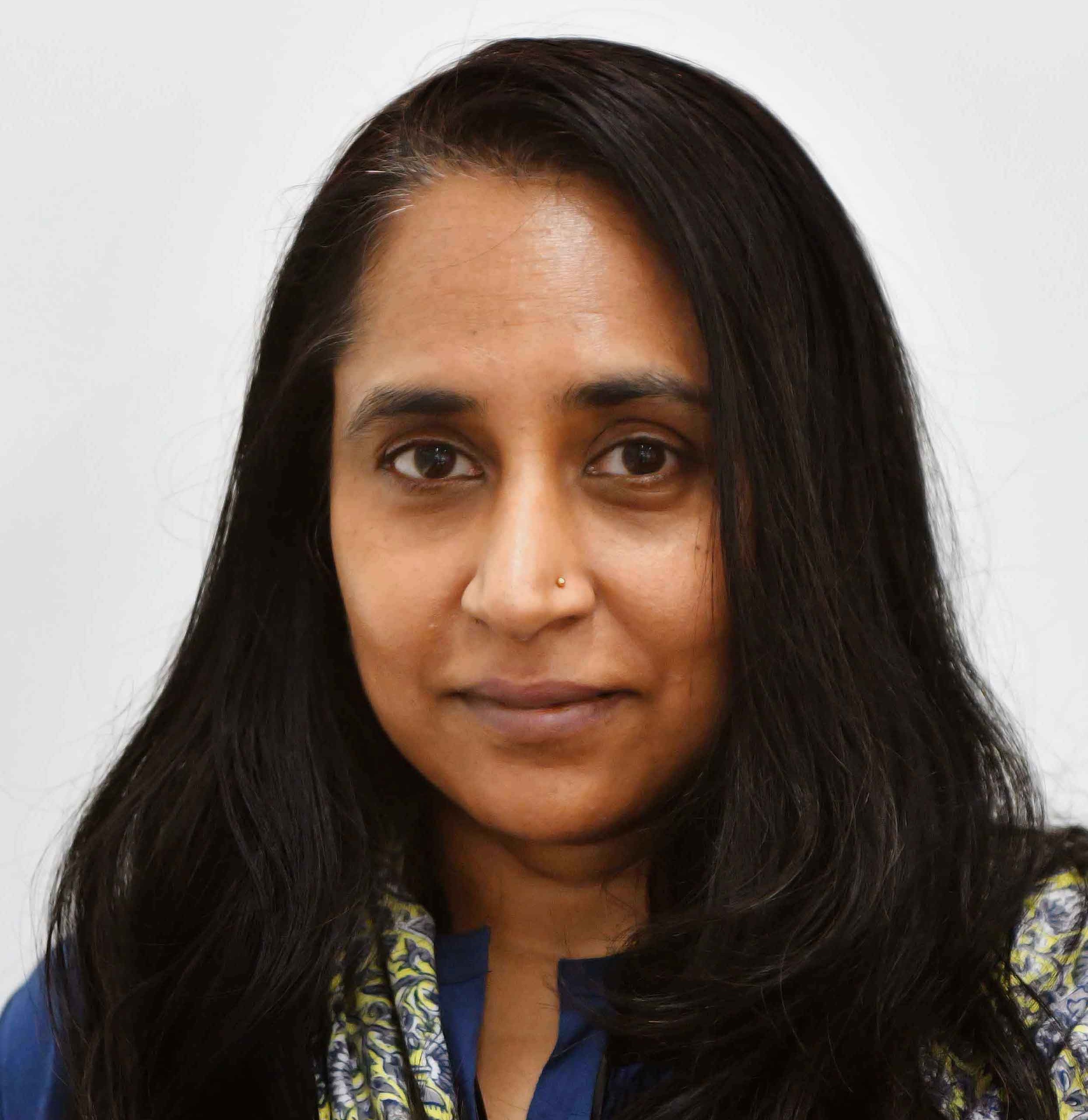
Author, Kamini Ramani, takes up these questions in her new book, Lotus Leadership: A Modern Playbook of Ancient Wisdom. Kamini is the former chief marketing officer of the venture capital firm Mayfield and a founding member of Neythri, a network for South Asian women.
Drawing on interviews with more than 100 Indian women leaders, her new book explores how culture, curiosity, relationships, and resilience have shaped their paths to success—and challenges some widely held assumptions about education, ambition, and what it takes to get ahead.
To discuss these stories and the lessons they hold, Kamini joins Milan on the show this week. They discuss Kamini’s own journey from India to Yale University, her ambition to write a book that offers “a yoga practice for your career,” and her efforts to help create a network for South Asian female entrepreneurs. Plus, the two discuss the pernicious effects of the Indian American education “pressure cooker.”
Episode notes:
1. Sheryl Sandberg, Lean In: Women, Work, and the Will to Lead (New York: Knopf, 2013).
2. Indra Nooyi, My Life in Full: Work, Family, and Our Future (New York: Portfolio, 2021).
3. “The Indian Who Helped Build Silicon Valley (with Kanwal Rekhi),” Grand Tamasha, April 22, 2026.
4. Kanwal Rekhi, The Groundbreaker: Entrepreneurship, the American Dream, and the Rise of Modern India (New York: Simon & Schuster, 2026).
Transcript
Note: this is an AI-generated transcript and may contain errors
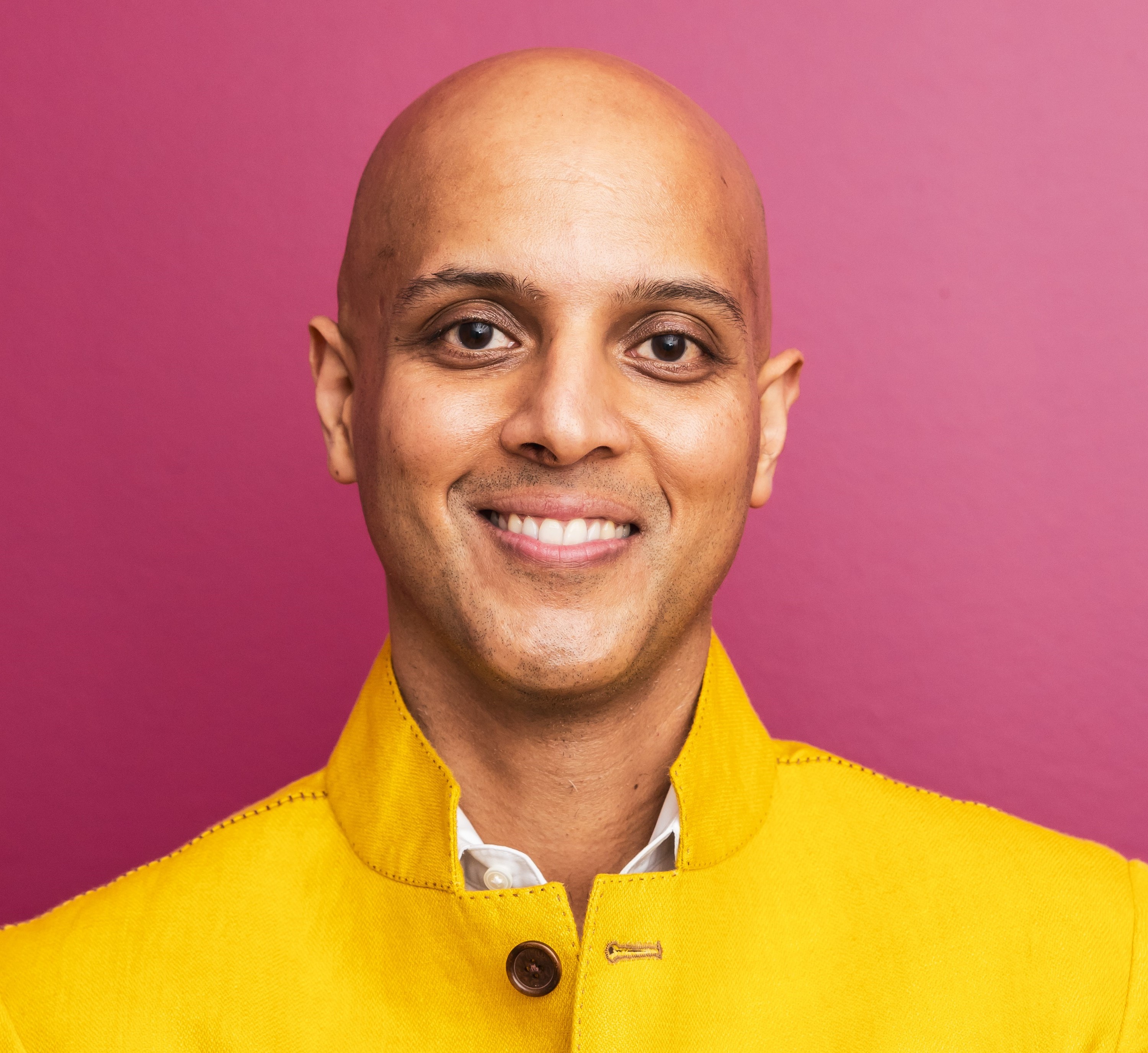
Milan Vaishnav Welcome to Grand Tamasha, a co-production of the Carnegie Endowment for International Peace and the Hindustan Times. I'm your host, Milan Vaishnav. By now, the success of Indian Americans in business and technology is a familiar story. But the stories that we've heard largely revolve around powerful, influential men. We've heard far less about the women who've made their mark in Silicon Valley and on Wall Street. What can their journeys teach us about leadership and about the role of heritage in shaping who we've become? The author, Kamini Ramani, takes up these questions in her new book, Lotus Leadership, a Modern Playbook of Ancient Wisdom. Kamini is the former chief marketing officer of the venture capital firm Mayfield and a founding member of Neythri, a network for South Asian women. Drawing on interviews with more than 100 Indian women leaders, the book explores how culture, curiosity, relationships and resilience have shaped their paths to success and challenges some widely held assumptions about education, ambition and what it takes to get ahead. To discuss these stories and the lessons they hold, I am pleased to welcome Kamini to the podcast for the very first time. Kamini, congrats on the book and thanks so much for taking the time.
Kamini Ramani Milan, it's great to be here.
Milan Vaishnav So one of the major objectives of your book is to tell the untold success stories of Indian American women in the United States. And you know, as I said at the outset, we've heard a lot of stories about successful men. We've all heard about the Sethi Nadella's and the Sundar Pichai's and so on and so forth. When did you realize that you wanted to tell the story of the Indian women who have really made it big in America?
Kamini Ramani It was on my 60th birthday, Milan, three years ago. I was lying poolside in San Miguel de Allende in Mexico with my sister, who's been my eternal cheerleader. And I said, you know, I keep meeting these amazing Indian women, especially in the last decade. I've worked in Silicon Valley for four decades. And especially in the last decades, I saw the rise of the Indian leader, certainly the men that you alluded to, but equally powerful and wise women. And except for Indra Nooyi's breakout memoir, we hadn't really heard stories of the women. Definitely not as a collective. And so that's when I sort of came from a little bit of outrage, like how come we don't hear the stories of the woman as much? And more importantly, we want to answer the question of how did they get to the top? So that's what sent me down this joyous journey of writing the book.
Milan Vaishnav And you know, you mentioned that in the decade prior, you had sort of come across these really amazing Indian American women. Tell us a little bit about kind of…was this just interactions, your life in the Bay Area? This is a hub for technology. Where were you seeing these women reach these great heights?
Kamini Ramani So a good example is a woman who's in the book, in the chapter on curiosity. Her name is Srinija Srinivasan. She was employee number five at Yahoo, and she was on the board of Stanford University for a decade, ending it as vice chair. She was the chair of the board, of SF Jazz, a very interesting polymath kind of Renaissance woman. And I had first met her because she was handing out Phi Beta Kappa awards at Stanford as the board member and our daughter who was graduating that year was getting one and as a coincidence her brother happens to be Sri Srinivasan, who's the chief judge of the federal circuit and our older daughter who had clerked for him. I'd only heard of her second-hand, and then I saw her in this gathering and got to know her over time and now we're very good friends. We were just at SF Jazz last night at a concert. So that's an example someone where, she's done some amazing things. One of the most thoughtful women I know, but nobody had actually spotlighted her in any sort of context of how she got to where she did and what powers.
Milan Vaishnav I mean, it's an interesting example that you choose, because by contrast, most of us have probably read several profiles of Sri Srinivasan in places like the Washington Post and the New York Times and so on.
Kamini Ramani Exactly. And at the same time, you know, Srinija is not an unknown figure in Silicon Valley because, you know, she gives these many different commencement talks, et cetera, but not at the depth at which I was able to engage with her and put it in the framework of the book.
Milan Vaishnav So you talk about this book, and you describe the book as quote a yoga practice for your career which I quite liked. Tell us a little bit about what you mean by that.
Kamini Ramani You know, I channel the tenets of yoga in three ways in the book. One, yoga at its essence is about seeing harmony and duality, not dissonance, because you have strength and surrender, you have endurance and flexibility in the practice of yoga. The second is, it's a practice. It's something you do every day, if you can, or a few times a week, over your life. It's not an intervention or, you know, something you do once in a while. And then the third thing is, what yoga celebrates is a being of calm and resilience, both those together. And all that put together is what Lotus Leadership is about. I contrasted to Lean In, for instance, Sheryl Sandberg's framework that came out in 2013, which was a wonderful acceleration framework for women to fulfill the ambition. But you felt that if you leaned out, the bus would pass you by. You also felt an anxiety around taking control of the next opportunity and the next opportunity. So, I think of that as a, like, running. You know, you'll get to your destination, you may blow out a knee, it may get harder as you grow older, versus yoga, which you can practice wherever you are at whatever stage of your life
Milan Vaishnav You know, getting back to where we started this conversation, you know, you start the book by talking about, you're sitting poolside with your sister. You're having this kind of sisterly conversation when this light bulb goes off about how you need to do this. But it's also, you in the book, very clear that you are writing this book at a particular time in your life. And you mentioned that you this idea of entering Vanaprastha, right? This kind of Hinduism's third stage of life in which the student and the householder evolves into this kind of mythical forest dweller who ages gracefully and, you know, spends a lot of their time counseling the young and so on and so forth. What convinced you that you were the right person to tell these women's stories at this particular juncture?
Kamini Ramani A good question. I was born and raised in India in Bombay. It was called Bombay at the time. And I came to the U.S. when I was 20 on a scholarship to Yale University where I did a master's in English literature, decided not to continue for a Ph.D., felt very ivory tower, also couldn't handle the winters in New Haven, honestly. So, I moved out to Stanford, and I did a second master's in communications. And then I fell into Silicon Valley exactly 40 years ago in 1986. And so, I had experience working with leaders, both men and women, in Silicon Valley. So that I felt gave me a good vantage point because I'd seen many different models evolve. You have the hustle culture. You have this self-described wunderkind. You know, you have the boy genius. You had the cult of the dropout. All these different role models for leaders that had emerged. So, I felt like I had sort of an anthropological view of the kinds of leaders that seem to break out and succeed. The second thing is, because I was ready to hang up my work boots after a 40-year career, I felt I could dedicate my full attention to this project of really talking with people and listening to them and hearing what they said instead of going in with a framework in mind and trying to force fit people into something that worked. Which is why I ended up you know, chatting with about a hundred or so women, surveys, coffee chats, walks, lunches. And out of that process of discovery came some very interesting realizations and then the resulting framework that I wrote the book around.
Milan Vaishnav You know, you talk about these women in the book, and about their journeys and you also, as you just mentioned, had your own journey from India to the United States. And I just want to, want to read one passage of the book where you're talking about yourself here. You say that “coming to America didn't make this staggering ride of my life possible. Bringing my heritage and my ancestors sewn into my heart and my psyche did.” Tell us a little bit about why you think your heritage gave you a kind of leg up or an advantage.
Kamini Ramani Absolutely. I was very lucky to go to these wonderful universities, work in Silicon Valley, where there were always non-white people succeeding in Silicon Valley. So, I never experienced discrimination. And if anything, yes, there was a little bit of the orientalism that goes on when you first come here. “Hey, are there elephants and cows on the street? What do you think of Gandhi, the movie?” et cetera, and not knowing the allusions to cool TV shows and you know, never having celebrated Halloween before and so on. However, I felt like the security that I had being born and raised in India, which Amy Chua actually alludes to in her book, The Triple Package, which is she talks about how immigrants have security feeling like they belong, but that insecurity when they have to sort of prove themselves and out of that comes grit. I definitely felt the sense of rootedness. And that I was bringing a rich heritage with me into America so that I could easily assimilate without feeling anxious that I wasn't letting something go to get something else. Kanwal Rekhi, who was on your podcast a few months ago, talks in the end about how you have to assimilate. He let go of cricket and he let go of Bollywood and he embraced football. I feel like you can do both. When I talked about duality: just reject the either or tyranny. You can be both Indian and American. You can be both a cricket lover and a football lover. You can contain multitudes, as the poet says.
Milan Vaishnav You know, it's interesting that you say that because I mean, I, you know, it's been a long time ago since I was in college, but I remember being a young college student feeling this pressure of either doing the Indian thing or the non-Indian thing, when my instinct was to kind of do a little bit of both. I didn't really understand, but there was this pressure and, you know, I think sometimes it was even explicit of like, you got to choose a lane, right? You can't kind of have this third way.
Kamini Ramani I agree, but you know what? The world has changed. Our daughters, who are 26 and 32, and by the way, they are multiracial, multicultural, and so on, because my husband is not of Indian origin, definitely feel like it's Diwali time. They'll put on the lehengas and go do that. But, you know, one of them is a huge Valkyries fan. It's the San Francisco women's basketball team.
Milan Vaishnav Of course, yeah, who just won the championship a few days ago.
Kamini Ramani 100%. So, you know, they feel just as comfortable being part of that, you know, cheerleading squad as next week is Diwali, they'll be at the Diwali parties. I think it's become easier today, or maybe over the last decade, it's gotten easier to feel you can be both, especially for the second-generation Indian kids, you're being raised in the U.S. But what was really striking with the women off, you know, the 30 Indian origin women and three non-Indian women in the book. Of the 30 Indian-origin women, I would say maybe about half are like me, raised in India and then emigrated, or maybe two-thirds. And then the rest are actually, you know, were raised here. State College, Pennsylvania; Flint, Michigan; Lawrence, Kansas; and so on. But all of them just, when they were talking to me, talked about how they drew on their inheritance in to make it, which I use the word, alchemize it into a leadership superpower. So, it's very interesting how sometimes these influences actually, you know, have an outsize impact on the person you are. And the more you can just leverage it instead of feeling you have to bury it or hide it or run away from it, the more freeing it is.
Milan Vaishnav You know, you mentioned a little bit, this kind of mix of women that you talked to. And, you know, over the period for which you did research for this book, you interviewed more than a hundred female leaders. And I wonder if you could just tell us a little bit about how did you develop this list of, you know, who did you talk to and give us a sense a little bit of their kind of diversity?
Kamini Ramani So of the 30 Indian origin women, I was very deliberate that I wanted what I just alluded to, the diversity of big first generation or second generation. The second diversity was around persona. So I have founders, investors, CEOs, C-suite leaders, academics, movement creators. So I wanted that. And then the third one is, I did want religious diversity. This is not a Hindu book. So I had women who are Sikh. Who are Parsi, who are Muslim, and then obviously Hindu. So, I definitely wanted that diversity as well. And I also wanted some geographic diversity because it's very easy to come to conclusions from enclaves and the Bay Area where I live is certainly an Indian American enclave, but I have women from L.A., I have woman from the East Coast. So I wanted that as well.
Milan Vaishnav So, you know, the title of the book is Lotus Leadership, and the framework for the book, you kind of use this lotus metaphor to talk about the kind of five petals that make up the five sections of the five kind of elements of the books. And we're going to talk about some of these in detail, but I wonder just, you know, before we get there, could you just tell us a little bit about what these five petals are and how they fit together?
Kamini Ramani So, first of all, I picked the lotus as a motif because, again, it represents duality beautifully. You know, the lotus flower is beautiful, but the roots are edible. If you've ever eaten lotus root at a Thai restaurant or whatever, really yummy dish. And it's also one that symbolizes chakra activation, but also a soporific effect like the lotus eaters. So, lotus itself has duality built into it. And the other reason I picked the lotus was Thich Nhat Hanh, who's this Buddhist monk, has a book that says, no mud, no lotus. The lotus has to bloom out of the mud. And I definitely wanted to write a book where the women were brought to life in their fullness, all the challenges they faced to get to where they were. And the women couldn't embrace that more because I was writing this as a playbook for the next generation. And they wanted to show how life sends you curveballs and how you overcome them and still fulfill your ambition. The five petals, really quick. The first one is what I call fusing of a so-called feminine and a so-called masculine style of leading. A lot of leaders, especially women, are told you can either be aggressive or compassionate, either assertive or empathetic. These women reject that, and they're both, and more. The second one is around celebrating curiosity, which I use the metaphor of zigzagging across a rock wall rather than climbing the rungs of a ladder. So, it's not a linear path, it's taking different risks. And still getting to your, to fulfill your potential. The third one is around harmony, which is if you choose to be in a life partnership, build it so it's not contentious, so that both of you can fulfill your ambition and realize your potential, and by the way, the phrase, “my partner is my greatest cheerleader” came up a dozen times in the interviews for that section of the book, and those don't have to be a heterosexual, I have a same-sex couple in there. And there are certainly some of the women who are not partnered in the book. So, I'm not saying there's an obligation, but if you're going to be in a life partnership, wouldn't it be great if you didn't keep 50-50 score in the moment and you tried to take the long view. The fourth one is I am redefining abundance with the help of the women in the bulk beyond material wealth, especially where I live, Milan. It's about who has the monster compound, who has the yacht. Who has the private flight to space? I mean, it's getting crazier and crazier, right? What your net worth is measured by. But these women, and we talked about Lata, who is a mutual friend, is all about giving. Or it's about uplifting your teams. Or it is about enriching your community. Or it about engendering family harmony. That is their metric of abundance, not stuff. Even though they enjoy their stuff unapologetically. And the fifth one is, when you pursue all these traits and incorporate them, you get to own your power and you live your life in 3D.
Milan Vaishnav So I want to—thank you for doing that. That was a great, I think, summary of the major elements or lessons of the book. I want to start with the first one, where again, you write in the book that the women that you spoke with, they demonstrated this kind of core duality, right? So, they had a comfort with the masculine. They also had a comfortable with feminine traits that were key to their success. I wonder if there's a particular woman in the book that is a prime example of being able to kind of capture both of these dimensions.
Kamini Ramani I think a great example is my opening character, Aparna Bawa, who was CEO of Zoom as I interviewed her for the book. She just about less than six months ago moved over to be the chief legal and people officer at Intel, handpicked by the new CEO to help with the transformation of that company. And she's the one who kept Zoom going during COVID so we could do it.
Milan Vaishnav I mean, this was the fascinating thing. She wasn't just CEO of Zoom. She was like CEO in the thick of it when Zoom completely became a household word.
Kamini Ramani And grew from 10 million meeting participants to 300 million in the space of 18 months. So, I mean, crazy growth, right? And she is a great example of, she herself says in the book, “I'm five foot two, kind of feminine looking, you know, like a cutesy girl, but I open my mouth and concrete and steel comes out.” And she has a philosophy that she's evolved that's called loving tough, which is very different from tough love. She talks about loving as an act of caring, but she holds her teams to accountability. I mean, you can imagine at Zoom the kinds of security challenges, infrastructure challenges, all the stuff they had to do to keep it going for the world. And she is, I think, a great example of how you can lead with love but also get results. And she says her secret is that she flexes. Meaning if she's trying to work with someone who's an introvert, she'll bring them out of their comfort zone so she can get them to what they want. But if she is talking to a bully, she's six foot tall, 100% male. So, it just, you know, it depends on the situation. And she's a very, very respected leader and by the way, not a household name. And she deserves to be, which is my whole motivation for writing this book.
[…]
Milan Vaishnav You know, you mentioned just a moment ago, this kind of aphorism from the famous Buddhist monk who once said, no mud, no lotus, right? And this comes up in the book in a section when you're talking about a lot of the challenges that women face, not least in, you know, fighting the patriarchy. And I'm wondering, you know, a little bit, if you could kind of help us understand the sorts of barriers that they had to face. I mean, you mentioned one before just, you know, having to kind of choose, are you going to have a masculine aggressive style or softer feminine style, but what are some of the other hurdles that you saw some of these Indian women really run into and have to surmount?
Kamini Ramani Sure. So, there were personal things that can happen to anyone in life, but some of those things that they shared with me were one had a rupture brain aneurysm while on the job, 18 months of rehab, and then she comes back. Her boss asks her, what do you want? She says, give me a showstopper project to demonstrate I'm back. Until today, she's leading companies. Another one lost her father when she was 15 years old. She was the youngest of five girls and for her mother to rent a home as a widow in India at the time was very hard, lots of discrimination. She's on the board of Uber, and she's one of the most powerful CEOs in the country, let alone in the Valley of a company called Flex. So, there were personal tragedies, of course, that they had to overcome. But when I think about better challenges, the trifecta of being a brown immigrant woman is not easy. So, one of their other challenges they talked about a lot is how to differentiate and find someone who's a mentor or a sponsor or a champion. A mentor is someone who speaks for you. A sponsor is someone who speaks about you when you're not in the room. But a champion is someone who actively helps advance your career. And the best example of this was Selena Tobaccowala, who worked for the late Dave Goldberg, Sheryl Sandberg's husband, at SurveyMonkey. She was a CTO. She wanted to grow into a business role. And he said, well, you need to learn how the finance works. Gave her the finance function. She's brilliant. She had founded Evite in her dorm room in her 20s. So, she learns the finance function, gets promoted to president. Then she goes to him and says, I want to become CEO, whether of this company or somewhere else. And he says, well, you'll need to get on an independent board to do that. And not only does he say that, he helps her get on her first independent board, which was another barrier for women. It's very hard for women to get on boards because mostly it's the men choosing from their friend group. So that's another challenge about how do you find your champion? How do you become worthy of a champion? How do you then become a champion to other people?
Milan Vaishnav You know, one of the things that I had not really focused on before reading your book is, you know, I've done episodes on Indian Americans. You mentioned an episode I did a while ago with Kanwal Rekhi. Kanwal Rakhi famously is referred to as the godfather of Silicon Valley. He has, I think, the first Indian entrepreneur to take a company that got publicly listed on the NASDAQ. He has, you know, mentored scores, hundreds, perhaps of Indian American founders. He was one of the leading creators behind TIE, the network of Indus entrepreneurs, which is, I think it's fairly well known, but I had not realized that, you know TIE is kind of a male-dominated institution. And you helped build as a founder, something called Neythri, which has a network for South Asian women. Tell us a little bit about the process of doing that and what you’ve learned.
Kamini Ramani Sure. So that started six years ago. To be clear, I'm not the founder. There were three co-founders. I'm what's called a founding member. Like I joined really early and helped nurture the network. And it was created because, yes, TIE was a network which definitely included women, but was really more targeted toward the men. And over the last few years, they'd been doing more proactive efforts to bring women under the tent. But the founders of Neythri felt you needed a purpose-built community just for South Asian women to realize their career goals. So it's not a social network. It's not an philanthropic network. It's a professional network. And by being in a group like that, I think it has about 3,500 members today, you can help each other achieve whatever it is. I want to get on a board. I want to raise money. As you know, less than 3% of women founders get access to capital. So, but in the network, there are venture capitalists who are check writers. Women venture capital are checkwriters and there are women founders. So sometimes that match happens. And different, someone is switching jobs and someone in the network is hiring. So, there's all the usual network effects that come into play. And I'm so proud of being part of that network. It's a network of women of substance; women of influence who are just there to help each other rise.
Milan Vaishnav You know, I want to turn to what I found one of the most interesting parts of the book is this debate that we often have within the Indian community on education. And I want just quote again a passage that you have from the book where you say, “if curiosity is the beautiful blooming lotus that got so many of these leaders to astounding success, then educational perfection, expectations and rigor were often the mud they had to push through to get there.” And this is the powerful part, “And it's a cycle the Indian community needs to stop.” Why do you feel so strongly about that?
Kamini Ramani I could write a whole book on that topic.
Milan Vaishnav Maybe that's your next one.
Kamini Ramani Oh, I don't know Milan. I want to enjoy my retirement. I want to binge-watch Netflix and travel the world. The pressure cooker, you know, the actual physical appliance of the pressure cooker which I introduced as a concept in the book because not all American readers are familiar with it. I mean, if you open it too early, then the lentils are undercooked. But if you let it go too long, it can explode in your face, right? I think of all our young Indians in that literal pressure cooker. And really where I live again, Stanford is down the street. I mean, we have rashes of suicides of kids throwing themselves in front of trains because they don't feel they're good enough. There's a lot of the ugly side of feeling like you're defined by a grade, the school you go to, the college you go, to the honors you get. And our own daughters would tease us and say, don't be an Asian parent if we put too much pressure on them in some context, right? And as you know, the legendary spelling bee thing of, you know Indians, you always winning the spelling bee because it's a roped thing. So, I feel especially in the age of AI, that kind of learning is not going to serve you well. And it's no surprise that the humanities entry course at Harvard is oversubscribed or that the coders from Stanford are not getting jobs. And so, the critical thinking that we learn is not always valued in the Indian community. As you know well, you're an engineer or a doctor or maybe a lawyer, but really not a liberal arts person, God forbid. So, I think by pushing kids to just be defined by grades and those kinds of external accomplishments and also having a very narrow lane of what success means is just doesn't do anyone any good. And I have examples of at least two women in the book who are of the younger generation who rejected that pressure and have gone on to do great things.
Milan Vaishnav You know, you say something and some part of the book, which I found really interesting, which is something along the lines of, if you make a list of Fortune 500 CEOs, you will find that actually very few of them go to elite colleges. That was striking to me.
Kamini Ramani Yeah, it's absolutely true. And same in this context. I think I have 12 engineering leader women in the book. Only 10 went to, sorry, only two went to the IITs. The others went to regional colleges, second tier, even third tier colleges, either because maybe their family wasn't comfortable sending them very far away or it was a, or there wasn't money. They could have gotten in. I mean, they're definitely at that level. So yeah, we can't get hung up on that. And Indra actually, Nooyi, who's in the book, one of her pieces of advice is, you know, it's better to be great at a middling place than to be average at a top tier place. She says it in a different, you know, she's got her turn of phrase the way she says it, but that, you know, there's no doubt about that, right? And so there is more to life than, you know, Harvard and Yale and Stanford or doctor, engineer, lawyer. That's my thing.
Milan Vaishnav I mean, you know, it's like the old saying, I mean basically some version of it's better to be a kind of big fish in a small pond than a small fish in the big pond, right? I mean I think that's essentially the kind of gist of the metaphor there. Yeah, this is what she says.
Kamini Ramani It's better to excel at a decent school than be an average performer at the most elite one. And then she adds, same goes for companies.
Milan Vaishnav So, so Kamini, I just want to push you a little bit on this, right? I mean, this is obviously not a foreign context to me either. I mean I think everything you just said really resonates with me. Although the question I had in reading the section is, you know, to what extent are Indians really that different, right. I mean it seems like it's a fairly common refrain in many immigrant communities that, you, know, they, the kids really need to push to do their best and get into good places and you know have good degrees and have kind of achieved this prestige. Do you think there's something kind of distinctively Indian about what's going on?
Kamini Ramani I do agree that it's a broader Asian obsession. I mean, Amy Chua, who's one of my advance readers who wrote Battle Hymn of the Tiger Mother, you know, certainly that's true of, of says it's true of other Asian communities. I think the difference is Milan when you live in these enclaves of high achieving Indian communities, whether you're in the Bay Area or New York or, you, know, Chicago, DC, whatever, it just gets so magnified because you're socializing with the same families. You know, you're going to school with the same families, you play sports with the same families so there's no way for a kid who wants to take a different path to hide because you're always being compared to the Joneses or the Mettas or whatever. So, so I do think that it's important for the Indian community to internalize this because if it spreads across the board, if a family proudly says on many different dimensions. We have a child who's gay, or we have a child whose chosen to go to community college, or we a child's who's doing a trade school, rather than the classic four-year thing. The more they can embrace what's called non-traditional choices, then it eddies into the community.
Milan Vaishnav You know, I want to circle back to another thing that you had kind of alluded to earlier, but I want us to unpack with you, which is in the book, you say that, “I almost never heard the typical gripes about unsupportive spouses who value their careers over their wives careers.” The different point of the book. You say that this line, “my husband is my greatest cheerleader came up like a dozen times during interviews.” Did this surprise you?
Kamini Ramani Yes. Because, you know, the hetero-pessimism narrative is you can't really have it all. You can't have a career and a family and all these other passions and so on. And my answer is, you can, just not all at the same time, and live life in seasons. But most importantly, evaluate if your life partner is going to be your cheerleader. I'm out there now talking to young leaders about the book and the framework, and one the things I've told them is have your checklist. If you're in a relationship, if your partner will be your cheerleader and what is that checklist about? You know, the church counsels you to talk about three things before you marry: finance, kids and religion. But don't stop at that. Scenario play, hey, I might be asked to go somewhere for an assignment for my career and it's good for my advancement. How would you feel about that? How would handle it? You know we need to have those kinds of deep conversations. To really evaluate if someone is there to support you and you are there to help support them. Because once you have that, and you're not just trying to keep the score in the moment, you did the laundry, I'm going to do the dishes. I mean, they're literally playing cards that people are using to keep track of who's doing what chore. And that's no way to live. You've got to think of success as a family project. And what these women showed is the way they were able to achieve their ambition. Is they had someone in their corner who was rooting for them. And by the way, the men achieved career success too. So it wasn't a disproportionate equation at all. And one of them uses a very good word. She says it's a dynamic hierarchy where over 30 years, she and her husband took turns, if he was working at a very hard charging startup, she tried to work at a more established company that maybe had less travel. So, you know, they, they worked it out. And I think if we can understand that and embrace it, then so many more leaders can be created.
Milan Vaishnav You know, you say towards the end of the book that kind of one major takeaway is, again, I'll just read a quote, which is “the things that make us different are often the things will make us successful if only we lean into them instead of burying, hiding, or running from them.” And I wonder, is that kind one of the central, if not the central message that you'd like readers to leave the book with?
Kamini Ramani Hundred percent. It's about inherited wisdom as a superpower. And whatever that inheritance is, feel it in your bones and live it. So which is why I have 33 women in the book and three of the women I deliberately chose to not be of Indian heritage, just to show this point about inheritance as a superpower. So, I have a black leader who's the CEO of Waymo, self-driving cars that are all over, you know, San Francisco and some, and some other parts of the country of the wood. And she says, often in rooms, I'm the only black. I'm the only woman. I am the only non-engineer. But I never feel alone because I have my communities, history behind me, I have ancestors behind me. I have a Chinese American leader who's on the board of Levi Strauss, Jenny Ming. And she talks about reverence for elders is a value. And how that helped her feel even now that she still has plenty of potential to go do the next big thing. And then I have a Hispanic leader. Who was the CEO of Girl Scouts USA, who says being bilingual, growing up bilingual, automatically made me empathetic because I kept putting myself in the other person's shoes. So yes, there are things that are sewn into our psyche and our DNA and our blood that we come with, whether you're Indian or not, because I say, just like you don't have to be Indian to do yoga, you don't have to Indian to practice Lotus leadership. So that is the key takeaway. Just own who you are.
Milan Vaishnav I mean, there you do say at one point in the book as well, because if you those who read the book, you know, you kind of intersperse these five petals with kind of these vignettes and stories from the Gita, which would spotlight particular female deities who are Hindu, but you say that, look, these stories are presented really as kind of cultural parables are not an effort to try and infuse the practice of religion into the practice of business. They're trying to kind of tell a larger meta story.
Kamini Ramani 100%. They're, first of all, really fun myths to read. So if you watched The Odyssey this summer and you liked Greek myth, then you'll like that. Or like me, I grew up loving Norse myths. Those were my favorites. So that's all. They're stories. However, the key trait that the myth was playing up, whether it was curiosity from Saraswati or harmony from Parvati, are traits that the leaders are exhibiting. So 100% they're seen as cultural touchstones. It's not a book about religion. It's a book not a about goddesses, but we can learn something from myths. After all, myths are the most ancient and beautiful stories. And that's the ancient wisdom in the subhead, which is, it's a modern playbook, 100%, but it draws on ancient wisdom.
Milan Vaishnav So I want to end maybe by asking you, Kamini, if I might, to kind of go a little bit personal with me, which is you've written this book, it's a modern playbook, it has a lot of wisdom in there, but you are writing this book after you have finished a successful career. You're now retired, as you said, you want to enjoy your life and just Netflix and chill, which is highly admirable, but as you look back, say, to the 20-something you, the 30-something you or the 40-something you, what are some of the things that you might have done differently had you been operating yourself with this framework, say, you know, when you were 25 or 35.
Kamini Ramani You know, I'll give it to you as a great example. In my thirties, I worked for Steve Jobs for a year and he was in exile because, you know, he had been fired from Apple and Next hadn't fulfilled its potential. And so, you know the industry had written him off, but you know you never underestimate a genius. And so, he believed in himself. He had also invested in Pixar at the time. So, he was running both companies and I was helping him, helping him in both. And you know he offered me the opportunity to work in both companies, but I didn't really have the conviction or frankly the word he used which I learnt at the time, chutzpah.
Milan Vaishnav Ah, chutzpah. That's a great word, yeah.
Kamini Ramani Which is the Jewish word for audacity, right? So I wasn't able to go sell myself into Pixar because they were entertainment people and I felt like I didn't know that. I didn’t feel ready enough. That's a phrase that Ray Vithee, one of the leaders in the book, uses. And so anyway, that opportunity didn't materialize. I went on to do other great things. But that 32-year-old, I think I was 32 years old at the time, that 32-year-old self, if she had been a freed from the likeability trap. Where I was just trying to please and can I do this? That would have been quite something. And then the second thing is that if I had more conviction in the amazing lineage I came from, my mother's a banker who was one of the few women bankers in India, I dedicate the book to her. I mean, I came from good stuff. And if I'd been able to just lean into that rather than feeling like I'm this you know immigrant who's in the process of getting a green card and I have to do this and I've to do that and you know please and everything else. Maybe I would have soared even more. I don't know. You know you and so I wrote the book for our daughters who are 26 and 32. So I want to give them the opportunity to lead from strength
Milan Vaishnav Well, that's kind of where I wanted to end, which is, you know, you, you talk about yourself a couple of times in the book as, you know, think of me as like your hip, wise, but brutally honest Indian auntie, and obviously you've done the book, which has one service, but obviously you're out there talking to people. What do you hope to accomplish in this next phase in terms of spreading some of what you've learned, spreading the gospel as it were to, to other people who are at an earlier stage of their careers.
Kamini Ramani Spreading the Gita, not the gossip.
Milan Vaishnav Spreading the Gita, exactly, yeah.
Kamini Ramani You know what? I haven't even read the Gita, so don't hold me to that. You know, if I can influence even one rising star leader to rise without burning out, to be able to live a meaningful life and build a meaningful career, and to do that in community, I've succeeded.
Milan Vaishnav My guest on the show this week is the author, Kamini Ramani. She is the other brand-new book called Lotus Leadership, A Modern Playbook of Ancient Wisdom. Reid Hoffman, who's the famous co-founder of LinkedIn had this to say about the book. He said, “it's a refreshing, long overdue playbook about leadership for everyone. I wish Lotus Leadership had been around decades ago. It's grounded in the best kind of wisdom, the kind that scales.” Kamini, it was really a pleasure to talk to you. Your kind of enthusiasm, your passion. I mean it's so palpable and it was palpable when I read the book and even more so when talking to you. Thanks so much for taking the time.
Kamini Ramani Thank you, Milan. I loved this chat.