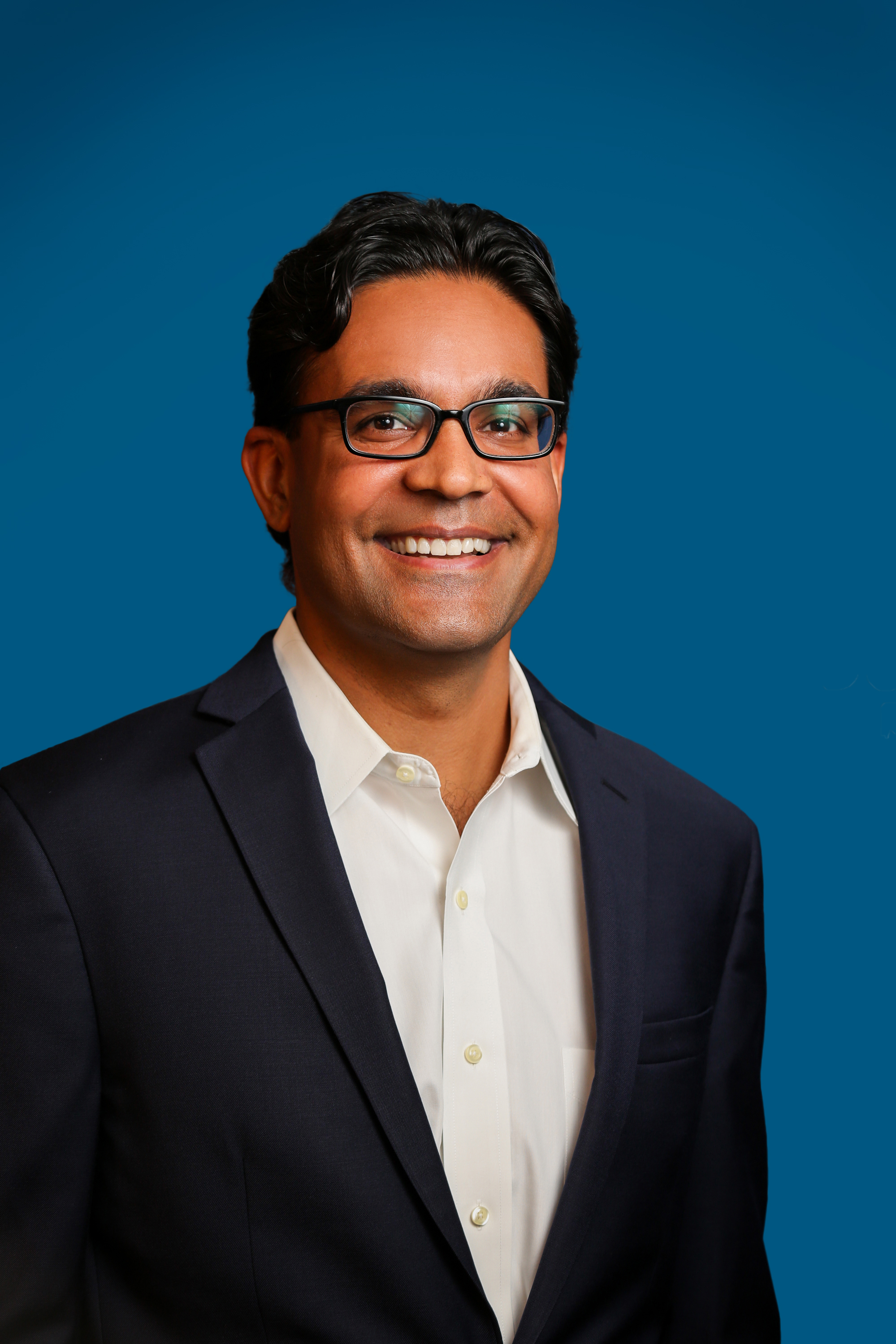
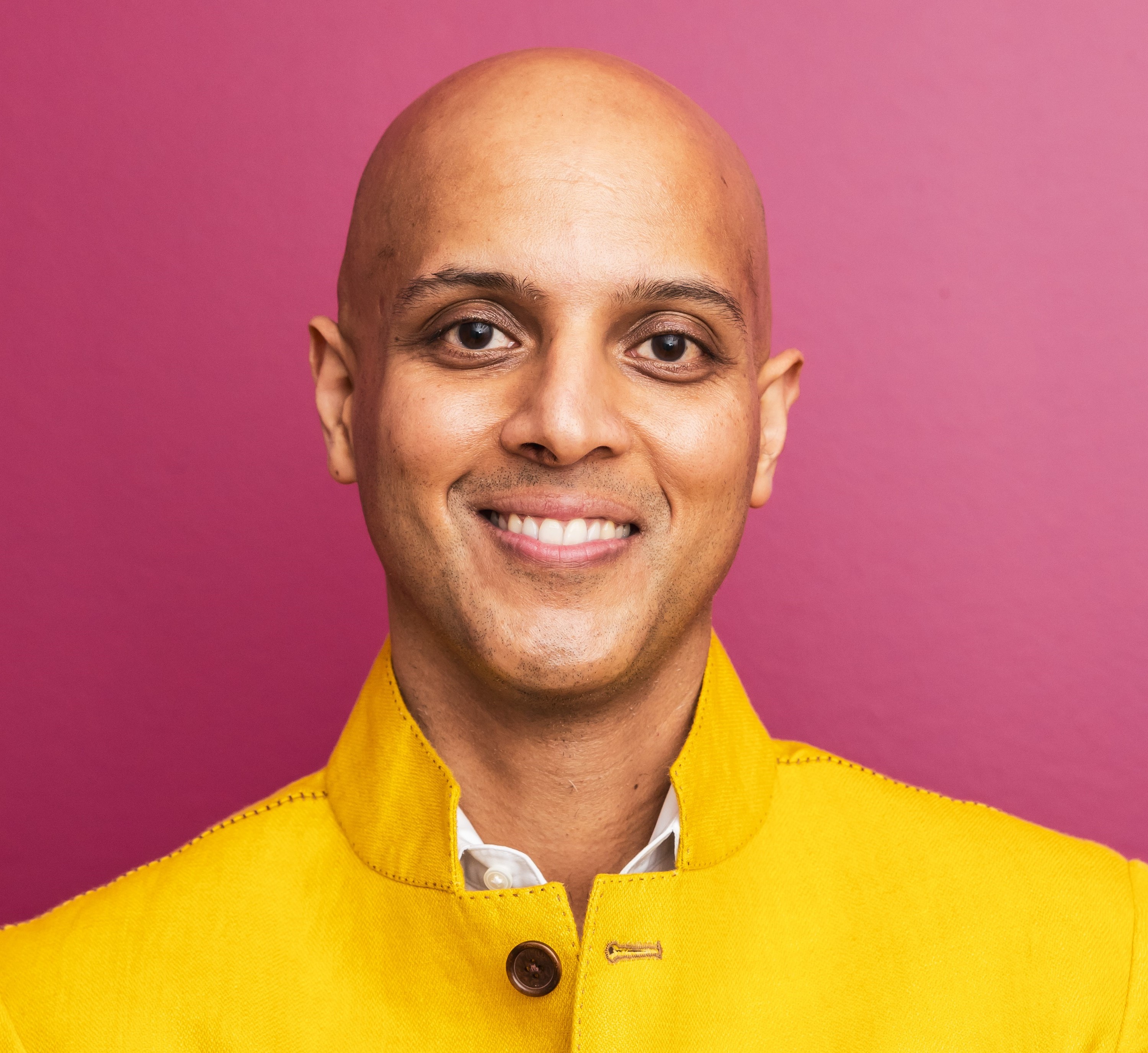
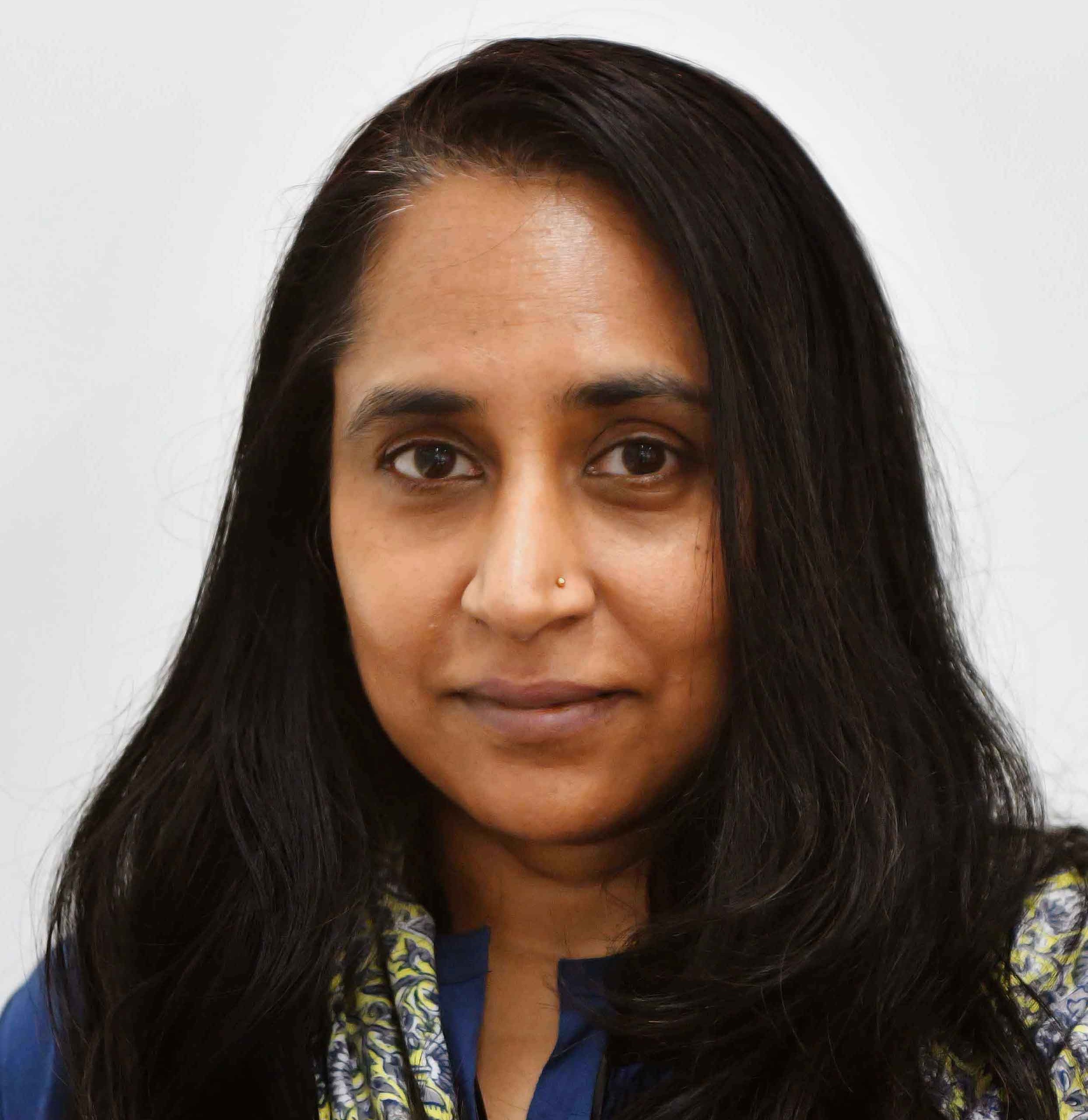
On this week’s episode of Grand Tamasha, Milan welcomes not one but two new Carnegie colleagues to the show.
This summer, Anit Mukherjee joined the New Delhi-based Carnegie India as its brand-new director. Anit is a senior lecturer at the King’s India Institute. He joined King's after ten years in Singapore, where he was an associate professor at the Rajaratnam School of International Studies. He has also served as an officer in the Indian Army. He’s an expert on all things defense and national security and wrote—what many people consider the best book on civil-military relations in India—The Absent Dialogue: Politicians, Bureaucrats and the Military in India, which was published in 2019.
And Sameer Lalwani is a new Senior Fellow in the South Asia Program at the Carnegie Endowment in Washington, D.C. He was previously a senior expert at the United States Institute of Peace and directed the South Asia Program at the Stimson Center. His work explores military technology competition, deterrence dynamics, alliance politics, and Indo-Pacific security.
On this week’s show, Milan speaks with Anit and Sameer about U.S.-India relations, India’s defense and military reforms, and what Washington and New Delhi don’t understand about one another.
Episode notes:
1. Sameer Lalwani, “As Rubio Lands in India, the U.S.-India Relationship Is Stronger Than It Looks,” Carnegie Endowment for International Peace, October 16, 2026.
2. Anit Mukherjee, “A Halting Turn: India’s Military Transformation,” Carnegie India, August 27, 2026.
3. “Rubio’s Visit and India’s Strategic Choices (with Pankaj Saran),” Grand Tamasha, October 27, 2026.
Transcript
Note: this is an AI-generated transcript and may contain errors
Milan Vaishnav Welcome to Grand Tamasha, a co-production of the Carnegie Endowment for International Peace and the Hindustan Times. I'm your host, Milan Vaishnav. We have a special episode of the podcast today because I get to welcome not one but two new Carnegie colleagues to the show this week. This summer, Anit Mukherjee joined our Carnegie India center in New Delhi as its brand-new director. He's a senior lecturer at the King's India Institute. He joined King's after 10 years in Singapore where he was an associate professor at the Rajaratnam School of International Studies. He's also served as an officer in the Indian Army. He's an expert on all things defense and national security and wrote what many people consider, we'll come back to that, the best book on civil-military relations in India, “The Absent Dialogue, Politicians, Bureaucrats, and the Military in India” which was published in 2019. And Sameer Lalwani is a new senior fellow in the South Asia program at Carnegie here in D.C. His work explores military technology competition, deterrence dynamics, alliance politics, and Indo-Pacific security. I've invited them on the show to talk about U.S.-India relations, India's defense and military reforms, and what it's like to be a think tanker in these troubled times. Anit and Sameer, thank you for joining me today.
Anit Mukherjee Thank you so much. So good to be back on the show.
Sameer Lalwani Yeah, it's great to be here.
Milan Vaishnav So, before we get into the substance of the matter, both of you have joined Carnegie this summer, so it's been a couple of months now. Anit, of course, is leading Carnegie India in Delhi. Sameer, you're here in D.C. Sameer, maybe I can just start with you, as you think about where Carnegie fits into this part of your career, what sort of drew you to this institution at this particular time?
Sameer Lalwani Well, I mean, I wish I could say like, you know, every step of my life has been sort of this logical sort of like progression towards Carnegie, much like Slumdog Millionaire. But I, you know, basically, I was interested in policy and security issues. When I was in college and a young RA, I read a lot of stuff coming out of Carnegie actually applied for the Carnegie Junior Fellowship when I was in college, didn't get it and that…
Milan Vaishnav That makes two of us.
Sameer Lalwani Yeah, yeah, motivated by spite ever since. And, but no, when this opportunity came up, this was exactly where I wanted to be. I've been reading the scholarship of people from here for the last 20 years and to be sort of amongst these intellectual giants is just a real privilege.
Milan Vaishnav I mean, Anit, this is a big change for you, because you have spent much of your kind of post-army life in academia. You changed continents, you changed jobs. Tell us a little bit about what it's like to be director of Carnegie India.
Anit Mukherjee Thank you so much. Firstly, it's a great privilege to be a director of Carnegie India, but I'll talk about that later. I'll probably talk about the journey that I took to Carnegie India here first. A bit of that is a personal reason, and I don't want to talk about it, but the professional understanding was simply this, and it was also born out of spite. When I joined SAIS, it was a very policy school, and most of the people from SAIS joined think tanks, and said, I'm going to create a career for me in academia because people don't take the SAIS PhD seriously. And so, I was like, all right, I'm going to be an academic. And then I did academia for 10, 10 to 13 years. And I enjoyed it, but frankly, the original argument for me to leave the army was to work on policy issues. So, when this opening opened up, when this job opportunity opened up, I was extremely keen and so I applied for it. And I'm excited to be back in the middle of leading among one of the best think tanks in New Delhi.
Milan Vaishnav I want to turn to you guys now and talk about the sort of, you know, range of substance issues that I think have been on all of our minds over the past, you know, many months and years. Sameer, maybe I'll turn to you first. As you well know, the mood on U.S.-India relations in this town has turned much more pessimistic of late. But I thought it was really interesting, you published a piece recently, which we'll link to prior to Secretary of State Rubio's recent visit to Delhi, where you argued that the U.S.-India relationship is, quote, stronger than it looks. And I wonder if you could just kind of give us, you know, what is the strongest evidence in that, for that argument, that things are stronger than they look?
Sameer Lalwani I mean, I read that article and threw a bunch of facts in there and I can recount those. The trade numbers are up, the exercise numbers are up, private sector transactions and collaborations and investments are all going up. I think that sort of speaks to just two open societies and capitalist markets that work really well together and sort of see eye to eye on the balance of power in the Indo-Pacific. But maybe I'll sort of point to something that I think is a little more specific and personal, which is I see India, in the U.S. imagination, sort of growing in terms of attention, as well as in consensus as that this is a priority for U.S. foreign policy. And I think that was demonstrated most recently by Secretary Rubio's visit just last week. It was a second visit within five months. If you notice, Secretary Rubio doesn't travel a whole lot out of the country. He's got two jobs and trying to keep an eye out and a foot in the White House often. And so, to me, like to his time was a significant indicator, but it wasn't just him. Admiral Paparo has been twice to India in the last six months.
Milan Vaishnav Who's the head of Pacific command.
Sameer Lalwani Head of Indo-Pacific command [and] was on the cover of Time magazine, sort of like the probably the front line of U.S. grand strategy and balance of power in the Indo-Pacific. While Secretary Rubio was there, there were two congressional delegations in India at the same time. There have been several this year. And these are bipartisan efforts. So, to me, it speaks to that there's a consensus in US foreign policy that sometimes gets crowded out by the drama and all the activity that the Middle East sort of throws at us or that we sort of get attracted to. But in the long run, I think that there is a consensus that the United States needs to have a vibrant and powerful relationship with India in order to achieve its long-term strategic aims in the Indo-Pacific. And that, to me, is the strongest evidence for the durability of it.
Milan Vaishnav I mean, Anit, you know, I'm curious if you share Sameer’s sense of optimism because I mean you know when you're in Delhi, you do get a little bit of a different picture, right? I mean a lot of folks you meet with whether it's an MEA or elsewhere in official India or even in the unofficial kind of analyst class talk about this trust deficit that's opened up. And not just opened up but kind of growing because of U.S. actions on trade, on tariffs, on sanctions, on immigration, and a number of other things. So, given what you've just heard, how do you see things from where you sit?
Anit Mukherjee So, I'm going to agree with the core thesis that Sameer puts out that it's better than it looks, but I'm going to caveat by saying it's a 50-50. It's like the U.S.-India is the ultimate kind of trust test, which is, you know, what you see is what you get. And I say this because it's not sugarcoating the fact that U.S.-India is in a very difficult position and it has not been this bad in the last 20 years. And in some ways, American actions on trade, on tariffs, on its immigration actions, on student visas, even on its engagement with Pakistan, is creating a constituency for India that was always skeptical and did not trust America to begin with in the last 20 years and saying, ah see, we told you so; you cannot trust them. And so, this has strengthened the anti-American constituency inside India and has regenerated a debate that had been seemingly settled. Having said that, the core diplomatic strategic defense community still believe that there is a logic to the U.S.-India relations, but this has created significant headwinds. And it would take a lot to pick up the straws from this and to kind of translate that into people-to-people goodwill again.
Milan Vaishnav I mean, I'm just curious, Sameer, if you have reactions. I mean this is, you've heard this line before.
Sameer Lalwani Yeah, yeah, yeah. And none of it is wrong, right? I mean, like, the political vibes are clearly bad. There are real headwinds. But I guess, you know, I think in international relations, something to be, you can, you to cognizant of is relative gains and relative like competition. In this case, India is getting far less of the pressure from the United States than America's closest allies. So that might be sort of like little consolation. But I guess what I'd say is that, you know, there's a world in which the United States sort of totally exits from sort of this global leadership role. But if it is able to sort of come back and start repairing its relationships, which I think are doable, because I think these attacks on U.S. relations with NATO and Canada and some of our closest allies, Japan and Taiwan in terms of our absence, if it can repair those, repair that damage, I think it's even more likely to be able to repair its relationship with India, because it's done far less. It's committed far less transgressions against India. I mean, we have threatened our own NATO allies with military [and] territorial conquest, right? Like that is as is the antithesis of what NATO is about. We've done that with our closest neighbor and closest partner that's fought multiple wars with us. So, I think there are real tensions on trade. There are real questions about U.S. loyalties when it comes to India and Pakistan, even though I think Secretary Rubio tried to address this pretty explicitly in a couple of interviews last week. But I do think these are much more recoverable tensions or problems than the other, you know, gaping holes we've opened up in our in our alliance structure globally.
Milan Vaishnav Let me just push you on one thing, Sameer, just to think about. You know, one question that I get a lot, I'm sure you do even more, is reporters or others kind of want to ask you, what would convince you that the kind of current political turbulence or the air pocket is commonly referred to is beginning to kind of damage the underlying partnership, right? Because as you rightly point out, there's a lot of stuff going on all the time. Much of it is not very visible, but in your recent piece, you document it very nicely. But how will we know if that geopolitical tension starts to seep down into the ground water?
Sameer Lalwani Yeah. Okay. So, there's, there's this question of like measurement of the strength of relationship. And I think the expectation with India is that it should be always on an upward slope, it should be growing. And so, when it stops growing or slows down and turns into a plateau, which is maybe what you could argue is happening now, then there's you know, critics will say, look, it stopped growing. There's a problem here. And that's probably true. And I think the real problem is when it starts to slope the other way, right? When we start to turn off things that we had sort of already built up over time. Of standard annual exercises, certain levels of engagement or dialogues that we have on a regular basis. When those things start turning off, then I will be starting to get more concerned. But if we're plateauing, I'm not a fan of it, but I think it is a thing that can be corrected and improved over time.
Anit Mukherjee I'm going to jump in on this, and I'll say that very quickly, I think the difference between U.S. engagement with its allies and India is simply this: the allies have had a long alliance relationship with the U.S., and they have signed on to the dotted line to have an alliance relationship to the U.S. In India's case, it's a never-ending debate. In India, in fact, it will make it harder to buy very advanced platforms from the U.S., which is why it's not surprising that if you talk to the Indians, they're like, we are not sure we want to invest in some super sensitive platforms with the U.S. because that will open up a sense of vulnerability. And so, the damage that has happened in the last two years is something that people were cautioning about for the last few decades. And I think it'll take a longer time to kind of repair that damage than the one that America has created with Canada and Japan and its European allies.
Milan Vaishnav Let me just bring China into this equation because, Anit, if you think about New Delhi's overall geopolitical outlook, India obviously worries about whether and how to confront China. It also worries simultaneously about Washington striking this kind of infamous G2 accommodation with Beijing. You know, we were discussing last night offline of like, you know, there are many ways of perhaps critiquing Indian foreign policy. But at the end of the day, the question is, well, how would you do it differently? And given the set of choices, it's not that obvious, right? So, I just wonder if you could reflect a little bit on how you see New Delhi navigating this kind of U.S.-India-China triangle.
Anit Mukherjee That's a really good question. I think the fears of G2 are really overblown. I think this whole fear of America and China starting to come together—They might come together tactically on certain issues for a brief period of time, but I think we all know that they are locked into this geopolitical competition that exists across different sectors and in different theaters. So, I don't think India is that concerned about U.S. and China coming together. I think India is a little bit more concerned about what increasing Chinese assertiveness means for itself, not just along the borders, but also in terms of its own trade engagement with China. Having said that, India has to coexist with China, right? And that means that it has to take advantage of what China brings to the table. And to be honest, China does bring certain significant technologies to the tables that India can take advantage of and that exists from, you know, electric vehicles to core, boring technologies, other critical minerals. So, I think India is going to do what it has done previously, which is deal with the U.S. on its own terms and China on its terms and try to disentangle the two as much as possible.
Milan Vaishnav I mean, Sameer, one of the interesting arguments that you made in your essay is that some of the most consequential elements of U.S.-India security cooperation happen very quietly. Most of us don't know about them, most of us don't track them. And sometimes they stay quiet because India wants them to stay quiet for various reasons. And I'm wondering if, does that sort of discretion help cooperation flourish or do you worry that when things go wrong, it can leave the relationship without a constituency because they are buried?
Sameer Lalwani Yeah, I think there's clearly indications that things have been kept quiet, particularly in the crisis in 2020, there's been a drip-drip of revelations over the last few years. I think that there was utility to secrecy, particularly in that period of time. In the moment of crisis, secrecy is a very valuable tool for crisis escalation management. This is a really good book by Austin Carson called Secret Wars, and it's all about for how the Soviets, United States colluded to keep things secret about their competition with each other, particularly in limited war in distant theaters, because they didn't want things to spiral out of control. They didn't their domestic audiences pulled into it that forces their hand to escalate. So, I take very seriously the importance of that for the India-China relationship, also the India-Pakistan relationship and the competition in crisis. I think though that there is utility to publicity, maybe in peace time or in sort of different periods of time for several reasons. One is deterrence, right? Like the lifeblood of deterrence requires public signals that are received, that are emitted and then received by the target. So that is very clear the consequences of certain actions. I also think that, you know, in addition to sort of the deterrence between two parties, there's a value in sort of India and the United States for acknowledging what they're doing together because it demonstrates that India is not just sort of this non-aligned actor, but actually sort of makes hard choices and takes sides, which I think historically it always does, but it doesn't sort of get translated into the lore of like India's foreign policy. And similar that the United States can work with countries that are not our allies and partners in sort of these strictures of caving to U.S. demands, that we are flexible. And I think, again, historically, I think the United States was doing this in the Cold War as well. But the point that you're making, I think, is one that should also worry about, which is that you can't create a virtuous cycle of public support and constituencies for your relationship, if you always hide the good things or sort of defer acknowledging them. And so, in moments of crisis in the U.S.-India relationship, I would like for both parties to be able to point to, look at the important things we did in 2020 to 2022, and sort of rely on that as a demonstration of reliability and trust. But because they're so shrouded from the public view, it's hard for any political leader to sort of make that case.
Milan Vaishnav I mean, it's a little bit like this discussion that we have about economic reforms, right? Reforms by stealth, right, which is like reforms by stealth might be necessary in the moment, but by virtue of being stealthy, you haven't built a public constituency for the larger ideas of, you know, market reform and so on and so forth.
Anit Mukherjee That's a fair point, but I think that also identifies a potential area for future research, right? And that's what good researchers should be doing, that now that five, six years is down the line, we can get together with the officials to actually highlight the actual contribution that happened.
Milan Vaishnav And just to be clear, you both are referring to what the U.S. might have done to assist India in dealing with the Chinese incursion around the LAC in 2020.
Anit Mukherjee Yes. And I can speak about that because I know of troops who I met with and I interviewed with who actually benefited from American cold weather gear, but that was not the only effort. And so, but again, at that point in time, there was an interest on all sides to keep it quiet, but this is an area that should definitely be integrated.
Sameer Lalwani On the United States side, we don't, I think there's not enough awareness, leave alone acknowledgement of sort of what India has been doing, the changes it's been making over the last few years. I mean, the example I point to is the combined maritime force. Like if you said to me five years ago, India is going to join a coalition military operation, a standing military operation for maritime security that's led under the auspices of the United States, I'd say like, you know, what planet are we on? But it has happened. And not only has India sort of leaned into the combined maritime force, it's also taking on leadership roles this year. Potentially next year as well. So I think that's something that when I talk to colleagues on the Hill who are all sort of pro-India and pro-US-Indian relationship, they're totally unaware of these features. So, I just think there needs to be a wider dissemination of the progress that's being made to maybe provide a ballast to some of the headwinds that are inevitable.
[…]
Milan Vaishnav On actually sticking with the topic of reforms, I want to ask you a little bit about the defense and military reforms that you've studied for a very long time. You had a piece shortly after you became director of Carnegie India that you published for Carnegie India, we'll link to that, in which you basically describe India's military transformation as kind of broadly positive, but still kind of halting in various ways. I think there was so much attention on the 2019 decision to create, finally, the chief of defense staff position. And I'm wondering, if you could just kind of at the macro level reflect on the past, I guess, seven years, how much do you think has actually changed in terms of how India prepares and fights wars?
Anit Mukherjee This goes back to your first question in part, I'm excited to come back to India and come home because this is a great time to be back home because there's such a lot of significant debate and there's a lot of significant ferment. And interestingly enough, there's so a lot willingness on the part of the strategic community and the military in India to engage with this. And so yes, the CDS was a very positive step and things are changing at a dramatic rate and things have definitely improved for the better. But I call it a halting turn because it's sort of a 50-50, halfway-there step. And I think that presages the biggest controversy that is dominating Indian strategic community today, which is the creation of the Joint Theater Commands. There have been op-eds back and forth. There's some speculation that this has been opposed by the Indian Air Force. And I think the feeling is that seven years after creation of CDS, the Joint Theater Command, which was actually expected to be created within three years, has dragged on too long. And I think this debate in India has dragged down of, oh, we are not the West. We should not copy and paste. We should have our own models. But for seven years, you have dealt with the issue, and you have not come to a settlement. It shows that there is a reluctance on the part of the military community to agree to the solution, which is completely understandable. I don't expect there to be a consensus-based approach to reforms. And here's where we expect the political establishment to come in and finish this particular step. But that's not the only one. And I think there's-
Milan Vaishnav Just to be clear, the Joint Theater Command basically is the idea you bring forces from different services under a single commander for a particular geographical area, right? And that is where different services have different ideas, rivalries, and so on and so forth.
Anit Mukherjee Right. Yeah. So the idea was, so for instance, the Indian Air Force has a northern command, the Indian Army has a northern command. Their areas can, at times, their areas do not align perfectly. And so, the idea of creating a joint theater command was to bring the three of them under one joint theater command. And that's the debate that's been happening for the last almost 10 or 15 years.
Milan Vaishnav So this is like in the U.S. equivalent of like creating a CENTCOM or SOUTHCOM, so on and forth.
Anit Mukherjee Yeah. And so that has been going on far too long. And so I think the expectation is that hopefully the government would take a call on that soon and they would create a joint theater command despite the objection from the services. But that's not the only debate. The other encouraging news is that the Indian Armed Forces as well as the industry and the government has opened up the private sector in a very significant way. So, there's been a growing Indian private sector defense industry coming up. And this is kind of coming up in. In kind of different ways, in part engineered by the fact that the Indian government has opened up defense exports and is encouraging defense exports. And there's been a significant growth in Indian defense exports, so in terms of transformation, there are parallel efforts organizationally, institutionally, doctrinally, even in terms of defense industry. And that's happening inside India right now.
Milan Vaishnav I mean, Sameer, you had shared with me a story, I think, published by Bloomberg last week that talked about the pretty significant rise in Indian defense exports to countries in Eastern Europe, presumably to perhaps replenish some of their stocks that they're sending to Ukraine. Anything you want to add to what Anit just said?
Sameer Lalwani Yeah, I mean, I think back to the theater command question, yeah, it's an ongoing saga. It's interesting. I was talking to a U.S. defense official who had served in India for more than a decade ago and then had returned recently and made the observation that there hasn't been, like it was astonishing that there hadn't been sort of an evolution in the theater command structure. I mean there was the establishment of the CDS, but they haven't actually done integrated commands that like alpha. Joint missions and joint integration of forces, and that was a concern to this person because it's happening in a lot of other places, like even a place like Japan, which is, you know, pretty stodgy and sort of bureaucratic and has still managed to introduce some significant reforms into their theater structure. And I think actually that's the concerning part here. I think I put a big bet on Indian power and capacity and innovation, but it's the organizational adaptation that I worry about because what we're seeing in the Russia-Ukraine war and other theaters is that you need to be an adaptable force more than you need, you know, just like massive stockpiles of material because you can develop those, but the lifecycle of a strategy on the Ukraine-Russia front is like four to six weeks, right, and then they're sort of adapting to new types of warfare, new capabilities and tactics. And if India can't sort of adapt over the course of multiple years in organizational structure, then I think it's going to be in real trouble, especially when it's one of its adversaries, Pakistan, after the war last May, quickly reorganized itself and developed a conventional rocket force. It was like lessons within a few months led to major organizational change. If India's not nimble enough to do that, it'll be behind.
Milan Vaishnav Before you come in, Anit, I mean, just to follow up on that, I mean, couldn't you kind of basically take that argument and apply it, like, to the United States? I mean a lot of people sort of say if you look at the Iran war, like this is not a war that's being... I mean forget about whether it should be fought or not, it's another question, but to the extent it's being fought, not being fought in a way that actually conforms with some of the lessons that we might have learned in recent years.
Sameer Lalwani Yes and no. I think at the strategic level, I think that there's a little bit of like obstinacy in how we're approaching just a general idea that we can bash a country into submission and sort of achieve political ends through just brute force. I think there you're right, there's not a whole lot of that option. Tactically, though, I hear the Indian military is very interested in sort of the U.S. integration of artificial intelligence into building dynamic target sets and the speed at which you can do that and sort of apprehend what's going on in the battlefield and then sort of provide new inputs. That stuff is actually quite agile and, you know, there has to be sort of, you know, it has to adapt to different theaters, so what you can do in Iran is not the same we can do with respect to a war in the Pacific. But I do think that there's tactical and organizational adaptation. It's maybe at the strategic level that we're a little bit stuck.
Anit Mukherjee No, I completely agree with him. I think there's a lot that is happening here. And I can say for sure that the Indian Armed Forces is very interested in what the other armies are doing and the other militaries are doing. And this integration of AI into operation is something that is topmost on their mind. So as soon as I go and talk to them about the things that the others are doing in Ukraine and learning from it, I have all their attention. I guess the challenge is to translate: What are the lessons that are learned, what are applicable, and what can be replicated? And I think translating that is something interesting enough that we at Carnegie India would launch this year with the fourth Security Studies Dialogue, where the focus is on military transformation. So, this is presaging a project that we are launching and we are planning to do a convening sometime in the middle of next year. Focusing on all of these issues of what are the lessons that different forces are learning from Ukraine, from Iran, how to incorporate them, what are the organizational and the technological changes required for that, as well as the doctrinal adaptation. So, thank you for giving me the option to advertise that.
Milan Vaishnav One common thread in both of your essays is you both in your own way kind of described that there's this huge distance between, you know, India announcing some kind of new defense initiative and then actually being able to deliver a military capability on the ground or something to be deployed on battlefield. Then I just wonder, there are a whole range of intermediate steps, but if you could change one thing to help condense that journey or improve the efficiency of that journey from kind of announcement to deployment, what would it be? Is it a procurement issue? Is it contracting issue? Is it, you know, technological? I'm curious if either of you have thoughts on that.
Anit Mukherjee So if I could go first on that, I think in terms of the Javelin co-production co-development deal, whenever it translates into this, this is about the U.S.-India Javelin co- production. I think there is a potential that it creates an opportunity for being the tip end of the sphere of a model that can be replicated here and after. And I would imagine that this creates a sort of model that now both countries can adopt by incorporating different private sector companies and saying, look, we have this technology, let's translate this quickly. But I think to answer your question specifically, Milan, it's a procurement issue. And procurement issues are because they are legacy issues. It's very hard to kind of short-circuit because it ties into corruption allegations at times. So people are really cautious around making deals. But having said that, with the adaptation of new technologies, I think there is a willingness to think about how to creatively, but still keeping public accounting in mind, adopt and incorporate these new technologies.
Sameer Lalwani Yeah, I agree with that. I think the development last year was this emergency procurement authority, which as I understand it was like almost like about $4 to $5 billion worth of procurements, which is not trivial considering like the capital acquisition budget, maybe $25 billion. So huge plus up on that and more flexible and not discretionary, but the services got to sort of make a lot of the calls and they can they can sort of buy more things experiment with them in smaller doses and then scale if they want to. So I think that that would be a recipe for at least serving the interim. For India to pursue more of this kind of what, you know, in the United States we call it like other transaction authorities, a more flexible procurement than the traditional long tail acquisition process. I think that would be super helpful.
Milan Vaishnav You know, there is this kind of constant debate, a conversation about India's desire to achieve greater self-reliance in the defense domain and the kind of wisdom of that or, you know, how you actually go again from that ambition to kind of implementation. But at the same time that it has talked a lot about self-reliance, it's also not really shied away from developing more sophisticated partnerships, whether it's with the US, with the UK, Europeans, others. So, I guess my, the question here is, you know, to what extent has India's pursuit of self-reliance strengthened in military readiness as opposed to sort of impeding it? I mean, I realize it's like a very big question, but like, do you have some initial judgments about, like, where the balance
Anit Mukherjee So if I was to take a stab at that, I think for the first time, the Indian government has got its state policies right on industrialization by saying that they need to create their own domestic industries. And they have combined that with opening up defense exports, right? So both of the steps, and they have corporatized the ordnance factories, just to give another example. So I think they've got the state policies, right, where they're saying we need to create these capabilities within India, and we will not get them from anywhere else. Having said that, India is kind of still way down in terms of its R&D investments in any of these. So there is a need that India has to partner with other countries. And the trust deficit for the US has opened up India's engagement with the European partners, with France, with UK, with Japan, and in its search for different partners to kind of get of technology from. So... I don't think it's an either-or. I think India has decided that it needs to create its own domestic defense industry. It doesn't have the capabilities as yet. It's willing to partner with other countries and it'll look for the best deal out.
Sameer Lalwani Yeah, I agree with that. I think, though, that there just has to be sort of an awareness that when someone's arguing about self-reliance, they have to tell the whole story, which is self-reliance in what time frame? So you can aim for self-reliance in sort of industrial capacity, industrial production, but it's going to have a window of vulnerability, which might be an extended window of, you know, years or a decade or plus. And I think that's sort of where I think India is going. But it means that you are much more vulnerable to, you know, your readiness levels are going to be lower in sort of the near medium term if you're not solving your immediate security demands and I think this is actually speaks to like a trilemma in through the indigenization debate that I will credit Dhruva Jayashankar for drawing out in a really great paper like 10 years ago and it really stuck with me, right? There's a trade-off between the level of indigenization, the speed of acquisition, which is needed to meet the threats of today. Uh, and then the highest end capabilities, right? You can really only maximize on two of those three things, unless you have unlimited resources, which you need is not. And so the cost constraint, I think sort of imposes this trilemma and it's just a matter of like policymakers and strategists and those who advocate for this being clear about what trade off they're willing to live with. And I think India is probably going to live some vulnerability in the near term in part because, you know, it has things that can rely on has nuclear weapons. It has sort of some exquisite geography and that might be how it sort of works through this trilemma but Anyone who's sort of avoiding saying it's cost-free is not being honest about it.
Anit Mukherjee And I think that's a really good point, because I think when we look at the debate about the declining strength of the Indian Air Force, they are faced with this dilemma issue. So do we buy the French off the shelf, or do we think about building up the Tejas Mark II? And I thing the answer is, because of the vulnerability issue, there is more an argument to buying the French co-production, co-development with the French than the Teja Mark II. But I think identifying what are the vulnerable platforms that actually make India. The platform that India needs, that it needs to incorporate immediately to overcome the vulnerability is another kind of research project that could be embarked upon.
Milan Vaishnav And maybe I'll just bring this to an end by asking you both to think a little bit about kind of misconceptions, right, in the relationship. You have spent a lot of time explaining India to the world, explaining the world to India. And I'm wondering, Sameer, maybe I will start with you, which is, if you could sort of think about, you know, what is the biggest misconception Washington holds about New Delhi and what would you say, like in the reverse, about what Delhi might hold about Washington?
Sameer Lalwani Let me focus on the Washington side for a second. I am often struck by the number of people who are very smart in this town who will make the argument that India is sort of non-aligned and will remain non-Aligned and we should essentially sort of not make the effort to change the nature of India's foreign policy. And I would disagree with that. I mean, I think that there's certainly other extreme which is like we should just sort of make India an ally and sort of sign the formal contract and move on. And I think we have to sort of think about more creatively the space in between, not just with India, frankly, but with a lot of countries, because I think rendering a world where our formal mutual defense treaty alliances no longer are going to have the same validity and confidence as they once did, which means they won't have the same operational deterrence effects. So I think this is an opportunity for creativity about like, what is the space where you have sort of not a formal alliance, but an alignment that... Is flexible and you have creative language to describe it and the ways in which it can generate meaningful strategic and political effects. And that's something that I do think the India strategic community and others are trying to think through. But that means putting to bed this idea that India will never sort of shift its tilts towards one side or another. They'll be perfectly in the middle. It's not. I think it's always going to have sort of a direction.
Anit Mukherjee For me, the biggest, like misconception in India is that DC is out to scuttle India's rise. I think this is completely overblown sense because again, India's rise would be decided by India. I don't think there's a plot by anybody in DC to deliberately undercut India's rice or to kind of stop it from growing in any which way. Um, India choices are its own. India's race would be decide by its own, but there is a narrative built up in India that, that different elements of the of the American state and society is incorporating to scuttle India's politics, its business, its industry, its civil society. And I think that is a misconception that I think needs to go.
Milan Vaishnav You know, I think for me, one of the misconceptions, and I guess it's probably true about a lot of countries, is that I feel that in Washington we forget that other countries have their own domestic politics, right? And I remember there's a great example I think about from like 10 years ago exactly when India passed the goods and services tax, right, which is a sweeping reform to unify basically the country and kind of allow for interstate commerce and get rid of all of these bespoke kind of taxation regimes and. You know, border checkpoints and so on and so forth. And, you know year after year after year you would hear people in the United States kind of, you know, hammer India saying, I can't believe you can't do this. You've been talking about it for 20 years. We could never in the U.S. Ever do a goods and services tax. I mean, it would just, like, it's such a political nonstarter because of the politics are very thorny between the center and the states and between the states, right? And so. There is this kind of myopic view, I think, sometimes in Washington that, like, we have really devilish domestic politics, but other countries don't necessarily have domestic politics. It's so complicated. My guests on the show this week are Anit Mukherjee and Sameer Lalwani. Anit is the director of Carnegie India in New Delhi. Sameer is a new senior fellow in the South Asia program at Carnegie here in D.C. Anit, Sameer, I'm just very happy to have you both as colleagues and look forward to doing a lot of work together, I hope, and thanks so much for joining.
Anit Mukherjee Thank you so much for this, Milan. Thank you so much for this.
Sameer Lalwani Yeah, great to be here.