

In The Media
Michele Dunne, Robert Kagan
{
  "authors": [
    "Robert Kagan"
  ],
  "type": "legacyinthemedia",
  "centerAffiliationAll": "",
  "centers": [
    "Carnegie Endowment for International Peace"
  ],
  "collections": [],
  "englishNewsletterAll": "",
  "nonEnglishNewsletterAll": "",
  "primaryCenter": "Carnegie Endowment for International Peace",
  "programAffiliation": "",
  "programs": [],
  "projects": [],
  "regions": [],
  "topics": [
    "Foreign Policy"
  ]
}
REQUIRED IMAGE
Source: Carnegie
Disestablishment
Reprinted by permission of The New Republic, August 17, 1998
A
Tangled Web: The Making of Foreign Policy in the Nixon Presidency
by William Bundy (Hill and Wang, 647 pp., $35)
The historical fallacy that most pervades discussions of American foreign policy these days is that it was all so much simpler during the cold war. In contrast to today's strategic ambiguities, some imagine, American strategic imperatives during the cold war were clear and easily comprehended. In contrast to the partisan squabbling that characterizes foreign policy debates today, there was once a broad and unshakable consensus in the United States about what needed to be done to achieve those imperatives. You would think we all marched together under a single banner throughout the cold war.
This, of course, is nonsense. Early in the cold war, and again after 1968, the political battles over foreign policy were far more vicious than they are today. Still, it is useful nonsense. Voltaire once called history a pack of tricks that the present plays on the past, and while such historicism is often misapplied, in this case the misconstruction of the cold war has served some useful purposes. Above all, it has helped to cover the tracks of those who emphatically did not participate in the alleged "consensus," and who generally argued that the problem facing the United States was less the Soviet Union than certain Republican presidents. Today it seems that we were all cold warriors; but there was a time, not long ago, when the term was an indictment, an epithet to be hurled at those engaged in the hard business of confronting the Soviet Union by those recommending accommodation. There was a time, in short, when something called the liberal foreign policy establishment still existed.
To understand fully the origins and the purposes of William Bundy's new book, which is a lengthy assault on the foreign policies of Richard Nixon and Henry Kissinger, it is necessary to recall the strange career of the liberal foreign policy establishment during the cold war. Bundy is the living embodiment of that establishment. He is among the last of a generation that influenced thinking about American foreign policy for much of the past fifty years.
A graduate of Groton, Yale, and Harvard Law School before joining a Washington law firm, Bundy joined the CIA in the early 1950s, then served as an assistant secretary of defense under Robert McNamara, and then as assistant secretary of state for East Asia in the last five years of the Johnson administration. The older brother of McGeorge Bundy and the son-in- law of Dean Acheson, Bundy counted among his powerful patrons McNamara and Allen Dulles. From 1972 to 1984, moreover, he was editor of Foreign Affairs, the journal of the Council on Foreign Relations and in those years the Scripture of the liberal foreign policy establishment.
Bundy was emblematic of the establishment in more than pedigree. He also traversed the same ideological path over four decades that the establishment as a whole traveled. He began as a liberal anti-Communist in the Truman and Acheson mold. Like the rest of his comrades, he retained that staunch anti- Communist worldview right through Kennedy's introduction of thousands of American military advisers into Vietnam and the vast escalation of American involvement in the war under Johnson. Indeed, Bundy was among the principal architects of those policies in the Johnson years.
In his preface, Bundy modestly describes his government work as including "five-plus years in the State Department, devoted to policy in East Asia." This is falsely modest. As Kennedy's assistant secretary of defense and as Johnson's assistant secretary of state for East Asia, Bundy was one of a half-dozen or so of the most important shapers of American policy in Vietnam throughout the 1960s.
He was also on the hawkish side. As far back as 1961, he supported the commitment of combat forces to Vietnam, in what he described in an internal memorandum as an "early and hard-hitting operation" to boost the fortunes of the then-besieged Ngo Dinh Diem. In 1964, he recommended blockading Haiphong harbor as a first step in an escalating policy of pressure on North Vietnam that was to include bombing railways, roads, and industrial complexes.
Bundy led a team of officials who recommended what was then considered the middle-of-the-road option between withdrawal and a larger commitment of American troops. Their plan called for "graduated military moves" in Laos and in North Vietnam: this would express the resolve of the United States to friends and foes, but it would also leave the United States with enough flexibility "to escalate or not, and to quicken the pace or not." It was, in sum, the kind of incremental approach to the war that Johnson would pursue throughout the remainder of his term. The actions he proposed against the North, Bundy argued at the time, would "show all of Southeast Asia ... that we will take strong measures to prevent the spread of Communism specifically, and the grab of territory generally, in the area."
By 1964, according to the historian H.R. McMaster, Bundy had become one of a handful of civilians who took charge of the minutest details of American military planning in Vietnam. It was Bundy, as well as McNamara's aide John McNaughton, who "would determine the right 'mix' of military and diplomatic measures necessary to attain a settlement in Vietnam." And it was Bundy who "would then supervise military operations to 'tighten the screw' on North Vietnam's leaders." Bundy was also one of the principal drafters of what became known as the Tonkin Gulf resolution. In the same memorandum in which he recommended the military strikes against North Vietnam, Bundy acknowledged that such actions might "normally require" a declaration of war, but that to ask Congress for such a "blunt instrument" would cause an uproar--hence the idea of a congressional "resolution" which would give the president broad authority to act as he deemed necessary.
Over time, Bundy's enthusiasm for expanding the war seems to have dulled, as it became clear that North Vietnam was simply not responding to the " signals" that American military actions were designed to send. But he did not dissent from the broad thrust of Johnson's policy, even at the end. To put it another way, William Bundy was not George Ball. Ball, in fact, occasionally looked to Bundy for support in his efforts to turn Johnson around, believing that Bundy shared his misgivings. But as one historian of the Johnson years has written, based on interviews with Ball, "even when Bill Bundy sometimes sounded sympathetic ... he came down on the forceful side. And when Ball tried to bell him by asking for help on a peace plan, Bundy dodged." Bundy remained to the end a loyal and politically active supporter of Johnson.
Like the rest of the liberal foreign policy establishment, then, Bundy was himself a determined cold warrior throughout the 1950s and 1960s. He helped march the country headlong into the Vietnam War with eyes wide open, determined to stop the spread of communism in Southeast Asia as part of the broader strategy of containing the Soviet Union and maintaining America's position as preeminent leader of the free world. Circa 1965, you could count on the fingers of one hand the members of the establishment who took a different view of the stakes in Vietnam and of the policies necessary to defend American interests there. In that year, at a famous meeting of the " Wise Men," a group that included Dean Acheson and Clark Clifford, all agreed, according to Robert Dallek, that Johnson had "no choice but to expand the war to prevent a Communist victory that would jeopardize America's national security around the world."
In the last two years of the Johnson administration, however, the liberal foreign policy establishment began to crack. McNamara, Clifford, McGeorge Bundy, and even Acheson swung from ebullient optimism to dark pessimism about the possibility of concluding the war in a way that could preserve South Vietnam's independence. Many of these officials and advisers believed that Johnson was deceiving the nation about the prospects for a successful conclusion to the war because he did not want to appear to be "soft" on communism as he headed into the 1968 election year.
But their private anguish rarely surfaced in their public statements; and the fact that they were de facto abettors of Johnson's deception caused many of them to suffer a crisis of conscience, which was exacerbated by the harsh criticism they were experiencing from within their own elite segment of American society.
As Stanley Karnow has written, "these bureaucrats would return home in the evening to face puzzled or even defiant wives and children. ... They had college-age sons and daughters who attended 'teach-ins' or participated in anti-war demonstrations, and disputes now poisoned the dinner conversation."
John McNaughton, a Harvard Law professor working for McNamara, who had shared both his boss's hard-line views and his mounting anxiety as the war dragged on inconclusively, worried that "a feeling is widely and strongly held" around the country that "'the Establishment' is out of its mind." And, indeed, during most of the last two years of Johnson's second term, the liberal establishment figures who remained in the Johnson administration were consumed by an ultimately futile effort to extricate themselves and the country from the maw of the monster that they had created.
As it happened, they were themselves extricated from the Vietnam disaster by the election of Richard Nixon. One can scarcely imagine what they would have done or thought about the war, or about American foreign policy generally, had Hubert Humphrey been elected in 1968. Judging by his track record, William Bundy might well have stayed on, with others, to continue along the same tortuous path followed by their Republican successors. But instead the liberal establishment was saved--saved, that is, from further responsibility for the conduct of the war in Vietnam, and, more broadly, from the conduct of the cold war they had once fought so zealously.
With the election of Nixon, the liberals were free to begin the arduous process of self-rehabilitation, free to salve their consciences, free to oppose the war they had started, free to renounce the vigorous anti-Communist worldview that had guided their actions for nearly three decades. In the 1970s and '80s, prominent figures of the liberal foreign policy establishment, such as Robert McNamara and McGeorge Bundy, made headlines with their dovish positions on such issues as the first use of nuclear weapons, the struggle against communism in the Third World, and detente with the Soviet Union.
William Bundy's transformation was a bit less radical. In his occasional articles in Foreign Affairs, Bundy tended toward moderate positions on the cold war, his style analytical rather than polemical. Still, his views on the conduct of the cold war were evolving. This was especially the case in the matter of Vietnam, where Bundy made a laborious effort to abandon his previous views without quite repudiating them. In an article in Foreign Affairs in 1971, he argued that while it might have been right to believe that the United States had "vital" interests in Vietnam in 1965, when "the great-power forces within the area were seen in starkly bipolar terms," the intervening years had brought a change in Southeast Asia that lessened America's stake in the outcome. "What we care about," he wrote, "and should have always defined as our objective, can be simply stated as 'conditions for lasting peace' there.... This goal should be seen affirmatively and above all in terms of the aspirations of the 250 million people whose hopes and fears, however inarticulate and vague, define the true tides of the future." So much for showing "all of Southeast Asia ... that we will take strong measures to prevent the spread of Communism."
Like the rest of his liberal establishment comrades, though, Bundy was prepared to be more polemical when the subjects were Richard Nixon and his foreign policy. Both Nixon and Kissinger were ripe targets for the establishment's wrath after 1968. Nixon, a crass and conservative politician from California who had made his career denouncing the errors of establishment giants such as Dean Acheson, was certainly not one of them, a fact that the president seems to have resented acutely every day of his presidency. Bundy and others did not forget that Nixon had once called Acheson a professor in the "college of cowardly Communist containment." Bundy had himself been a target of Joseph McCarthy's scurrility, a victim of the kind of red-baiting which, Bundy once wrote bitterly in Foreign Affairs, had been "condoned (or more)" by Nixon and other leading Republicans.
That Nixon rose to power as a result of the liberal establishment's failure in Vietnam was especially galling for those sent into political exile in 1968. And the fact that Nixon and Kissinger soon fell into the very swamp in which their predecessors had been mired engendered predictable feelings of schadenfreude. But this was nothing compared to the joy of seeing Nixon immolate himself in the Watergate scandal. Nixon's fall was an unexpected, delicious pay-back for his conquest of the liberal establishment in 1968.
It was also more than that. Nixon's colossal failure as president had the effect of washing away memories of the liberal establishment's own colossal failures. It even provided a kind of back-handed vindication. The liberal establishment may have erred, even seriously erred, in Vietnam; but at least they were not crooks. History, they had reason to hope, would ultimately treat them more kindly than it would the discredited Nixon and Kissinger.
But history has a mind of its own, and a funny thing happened on the way to the end of the cold war. The liberal establishment's return to power in the late 1970s under Jimmy Carter proved almost as disastrous as its service under Lyndon Johnson. In the twelve years that followed Carter's ignominious defeat, Reagan and Bush and their administrations, populated by numerous former Nixon appointees and Kissinger aides, steered the country successfully through the conclusion of the cold war. And in the course of that Republican triumph, the reputations of Nixon and Kissinger were resurrected.
Nixon came to be viewed, across the political spectrum, as a wise old senior statesman. He may have been a crook, but he was a keen student of international relations. Even Bill Clinton paid Nixon such a tribute at his well-attended and much-celebrated funeral. Kissinger, meanwhile, did not merely transcend the liberal establishment: he transplanted it. By the end of the 1990s, Kissingerian realism became the dominant strain of thought in Washington think tanks and even at the Council on Foreign Relations. Bundy's own Foreign Affairs became the mouthpiece, not of the old liberal establishment, but of conservative realpolitik. Even President Clinton has adopted a Kissingerian view of the world, especially in Asia, where his policies have blended Carter's strategic vision with Nixon's moral vision, which is quite an achievement.
By the 1990s, in short, the once-powerful liberal foreign policy establishment was, for all practical purposes, defunct. One need not imagine the bitterness with which the few remaining scions of that faded dynasty greeted this cruel historical reversal. In A Tangled Web, Bundy has taken it upon himself to right this cosmic injustice, and to fire what may well be the liberal establishment's last salvo in this grand historical feud.
Bundy's is a carefully calibrated attack. In the face of the broad modern consensus about the wisdom and the skill with which Nixon and Kissinger handled foreign policy, it would have been a serious tactical error to write a condemnatory screed that too openly aimed at settling old scores. Instead, Bundy has affected to take the high road. He has written a serious, ostensibly nonpartisan history of the events and the people who shaped foreign policy in the Nixon years, parceling out praise and blame in what might seem to be equal measure, giving Nixon and Kissinger credit where credit is due, in the expectation that in those many, many instances where he condemns them he will, as a demonstrably dispassionate historian, be all the more persuasive.
Indeed, Bundy spends most of his book merely recounting the diplomatic history of the Nixon years in an entirely straightforward fashion--so straightforward, in fact, as to be unoriginal in both narrative and interpretation on many of the issues he covers. He relies almost exclusively on secondary sources, and on works that were considered standards in the field fifteen and twenty years ago. Bundy's work is in no respect, therefore, a "new" history of the Nixon years. It is the same old history, and even readers who consider themselves only reasonably well-informed about this period in history will learn little that they did not already know.
But that is not Bundy's concern. In his preface, Bundy acknowledges that he has aimed his book chiefly at a generation of readers who "were not then alive or old enough to follow foreign policy." And well he might. For these readers may be ignorant not only of the part played in history by Nixon and Kissinger, but also of the role that Bundy and the liberal establishment played in shaping the international and domestic contours of the era in which Nixon and Kissinger held power. Such readers may not even know that there are scores to settle, or that this old Kennedy and Johnson hand, for all his studied judiciousness, is out for revenge.
Bundy levels three broad criticisms of Nixon's and Kissinger's conduct of foreign policy, two of which are as unexceptionable as they are unoriginal. Nobody will be shocked to learn that Nixon and Kissinger made important foreign policy decisions with a keen eye to their domestic political consequences: Nixon's famous opening to China and his move toward detente with the Soviet Union, the two centerpieces of Nixonian foreign policy, were not undertaken merely for their own sake, Bundy shows, but were also, and perhaps even primarily, a way to keep liberal critics at bay while the administration tried to pursue its vision of an honorable settlement in Vietnam. Nixon wanted to get reelected, and this, Bundy points out, "strongly influenced the timing and sometimes the substance of his policies."
This is not exactly a major revelation. Nor does Bundy bother to ask whether such behavior distinguishes Nixon from most other presidents, including the one who now inhabits the White House. An uncharitable reader might ask whether Nixon was any worse than Johnson in this respect. For those who still doubt that this was the case, recent studies by Robert Dallek and H. R. McMaster have demonstrated that Johnson's policies in Vietnam, especially in the election years 1964 and 1968, were carefully and deliberately devised for their political impact at home, and much to the detriment of the successful prosecution of that war. As McMaster writes, Johnson in 1964 "did not conceive of Vietnam as primarily a national security issue. Rather, he saw it mainly as the issue that could cost him the election."
Indeed, Bundy was himself no stranger to the commingling of politics and foreign policy. His proposals for escalating the war in 1964 called for attacks on North Vietnam to begin after election day. And during the campaign of 1964, Assistant Secretary of State Bundy drafted talking points for campaign speeches and explained how, in McMaster's words, Democratic speakers "might talk around the conflicting priorities of getting their president elected and preserving their freedom of action in Vietnam."
A similar point can be made about Bundy's second charge, that Nixon and Kissinger consistently resorted to deception of the public and of Congress in matters of foreign policy. They tried to hide actions they feared would be too controversial; they often gave one set of reasons for their actions in public while privately having in mind a different rationale; they covered up policy failures; they oversold successes. This is the "tangled web" of Bundy's title, derived from Walter Scott's famous couplet: "Oh, what a tangled web we weave/When first we practice to deceive!" According to Bundy, this pattern of deception led ultimately to the destruction not only of Nixon's presidency, but of the entire foreign policy structure that he and Kissinger tried to put into place. That "structure of peace," Bundy argues, was "oversold, timed and framed too much for domestic political effect."
No charge sticks more easily to the man who gave us Watergate than the charge of deception. And here, at least, there is no question that the magnitude of Nixon's deceptions was pretty spectacular. Still, if one attends only to the question of Nixon's deception in foreign policy, as Bundy asks us to do, it is not at all clear that Nixon's and Kissinger's deceptions were significantly greater or more egregious than those of many others who held their positions.
Were they more egregious than Roosevelt's evasions of the Neutrality Act before World War II? Or, more to the point in Bundy's case, were they more egregious than the manifold deceptions of the Johnson administration in its conduct of the Vietnam War?
To illustrate his case against Nixon most starkly, Bundy opens his narrative with a meticulously detailed account of the "Chennault Affair," a sordid little tale about how the Nixon campaign, using Republican loyalist Anna Chennault as an intermediary, sounded out President Nguyen Van Thieu of Vietnam about the possibility of delaying entering peace talks on the eve of the 1968 election.
According to Bundy, the story demonstrates that Nixon stole the election from Hubert Humphrey by means of a "covert operation" which was a "preview of techniques used at Watergate." We are to conclude, presumably, that the entire Nixon presidency, not just the last few years, lacked legitimacy, and that the liberal establishment's defeat in 1968 was a fluke. The "Chennault Affair" was the "October Surprise" of its day.
But Bundy's one-sided account of the "Chennault Affair" actually reveals both less and more than he intends. There does not seem to be any doubt that the Nixon campaign did pass messages to Thieu indicating that his refusal to join Johnson's proposed peace talks would be welcomed by Nixon. In the feverish last weeks of the campaign, the Johnson camp knew that the Nixon camp was engaged in some such skullduggery with Thieu. And they knew it because Johnson had ordered Chennault put under FBI surveillance and her phone tapped. Although they doubted whether Nixon himself was directly involved, officials in the White House and Humphrey's advisers nevertheless contemplated making their accusations against Nixon public in the last days of the campaign. The man who, on November 3, gave the Democratic candidate Humphrey the full briefing on what the FBI wiretaps had turned up was none other than the Assistant Secretary of State for East Asia, William Bundy. Humphrey decided not to raise the issue publicly, in no small part because he knew "it would have been difficult to explain how we knew about what Chennault had done." Difficult indeed.
The result was that reports of the "Chennault Affair" did not break until after the election, Humphrey lost, and Johnson officials have been nursing a grudge ever since. Whatever one may think about Nixon's role in the matter, however, Bundy's claim that it cost Humphrey the election is a hallucination brought on by three decades of fevered hatred. After all, as Bundy himself acknowledges, the Nixon campaign's message to Thieu was redundant. Thieu had no intention of going along with Johnson's peace proposal before the election. He believed it was a campaign ploy for American domestic consumption, and that the pressure on him to agree to talks with North Vietnam would probably diminish once the election was over.
He was right on both counts. Johnson himself later argued that Thieu became intransigent not as a result of Nixon's skullduggery, but because of a politically motivated speech delivered by Humphrey on September 30, in which the vice president promised to halt the bombing of the North and to "seek peace in every way possible." That speech, Johnson recalled in his memoirs, made Thieu "extremely nervous and distrustful of the Johnson-Humphrey administration and of the entire Democratic Party." It was no secret to Thieu that he would be better off with Nixon in the White House.
The fact is that both sides in the 1968 campaign were playing politics with the Vietnam War, just as both sides in the Vietnam War were trying to influence American domestic politics to improve their own positions on the battlefield. Bundy would have us believe that Johnson's ultimate decision to order a halt in the bombing of North Vietnam and the start of a peace offensive just days before the election had nothing to do with his passionate desire to defeat Nixon and to elect Humphrey, that it was merely a response to more positive signals coming from Hanoi in the waning weeks of the campaign. But those positive signals were aimed precisely and exclusively at boosting the fortunes of Humphrey, whom the North Vietnamese vastly preferred to Nixon, just as Thieu preferred Nixon to Humphrey. Thus Johnson's decision to call a halt to the bombing on October 31, 1968, and to launch a new round of peace talks, was an integral feature of a broad pro-Humphrey strategy in both Hanoi and Washington.
A great deal was at stake, after all, for Johnson, for Humphrey, and for the liberal foreign policy establishment as a whole. For Johnson and his advisers, salvaging their legacy was a primary concern, and the fate of Richard Nixon figured prominently in their calculations. For a time, Johnson toyed with the idea that a Nixon victory would be good for that legacy. As Dallek writes, "Johnson saw the up side of a Nixon victory as a Vietnam policy that would save him from the historical complaint that he was the only President to have lost a war." Yet Johnson's advisers "encouraged him to see Humphrey's election serving his historical reputation." A Nixon presidency, they argued, "would signal public eagerness for a change from Johnson and the Democrats. A vote for Nixon would express the belief that Nixon and the Republicans could do better coping with or even possibly resolving current difficulties over Vietnam" and other pressing matters. Johnson, who resented Humphrey's constant pressure for a more moderate Vietnam policy that would help his election bid, nevertheless "warmed to the idea of helping beat Nixon" because "a Humphrey victory would refute talk about a repudiation of Johnson." Are we supposed to believe that this calculation did not in any way affect the nature and the timing of Johnson's decisions?
The "Chennault Affair" is only a minor part of the story of Nixon's presidency, though Bundy gives it great prominence in his narrative. His account raises a broader question about his entire critique of Nixon and Kissinger, a question that Bundy would undoubtedly prefer not be asked. For even a charitable reader may wonder whether Bundy and the others who helped shape Johnson's military and domestic political strategy during the Vietnam War really have the standing to make the kinds of charges and criticisms that Bundy levels at Nixon and Kissinger.
This question seems especially pertinent when one turns to the third of Bundy's broad charges, his criticism of the substance of foreign policy during the Nixon presidency. For Bundy has a quibble with almost every strand of Nixon's and Kissinger's foreign policy, even on those matters where he feels compelled to give Nixon and Kissinger high marks, as he does for their Middle East diplomacy. He also remarks upon every instance in which a foreign policy success, such as the opening to China, did not deliver quite as much as promised.
Bundy harshly criticizes all errors of judgment and execution, even when those errors made no lasting impact on the course of events. Thus he condemns Nixon's embrace of the Shah of Iran, insisting that "the policies of the Nixon era bear a large share of the responsibility" for the "disastrous" and "deplorable" events of the late 1970s. In 1980, however, in an article in Foreign Affairs defending the Carter administration against the charge of having "lost" Iran, Bundy himself noted, correctly, that after "the late 1960s" American policy toward Iran had little if any effect on the decisions taken by the increasingly independent Shah. Even more appalling is Bundy's mechanical rehashing of the fight over whether the Nixon administration's bombing of Cambodia was responsible for the genocide later carried out by Pol Pot and the Khmer Rouge. Bundy's "reexamination" of the question of Nixon's culpability for the Cambodian genocide consists, by his own admission, almost entirely of restating, while slightly softening, the allegations made by William Shawcross and Seymour M. Hersh, as if those allegations were not the subject of serious scholarly controversy.
Bundy is disinclined to give Nixon and Kissinger the benefit of the doubt on such matters, and he consistently chooses the harshest interpretation of their successes and their failures. This is a pinched and niggardly book. It is a certainty that no administration's foreign policy could withstand this kind of scrutiny. Bundy, of all people, has reason to know that mistakes and failures are more common in foreign policy than successes. And even successes are never quite as complete and enduring as they are imagined to be. Bundy even has the nerve to point out that Kissinger's peace agreement in 1973 failed to save South Vietnam, as if he or anyone else in Johnson's administration believed by 1968 that there was a viable policy for accomplishing that objective.
But it is in his attack on the broad outlines of Nixon's and Kissinger's foreign policy strategy that Bundy most clearly reveals the weakness of the liberal establishment's case against them. For it is not merely that Bundy, with his own history, lacks the standing to make the criticism that he makes. It is also that the criticism itself is wrong, and says more about the accuser than the accused.
Put simply, in Bundy's reckoning Nixon and Kissinger stand accused, above all, of prosecuting the cold war. For all their talk of detente, they remained anti-Communists at heart. Nixon was "the archetype, perhaps even the caricature, of the cold warrior." He and Kissinger saw the United States as locked in an eternal competition with the Soviet Union, and this shaped their policies not only toward Moscow but toward the rest of the world, too. They "envisaged a continuing arms race and also intense competition with the Soviet Union in the Third World." The world for them was a giant superpower battleground, where "losses" had to be prevented and "gains" had to be sought wherever possible.
To substantiate his charge that Nixon and Kissinger actually persisted in believing that there was a cold war, Bundy turns to the "dispassionate judgment" of Anatoly Dobrynin, who observes in his autobiography that Nixon's and Kissinger's policy toward the Soviet Union was unfortunately "a combination of deterrence and cooperation.... T hey were not really thinking in terms of bringing about a major breakthrough in Soviet-American relations, and of ending the Cold War and the arms race." This was their chief failure, in Bundy's view, and it was the cause of many smaller failures, including the embrace of the Shah, the attempt to undermine Salvador Allende in Chile, and the coolness with which they viewed the Ostpolitik of Willy Brandt.
After his Vietnam experience, Bundy reeducated himself to believe that emerging "regional" issues were more important than superpower rivalry, and that the former needed to be handled outside the context of the latter. Nixon and Kissinger failed to put themselves through the same reeducation, and therein lies their dishonor. "Presiding over a time when the United States should have been moving out of the mold of the Cold War and into the era when local and regional crises were more important than superpower rivalry, and economic factors more influential than geopolitics at any level," Bundy charges, Nixon "never made the leaps that history called for, on either front."
Even on those matters about which Bundy believes Nixon and Kissinger acted correctly, such as their policy toward China, they did so for the wrong reason--that is, they were driven by anti-Soviet motives. The problem with Nixon's and Kissinger's "triangle" diplomacy, Bundy argues, was that it was "unbalanced." "It was based not on equal treatment of the Communist powers but on a pronounced favoring of China." Nixon and Kissinger applied a "double standard" when dealing with two powers. But that was the point, wasn't it? Kissinger always believed, as he wrote to Nixon after departing from his first big meeting with the Chinese, that "the beneficial impact on the USSR is perhaps the single biggest plus that we get from the China initiative." Bundy seems to think that the opening to China was worthwhile for its own sake, something that Kissinger himself did not believe at the time. (Kissinger has since developed a Sinocentric view of American foreign policy.)
For Bundy, Kissinger's "unbalanced" attitude is only further proof that Nixon and Kissinger were not really wedded to detente, that their accommodation of the Soviet Union was only a tactical move aimed at shoring up flagging domestic support for continued American engagement in the world in the midst of the Vietnam debacle. Bundy even accuses Nixon of being an anti-Communist hawk; and for a figure such as Bundy, those words amount to a kind of final condemnation.
Thus, although he applauds Nixon for consistently fighting against efforts by Senator Henry Jackson to undermine detente and arms control talks, Bundy suspects that "a large piece of him agreed with what Jackson and his ally, James Schlesinger, were advocating." Would that this were true.
Thanks to Nixon's ambivalence, combined with his overall tendency to deceive the public and to seek short-term political gain in all he undertook, detente "foundered in the end, for lack of political support at home." Detente, Bundy argues, like the rest of Nixon's and Kissinger's foreign policy, became caught in the "tangled web" of Nixon's deception. It failed not because of Watergate, as Kissinger claims. It failed because it was designed to fail.
This is almost conspiratorial. It will come as news to many of Nixon's critics, moreover, that the real problem with detente was Nixon's and Kissinger's lukewarmness toward it, their failure to pursue it ardently and sincerely. Those unafflicted by Bundy's need for conscience-salving would advance an entirely different criticism. For the problem with Nixon was not that he was too hard on the Soviets, the problem was that he was too soft. In trying to compensate for American weakness brought on by the failure in Vietnam, Nixon and Kissinger succeeded only in making the United States even weaker. Their real deception was not in pursuing detente half-heartedly, but in trying to convince the American people that Brezhnev's Soviet Union was a partner in international affairs rather than an adversary. The events of the mid- and late 1970s, in which the Soviets continued a massive conventional and nuclear arms buildup and showed a newly adventurous spirit in the Third World, rather convincingly disproved the main tenets of the detente strategy.
Or to put it differently, Richard Nixon was not Ronald Reagan. Indeed, Nixon and Kissinger hewed far too closely to the line advocated by the post-Vietnam liberal establishment. They withdrew from Vietnam and permitted a Communist victory there; they pursued detente, though it went largely unreciprocated by Moscow; they established an arms control process with a most untrustworthy Soviet Union bent on strategic superiority; they eschewed anti-Communist rhetoric and de-ideologized American foreign policy, a kind of moral disarmament; they resisted efforts to link American trade with Soviet human rights practices. The evidence reveals that, in his domestic policies as well as in his foreign policies, Nixon constantly sought ways to ingratiate himself with a liberal foreign policy establishment that refused to grant him the legitimacy in American elite circles that he craved. And the result was a decline in the fortunes of the United States that was not reversed until the election of Reagan.
In the aftermath of the cold war, these criticisms still seem fair. Even Kissinger acknowledges now that it was not detente but "diplomatic confrontation, economic ostracism and ideological warfare ... that accelerated the collapse of the Soviet empire." It was the intransigent idealism of Reagan, not Kissingerian realpolitik, and much less the accommodationism of the liberal establishment, that won the cold war. If one wanted to criticize Nixon's and Kissinger's foreign policies, this would seem to be the strongest angle of attack; but even those who have leveled this very different kind of criticism tend to be more charitable in their assessment of Nixon's and Kissinger's failures than Bundy. For they acknowledge what Bundy covers over: the horrible predicament that Nixon and Kissinger inherited from their predecessors.
The truth is that just about every major aspect of the foreign policy that Nixon and Kissinger tried to conduct from 1969 to 1974--from the opening to China to detente with the Soviet Union to the bombing of Cambodia to the rigid anti-Communism of their policies in such Third World venues as Chile and Indonesia--had its origins in their desperate efforts to extricate themselves and the nation from the disastrous Vietnam policy that they inherited from the liberals who preceded them, and to do so with the least damage to America's standing in the world. Thanks to the Johnson administration's failure in Vietnam, not just Soviet leaders but leaders of both friendly and hostile governments around the world had reason to believe that the correlation of forces was shifting against the United States. And thanks to the liberal establishment's crack-up over Vietnam, the hard realities of American domestic politics made it all but impossible to take the actions necessary to dispel that impression.
To prosecute the cold war effectively, Nixon and Kissinger had either to fight the liberal establishment, to evade it, or to meet it half-way. They did too much of the second and the third, and too little of the first, and this is to be regretted. Still, it would have taken extraordinary courage to do what was necessary to avoid the disastrous policy failures of the mid- and late 1970s.
The "tangled web" in which Nixon and Kissinger were caught was not primarily of their own weaving. The establishment of which William Bundy was a member must bear the lion's share of the blame, something that it has spent more than twenty years refusing to do.
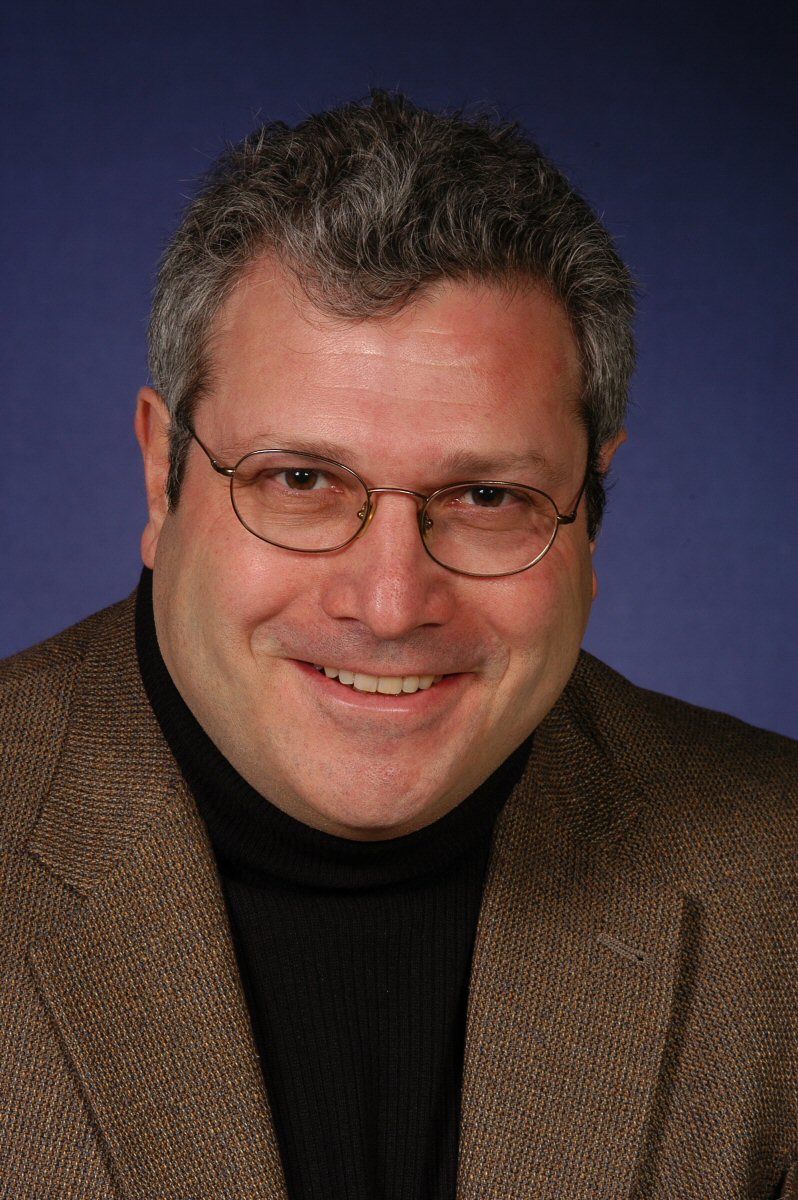
Former Senior Associate
Kagan, author of the recent book, The Return of History and the End of Dreams (Knopf 2008), writes a monthly column on world affairs for the Washington Post and is a contributing editor at both the Weekly Standard and the New Republic.
Recent Work

Michele Dunne, Robert Kagan
Robert Kagan, Michele Dunne
Carnegie does not take institutional positions on public policy issues; the views represented herein are those of the author(s) and do not necessarily reflect the views of Carnegie, its staff, or its trustees.
Lee’s tour shows how Seoul is reorganizing its diplomacy away from Pyongyang and toward industrial networks and the geography of the compute economy.

Darcie Draudt-Véjares
Most migrants may have left Ceuta, but the effects may linger.


Alejandro Martin Rodriguez, Sarah Yerkes
There is a transnational far-right populist movement that links middle powers in a global movement that extends well beyond Trump.


Christopher S. Chivvis, Rohan Mukherjee, Milan Vaishnav

When faced with fuel shortages in the past, Central Asian governments could always count on additional supplies from Moscow. That safety net no longer exists.

Galiya Ibragimova

Saied’s main accomplishment has been to destroy a decade’s worth of democratic progress.
Sarah Yerkes