

Report
- +2
George Perkovich, Jessica Tuchman Mathews, Joseph Cirincione, …
{
  "authors": [
    "Joseph Cirincione"
  ],
  "type": "legacyinthemedia",
  "centerAffiliationAll": "dc",
  "centers": [
    "Carnegie Endowment for International Peace"
  ],
  "collections": [],
  "englishNewsletterAll": "ctw",
  "nonEnglishNewsletterAll": "",
  "primaryCenter": "Carnegie Endowment for International Peace",
  "programAffiliation": "NPP",
  "programs": [
    "Nuclear Policy"
  ],
  "projects": [],
  "regions": [],
  "topics": [
    "Military",
    "Nuclear Policy"
  ]
}
REQUIRED IMAGE
Source: Carnegie
Introduction
Sir Martin Rees, the Astronomer Royal of England, notes that there have been just as many remarkable astronomical discoveries in the past two years as in any earlier period. Evidence of planets around other stars, glimpses of infant galaxies at the edges of the universe, detection of powerful energy bursts hitting the Earth from distant neutron stars, even the possible discovery of a new basic force in the universe that is the reverse of gravity.
Unfortunately, the same might be said for the proliferation of weapons of mass destruction. Hardly a week passes without a new, major crisis. Iraq threatens to break out of the UN inspection regime; terrorists attempt to acquire biological, chemical or even nuclear materials; Iran and North Korea conduct surprise tests of intermediate-range missiles; Russia's free-fall accelerates the deterioration of its nuclear safeguards; and India and Pakistan stun the world with nuclear tests and plans to deploy weapons. There is a proliferation of proliferation events.
One might expect that the response would be to redouble efforts to stop the spread of these deadly weapons, including the ratification of treaties and agreements to prevent and reduce the threats. In fact, the reverse is occurring. Harald Müller documents in the last issue of Disarmament Diplomacy the moribund status of the major non-proliferation treaties and initiatives. His masterful and depressing review reveals a regime badly damaged from global events since the 1995 Non-Proliferation Treaty (NPT) Review and Extension Conference. It is a regime urgently in need of repair, but one currently suffering from inattention and the mutual mistrust of many of its members.
Optimists often look to the United States to provide leadership in such times. While some demonized it as the source of many of the regime's problems, the United States remains the one nation in the world with the resources, status and potential leadership capable of galvanizing international non-proliferation efforts. Its weak response to the current crises results from three factors: the political paralysis of the Clinton presidency; the power of the conservative Republican leadership to set the national security agenda; and the cautious, minimalist threat reduction approach pursued by Administration officials.
The President's Problems
It is not difficult to find official expressions of concern about the mounting proliferation problems. Secretary of State Madeleine Albright noted earlier this year, "The greatest threat to our society at the moment are the weapons of mass destruction… It's nuclear weapons, it's poison gas, and it's biological warfare. Those are weapons that know no boundaries. They are a huge threat to us." At the Association of South East Asian Nations (ASEAN) summit in July, Secretary Albright and then-Russian Foreign Minister Yevgeny Primakov agreed that non-proliferation was the "premier security issue of the post-Cold War period." General Patrick Hughes, Director of the Defense Intelligence Agency, concludes bluntly in this year's annual testimony to Congress, "The proliferation of nuclear, chemical, and biological weapons, missiles, and other key technologies remains the greatest direct threat to US interests worldwide."
These comments reflect the consensus view of the Joint Chiefs of Staff, the intelligence agencies and the expert community. But, however well intentioned these officials are, however clear their warnings, they have been unable to re-orient the government's resources and policies to confront the threats they so correctly identify. In normal times, perhaps the issue would be joined more directly on the national stage. But these are not normal times.
The overwhelming political reality in Washington is the impeachment threat facing President Bill Clinton. Whether one thinks the problems are self-induced or the results of a determined right-wing effort to topple a popular President, the impact is the same: policy paralysis. This is particularly true in non-proliferation efforts, which need both sustained Presidential attention and Senate approval of treaties, senior appointments and funding. But in this highly-charged, partisan atmosphere, comity is a rare commodity. Government resources are diverted to the front lines of political battle, while every contentious issue gets loaded into the attack machine as fresh ammunition.
For example, the State Department is now without a director for policy planning as Greg Craig, who had been in the post for only a year, has been brought over to the White House to head the President's political defense efforts. The United States does not have an ambassador to the United Nations, as Senate investigations into alleged improprieties string out Richard Holbrook's nomination. And John Holum is unable to be confirmed as Undersecretary of State for Arms Control and National Security as Senator Jesse Helms delays the very State Department re-organization he once demanded.
Issues that might formerly have been addressed by a General Accounting Office report now produce calls for special prosecutors and congressional investigations into treasonous activity. Senior Members of Congress allege that the policy of allowing US firms to launch their satellites on Chinese rockets means that President Clinton has given national security secrets to China in exchange for campaign contributions. Ten separate committees are now investigating alleged American corporate assistance to China's space-launch vehicles and ballistic missiles and this issue is often cited as a possible impeachable offense. Similarly, when former UNSCOM inspector Scott Ritter resigned in criticism of the US policy shift on Iraqi inspections, Republican Majority Leader Trent Lott escorted him to a hastily called joint Senate committee hearing. Republican Senators used the occasion to denounce the President and tie the crisis into "a much deeper problem, and that's the duplicity of saying one thing and doing something else; that's far more troubling, far more broad-based," according to Senator Sam Brownback (Republican - Kansas). Any efforts to forge a bi-partisan response to Saddam Hussein were lost in the noise.
Like Sherlock Holmes' dog that did not bark, the damage is often in what doesn't happen. A top-ranking State Department official told The New York Times recently that proposals for fresh initiatives on Kosovo and Iraq have been on President Clinton's desk for some time. "We need action," he said, "and in normal times, we would have had it." With Russia in the most serious crisis of its young democratic life, with 22,000 nuclear weapons in various states of deteriorating security, with hundreds of tons of fissile material still lacking adequate safeguards, and with tens of thousands of nuclear scientists, technicians and guards unpaid for months, the Clinton-Yeltsin summit came and went without any major actions.
The only non-proliferation area that has shown some progress is Deputy Secretary of State Strobe Talbott's diplomatic efforts with India and Pakistan. Leaders of both nations have now agreed to sign the Comprehensive Test Ban Treaty. Talks continue, hoping to yield joint pledges not to deploy nuclear weapons and to agree to a treaty ending the production of fissile materials. Here, however, the Administration's work runs into the second paralyzing factor: a conservative congressional leadership adamantly opposed to arms control treaties and deeply isolationist.
Congressional Opposition
The proliferation policy debates of the past few months have been dominated by calls from influential members of the US Congress and their allies for increases in military spending, for more resolute opposition to arms control treaties and for the rapid deployment of new weapons systems, particularly a national missile defense system.
Numerous Senators took to the Senate floor in the days after the India tests, citing the "India threat" as justification of a crash program to field a national missile defense system. Although the legislation was blocked (twice) by Democrats, Senate Majority Leader Trent Lott said in support of the bill, "Only effective missile defense, not unenforceable arms control treaties, will break the offensive arms race in Asia and provide incentives to address security concerns without a nuclear response."
Dozens of articles and speeches by conservatives have used the South Asian tests and the Korean and Iranian missile launches as proof that future threats are inherently unpredictable, our intelligence estimates are consistently unreliable, the proliferation of weapons of mass destruction fundamentally unstoppable and, thus, the only truly effective response is reliance on American defense technology.
On 15 September, Senators Trent Lott (Republican - Mississippi), Jesse Helms (Republican - North Carolina) and Jon Kyl (Republican - Arizona) sent President Clinton a letter opposing "lifting sanctions in order to convince India to sign the CTBT." "As the recent Indian nuclear test demonstrated," they said, "The CTBT is not adequately verifiable….In addition, over the past 50 years, nuclear testing has been a critical element of efforts to maintain the viability of the US nuclear arsenal."
Jim Nicholson, the chairman of the Republican Party's National Committee, wants to make national missile defense an issue in the November 1998 congressional elections in the United States. "The Republican Party is prepared to have this become a political issue," he wrote in an editorial published in the conservative newspaper, The Washington Times, 21 June. "We are prepared to ask the American people if they agree the United States should be defenseless against weapons of mass destruction, relying instead on outdated treaties and the good intentions of our adversaries."
Interestingly, his call was preceded by an article by Gary Bauer, a candidate for the Republican Presidential nomination and President of the fundamentalist Christian group, Family Research Council, who warned with Edwin Feulner, President of the Heritage Foundation, in another Washington Times opinion piece on 14 June, "The nuclear club is getting larger, not smaller. The world is getting more threatening, not less. America needs to make its house secure again."
The Christian right has become an increasingly strong political force in the Republican Party and its influence now extends to foreign and defense policy as well as the traditional domestic issues. They believe it is the moral bankruptcy of the current leadership that has prevented America from standing up to States and terrorists who now seek to acquire the weapons we once claimed as our unique prerogative. They are leery of international organizations and are deeply suspicious of China's ambitions. That is one reason Speaker Newt Gingrich called the imposition of sanctions against India "a great over-reaction." He implied that President Clinton was "indirectly responsible for spurring India's nuclear detonations," by facilitating "the transfer of US missile technology to China and from China to Pakistan," and blamed Administration policy for provoking India's tests while ignoring the "potential threat from China."
As the base of the Republican Party moves right, its leadership is increasingly out of step with the majority of Americans. This shows up in popular opinion on President Clinton's job performance and whether his offenses deserve impeachment. The Republican activist base demands the President's head and want investigations to go on and on; the majority of the public support the President and want Congressional investigations to end. This same schism between the hard-core right and the general public has dire consequences for non-proliferation policies. The Comprehensive Test Ban Treaty, for example, is a widely popular treaty with 80 to 87 percent of the public in recent polls supporting the pact. On average, only about 13 percent of the public oppose the CTBT (with the rest undecided). But 26 of the 100 US Senators are expected to vote against the treaty should it get to the floor next year. In other words, the Senate is twice as opposed to ending nuclear tests as is the public at large. Unless the mid-term elections reverse this trend, the politically active and well-financed right–wing of the Republican Party is likely to continue to determine the leadership and the platform of the party. That spells bad news for multilateral cooperation, international treaties, funding for non-proliferation activities and any initiative that hints at US compromise.
Minimalist Agenda
It must be acknowledged that the problems with the non-proliferation policies of the United States are not just the result of impeachment politics or conservative opposition. The Clinton Administration does not have a clear, comprehensive non-proliferation plan or an administration leader on these issues.
This does not mean that the Administration has not made progress. It has on a number of fronts and some of it is quite impressive. Perhaps the most historically significant is the successful de-nuclearization of Ukraine, Belarus and Kazakhstan and the implementation and expansion of the Nunn-Lugar program in the States of the former Soviet Union. Both are bi-partisan success stories, with the Nunn-Lugar program finally enjoying the support it deserves, emerging fully funded from this year's congressional process. The Administration also led the successful extension and strengthening of the Non-Proliferation Treaty in 1995, was out front pulling for the CTBT in 1996, and has resolutely defended the ABM Treaty from withering attacks over the past several years.
Hundreds of dedicated officials toil daily for these and other programs. Arms control officials genuinely feel that they are doing all that they can under the circumstances and that the system simply can't take any more.
The problem is that it just isn't enough. Non-proliferation work is in some senses like a pyramid scheme. It must keep expanding, bringing in new successes to satisfy the existing members of the plan. It can't stand still and maintain its structural integrity. If it falters, if members begin to doubt the success of the enterprise, nations will begin hedging their bets, doubting the wisdom of giving up weapons that others seem to be acquiring and the process could collapse.
Right now, despite the best intentions of many Administration officials and some members of Congress, the work being done, the resources being devoted and the amount of political capital being expended are simply not sufficient to deal with the problems presented. The Nunn-Lugar programs, for example, are fully funded this year at $442 million. By comparison, the Congress added $450 million to the defense budget to purchase eight new C-130 J transport planes for the National Guard that none of the military services requested, but which happen to be built near the home district of the Speaker of the House. And the budget allocates almost ten times this amount ($4 billion) for research on ballistic missile defense efforts. While such research is important, is it ten times more vital that eliminating and preventing the theft of the very weapons the defenses are designed to defeat?
The situation is similar on strategic nuclear reductions. When George Bush and Boris Yeltsin signed START II in January 1993, Yeltsin called it "the treaty of hope." It was the most sweeping arms reduction pact in history, slashing in half the number of deployed nuclear weapons. Six years later, Presidents Clinton and Yeltsin politely ignored the past at their Moscow summit. The Russian economic panic and the Duma's refusal to ratify the pact threaten to destroy the step-by-step nuclear reduction process begun by Richard Nixon and accelerated by Ronald Reagan and George Bush. President Clinton has refused to negotiate a START III agreement until START II is ratified (even though George Bush did exactly that with START II and I). As a result, Clinton has yet to negotiate and sign a nuclear reduction treaty in his six years in office, while George Bush signed two during his four years.
With the exception of the special effort made in South Asia, non-proliferation policies in general and Russia policy in particular seems to be proceeding as if nothing unusual happened this year. While the President and his top officials concur that the spread of weapons of mass destruction is our single most urgent national security threat, it is difficult to identify an Administration official in charge of non-proliferation. Or, for that matter, in charge of Russia policy. Resources have not been increased; personnel have not been augmented; and top-level attention seems to last only as long as the most recent speech.
And the situation is likely to worsen. The International Monetary Fund warned 30 September that the current global economic situation is "unusually fragile" and declared: "Changes of any significant improvement in 1999 have…. diminished, and the risks of a deeper, wider and more prolonged downturn have escalated." While it may be difficult to document a tight correlation between proliferation and global economic dislocations, it seems reasonable to assume that depressed economies will increase the pressure on some nations to sell sensitive technologies, on skilled scientists to sell their services, and on individuals and corporations to sell (or steal) critical materials. Economic problems are also likely to exacerbate existing tensions between nations, creating an atmosphere less conducive to the success of disarmament proposals.
It is as if the Administration is on cruise control, with the speed set for a moderate 30 miles an hour, even as a tidal wave comes crashing down behind at twice that speed.
In part this is a conscious political strategy. From the beginning, President Clinton has been determined to immunize the White House from right-wing attacks on defense issues. He has worked to minimize disputes with the Pentagon. He has regularly increased defense budgets each Fall in the inter-agency review process and has supported congressional increases to his request. He is expected to increase the defense budget an additional $10 billion this year to prevent further criticism of alleged readiness shortfalls. The strategy has worked. He has not been vulnerable to the kind of attacks launched against President Jimmy Carter when Army Chief of Staff Edward Myers complained to Congress in 1980 of a "hollow Army." But, it leaves the President unwilling or unable to actually lead the defense establishment. He follows the most cautious of his advisors, reluctant to propose any initiative that does not already enjoy a consensus. It is the politics of status quo in a time of radical change. A minimalist agenda that unintentionally courts maximum risk.
Leader of the Pack
What could be done? Even with the current poisonous atmosphere in Washington, there is still room in the American political spectrum for bi-partisan initiatives that would boldly address the proliferation dangers. Even with the President's present political problems, even with the dominance of the radical right politics in Congress, there is room to lead. Public opinion polls confirm that Americans believe the task of reducing the dangers posed by nuclear weapons is an important issue for President Clinton's historical legacy. They believe this is just as important as the domestic issues to which he had dedicated enormous amounts of Presidential time and political capital, such as balancing the federal budget and improving race relations. (See, Public Attitudes on Nuclear Weapons: An Opportunity for Leadership, on the web at http://www.stimson.org/policy)
The President, with key Senators in support, could break the Duma logjam by announcing he wants and is willing to begin negotiating a START III agreement at much lower levels than agreed to at Helsinki, but only in conjunction with a ratified START II. He could, with former Senator Nunn and current Senator Lugar, announce an expanded and revitalized threat reduction program for Russia, and bring in a special ambassador to coordinate the effort (such as a former senator familiar with the issue). He could take the advice of Congress in 1995 and appoint a senior "proliferation Czar" (with budget authority) to organize the executive branch responses to the now multiple proliferation crises. And, he could challenge the military services to put their resources where their threats are and reconfigure at least part of their forces and budgets to respond to the real threats we face today and not the Cold War threats of yesterday.
These are just some of the solutions experts and institutes are examining and proposing in much greater detail in a variety of ways. The Administration itself has put forth three new initiatives, which, though modest, could be accelerated and expanded into truly important programs. At the Moscow summit the Presidents announced plans to share early warning data with the Russians to reduce the danger of accidental launch of nuclear weapons, and the US pledge to aid Russia in permanently disposing of 50 tons of plutonium (about one-quarter of the estimated Russian stockpile). And Vice President Al Gore announced in July, and Secretary of Energy Bill Richardson formalized in September, a plan to begin developing new, commercial enterprises for the thousands of scientists in Russia's "nuclear cities" and laboratories.
At the Department of Defense, 1 October marked the formation of a new Defense Threat Reduction Agency, consolidating the On-Site Inspection Agency, the Defense Special Weapons Agency and the Defense Technology Security Administration into one, $2 billion-a-year organization. With proper leadership and Presidential direction, this could become much more than a bureaucratic reshuffle.
Some in the Senate are trying to provide that leadership. Senate Minority Leader Tom Daschle (Democrat - South Dakota) took to the floor of the Senate in late September warning, "No longer should anyone believe Russia's nuclear forces are exempt from the neglect and disarray that has been experienced by her conventional forces." He argued:
"There are 3 initiatives the United States could take immediately that begin to address these risks: de-alerting a portion of the US and Russian strategic and nuclear weapons, ratifying the Comprehensive Test Ban Treaty, and pushing for much deeper reductions in nuclear weapons than currently contemplated in START II. However, these measures alone are not enough. We must vigorously pursue other possible avenues, many of which may lie outside the traditional arms control process."
Finally, some are not waiting for US leadership. This June the Ministers for Foreign Affairs of Brazil, Egypt, Ireland, Mexico, New Zealand, Slovenia, South Africa and Sweden launched a "New Agenda" initiative to resuscitate the disarmament process. They expressed their deep concern "at the persistent reluctance of the nuclear-weapon States to approach their Treaty obligations as an urgent commitment to the total elimination of their nuclear weapons" and urged them, as first steps, to abandon their hair-trigger nuclear alert postures and to remove non-strategic nuclear weapons from deployed sites. They outlined several other practical and achievable objectives in a short statement (available on the Internet at: http://www.peacenet.org/disarm/abolish.html). If the ministers are serious in their statement that they "we will spare no efforts to pursue the objectives" and other nations rally to the initiative, this could become a welcome catalyst.
There are solutions to these problems, but they are neither simple nor cheap. The next few years may well determine whether the non-proliferation regime can be successfully repaired and revived, or if further shocks overwhelm our collective ability to sustain the security system that the United States helped create and nurture over the past thirty years.
Joseph Cirincione is Director of the Non-Proliferation Project at the Carnegie Endowment for International Peace in Washington, D.C. The Project maintains a comprehensive web-site on issues of proliferation concern.
© 1998 The Acronym Institute.

Former Senior Associate, Director for NonProliferation
Recent Work


George Perkovich, Jessica Tuchman Mathews, Joseph Cirincione, …
Joseph Cirincione
Carnegie does not take institutional positions on public policy issues; the views represented herein are those of the author(s) and do not necessarily reflect the views of Carnegie, its staff, or its trustees.
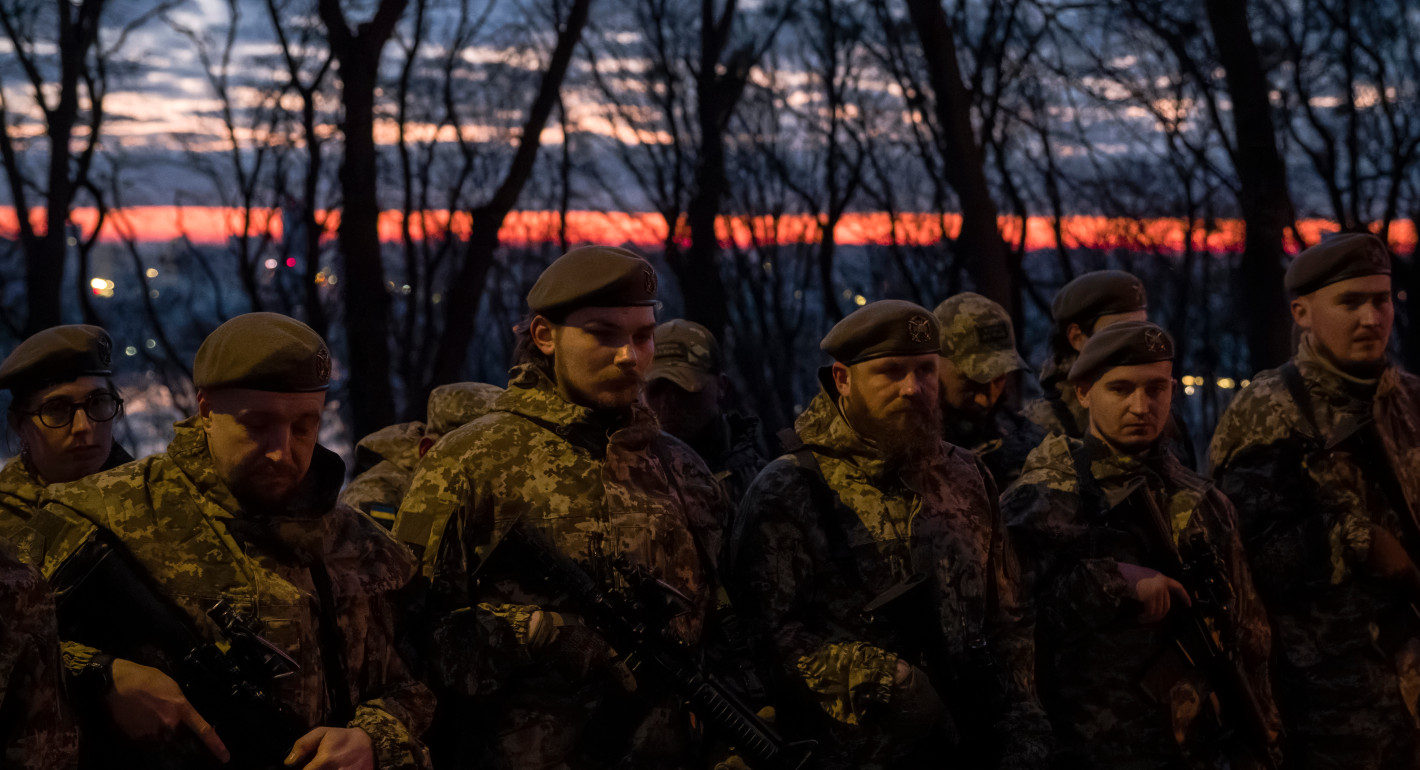
Strategy and force design are key to solving Kyiv’s persistent manning and readiness problems.

Viktor Kevliuk, Olesya Favorska, Andriy Zagorodnyuk

Japan’s prime minister, Takaichi Sanae, may kickstart a discussion on Japan’s non-nuclear principles.
Shizuka Kuramitsu
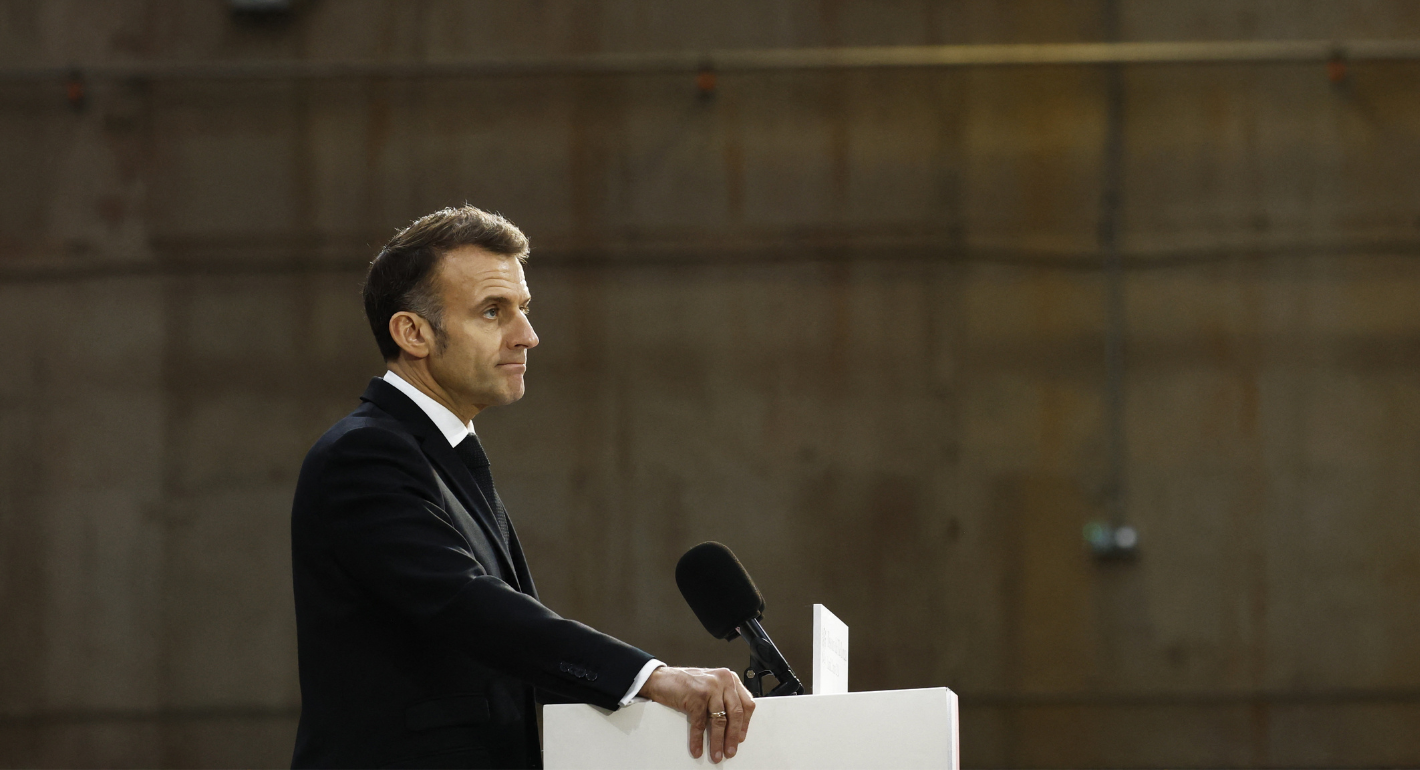
French President Emmanuel Macron has unveiled his country’s new nuclear doctrine. Are the changes he has made enough to reassure France’s European partners in the current geopolitical context?

Rym Momtaz, ed.
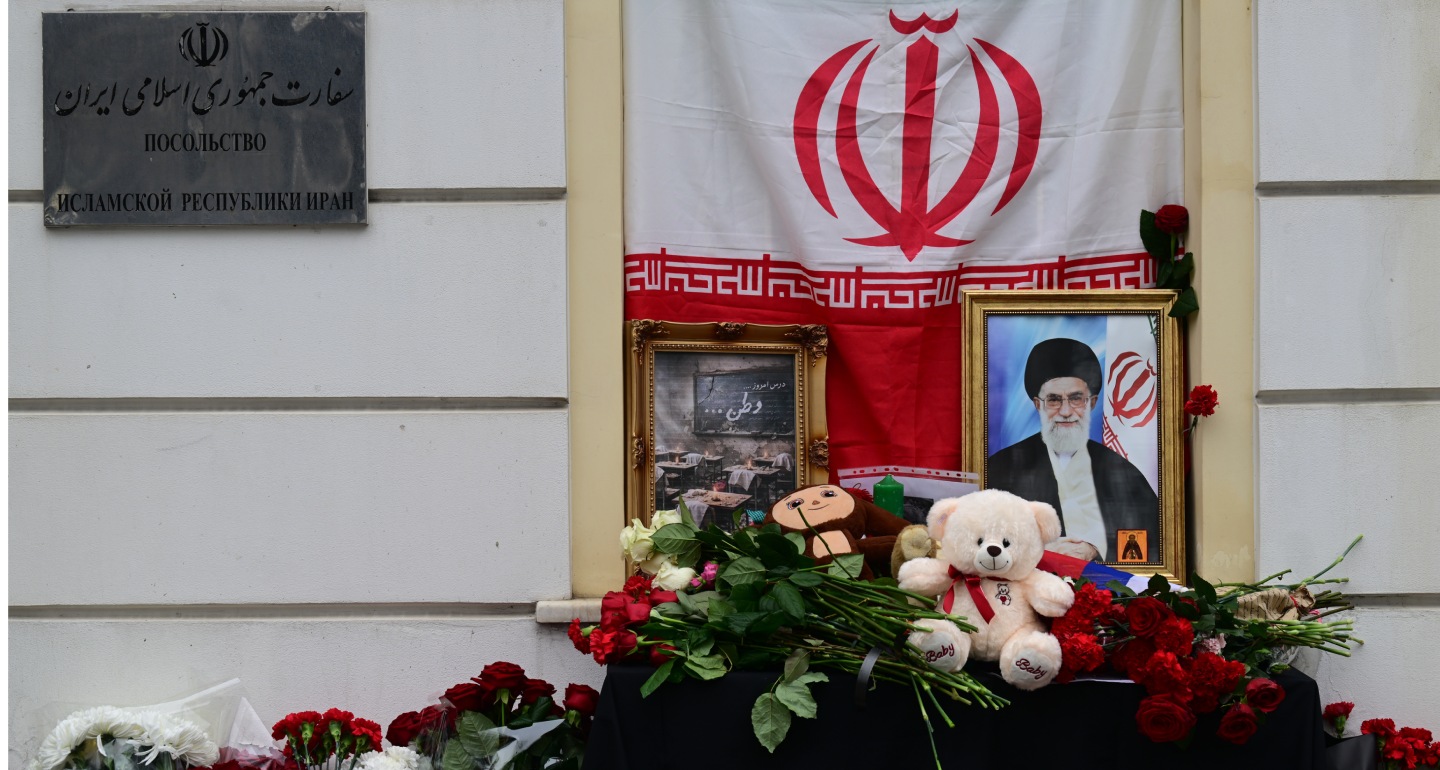
If the regime in Tehran survives, it could be obliged to hand Moscow significant political influence in exchange for supplies of weapons and humanitarian aid.

Nikita Smagin
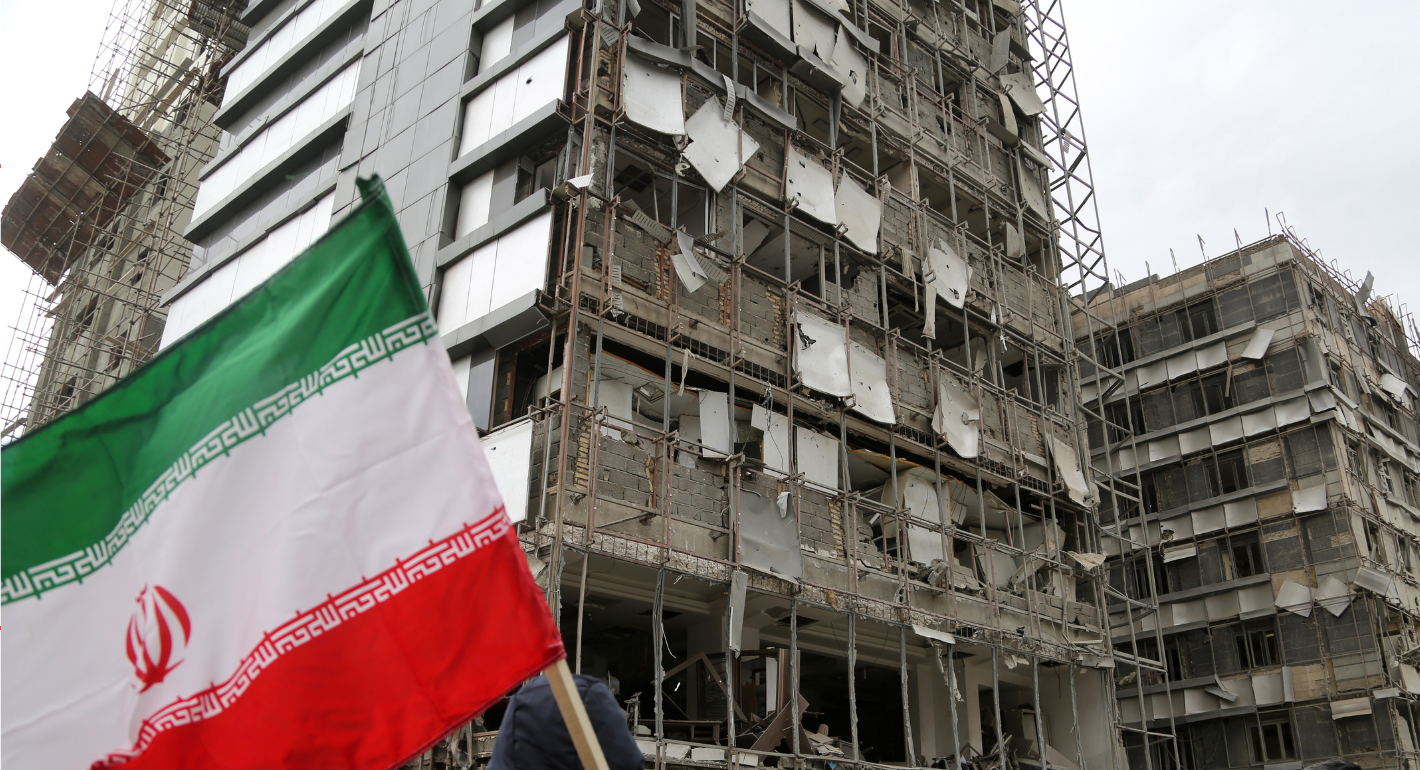
Europe’s reaction to the war in Iran has been disunited and meek, a far cry from its previously leading role in diplomacy with Tehran. To avoid being condemned to the sidelines while escalation continues, Brussels needs to stand up for international law.

Pierre Vimont