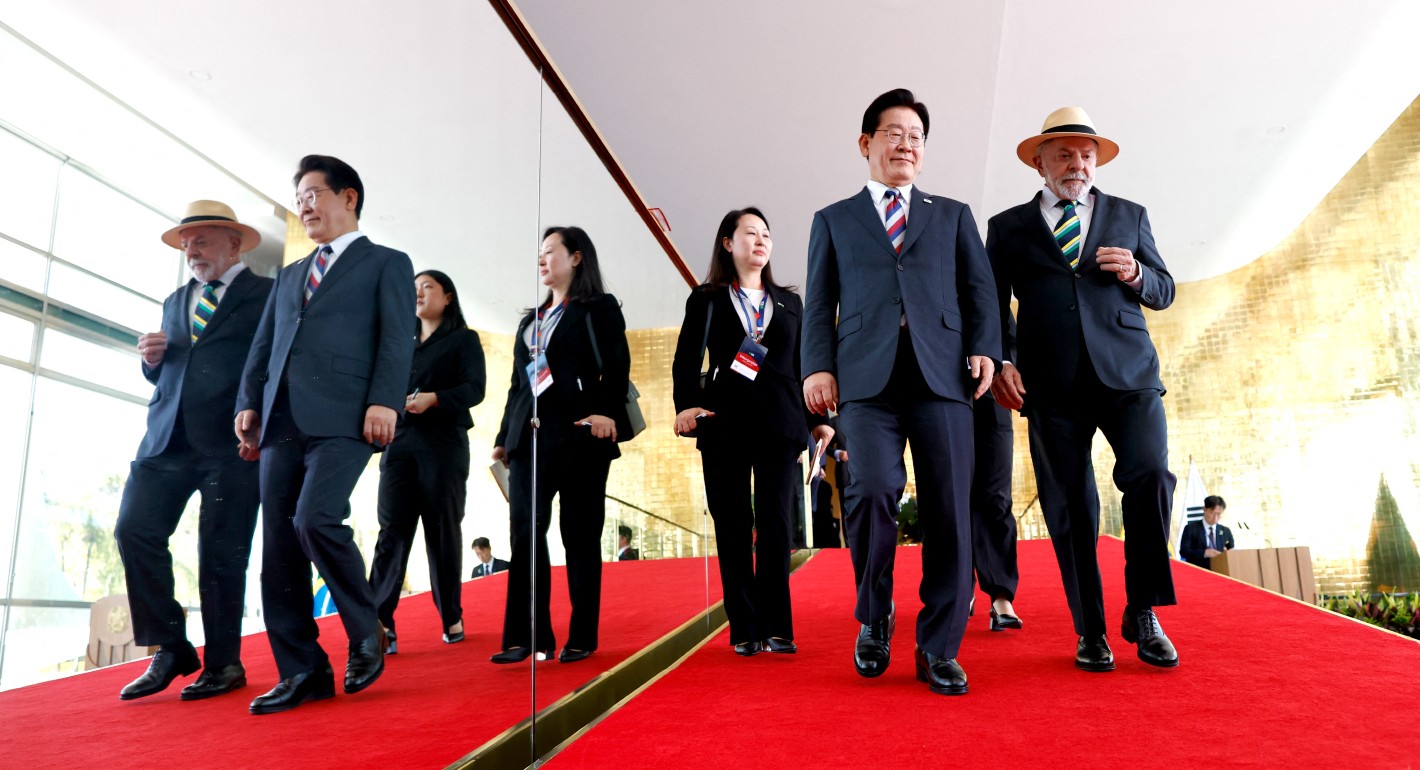
Argentina’s president blends libertarian populism with leader-centric diplomacy, transnational right-wing networks, and selective disengagement from multilateral institutions.
Federico Merke
{
"authors": [],
"type": "other",
"centerAffiliationAll": "",
"centers": [
"Carnegie Endowment for International Peace"
],
"collections": [],
"englishNewsletterAll": "",
"nonEnglishNewsletterAll": "",
"primaryCenter": "Carnegie Endowment for International Peace",
"programAffiliation": "",
"programs": [],
"projects": [],
"regions": [
"South America"
],
"topics": []
}REQUIRED IMAGE
Source: Carnegie
In a policy brief based on a public debate sponsored by the Reuters Foundation and the Carnegie Endowment, Jan Gilbreath looks at the temporary worker issue in both the United States and Germany. She writes that, though temporary worker programs with realistic, short-term goals can provide economic benefits to both the sending and receiving counties, they are not an alternative to developing a long-term framework for permanent migration. Read the report.
Carnegie does not take institutional positions on public policy issues; the views represented herein are those of the author(s) and do not necessarily reflect the views of Carnegie, its staff, or its trustees.
Argentina’s president blends libertarian populism with leader-centric diplomacy, transnational right-wing networks, and selective disengagement from multilateral institutions.
Federico Merke
The India AI Impact Summit offers a timely opportunity to experiment with and formalize new models of cooperation.
Lakshmee Sharma, Jane Munga
When democracies and autocracies are seen as interchangeable targets, the language of democracy becomes hollow, and the incentives for democratic governance erode.
Sarah Yerkes, Amr Hamzawy
Geological complexity and years of mismanagement mean the Venezuelan oil industry is not the big prize officials in Moscow and Washington appear to believe.
Sergey Vakulenko
With U.S. democracy support receding, progressive leaders from Spain and Latin America have pioneered a global initiative to combat backsliding. Can it succeed?
Oliver Stuenkel, Adrian Feinberg